
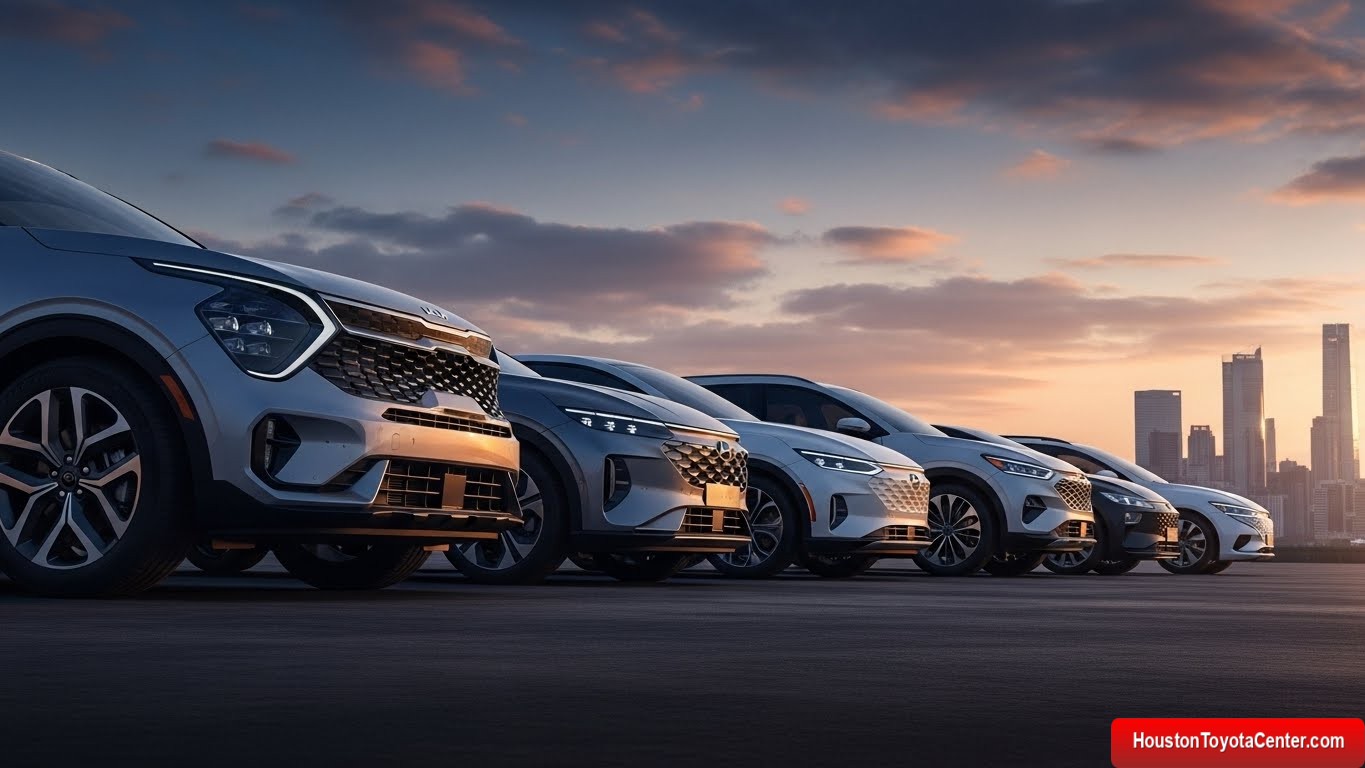
For decades, the global automotive conversation revolved around a familiar hierarchy. Japanese manufacturers were praised for reliability, German brands for engineering and prestige, and American companies for scale and power. South Korean automakers—primarily Kia and Hyundai—occupied a very different position in the public imagination. They were often described as budget-friendly, utilitarian, and sometimes disposable. They were cars you bought because they were inexpensive, not because you admired them.
That narrative has changed dramatically.
Over the last fifteen years, and especially in the past decade, Kia and Hyundai have undergone one of the most remarkable transformations in modern automotive history. What began as a quiet improvement in quality has evolved into a full-scale reinvention of brand identity. Today, these companies are recognized as leaders in design, technology, warranty coverage, and overall value. They are not merely competing with established players—they are frequently outpacing them.
This resurgence is not an accident, nor is it the result of a single successful model. It is the outcome of long-term strategic planning, aggressive investment in design and engineering, a willingness to challenge industry norms, and a deep understanding of shifting consumer expectations. Kia and Hyundai have learned how to deliver emotional appeal and rational value in the same package.
FREE: Quickly identify and understand problems with your vehicle 🚘
CLICK HEREThis article explores how Kia and Hyundai reinvented themselves, why their design language resonates so strongly with modern buyers, how their value proposition reshaped consumer trust, and what their rise means for the future of the global auto industry.
Historical Context: Humble Beginnings and Early Skepticism
To understand the scale of Kia and Hyundai’s resurgence, it is essential to examine where they started.
Hyundai’s Early Global Expansion
Hyundai entered the global automotive market in earnest during the late 1980s and early 1990s. Its early exports, such as the Hyundai Excel, were aggressively priced and widely available. While this approach succeeded in attracting budget-conscious buyers, it also cemented a reputation for poor build quality, weak performance, and limited durability.
Hyundai vehicles of this era were rarely aspirational. They were often purchased as first cars, commuter vehicles, or temporary solutions. Reliability concerns and rapid depreciation were common criticisms.
Kia’s Struggles and Reinvention
Kia’s story was even more turbulent. Founded earlier than Hyundai, Kia struggled with financial instability and limited global presence. By the late 1990s, the Asian financial crisis pushed Kia into bankruptcy, leading to Hyundai acquiring a controlling stake.
This merger proved pivotal. Hyundai’s resources, combined with Kia’s manufacturing base, created the foundation for a unified long-term strategy. However, public perception lagged far behind internal improvements.
The Weight of Reputation
Automotive reputations are notoriously difficult to change. Early impressions—especially negative ones—tend to persist across generations of buyers. Kia and Hyundai faced entrenched skepticism from consumers, reviewers, and competitors alike. Overcoming this skepticism required more than incremental improvements; it demanded a fundamental reset.
Strategic Turning Points: The Foundations of a Comeback
Several strategic decisions laid the groundwork for Kia and Hyundai’s resurgence. These decisions were bold, expensive, and long-term in nature.
The 10-Year Warranty Gamble
One of the most defining moves in Hyundai’s history was the introduction of the 10-year/100,000-mile powertrain warranty in the United States.
At the time, this decision was widely viewed as risky. Critics argued that the warranty would expose the company to massive repair costs. Instead, it achieved two critical objectives:
- It forced internal quality improvements to avoid financial losses.
- It signaled confidence to consumers who doubted Hyundai’s reliability.
Kia soon followed with similar coverage. Over time, these warranties became a cornerstone of both brands’ value propositions and a powerful differentiator in a crowded market.
Investment in Manufacturing Quality
Behind the scenes, Hyundai Motor Group invested heavily in manufacturing processes, quality control systems, and supplier relationships. Factories were modernized, tolerances tightened, and quality metrics rigorously enforced.
This focus on quality did not yield immediate public acclaim, but it steadily reduced defect rates and improved long-term durability. Independent studies began to reflect these improvements, further validating the brands’ claims.
Platform Sharing and Scale Efficiency
Hyundai Motor Group leveraged its growing scale by developing shared platforms and powertrains across Hyundai, Kia, and later Genesis models. This approach reduced development costs while allowing more resources to be allocated to design, technology, and safety.
Crucially, platform sharing did not result in bland, indistinguishable vehicles. Each brand maintained distinct styling, tuning, and brand identity.
Design as a Catalyst: Changing How the World Sees Korean Cars
If quality improvements rebuilt trust, design transformed desire.
Recruiting Global Design Talent
One of the most influential decisions was Hyundai Motor Group’s aggressive recruitment of world-class designers. Perhaps the most notable example was the hiring of Peter Schreyer, formerly of Audi, to lead Kia’s design transformation.
Schreyer introduced the now-iconic “tiger nose” grille, giving Kia vehicles a recognizable and cohesive visual identity. Hyundai followed suit by strengthening its own design leadership, establishing design studios in Europe, the United States, and Asia.
This global design approach ensured that vehicles appealed to diverse markets while maintaining brand consistency.
Emotional Design Over Conservative Styling
Where earlier Korean cars emphasized anonymity, modern Kia and Hyundai models embrace boldness. Sharp creases, distinctive lighting signatures, and confident proportions replaced conservative shapes.
Vehicles like the Kia Stinger, Hyundai Sonata, and Hyundai Tucson challenged preconceived notions about what mainstream brands could look like. These designs were not merely attractive—they were memorable.
Interior Design and Perceived Quality
Design improvements extended beyond exterior styling. Interiors became a major focus area, with attention paid to materials, ergonomics, and technology integration.
Soft-touch surfaces, clean layouts, and intuitive controls replaced hard plastics and cluttered dashboards. In many cases, Kia and Hyundai interiors rivaled or exceeded those of more expensive competitors.
Value Redefined: Beyond Low Prices
Value is often misunderstood as simply being cheap. Kia and Hyundai redefined value as the optimal balance of price, features, quality, and ownership experience.
Feature-Rich as Standard
Kia and Hyundai became known for offering features as standard equipment that competitors reserved for higher trims. These often included:
- Advanced driver-assistance systems
- Large infotainment displays
- Smartphone integration
- Heated and ventilated seats
This strategy made buyers feel they were receiving more than they paid for—a powerful emotional driver in purchase decisions.
Competitive Pricing Without Compromise
While prices increased as quality and features improved, Kia and Hyundai maintained a clear pricing advantage relative to Japanese and European rivals. Importantly, this advantage did not come at the expense of safety or technology.
Ownership Experience and Dealer Networks
The value proposition extended into ownership. Improved dealership experiences, transparent pricing, and strong warranty support reduced friction and increased customer satisfaction.
Comparative Snapshot: Kia and Hyundai Versus Traditional Competitors
| Category | Kia / Hyundai | Traditional Mainstream Rivals |
|---|---|---|
| Warranty Coverage | Industry-leading | Typically shorter |
| Design Boldness | High, distinctive | Often conservative |
| Standard Features | Generous | Frequently optional |
| Price-to-Value Ratio | Excellent | Variable |
| Brand Momentum | Strong upward trend | Mixed or stagnant |
This comparison illustrates how Kia and Hyundai positioned themselves not just as alternatives, but as benchmarks in key areas.
Technology and Innovation: Catching Up and Surpassing
Technology became another critical pillar of resurgence.
Infotainment and User Experience
Kia and Hyundai invested heavily in infotainment systems that prioritized usability. Large, high-resolution screens, logical menus, and responsive interfaces became hallmarks of their vehicles.
Unlike some competitors who overcomplicated controls, Korean brands struck a balance between digital innovation and physical usability.
Electrification and Future Mobility
Hyundai Motor Group emerged as a leader in electrification with dedicated EV platforms such as E-GMP. Vehicles like the Hyundai Ioniq 5 and Kia EV6 demonstrated that electric cars could be stylish, practical, and emotionally engaging.
Key advantages included:
- Fast charging capabilities
- Long driving ranges
- Flexible interior layouts
These models did not merely compete with electric rivals—they redefined expectations for mainstream EVs.
Hydrogen and Alternative Powertrains
In addition to battery electric vehicles, Hyundai invested in hydrogen fuel cell technology. While still niche, this commitment underscored the company’s willingness to explore multiple pathways toward sustainable mobility.
Brand Architecture: Hyundai, Kia, and Genesis
A critical aspect of Hyundai Motor Group’s success lies in its brand architecture.
Hyundai: Broad Appeal and Innovation
Hyundai positioned itself as a broad-market brand focused on innovation, reliability, and smart design. Its lineup spans economy cars, SUVs, luxury-adjacent sedans, and cutting-edge EVs.
Kia: Youthful, Sporty, and Bold
Kia adopted a more youthful and emotionally driven identity. Sportier styling, daring concepts, and a slightly more playful tone differentiated it from Hyundai while avoiding internal competition.
Genesis: Luxury Without Legacy Baggage
Genesis, the group’s luxury brand, further demonstrated the group’s confidence. By entering the luxury segment without decades of legacy, Genesis could redefine what modern luxury looks like—clean, technology-driven, and customer-focused.
Cultural Shifts and Consumer Psychology
The resurgence of Kia and Hyundai coincided with broader cultural changes.
Decline of Traditional Brand Loyalty
Younger buyers are less brand-loyal than previous generations. They prioritize technology, design, and value over heritage. Kia and Hyundai were perfectly positioned to benefit from this shift.
Transparency and Online Research
The rise of online reviews, comparison tools, and long-term reliability data allowed improvements to become visible. As third-party data validated Kia and Hyundai’s progress, skepticism faded.
Design as Self-Expression
Cars increasingly serve as expressions of identity. Bold design and customization options resonated with buyers seeking individuality rather than conformity.
Challenges and Criticisms: Not Without Setbacks
Despite their success, Kia and Hyundai faced challenges.
Recalls and Quality Scandals
Engine recalls and manufacturing issues reminded consumers that no automaker is immune to mistakes. However, transparent handling and warranty coverage mitigated long-term damage.
Rising Prices and Market Pressure
As popularity grew, prices increased. Maintaining value while preserving margins remains an ongoing challenge.
Intensifying Competition
Competitors responded aggressively, improving design and features. The bar Kia and Hyundai set forced the entire industry to adapt.
The Broader Industry Impact
The resurgence of Kia and Hyundai reshaped industry expectations.
- Mainstream brands increased warranties and features.
- Design became more adventurous across segments.
- Value became a strategic focus rather than a marketing slogan.
In many ways, Kia and Hyundai disrupted complacency.
The Road Ahead: Sustaining Leadership
The next phase of Kia and Hyundai’s journey will be defined by:
- Continued electrification
- Software-defined vehicles
- Autonomous driving technologies
- Global sustainability initiatives
Maintaining design leadership while managing complexity will be crucial.
Conclusion: A Masterclass in Reinvention
The resurgence of Kia and Hyundai stands as a masterclass in long-term brand reinvention. Through disciplined investment, bold design, and an unwavering focus on value, these companies transformed themselves from overlooked budget options into global leaders.
Their success proves that in the automotive industry, reputation is not destiny. With vision, patience, and execution, even the most underestimated players can redefine the rules.
Kia and Hyundai did not simply catch up to the competition—they forced the competition to catch up to them.
Leave a Reply