
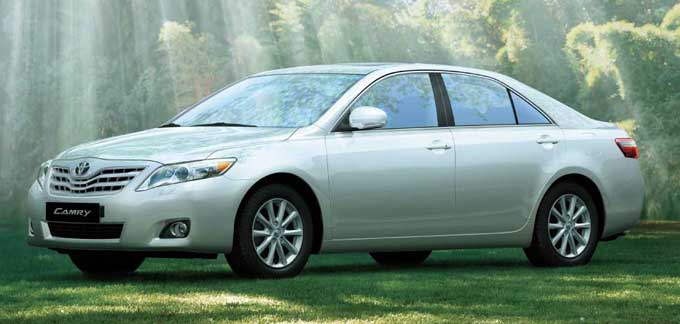
The Toyota Camry has earned a reputation as one of the most dependable passenger cars ever built. For decades, it has been the benchmark for reliability, longevity, affordability, and low operating costs. While many factors contribute to the Camry’s legendary status, the engines under the hood deserve much of the credit. Some Camry powerplants have become famous among mechanics, fleet operators, taxi companies, and private owners for their ability to run hundreds of thousands of miles with minimal issues.
In an automotive world increasingly filled with turbochargers, complex emissions systems, and expensive electronic components, many older Camry engines represent an era when simplicity and durability were prioritized above all else. It is not uncommon to find examples with 250,000, 300,000, or even 500,000 miles still operating with their original engines.
This article explores the most reliable Camry engines ever produced, examining their design, strengths, common issues, maintenance requirements, and why they have earned such remarkable reputations among enthusiasts and industry professionals alike.
What Makes an Engine Reliable?
Before identifying the most reliable Camry engines, it is important to understand what reliability means in the automotive world.
FREE: Quickly identify and understand problems with your vehicle 🚘
CLICK HEREA reliable engine is not necessarily the most powerful or technologically advanced. Instead, it consistently performs its intended function over an extended period with minimal repairs. Several characteristics contribute to long-term reliability:
- Robust internal components
- Conservative engineering
- Effective cooling systems
- Strong lubrication design
- Low-stress operating conditions
- Simple maintenance requirements
- Resistance to overheating
- Proven manufacturing quality
Toyota has historically excelled in these areas. Many Camry engines were deliberately engineered with large durability margins, allowing them to tolerate neglect, harsh climates, and high mileage better than many competitors.
Ranking the Most Reliable Camry Engines
The following engines stand out as the most dependable ever installed in a Toyota Camry.
| Rank | Engine | Displacement | Configuration | Production Era |
|---|---|---|---|---|
| 1 | 2AZ-FE (Later Improved Versions) | 2.4L | Inline-4 | 2002–2011 |
| 2 | 5S-FE | 2.2L | Inline-4 | 1990–2001 |
| 3 | 2GR-FE | 3.5L | V6 | 2005–Present |
| 4 | 1MZ-FE | 3.0L | V6 | 1994–2006 |
| 5 | 2AR-FE | 2.5L | Inline-4 | 2009–2017 |
| 6 | 3S-FE | 2.0L | Inline-4 | Various Global Markets |
| 7 | A25A-FKS | 2.5L | Inline-4 | 2018–Present |
Each engine achieved reliability through slightly different engineering philosophies.
5S-FE: The Legendary Workhorse
Many Toyota enthusiasts consider the 5S-FE the gold standard for Camry reliability.
Produced from the early 1990s through the early 2000s, this 2.2-liter four-cylinder engine powered millions of Camrys worldwide. Its reputation for durability became almost mythical.
Design Philosophy
Toyota designed the 5S-FE with simplicity as a priority.
Key characteristics included:
- Cast-iron engine block
- Aluminum cylinder head
- Non-turbocharged design
- Conservative compression ratio
- Relatively low specific output
- Proven fuel injection system
Unlike many modern engines, the 5S-FE was never pushed to produce extreme horsepower figures. Instead, Toyota focused on smooth operation and long-term durability.
Why It Lasts So Long
Several factors explain the engine’s longevity.
Thick Cast-Iron Block
The cast-iron block provides excellent structural strength and resistance to wear. Many engines remain within factory tolerances after hundreds of thousands of miles.
Low-Stress Operation
The engine rarely operates near its mechanical limits. Components such as pistons, rods, and bearings experience relatively low stress.
Excellent Cooling
The cooling system was generously sized, helping prevent overheating—a leading cause of engine failure.
Forgiving Nature
The 5S-FE can often survive maintenance neglect better than many competitors.
Owners have reported:
- Extended oil change intervals
- Occasional overheating incidents
- High-mileage operation
while still achieving remarkable longevity.
Common Problems
No engine is perfect.
Typical issues include:
- Oil leaks from valve cover gaskets
- Aging distributor components
- Timing belt replacement requirements
- Idle air control valve issues
Fortunately, these problems are generally inexpensive to repair.
Typical Lifespan
A properly maintained 5S-FE commonly reaches:
- 250,000 miles with ease
- 300,000 miles regularly
- 400,000+ miles in exceptional cases
For many mechanics, the 5S-FE remains one of Toyota’s greatest engineering achievements.
1MZ-FE: The Reliable V6 Revolution
The 1MZ-FE introduced smooth V6 power to the Camry while maintaining Toyota’s reputation for reliability.
This 3.0-liter V6 became a favorite among drivers seeking stronger acceleration without sacrificing durability.
Key Specifications
| Specification | Value |
| Configuration | V6 |
| Displacement | 3.0L |
| Block Material | Iron |
| Head Material | Aluminum |
| Fuel System | Electronic Fuel Injection |
| Power Output | Approximately 190–210 hp |
Why Owners Love It
The 1MZ-FE combines:
- Smooth performance
- Quiet operation
- Excellent fuel economy for its era
- Exceptional longevity
Many examples exceed 300,000 miles without requiring major internal repairs.
Engineering Strengths
Robust Bottom End
The crankshaft, connecting rods, and bearings were built to handle more power than the engine typically produced.
Conservative Tuning
Toyota intentionally avoided aggressive tuning.
The result was:
- Reduced thermal stress
- Lower cylinder pressures
- Longer component life
High Manufacturing Quality
During this era, Toyota’s production standards were among the highest in the industry.
Many engine components demonstrate exceptional consistency and precision.
Known Weaknesses
The most discussed issue is sludge formation in poorly maintained engines.
Early maintenance schedules sometimes encouraged longer oil intervals than ideal.
When owners neglected oil changes, sludge could accumulate.
However, engines receiving regular oil service rarely suffered significant problems.
Longevity Expectations
A well-maintained 1MZ-FE often reaches:
- 250,000 miles
- 300,000 miles
- Occasionally 400,000 miles
without major engine rebuilding.
2GR-FE: Toyota’s Modern Reliability Champion
If one modern Toyota engine deserves legendary status, it is the 2GR-FE.
Introduced in the mid-2000s, this 3.5-liter V6 powers numerous Toyota and Lexus vehicles.
Many automotive technicians consider it one of the best V6 engines ever produced.
Performance Meets Reliability
Unlike older engines that sacrificed power for durability, the 2GR-FE successfully delivers both.
Typical specifications include:
| Specification | Value |
| Displacement | 3.5L |
| Horsepower | 268–301 hp |
| Configuration | V6 |
| Fuel Delivery | Electronic Injection |
| Valvetrain | DOHC |
Why It Became Famous
The engine offers:
- Strong acceleration
- Smooth power delivery
- Excellent fuel economy
- Exceptional durability
This combination is rare.
Engineering Highlights
Timing Chain Design
Unlike earlier timing belt engines, the 2GR-FE uses a timing chain.
Benefits include:
- Reduced maintenance
- Longer service life
- Improved reliability
Strong Internal Components
The engine’s rotating assembly is notably robust.
Even under demanding driving conditions, failures remain uncommon.
Advanced Yet Proven Technology
Toyota carefully introduced newer technologies without compromising durability.
This balance contributed significantly to the engine’s reputation.
Common Issues
The engine is remarkably reliable, but some problems occur:
- Minor oil line concerns on early models
- Water pump wear
- Ignition coil failures at very high mileage
None are typically catastrophic.
Mileage Potential
Many examples exceed:
- 300,000 miles
- 350,000 miles
- 400,000 miles
with routine maintenance.
2AR-FE: The Dependable Modern Four-Cylinder
The 2AR-FE replaced earlier four-cylinder engines and quickly earned praise for reliability.
Found in Camrys from approximately 2010 onward, it remains one of Toyota’s strongest modern designs.
Core Design Features
- 2.5-liter displacement
- Aluminum construction
- Timing chain
- Dual VVT-i
- Efficient combustion design
Why It Stands Out
The 2AR-FE successfully balances:
- Fuel efficiency
- Reliability
- Smooth operation
- Low ownership costs
Many fleet operators specifically seek vehicles equipped with this engine.
Durability Advantages
Lower Internal Friction
Toyota optimized numerous components to reduce wear.
Excellent Oil Control
Compared with some earlier engines, oil consumption issues are relatively rare.
Proven Timing Chain
The chain-driven design reduces maintenance requirements.
Typical Lifespan
With proper care:
- 250,000 miles is common
- 300,000 miles is achievable
- Higher mileage is possible
without major internal repairs.
2AZ-FE: The Controversial Survivor
The 2AZ-FE is one of the most debated Camry engines.
Some owners experienced oil consumption issues, while others accumulated enormous mileage without significant trouble.
Overview
| Specification | Value |
| Displacement | 2.4L |
| Configuration | Inline-4 |
| Power Output | 157–170 hp |
| Production | 2002–2011 |
Why It Made the List
Later production improvements significantly enhanced reliability.
Many examples demonstrate outstanding durability.
Strengths
Strong Fuel Economy
The engine offered competitive efficiency.
Durable Bottom End
Internal components generally withstand high mileage.
Broad Parts Availability
Repair costs remain relatively low.
Main Concern
Oil consumption affected certain production years.
The issue stemmed largely from piston ring design.
Owners who monitored oil levels carefully often avoided severe damage.
Real-World Longevity
Despite its reputation, many 2AZ-FE engines surpass:
- 250,000 miles
- 300,000 miles
with regular maintenance.
3S-FE: Toyota’s Global Reliability Icon
Outside North America, the 3S-FE became one of Toyota’s most respected engines.
Its reliability reputation extends across Asia, Europe, Australia, Africa, and South America.
Design Characteristics
- Cast-iron block
- Aluminum head
- Simple fuel injection
- Non-turbocharged configuration
Why Mechanics Respect It
The engine is:
- Easy to repair
- Highly durable
- Resistant to abuse
- Inexpensive to maintain
Many continue operating after decades of service.
Typical Issues
Most problems involve age-related wear:
- Gaskets
- Sensors
- Hoses
- Belts
Internal failures remain relatively uncommon.
A25A-FKS: The Future Reliability Candidate
The A25A-FKS powers modern Camrys and represents Toyota’s latest naturally aspirated engine technology.
Although newer and therefore lacking decades of mileage history, early results are extremely promising.
Modern Engineering
Features include:
- Dynamic Force architecture
- High thermal efficiency
- Direct and port injection
- Advanced combustion design
Reliability Indicators
Early ownership data suggests:
- Strong durability
- Minimal oil consumption
- Excellent fuel economy
- Low repair frequency
If current trends continue, the A25A-FKS may eventually join Toyota’s all-time reliability hall of fame.
Comparing Reliability Across Generations
The Camry evolved significantly over the years.
Yet Toyota consistently prioritized reliability.
| Engine | Simplicity | Power | Maintenance Cost | Longevity Potential |
| 5S-FE | Excellent | Moderate | Very Low | Excellent |
| 1MZ-FE | Very Good | Good | Low | Excellent |
| 2GR-FE | Very Good | Excellent | Moderate | Excellent |
| 2AR-FE | Very Good | Good | Low | Very Good |
| 2AZ-FE | Good | Good | Low | Good |
| 3S-FE | Excellent | Moderate | Very Low | Excellent |
| A25A-FKS | Good | Very Good | Moderate | Promising |
Why Toyota Camry Engines Outlast Many Competitors
Several factors explain Toyota’s success.
Conservative Engineering
Toyota traditionally avoids chasing extreme performance figures.
Instead, engineers prioritize durability.
Extensive Testing
Toyota engines undergo extensive validation before reaching production.
This testing helps identify weaknesses before customers encounter them.
Manufacturing Consistency
High manufacturing standards reduce variation between engines.
As a result, reliability remains predictable.
Strong Supply Chain
Toyota has historically maintained strict supplier quality requirements.
This contributes to component durability.
Continuous Improvement
Rather than completely redesigning engines every few years, Toyota often refines proven designs.
This gradual evolution improves reliability.
Maintenance Practices That Maximize Engine Life
Even the most reliable engine requires proper care.
Owners seeking maximum longevity should focus on several key areas.
Regular Oil Changes
Fresh oil remains the single most important maintenance item.
High-quality oil helps:
- Reduce wear
- Control temperatures
- Prevent sludge formation
Cooling System Maintenance
Overheating destroys engines quickly.
Owners should inspect:
- Radiators
- Water pumps
- Hoses
- Coolant levels
Air Filtration
Clean air filters prevent abrasive contaminants from entering the engine.
Transmission Care
Although not part of the engine itself, a failing transmission can shorten vehicle lifespan.
Address Small Problems Early
Minor leaks and unusual noises should never be ignored.
Small repairs often prevent major failures.
Which Camry Engine Is the Most Reliable Overall?
Choosing a single winner is difficult because each engine excels in different areas.
However, if reliability alone is the primary criterion, the ranking often looks like this:
- 5S-FE
- 2GR-FE
- 1MZ-FE
- 2AR-FE
- 3S-FE
- A25A-FKS
- 2AZ-FE
The 5S-FE remains particularly respected because of its extraordinary combination of simplicity, durability, affordability, and tolerance for neglect.
The 2GR-FE, meanwhile, represents one of the greatest modern V6 engines ever built, proving that strong performance and long-term reliability can coexist.
Final Thoughts
The Toyota Camry’s reputation for reliability was not created through marketing. It was earned through decades of engineering discipline and the consistent production of exceptionally durable engines. From the rugged 5S-FE to the refined 2GR-FE and the efficient A25A-FKS, Toyota repeatedly demonstrated an ability to build powerplants capable of surviving hundreds of thousands of miles.
What makes these engines remarkable is not merely their longevity, but their ability to achieve that longevity under real-world conditions. They have powered commuters through harsh winters, endured stop-and-go city traffic, served in taxi fleets, and carried families across continents. Many continue operating long after competing vehicles have been retired.
For buyers seeking a used Camry, understanding the strengths of these engines can be invaluable. While any vehicle requires maintenance, selecting a model equipped with one of Toyota’s most proven engines dramatically improves the chances of long-term ownership satisfaction.
The most reliable Camry engines ever produced share a common philosophy: durability first, complexity second. That philosophy helped transform the Camry from a midsize sedan into one of the most trusted automotive nameplates in history, and it remains a major reason why millions of drivers continue to choose the Camry generation after generation.
Leave a Reply