
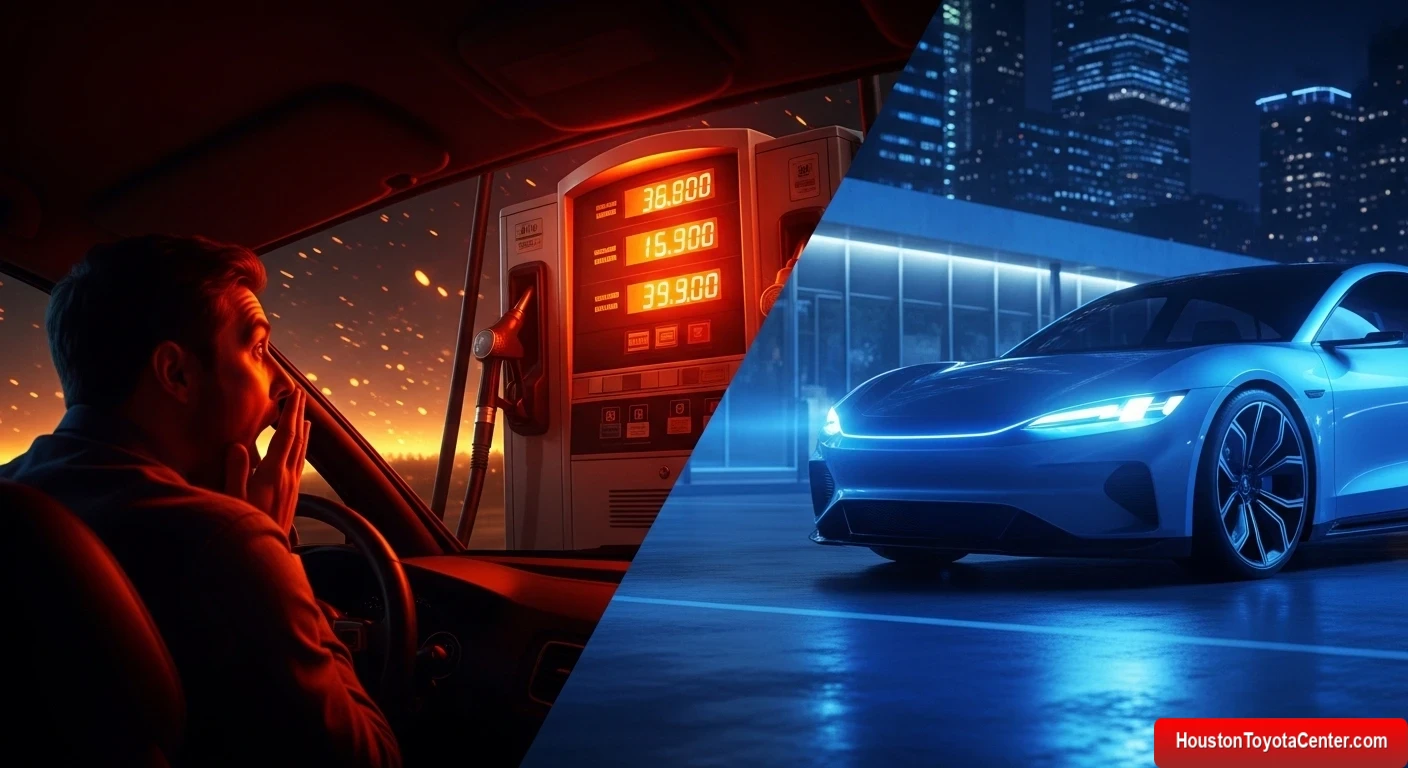
Few everyday economic signals are as visible—or as emotionally charged—as the numbers glowing on fuel station signs. Gas prices rise and fall in response to global supply chains, geopolitical tensions, refinery capacity, seasonal demand, environmental regulation, speculation, and currency fluctuations. Yet for individual consumers, the implications are personal and immediate. The cost to fill up a tank influences daily commuting expenses, long-distance travel, household budgets, and, crucially, decisions about what kind of vehicle to buy.
The impact of gas prices on vehicle choice is both direct and subtle. At times of sustained high fuel costs, buyers gravitate toward smaller, more fuel-efficient vehicles, hybrids, and electric options. When prices drop, demand often shifts back toward larger vehicles such as SUVs and pickup trucks. However, the relationship is not purely linear. Psychological factors, expectations about the future, government incentives, technology advances, cultural identity, and infrastructure availability all shape how consumers interpret and respond to fuel price signals.
This article explores the multifaceted ways in which gas prices affect vehicle choice. It examines economic theory, historical patterns, consumer psychology, regional differences, environmental considerations, and the growing role of electric vehicles. Through a comprehensive analysis, we will see how a seemingly simple commodity price can reshape entire automotive markets.
1. The Economic Foundations: Fuel as a Long-Term Cost Signal
When consumers purchase a vehicle, they are not only buying a product—they are committing to a stream of future operating costs. Fuel is one of the most visible and recurring of these costs. From an economic perspective, vehicle choice involves balancing:
FREE: Quickly identify and understand problems with your vehicle 🚘
CLICK HERE- Upfront purchase price
- Fuel efficiency (miles per gallon or kWh per mile)
- Expected annual mileage
- Fuel prices (current and anticipated)
- Maintenance and insurance costs
- Resale value
Gas prices directly influence the total cost of ownership (TCO). When fuel prices increase significantly and are expected to remain high, the relative attractiveness of fuel-efficient vehicles rises.
For example:
- A compact car that achieves 35–40 miles per gallon becomes far more appealing at $5 per gallon than at $2 per gallon.
- A large SUV averaging 15–18 miles per gallon becomes more expensive to operate in comparison.
- Hybrids and electric vehicles begin to offer stronger cost savings over time.
The Elasticity of Demand
Economists measure how demand responds to price changes through elasticity. In the short term, gasoline demand tends to be relatively inelastic—people still need to commute and transport goods. However, in the long term, demand becomes more elastic because consumers can change behavior, relocate, carpool, or purchase different vehicles.
Vehicle choice is part of this long-term adjustment mechanism. If consumers believe high gas prices are temporary, they may delay purchases or tolerate higher fuel costs. But if they expect sustained high prices, they are more likely to switch vehicle types.
2. Historical Patterns in the United States
The relationship between fuel prices and vehicle choice has been especially visible in the United States, home to large vehicles and historically lower fuel taxes than many other countries.
1970s Oil Crises
The oil shocks of the 1970s, triggered by OPEC embargoes and geopolitical disruptions, dramatically raised gasoline prices. American consumers began shifting from large, fuel-hungry cars to smaller, more efficient imports. Japanese automakers gained significant market share by offering reliable, economical vehicles.
The oil crisis permanently altered the competitive landscape. Fuel efficiency became a design priority, and governments introduced Corporate Average Fuel Economy (CAFE) standards to regulate vehicle efficiency.
Early 2000s and the 2008 Spike
In the early 2000s, relatively low fuel prices encouraged a boom in SUVs and pickup trucks. Larger vehicles became cultural and economic symbols of prosperity and lifestyle.
However, by 2008, oil prices soared, and gasoline in many areas exceeded $4 per gallon. Consumers quickly shifted toward compact cars and hybrids. Sales of vehicles such as the Toyota Prius surged.
When fuel prices later fell, SUV and truck sales rebounded, demonstrating that consumer response is highly sensitive to perceived fuel cost trends.
3. The Role of Expectations and Psychology
Consumer response to gas prices is not based solely on current prices but on expectations about the future.
Price Memory and Salience
Gas prices are highly visible. Drivers see them displayed prominently on roadside signs. This visibility enhances psychological salience—people are reminded frequently of fuel costs.
A rapid price increase can feel more dramatic than a gradual one, even if the absolute price difference is similar. Consumers may react strongly to spikes because they interpret them as signals of instability.
Loss Aversion
Behavioral economics suggests that people experience losses more intensely than gains. A sudden increase from $3 to $4 per gallon feels more painful than the satisfaction of a drop from $4 to $3.
This asymmetry influences vehicle purchasing decisions. When consumers feel squeezed by high fuel prices, they may seek security in fuel-efficient vehicles, even if objective savings are modest.
Perceived Permanence
If consumers believe high fuel prices are temporary, they may delay switching vehicles. If they believe prices will remain elevated for years, they are more likely to make structural changes, such as:
- Buying hybrids
- Purchasing electric vehicles
- Downsizing from SUVs to sedans
4. Comparative Cost Illustration
The table below demonstrates how fuel price changes affect annual fuel costs across different vehicle types, assuming 12,000 miles driven per year.
| Vehicle Type | MPG (Gasoline) | Fuel Price $2/gal | Fuel Price $4/gal | Fuel Price $6/gal |
|---|---|---|---|---|
| Large SUV | 16 | $1,500 | $3,000 | $4,500 |
| Mid-size Sedan | 28 | $857 | $1,714 | $2,571 |
| Compact Car | 36 | $667 | $1,333 | $2,000 |
| Hybrid | 50 | $480 | $960 | $1,440 |
As fuel prices double or triple, the cost gap between inefficient and efficient vehicles widens dramatically. Over several years, this difference can amount to thousands of dollars.
Such cost differentials strongly influence rational consumers—particularly households with tight budgets.
5. The Rise of Hybrid and Electric Vehicles
Fuel price volatility has played a crucial role in the development and adoption of alternative fuel vehicles.
Hybrids
Hybrid vehicles offer improved fuel efficiency by combining gasoline engines with electric motors. When gas prices rise, the economic case for hybrids strengthens.
Manufacturers such as Toyota benefited significantly from periods of high fuel prices with models like the Toyota Prius becoming symbols of fuel-conscious driving.
Electric Vehicles (EVs)
Electric vehicles eliminate gasoline consumption entirely. Companies like Tesla capitalized on rising environmental awareness and fuel price concerns.
When gasoline prices surge, EV sales often increase as consumers seek long-term insulation from fuel volatility. However, EV adoption also depends on:
- Charging infrastructure
- Government incentives
- Electricity prices
- Battery technology
- Range anxiety
Gas prices act as one of several reinforcing factors rather than the sole driver.
6. Regional Differences
The impact of gas prices varies significantly by region.
Urban vs. Rural
Urban residents may:
- Drive fewer miles
- Have access to public transportation
- Be more receptive to compact cars and EVs
Rural residents often:
- Drive longer distances
- Require larger vehicles for work or terrain
- Have fewer charging stations
Thus, high gas prices may push urban consumers more quickly toward efficiency-oriented vehicles.
International Variation
In Europe, historically high fuel taxes have long encouraged smaller vehicles and diesel engines. In contrast, lower fuel taxes in the United States historically supported larger vehicles.
Fuel price baselines influence long-term fleet composition. Countries with permanently high fuel prices tend to have more fuel-efficient vehicle markets.
7. Automaker Strategy and Product Planning
Automakers closely monitor fuel prices because they shape product demand. However, vehicle development cycles are long—often five years or more. This creates strategic challenges.
If automakers overinvest in large SUVs during a period of low gas prices, they risk being caught off guard by a price spike. Conversely, investing heavily in compact vehicles during a temporary spike may backfire if prices fall.
Successful automakers maintain diversified product portfolios to hedge against fuel price uncertainty.
8. The Feedback Loop Between Policy and Prices
Government policy interacts with fuel prices in complex ways:
- Fuel taxes directly raise gasoline prices.
- Fuel efficiency standards push manufacturers toward efficient designs.
- Subsidies encourage hybrid and electric adoption.
- Carbon pricing influences long-term expectations.
When fuel prices rise due to market forces, policymakers may accelerate transitions to alternative energy. When prices fall, political pressure for fuel economy standards may weaken.
Thus, gas prices not only affect consumers but also shape regulatory landscapes.
9. Environmental Considerations
High gas prices often align with environmental benefits, though not always intentionally.
When fuel costs rise:
- Consumers drive less.
- Demand for efficient vehicles increases.
- Carbon emissions may decline.
However, environmental motivations and economic motivations can diverge. Some consumers adopt electric vehicles primarily for cost savings; others for climate concerns. Gas prices amplify the economic argument but do not fully define environmental behavior.
10. Long-Term Structural Shifts
Sustained high fuel prices can reshape entire transportation systems.
Urban Planning
Persistent high fuel costs encourage:
- Denser cities
- Public transit investment
- Walkable communities
- Mixed-use development
Technology Innovation
Fuel price volatility incentivizes:
- Battery research
- Lightweight materials
- Aerodynamic improvements
- Alternative fuels (hydrogen, biofuels)
Over decades, these structural changes alter vehicle design permanently.
11. When Gas Prices Fall: The Rebound Effect
Interestingly, falling gas prices often reverse efficiency trends.
When fuel becomes cheaper:
- Consumers may purchase larger vehicles.
- Driving distances may increase.
- Automakers may prioritize performance and size over efficiency.
This rebound effect complicates environmental goals. Policymakers sometimes attempt to smooth volatility or maintain incentives for efficiency regardless of fuel price fluctuations.
12. The Transition to Electrification and Energy Independence
As more countries pursue energy independence and decarbonization, the link between gasoline prices and vehicle choice may weaken over time.
Electric vehicles rely on electricity, which has its own price dynamics. If renewable energy expands and battery costs decline, EV adoption may become less sensitive to oil price swings.
However, in the transitional period, gasoline prices remain a powerful catalyst for change.
13. Socioeconomic Inequality and Vehicle Choice
Fuel price spikes disproportionately affect lower-income households. These households may:
- Own older, less fuel-efficient vehicles
- Have limited access to financing for new cars
- Live farther from workplaces due to housing affordability
As a result, high gas prices can strain budgets without immediately enabling vehicle switching. Policy measures such as rebates, tax credits, or scrappage programs can help facilitate transitions to more efficient vehicles.
14. Fleet Purchases and Commercial Impact
Businesses also respond to fuel prices.
Delivery companies, ride-share drivers, logistics firms, and taxi services often calculate fuel costs precisely. Sustained high prices can accelerate fleet electrification or hybrid adoption because fuel savings scale with high mileage.
Corporate sustainability commitments further reinforce these decisions.
15. The Future Outlook
Looking ahead, several trends will influence how gas prices affect vehicle choice:
- Continued electrification
- Improvements in battery density
- Expansion of charging infrastructure
- Autonomous driving integration
- Carbon regulation
- Energy geopolitics
If EVs reach cost parity independent of fuel prices, gasoline volatility may become less decisive. Yet until that tipping point is reached, gas prices will continue to act as a powerful economic signal shaping vehicle markets.
Conclusion
The impact of gas prices on vehicle choice extends far beyond the pump. It touches economics, psychology, technology, environmental policy, and cultural identity. Short-term price spikes can trigger immediate shifts in purchasing patterns, while sustained high prices can reshape entire automotive industries.
Consumers respond not only to current fuel costs but to expectations, risk perceptions, and broader social trends. Automakers hedge against uncertainty with diversified portfolios. Governments intervene with taxes, standards, and incentives. Technological innovation accelerates when volatility creates opportunity.
Ultimately, gas prices function as both a cost and a signal. They communicate information about scarcity, geopolitics, and energy transitions. And through millions of individual purchase decisions, they help determine whether societies move toward efficiency, electrification, and sustainability—or revert to larger, more fuel-intensive vehicles when prices fall.
As the global transportation sector undergoes transformation, understanding the relationship between gas prices and vehicle choice remains essential. It is not merely about fuel—it is about the future direction of mobility itself.
Leave a Reply