
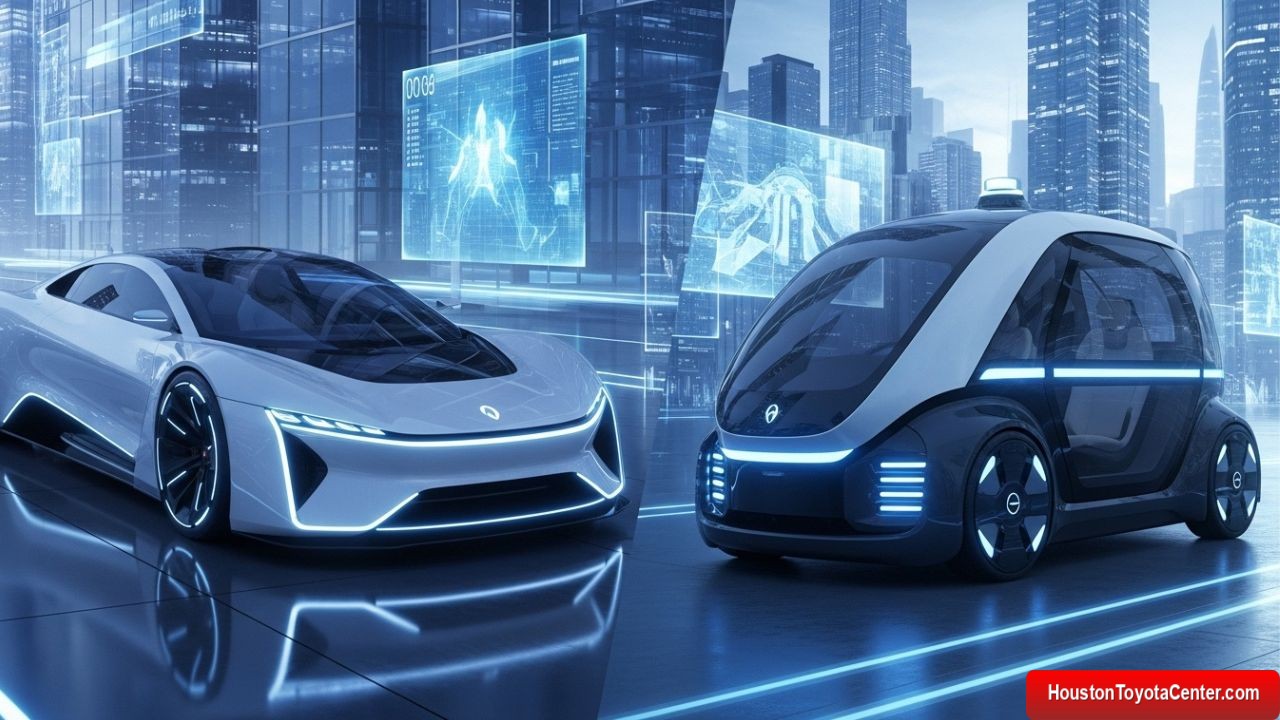
The automobile is one of humanity’s most transformative inventions. It reshaped the world’s cities, altered the global economy, redefined personal freedom, and became a cultural symbol of identity and innovation. Yet the story of the automobile is far from linear. It is a centuries-long tale of experimentation, breakthroughs, failures, and reinventions driven by engineers, hobbyists, entrepreneurs, and dreamers.
This article explores the history of the automobile in depth—over three millennia of technological evolution, from ancient self-propelled concepts to hydrogen fuel-cell cars and upcoming autonomous vehicles. We will walk through the earliest steam vehicles, the rise of gasoline engines, the electric-vs-gas debate of the early 20th century, mass production, safety revolutions, computerized cars, and the future mobility landscape. Along the way, we will highlight the key milestones and innovations that reshaped transportation and society as a whole.
Early Concepts Preceding the Automobile
Long before the first real automobile existed, inventors dreamed of vehicles that could move without the aid of animals. While these early machines were primitive and often non-functional, they laid the conceptual foundation for future breakthroughs.
Ancient and Medieval Concepts
- 3000+ years ago: Ancient civilizations used wheeled carts, but propulsion required animals or human power.
- Medieval automata: Clockmakers in Europe and Asia created small self-propelled mechanical toys—early examples of gears and stored energy systems.
- Leonardo da Vinci (15th century): Designed a spring-powered cart, sometimes cited as a conceptual precursor to self-propelled vehicles.
None of these contraptions could carry passengers over long distances, but they proved that self-propulsion was imaginable even centuries before industrialization.
FREE: Quickly identify and understand problems with your vehicle 🚘
CLICK HERE17th–18th Century: The Birth of Self-Propelled Vehicles
Steam Power Sparks Imagination
The industrial revolution brought one crucial ingredient that the ancient world lacked: usable mechanical power.
In 1769, French engineer Nicolas-Joseph Cugnot built the first full-scale self-propelled vehicle. His invention, the steam-powered fardier, could carry several tons of cargo at walking speed. It had limited practicality due to its size, weight, and low speed, but it was the first real-world attempt to replace animal power.
19th-Century Steam Cars
Throughout the early 1800s, British inventors such as Richard Trevithick and Goldsworthy Gurney improved steam vehicles. These machines were technically impressive but faced challenges:
- Heavy boilers
- Slow startup times
- Frequent mechanical failures
- Government road restrictions
Nevertheless, steam remained a dominant automotive technology until the early 1900s.
Late 19th Century: The Internal Combustion Engine Changes Everything
Breakthrough in Engine Technology
The internal combustion engine (ICE) transformed transportation. Instead of using steam pressure, these engines ignited fuels like gasoline inside a chamber to generate power more efficiently and compactly.
Key innovators include:
| Innovator | Contribution | Approx. Year |
|---|---|---|
| Étienne Lenoir | First practical internal combustion engine | 1860 |
| Nikolaus Otto | Four-stroke “Otto cycle” engine | 1876 |
| Gottlieb Daimler & Wilhelm Maybach | High-speed gasoline engine | 1885 |
| Carl Benz | First practical automobile | 1886 |
Benz’s three-wheeled Motorwagen, patented in 1886, is often considered the first true automobile recognizable today.
The First Automobile Drive
In 1888, Bertha Benz made the world’s first long-distance automobile trip, secretly taking her husband’s Motorwagen from Mannheim to Pforzheim. She introduced:
- Brake lining improvements
- Fuel stops (she bought ligroin from a pharmacy)
- Public exposure to the automobile
Her journey helped prove that cars were viable for everyday travel.
1890s–1910s: The First Automotive Boom
A Competitive Marketplace
By the late 19th century, three major propulsion technologies were competing:
- Steam cars
- Electric cars
- Gasoline cars
Surprisingly, around 1900, electric cars were more popular in many cities. They were clean, quiet, and easy to operate. Early electric vehicle (EV) companies like Detroit Electric thrived for a time.
Gasoline vehicles eventually won due to:
- Longer driving range
- Faster refueling
- Improvements in engines and carburetors
- Falling gasoline prices
- The invention of the electric starter (1912)
Henry Ford and Mass Production
The single biggest transformative moment was Henry Ford’s assembly line, introduced in 1913 for the Model T.
The assembly line:
- Reduced vehicle cost dramatically
- Made cars affordable to middle-class families
- Increased production speed
- Standardized automotive manufacturing globally
By 1927, Ford produced over 15 million Model Ts, cementing automobiles as a mass-market commodity.
1920s–1930s: Style, Power, and Global Expansion
With cars becoming affordable, the 1920s ushered in an era of style and luxury.
Key Innovations of the Period
- Balloon tires for smoother rides
- Improved braking systems
- All-steel body construction
- Better suspensions
- Streamlined aerodynamic designs (Chrysler Airflow)
Cars became cultural symbols:
- Status indicators
- Freedom for young people
- Tourism growth
- New businesses: motels, gas stations, repair shops
The automobile was not just technology—it was shaping society.
1940s: World War II Accelerates Innovation
WWII forced rapid advancements:
- Efficient engines
- Better fuel systems
- Stronger materials
- Four-wheel drive (e.g., the Jeep)
- Diesel technology
- Turbocharging foundations
After the war, these innovations flowed into civilian vehicles.
1950s–1960s: The Golden Age of Automotive Culture
This era saw immense technical progress and cultural transformation.
Safety Innovations Begin
Automobiles in the mid-20th century were powerful but dangerous. In response to rising deaths, manufacturers and governments pursued safety improvements:
- Seat belts (standardized in the 1950s–60s)
- Crumple zones (Mercedes)
- Padded dashboards
- Disc brakes
- Collapsible steering columns
The Rise of the Muscle Car
The 1960s introduced:
- Ford Mustang
- Chevrolet Camaro
- Pontiac GTO
Cars became more about identity, freedom, and performance.
1970s: Oil Crisis and Environmental Awareness
The 1973 oil crisis reshaped global automotive priorities.
Key shifts:
- Demand for fuel-efficient cars
- Rise of Japanese automakers (Toyota, Honda, Nissan)
- Introduction of emissions regulations
- Mandatory catalytic converters
- Development of compact and subcompact cars
Environmental and efficiency concerns would continue to influence decades of innovation.
1980s–1990s: Electronics, Safety, and Globalization
The Digital Revolution in Automobiles
Microprocessors entered the automobile, making modern engine management possible.
Major breakthroughs:
- Electronic fuel injection (EFI)
- Anti-lock braking systems (ABS)
- Traction control
- Airbags
- Onboard diagnostics (OBD)
These innovations improved performance, reliability, and safety.
Rise of Japanese Reliability
Brands like Toyota and Honda set new benchmarks for durability, prompting global competition and quality improvements.
SUV Boom
By the late 1990s, SUVs became extremely popular, especially in North America.
2000s: Hybrid Era and Advanced Safety
Toyota Prius and Hybrid Popularity
Released in the late 1990s and popularized in the 2000s, the Toyota Prius spearheaded hybrid technology worldwide.
Benefits:
- Reduced fuel consumption
- Lower emissions
- Quiet operation
Hybrids became a bridge between gasoline and fully electric vehicles.
Advanced Safety Systems
New features included:
- Electronic stability control
- Lane departure warnings
- Adaptive cruise control
- Backup cameras
- Rain-sensing wipers
Cars were becoming smarter, safer, and more connected.
2010s: The Electric Renaissance and Autonomous Driving
Tesla Reshapes the EV Landscape
While EVs existed earlier, Tesla’s Model S (2012) revolutionized public perception. It offered:
- Long-range electric travel
- Fast acceleration
- Over-the-air software updates
- Supercharger networks
This accelerated global EV development.
Battery Technology Breakthroughs
Key advancements:
- Lithium-ion improvements
- Better energy density
- Faster charging
- Price reductions
- Regenerative braking optimization
Autonomous Vehicles Emerge
Companies began competing in self-driving technology:
- Tesla Autopilot
- Waymo
- GM Cruise
- Baidu Apollo
AI, sensors, and mapping technologies made semi-autonomous driving feasible.
2020s and Beyond: The Future of the Automobile
Electric Vehicles Become Mainstream
Governments and automakers worldwide are transitioning toward electric mobility. Many countries have announced future bans on new gasoline car sales, pushing innovation in:
- Fast charging
- Solid-state batteries
- Vehicle-to-grid energy systems
- Renewable energy integration
Autonomous Driving Advances
Fully autonomous vehicles remain in development, but Level 2 and Level 3 driver-assist systems are rapidly improving.
Key technologies:
- Radar + LiDAR sensor fusion
- AI-powered decision systems
- Real-time mapping
- Enhanced safety algorithms
Connected Cars and the Software-Defined Vehicle
Modern vehicles now feature:
- Over-the-air updates
- Smartphone integration
- Cloud-based diagnostics
- Subscription-based software features
The car is evolving into a mobile computing platform.
Hydrogen and Alternative Fuels
Some automakers explore hydrogen fuel cells as an alternative for long-range travel, particularly for heavy transport.
Cultural, Economic, and Social Impact of Automobiles
Urban and Social Transformation
Cars changed:
- City layouts (suburbs, highways, parking lots)
- Tourism and travel habits
- Employment and global trade
- Shipping and logistics (trucks replacing trains)
- Personal mobility and independence
Environmental and Sustainability Challenges
Automobiles also brought:
- Air pollution
- Carbon emissions
- Noise pollution
- Traffic congestion
- Dependence on fossil fuels
Climate concerns now drive the innovation cycle.
Why the Automobile Became the Most Influential Invention of the Modern Age
Few inventions have impacted humanity as deeply as the car. It influences:
- Where people live
- What jobs exist
- How goods move
- How cities grow
- Cultural identity and personal freedom
From steam-powered carts to smart electric cars, the automobile reflects the ingenuity and ambition of every era.
And the story is still being written.
Leave a Reply