
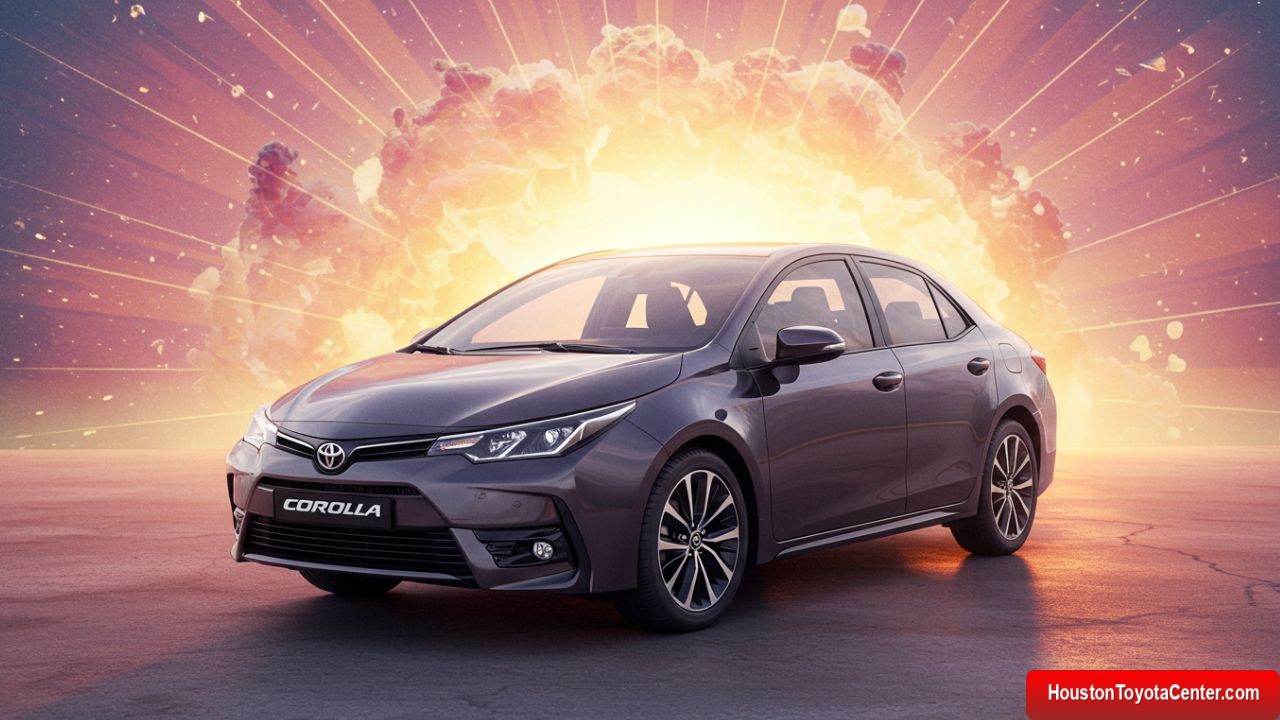
Few automobiles in modern history have achieved the level of global recognition, longevity, and influence enjoyed by the Toyota Corolla. Since its introduction in 1966, the Corolla has evolved from a compact family sedan designed for the Japanese market into one of the best-selling vehicles of all time. Across more than five decades and numerous generations, it has consistently adapted to changing consumer expectations, technological innovations, economic conditions, environmental regulations, and automotive design trends.
The story of the Toyota Corolla is not merely the story of a single vehicle model. It is also a reflection of the transformation of the global automotive industry. The Corolla has served as a benchmark for reliability, affordability, fuel efficiency, and practicality while continually reinventing itself to remain relevant in an increasingly competitive market.
Today, the Corolla exists in multiple forms, including sedans, hatchbacks, hybrid models, and performance-oriented variants. Its journey illustrates how a vehicle can maintain its core identity while embracing innovation and modernization.
Origins: Toyota’s Vision for a New Compact Car
During the 1960s, Japan experienced rapid economic growth. As household incomes increased, more families aspired to own personal automobiles. Toyota recognized an opportunity to create a vehicle that would be affordable, reliable, comfortable, and practical for the average consumer.
FREE: Quickly identify and understand problems with your vehicle 🚘
CLICK HEREAt the time, many compact cars sacrificed comfort and performance in pursuit of low prices. Toyota sought to differentiate itself by developing a vehicle that offered a higher level of refinement without becoming prohibitively expensive.
The result was the first-generation Corolla, introduced in 1966.
Toyota’s engineers focused on several key objectives:
- Affordable ownership
- Efficient fuel consumption
- Dependable mechanical systems
- Comfortable ride quality
- Modern styling
- Ease of maintenance
These priorities would become foundational principles for the Corolla brand and remain influential throughout its history.
First Generation (1966–1970): The Beginning
The original Corolla debuted with a relatively simple design but featured advanced thinking for its time. It was powered by a small four-cylinder engine and offered both manual and automatic transmission options.
Compared to many competitors, the Corolla provided:
- Better interior comfort
- Improved ride quality
- Competitive fuel economy
- User-friendly operation
Toyota quickly expanded the model range to include multiple body styles, allowing buyers to select configurations that suited their needs.
The first-generation Corolla also marked the beginning of Toyota’s international expansion strategy. Exports to markets outside Japan increased steadily, introducing consumers around the world to Toyota’s growing reputation for quality and dependability.
The success of the original Corolla demonstrated that there was significant demand for practical compact vehicles that balanced affordability with reliability.
Second Generation (1970–1974): Growth and Refinement
The second-generation Corolla arrived during a period when global demand for compact vehicles was increasing rapidly.
Toyota improved:
- Engine performance
- Cabin space
- Ride comfort
- Exterior styling
The vehicle became slightly larger while maintaining its economical character.
This generation benefited enormously from changing market conditions. As fuel prices rose and consumers sought efficient transportation, compact Japanese cars gained popularity in North America, Europe, and other international markets.
Toyota’s manufacturing quality and consistency helped distinguish the Corolla from many competitors. Buyers increasingly viewed the vehicle as a sensible long-term investment rather than merely a budget option.
Third Generation (1974–1979): Adapting to the Oil Crisis Era
The global oil crisis of the 1970s transformed automotive priorities. Fuel efficiency suddenly became one of the most important purchasing factors.
The Corolla was exceptionally well-positioned to capitalize on this shift.
Its advantages included:
- Lightweight construction
- Efficient engines
- Affordable maintenance
- Reliable operation
Toyota introduced aerodynamic improvements and continued refining engine technology to maximize efficiency.
During this period, the Corolla became a symbol of practical transportation. In many markets, it represented an alternative to larger vehicles that consumed significantly more fuel.
The reputation for reliability that still defines the Corolla today became firmly established during these years.
Fourth Generation (1979–1983): Entering a New Era
By the late 1970s, consumer expectations had evolved. Buyers wanted vehicles that offered greater comfort and more sophisticated engineering.
Toyota responded with a redesigned Corolla featuring:
- More modern styling
- Improved suspension systems
- Enhanced safety features
- Better interior materials
Technological improvements helped create a smoother driving experience while maintaining excellent fuel economy.
The fourth-generation Corolla also demonstrated Toyota’s commitment to continuous improvement. Rather than relying solely on past success, the company consistently refined every aspect of the vehicle.
This philosophy became a cornerstone of Toyota’s manufacturing culture.
Fifth Generation (1983–1987): The Front-Wheel Drive Revolution
One of the most significant milestones in Corolla history occurred during the fifth generation.
Toyota transitioned many Corolla models from rear-wheel drive to front-wheel drive.
This change offered several advantages:
| Benefit | Impact |
|---|---|
| Better interior packaging | More cabin space |
| Improved fuel efficiency | Lower operating costs |
| Enhanced traction | Better performance in poor weather |
| Reduced weight | Increased efficiency |
Front-wheel drive quickly became the dominant layout for compact passenger cars worldwide.
Although some enthusiasts preferred rear-wheel-drive versions, the transition allowed the Corolla to remain competitive in an evolving marketplace.
Toyota also improved manufacturing processes during this era, further strengthening the vehicle’s reputation for durability.
Sixth Generation (1987–1991): Global Expansion
By the late 1980s, the Corolla had become a truly global vehicle.
Toyota sold the model across numerous continents, adapting specifications to local regulations and customer preferences.
Key developments included:
- Improved crash protection
- Enhanced engine technology
- Better fuel economy
- Increased comfort features
The Corolla’s success was supported by Toyota’s growing manufacturing footprint. Production facilities around the world enabled the company to serve local markets more efficiently.
The vehicle’s consistent quality helped establish Toyota as one of the world’s leading automakers.
Seventh Generation (1991–1995): Maturity and Sophistication
The seventh-generation Corolla represented a move toward greater refinement.
The vehicle became:
- Quieter
- Safer
- More comfortable
- More technologically advanced
Interior design improved significantly, reflecting rising consumer expectations.
Toyota also invested heavily in engineering improvements aimed at reducing vibration and noise.
This generation illustrated how the Corolla had evolved from a basic economy car into a well-rounded compact vehicle capable of satisfying a broader range of customers.
Its appeal extended beyond first-time buyers and increasingly attracted families seeking dependable transportation.
Eighth Generation (1995–2000): Reliability Becomes Legendary
The eighth-generation Corolla arrived during a period when Toyota’s reputation for reliability was reaching legendary status.
Owners frequently reported:
- Minimal mechanical issues
- Long service life
- Low maintenance costs
- Strong resale values
These qualities helped create extraordinary customer loyalty.
Many examples from this era remain on roads today, demonstrating the durability of Toyota’s engineering.
The Corolla also benefited from increasing globalization. Toyota incorporated lessons learned from markets around the world, allowing the vehicle to satisfy diverse consumer expectations.
This generation solidified the Corolla’s identity as one of the most dependable vehicles available.
Ninth Generation (2000–2006): Entering the New Millennium
The beginning of the 21st century brought new challenges and opportunities.
Consumers demanded:
- Enhanced safety
- Improved emissions performance
- Greater comfort
- More technology
Toyota responded with a redesigned Corolla featuring:
- Updated powertrains
- Advanced safety systems
- Modern styling
- Improved ergonomics
The ninth generation emphasized practicality while embracing contemporary automotive trends.
Digital technology began playing a larger role in vehicle design, and Toyota gradually incorporated more electronic systems into the Corolla platform.
Despite these advancements, the vehicle remained accessible and affordable.
Tenth Generation (2006–2013): Balancing Tradition and Innovation
The tenth-generation Corolla faced a highly competitive compact-car segment.
Competitors from around the world were introducing increasingly sophisticated vehicles.
Toyota’s strategy focused on preserving the Corolla’s traditional strengths while introducing modern features.
Key priorities included:
- Reliability
- Fuel efficiency
- Comfort
- Safety
- Value
The vehicle offered improved ride quality and a more refined interior experience.
Toyota also enhanced manufacturing precision, helping maintain consistent quality standards across global production facilities.
This generation demonstrated the challenge of evolving a beloved product without compromising the characteristics that made it successful.
Eleventh Generation (2013–2018): A More Emotional Design
Historically, Corolla buyers prioritized practicality over excitement.
However, automotive tastes were changing.
Consumers increasingly desired vehicles that combined functionality with expressive styling.
Toyota responded by introducing a more dramatic design language.
Features included:
- Sharper body lines
- More aggressive front-end styling
- Improved interior aesthetics
- Enhanced technology integration
This generation represented an effort to attract younger buyers while retaining loyal customers.
The Corolla became more visually distinctive without abandoning its core values.
Advanced infotainment systems also became increasingly important, reflecting the growing role of connectivity in modern vehicles.
Twelfth Generation (2018–Present): The TNGA Transformation
The current Corolla generation represents one of the most significant redesigns in the model’s history.
Built on Toyota’s New Global Architecture (TNGA), the vehicle benefits from a completely modernized platform.
Advantages include:
| Feature | Benefit |
| Lower center of gravity | Improved handling |
| Increased structural rigidity | Better safety and ride quality |
| Advanced suspension design | Enhanced comfort |
| Improved manufacturing efficiency | Greater consistency |
The TNGA platform allows Toyota to share technologies across multiple vehicle models while maintaining distinct identities.
For the Corolla, this approach has resulted in a more engaging driving experience and a higher level of refinement.
The Rise of Hybrid Technology
One of the most important developments in recent Corolla history has been the integration of hybrid powertrains.
Toyota has long been a pioneer in hybrid technology.
By introducing hybrid variants of the Corolla, the company expanded the vehicle’s appeal among environmentally conscious consumers.
Hybrid Corollas offer:
- Reduced fuel consumption
- Lower emissions
- Quiet operation
- Improved efficiency in urban environments
The success of these models reflects broader shifts in consumer preferences and government regulations.
As sustainability becomes increasingly important, hybrid technology has become a central component of the Corolla’s future.
Corolla Hatchback: Expanding the Formula
Although the sedan remains the most recognizable Corolla variant, Toyota has expanded the lineup to include hatchback models.
The Corolla Hatchback appeals to buyers seeking:
- Greater versatility
- Sportier styling
- Improved cargo flexibility
Built on the TNGA platform, these models offer dynamic handling characteristics while preserving the reliability and practicality associated with the Corolla name.
The hatchback demonstrates Toyota’s willingness to diversify the product line without compromising brand identity.
The Performance Era: GR Corolla
For decades, the Corolla was known primarily for practicality.
The introduction of the GR Corolla challenged that perception.
Developed by Toyota’s Gazoo Racing division, the GR Corolla features:
- High-performance turbocharged engine
- Advanced all-wheel-drive system
- Motorsport-inspired engineering
- Aggressive aerodynamic design
The vehicle showcases a different side of the Corolla brand.
It demonstrates that performance and reliability can coexist within the same product family.
The GR Corolla has attracted automotive enthusiasts who may never have previously considered purchasing a Corolla.
Safety Evolution Through the Generations
Safety has become an increasingly important focus throughout the Corolla’s history.
Early generations featured relatively basic safety equipment compared to modern standards.
Today’s Corolla incorporates sophisticated technologies such as:
- Automatic emergency braking
- Lane departure warning
- Adaptive cruise control
- Pedestrian detection
- Traffic sign recognition
The evolution of safety systems reflects broader advancements in automotive engineering.
Toyota’s commitment to safety has helped maintain consumer trust and strengthen the Corolla’s reputation.
Design Evolution
Examining Corolla design across generations reveals dramatic changes.
Early Years
Characteristics included:
- Simple body shapes
- Minimal ornamentation
- Functional layouts
Middle Generations
Features evolved toward:
- Improved aerodynamics
- Greater refinement
- Increased comfort
Modern Era
Current models emphasize:
- Dynamic styling
- Advanced lighting technology
- Premium materials
- Strong visual identity
Despite these transformations, the Corolla has consistently prioritized practicality and usability.
Engineering Philosophy
A key reason for the Corolla’s enduring success is Toyota’s engineering philosophy.
Several principles have remained remarkably consistent:
Continuous Improvement
Toyota embraces the concept of continuous improvement, often associated with the Japanese term “Kaizen.”
Rather than pursuing radical changes for their own sake, engineers focus on incremental enhancements.
Reliability First
Every generation prioritizes durability and long-term dependability.
Customer-Centered Development
Toyota studies customer feedback extensively and incorporates lessons into future models.
Efficient Manufacturing
Advanced production systems help ensure consistent quality while controlling costs.
These principles have contributed significantly to the Corolla’s sustained popularity.
Global Impact
The Corolla’s influence extends far beyond automotive sales figures.
The vehicle has played a role in:
- Expanding personal mobility
- Supporting economic development
- Increasing access to reliable transportation
- Shaping consumer expectations regarding reliability
Millions of families have relied on Corollas for commuting, education, business activities, and travel.
Its widespread adoption has made it one of the most recognizable vehicles in the world.
Corolla by the Numbers
The Corolla’s commercial success is extraordinary.
| Achievement | Significance |
| More than 50 years of production | Exceptional longevity |
| Multiple generations | Continuous adaptation |
| Global manufacturing network | Worldwide availability |
| Tens of millions sold | Massive market impact |
| Presence in numerous countries | International appeal |
Few automotive nameplates can match this level of sustained success.
Challenges in a Changing Market
The automotive industry is undergoing rapid transformation.
Major trends include:
- Electrification
- Autonomous driving technologies
- Digital connectivity
- Sustainability initiatives
These developments create both opportunities and challenges for the Corolla.
Toyota must balance innovation with the qualities that customers have traditionally valued.
Maintaining affordability while incorporating advanced technologies will remain a critical objective.
The Future of the Corolla
Looking ahead, the Corolla is likely to continue evolving in response to technological and societal changes.
Potential areas of development include:
- Expanded hybrid offerings
- Greater electrification
- Enhanced connectivity
- Advanced driver-assistance systems
- Improved sustainability
Toyota’s extensive experience with hybrid technology positions the Corolla well for the transition toward cleaner transportation solutions.
Future generations may look dramatically different from their predecessors, but the underlying mission is likely to remain unchanged: providing dependable, efficient, and accessible transportation.
Why the Corolla Endures
The longevity of the Toyota Corolla is not accidental.
Many vehicles achieve short-term success, but few remain relevant for decades.
The Corolla has endured because it consistently delivers on promises that matter to consumers:
- Reliability
- Efficiency
- Practicality
- Value
- Safety
Toyota has repeatedly demonstrated an ability to adapt the vehicle to changing market conditions without losing sight of these fundamentals.
This balance between continuity and innovation has allowed the Corolla to thrive across generations.
Conclusion
The evolution of the Toyota Corolla is one of the most remarkable stories in automotive history. From its modest beginnings in 1966 to its current status as a globally recognized icon, the Corolla has continuously adapted to changing technologies, consumer preferences, and market demands.
Each generation has introduced improvements in design, engineering, safety, comfort, and efficiency. Yet the vehicle has remained true to the principles that made it successful from the beginning. Reliability, affordability, practicality, and quality have remained at the core of the Corolla’s identity.
As the automotive industry moves toward electrification, connectivity, and new mobility solutions, the Corolla continues to evolve. Its history demonstrates an extraordinary ability to embrace change while preserving the characteristics that millions of drivers trust.
More than just a car, the Toyota Corolla represents a case study in sustainable product development, customer-focused engineering, and long-term brand success. Its journey from a compact Japanese sedan to one of the world’s most influential automobiles illustrates how thoughtful innovation and consistent execution can create a legacy that spans generations.
Leave a Reply