
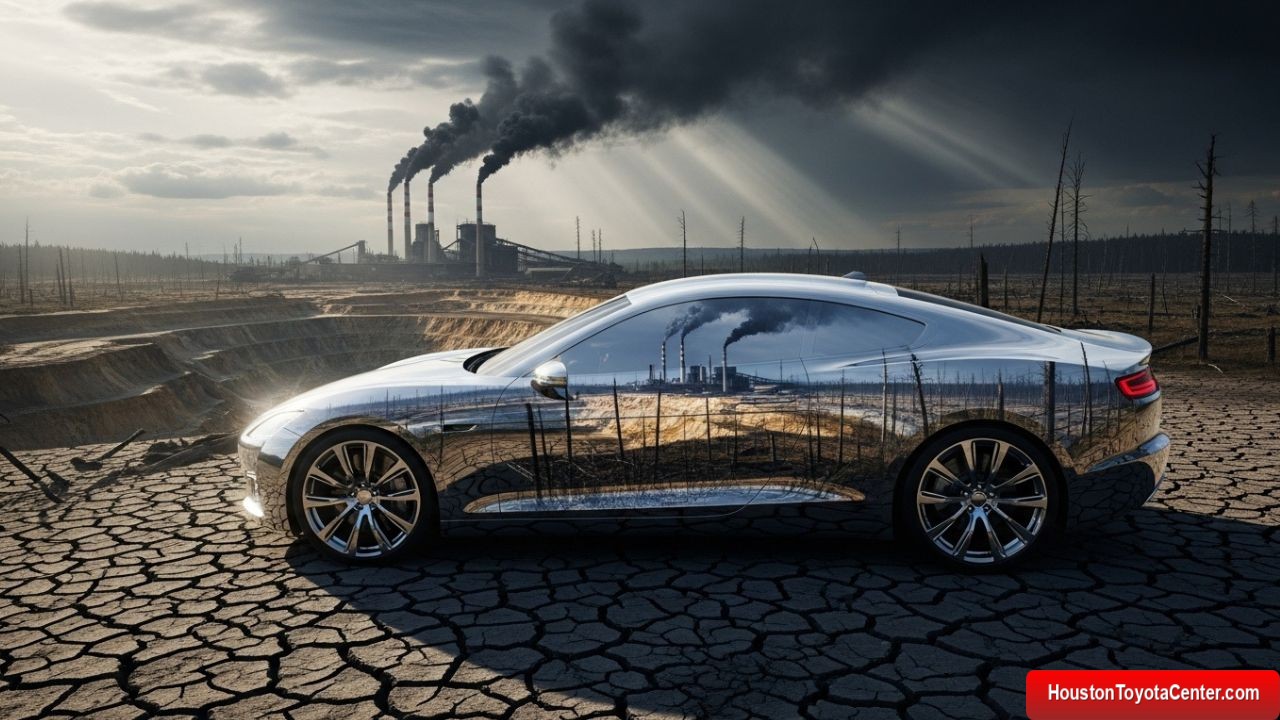
Cars are often marketed as symbols of freedom, progress, and personal achievement. Sleek designs, powerful engines, and cutting-edge technology dominate advertisements, while the environmental consequences of manufacturing these vehicles remain largely invisible to the consumer. When discussions about sustainability and transportation arise, they tend to focus almost exclusively on fuel consumption, tailpipe emissions, and the transition from internal combustion engines to electric vehicles. While these aspects are undeniably important, they represent only a fraction of the total environmental impact associated with cars.
Long before a vehicle ever reaches the road—and long after it is retired—it imposes a significant environmental cost. The production of a single car requires vast amounts of raw materials, energy, water, and chemical inputs. Mining metals, refining materials, manufacturing components, assembling vehicles, and transporting them across global supply chains all generate pollution, greenhouse gas emissions, and ecological degradation. These impacts are often outsourced to distant regions, making them easier to ignore but no less severe.
Understanding the environmental cost of car production is essential for making informed decisions about transportation policy, industrial design, and consumer behavior. This article explores the full lifecycle of car manufacturing, examining how raw material extraction, energy use, water consumption, chemical pollution, labor practices, and waste management contribute to environmental harm. It also evaluates how emerging technologies, regulations, and alternative mobility models may reduce—or in some cases exacerbate—these costs.
Rather than framing the issue as a simple choice between gasoline and electric vehicles, this discussion aims to reveal the deeper structural challenges embedded in the modern automotive industry. Only by confronting the true environmental price of car production can society move toward genuinely sustainable transportation systems.
FREE: Quickly identify and understand problems with your vehicle 🚘
CLICK HERERaw Material Extraction: The Foundation of Environmental Damage
Every car begins its life as a collection of raw materials extracted from the Earth. Steel, aluminum, copper, rubber, plastics, glass, and increasingly rare earth elements form the backbone of modern vehicles. Each of these materials carries its own environmental burden, often concentrated in the extraction phase.
Steel and Aluminum
Steel remains the dominant material in car manufacturing, accounting for a significant portion of a vehicle’s weight. Producing steel requires iron ore mining, coal extraction, and high-temperature smelting processes. These activities release substantial amounts of carbon dioxide and particulate matter, contributing to air pollution and climate change.
Aluminum, prized for its lightweight properties, is increasingly used to improve fuel efficiency. However, aluminum production is extremely energy-intensive. Bauxite mining frequently results in deforestation and soil degradation, while the refining process generates toxic byproducts such as red mud, which can contaminate water and land if not properly managed.
Copper and Electrical Components
Copper is essential for wiring, electronics, and electric motors. Its extraction often involves open-pit mining, which dramatically alters landscapes and generates large volumes of waste rock. Acid mine drainage and heavy metal contamination pose serious risks to nearby ecosystems and communities.
Plastics and Synthetic Materials
Plastics used in cars originate from petroleum. The extraction and refining of oil are associated with habitat destruction, oil spills, methane emissions, and geopolitical instability. Once plastics are incorporated into vehicles, they are difficult to recycle, contributing to long-term waste problems.
Rare Earth Elements
Modern vehicles, particularly electric and hybrid models, rely heavily on rare earth elements such as lithium, cobalt, nickel, and neodymium. These materials are critical for batteries, magnets, and electronic systems. Mining them often involves severe environmental and social consequences, including water depletion, toxic waste, and human rights abuses.
Energy Consumption in Manufacturing
Car manufacturing is one of the most energy-intensive industrial processes in the world. From raw material processing to final assembly, energy demand is enormous and often met by fossil fuels.
Manufacturing Plants and Energy Sources
Automotive factories operate massive stamping presses, welding robots, paint booths, and climate control systems. Many facilities still rely on coal- or gas-fired electricity, particularly in regions where renewable energy adoption is limited. As a result, each vehicle produced carries a substantial carbon footprint before it ever leaves the factory.
Embodied Energy
The concept of embodied energy refers to the total energy consumed throughout a product’s lifecycle up to the point of use. For cars, embodied energy can account for a large portion of their overall environmental impact, sometimes rivaling or exceeding the emissions produced during years of driving.
Electric vehicles, while cleaner during operation, often have higher embodied energy due to battery production. This does not negate their benefits, but it complicates simplistic narratives about “zero-emission” cars.
Water Use and Pollution
Water is an often-overlooked resource in discussions about car production. Yet the automotive industry is a major consumer and polluter of freshwater resources.
Water Consumption
Water is used extensively in metal processing, cooling systems, painting, and cleaning. A single car can require tens of thousands of liters of water during production. In water-scarce regions, this demand can exacerbate shortages and compete with local communities and agriculture.
Water Pollution
Wastewater from manufacturing plants may contain heavy metals, solvents, oils, and paint residues. Even with treatment systems in place, accidental discharges and inadequate regulation can lead to contamination of rivers, lakes, and groundwater.
Mining activities associated with car materials also contribute significantly to water pollution, often affecting ecosystems far removed from the final assembly plant.
Chemical Use and Toxic Exposure
Car production relies on a wide range of chemicals, many of which pose risks to human health and the environment.
Paints and Coatings
Automotive paints contain volatile organic compounds (VOCs) that contribute to air pollution and smog formation. While water-based paints have reduced some emissions, the painting process remains one of the most polluting stages of car manufacturing.
Plastics, Adhesives, and Sealants
The use of synthetic materials involves chemical additives that can leach into the environment during production, use, or disposal. Flame retardants, plasticizers, and stabilizers are particularly concerning due to their persistence and toxicity.
Worker Health and Community Impact
Exposure to hazardous chemicals affects not only ecosystems but also factory workers and nearby residents. Occupational health risks in automotive manufacturing include respiratory issues, skin disorders, and long-term chronic illnesses.
Global Supply Chains and Transportation Emissions
Modern cars are rarely produced in a single location. Instead, components are sourced from a complex global network of suppliers.
Fragmented Production
Engines, transmissions, electronics, and interior components may be manufactured in different countries and shipped to assembly plants thousands of kilometers away. Each step adds transportation-related emissions, often involving cargo ships, trucks, and airplanes.
Carbon Cost of Logistics
Maritime shipping, a cornerstone of global trade, is a significant source of sulfur oxides, nitrogen oxides, and greenhouse gases. While shipping is efficient per unit, the sheer volume of components involved in car production amplifies its environmental impact.
A Lifecycle Perspective: Environmental Costs by Stage
The environmental impact of car production can be better understood by examining each stage of the vehicle lifecycle.
| Lifecycle Stage | Primary Environmental Impacts |
|---|---|
| Raw material extraction | Deforestation, habitat loss, emissions, water pollution |
| Material processing | High energy use, greenhouse gases, toxic waste |
| Component manufacturing | Chemical pollution, worker exposure, energy demand |
| Vehicle assembly | Electricity consumption, paint emissions, water use |
| Distribution | Transportation emissions, fuel consumption |
| End-of-life | Waste generation, recycling challenges |
This table highlights how environmental costs accumulate long before and after the driving phase that dominates public attention.
Electric Vehicles: A Partial Solution with New Challenges
Electric vehicles (EVs) are often promoted as a solution to the environmental problems associated with cars. While they offer clear advantages in terms of operational emissions, their production introduces new complexities.
Battery Production
Lithium-ion batteries require energy-intensive manufacturing processes and materials with significant environmental and social costs. Mining lithium can deplete water resources, while cobalt extraction has been linked to labor exploitation.
Carbon Payback Time
EVs typically offset their higher production emissions over time through cleaner operation. However, the length of this “carbon payback” period depends on driving patterns and the electricity mix used for charging.
Recycling and Second Life
Battery recycling technologies are improving, but they are not yet universally efficient or widely implemented. Improper disposal poses environmental risks, while effective recycling could reduce future demand for raw materials.
Waste Generation and End-of-Life Issues
Car production inevitably leads to waste, both during manufacturing and after vehicles reach the end of their useful life.
Manufacturing Waste
Scrap metal, defective parts, chemical residues, and packaging materials contribute to industrial waste streams. While some materials are recycled, others end up in landfills or incinerators.
Vehicle Disposal
At the end of a car’s life, dismantling and recycling present significant challenges. Metals are relatively easy to recover, but plastics, composites, and electronic components are harder to process and often discarded.
Environmental Legacy
Abandoned vehicles and improperly managed scrapyards can leak fluids and contaminants into soil and water, leaving long-term environmental damage.
Social and Ethical Dimensions
The environmental cost of car production is inseparable from its social implications.
Environmental Injustice
Mining and manufacturing activities often affect marginalized communities that receive few of the economic benefits. Pollution, water scarcity, and health risks are disproportionately borne by those least responsible for car consumption.
Labor Conditions
From mining sites to assembly lines, labor conditions vary widely. Inadequate safety standards and exploitative practices remain a concern in parts of the automotive supply chain.
Reducing the Environmental Cost of Car Production
Despite these challenges, there are pathways to reduce the environmental impact of car manufacturing.
Material Innovation
Lightweight materials, recycled metals, and bio-based plastics can lower energy use and emissions. Designing vehicles for easier disassembly and recycling is also crucial.
Cleaner Energy
Transitioning manufacturing plants to renewable energy sources can significantly reduce embodied emissions. Some automakers have begun investing in solar, wind, and energy efficiency improvements.
Circular Economy Models
A circular approach emphasizes reuse, remanufacturing, and recycling. Extending vehicle lifespans and recovering materials at end-of-life can reduce the need for new resource extraction.
Rethinking Mobility
Perhaps the most effective solution lies beyond improving cars themselves. Expanding public transportation, promoting car-sharing, and designing cities for walking and cycling can reduce overall demand for vehicle production.
Conclusion: Seeing the Full Picture
The environmental cost of car production is vast, complex, and often hidden from view. While technological advances and cleaner vehicles offer hope, they do not eliminate the fundamental resource intensity of producing millions of cars each year. Focusing solely on tailpipe emissions risks overlooking the deeper structural issues embedded in automotive manufacturing.
True sustainability requires a holistic perspective that accounts for the entire lifecycle of vehicles, from the mine to the scrapyard. It also demands broader societal shifts in how mobility is designed, valued, and consumed. By acknowledging the full environmental cost of car production, policymakers, manufacturers, and consumers alike can make more informed choices—ones that move beyond superficial solutions toward lasting change.
Leave a Reply