
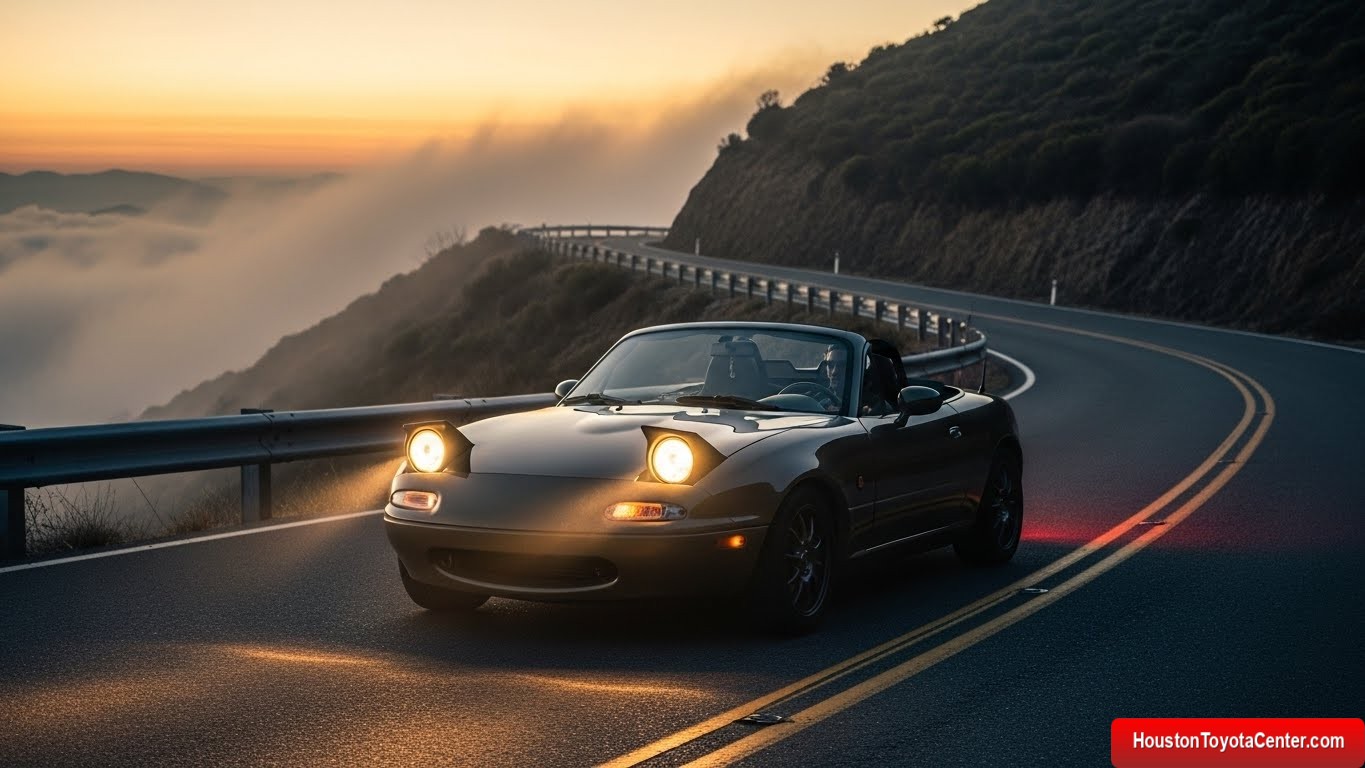
Few cars in automotive history have achieved what the Mazda MX-5 Miata has accomplished. It is not the fastest, not the most powerful, not the most luxurious, and certainly not the most expensive sports car ever made. Yet, since its debut in 1989, the Miata has built one of the most passionate and enduring cult followings in the automotive world. Owners don’t just like the Miata—they defend it, modify it, race it, daily-drive it, and form communities around it that span generations and continents.
The Miata’s cult following is not an accident. It is the result of deliberate engineering philosophy, emotional design, affordability, and an almost stubborn commitment to one idea: driving joy matters more than numbers. While the automotive industry has increasingly chased horsepower, technology, and complexity, the Miata has remained remarkably faithful to its original mission.
This article explores why the Mazda MX-5 Miata inspires such loyalty, how it has evolved over four generations, how it shaped modern car culture, and why—decades later—it continues to attract new fans while keeping longtime devotees deeply invested.
The Philosophy Behind the Miata: Jinba Ittai
At the heart of the Miata’s cult appeal lies a Japanese concept: Jinba Ittai, which translates roughly to “horse and rider as one.” This philosophy originates from traditional Japanese archery and emphasizes harmony between human and machine. Mazda engineers embraced this idea as the guiding principle for the MX-5.
FREE: Quickly identify and understand problems with your vehicle 🚘
CLICK HERERather than designing a car to dominate spec sheets, Mazda focused on:
- Perfect weight balance
- Responsive steering
- Light overall mass
- Intuitive controls
- Emotional feedback
The result was a car that feels alive in the driver’s hands. Even at modest speeds, the Miata delivers engagement that many faster cars fail to provide. Drivers don’t feel separated from the road by layers of insulation or electronic intervention; instead, they feel connected.
This connection is one of the foundational reasons Miata owners often describe the car in emotional terms, not technical ones.
A Return to Classic British Roadsters—Without the Problems
The Miata was inspired by classic British roadsters such as the Lotus Elan, MG B, and Triumph Spitfire. These cars were lightweight, rear-wheel drive, and fun—but also infamous for unreliability, rust, and constant maintenance.
Mazda asked a simple question:
What if we kept the fun and removed the frustration?
The answer was revolutionary.
The MX-5 delivered:
- Japanese reliability
- Modern manufacturing quality
- Affordable ownership
- Classic roadster proportions
For many enthusiasts, the Miata became the idealized version of the classic roadster—everything people loved, none of what they hated.
This blend of nostalgia and modern sensibility resonated deeply, especially with drivers who wanted a sports car experience without sacrificing dependability.
Generational Evolution: Same Soul, Different Eras
One of the most fascinating aspects of the Miata cult is that fans often strongly identify with a specific generation. Each version has its own personality, strengths, and loyal supporters.
Overview of Mazda MX-5 Generations
| Generation | Years | Chassis Code | Key Characteristics |
|---|---|---|---|
| NA | 1989–1997 | NA | Pop-up headlights, pure simplicity |
| NB | 1998–2005 | NB | Improved refinement, more power |
| NC | 2006–2015 | NC | Larger size, modern comfort |
| ND | 2016–Present | ND | Lightweight revival, sharp design |
NA Miata: The Icon That Started It All
The NA Miata is arguably the most beloved generation. With its pop-up headlights, minimalist interior, and feather-light weight, it embodies everything enthusiasts imagine when they think of a “pure” Miata.
Why the NA inspires cult-level devotion:
- Analog driving experience
- Minimal electronic interference
- Timeless, friendly design
- Easy mechanical simplicity
Many owners describe the NA as “mechanical honesty on wheels.” You feel everything: the steering feedback, the chassis flex, the road texture. It rewards skill and punishes sloppy driving, but always with charm.
The pop-up headlights alone have become a cultural symbol, spawning memes, merchandise, and social media pages dedicated entirely to their animated expressions.
NB Miata: The Refined Enthusiast’s Choice
When Mazda replaced the NA with the NB Miata, some purists were skeptical. The pop-up headlights were gone, replaced by fixed units. But under the surface, the NB was a better car in almost every measurable way.
Improvements included:
- Increased rigidity
- More powerful engines
- Better brakes
- Subtle design evolution
For many enthusiasts, the NB strikes the perfect balance between old-school charm and modern capability. It remains one of the most popular generations for track days, autocross, and grassroots racing.
The NB’s cult following is often quieter but deeply committed—owners who value performance and refinement over nostalgia.
NC Miata: The Underrated Chapter
The NC Miata is often labeled the “black sheep” of the family, primarily due to its larger size and weight. Yet, this generation has experienced a renaissance in recent years.
Why the NC deserves respect:
- Strong 2.0L engine
- Excellent chassis stiffness
- Comfortable daily drivability
- High safety standards
As prices for NA and NB models have risen, many enthusiasts have rediscovered the NC as an incredible value. With modern suspension tuning, the NC can be transformed into a serious performance machine.
Its cult following tends to be practical enthusiasts—those who want Miata fun without sacrificing comfort or safety.
ND Miata: Modern Technology, Classic Spirit
With the ND Miata, Mazda made a bold move: reducing weight after years of growth. This decision thrilled enthusiasts and reaffirmed Mazda’s commitment to the Miata’s core philosophy.
Key features of the ND:
- Significant weight reduction
- Skyactiv engines
- Modern infotainment and safety
- Aggressive, sculpted design
The ND has introduced the Miata to an entirely new generation of drivers—many of whom grew up with smartphones, driver aids, and digital interfaces. Yet, despite these modern touches, the ND still feels unmistakably like a Miata.
It proves that the cult is not fading—it is evolving.
Affordability: The Gateway to Enthusiasm
One of the most critical factors behind the Miata’s cult following is accessibility.
Unlike many sports cars, the Miata:
- Is affordable to buy
- Is inexpensive to maintain
- Uses widely available parts
- Has a massive aftermarket
This accessibility lowers the barrier to entry into car enthusiasm. For countless drivers, the Miata is their first sports car, their first project car, or their first track car.
When people can afford to participate, communities grow. When communities grow, cults form.
The Aftermarket and Modification Culture
Few cars enjoy aftermarket support like the Miata. From mild aesthetic tweaks to full race builds, the platform supports virtually every level of modification.
Popular modifications include:
- Suspension upgrades
- Wheel and tire packages
- Engine swaps
- Forced induction
- Aero kits
Because the Miata is mechanically simple and well-documented, owners are encouraged to work on their own cars. This hands-on involvement deepens emotional attachment and reinforces community knowledge-sharing.
Miata forums, YouTube channels, and social media groups are filled with tutorials, build diaries, and shared problem-solving—further strengthening the cult-like bond.
Motorsports: Where the Miata Truly Shines
The Miata’s dominance in amateur and professional motorsports cannot be overstated.
It excels in:
- Autocross
- Track days
- Time attack
- Endurance racing
- Spec Miata racing
Spec Miata, in particular, has become one of the largest racing classes in the world. The close competition, relatively low cost, and emphasis on driver skill make it the perfect embodiment of Miata philosophy.
Many drivers who start racing Miatas remain lifelong fans—even if they move on to faster cars later.
Community and Identity
Owning a Miata is rarely a solitary experience. Owners wave at each other on the road, attend meetups, and form clubs that operate like extended families.
Miata culture includes:
- Local and global meetups
- Charity drives
- Track-focused communities
- Meme-driven online humor
There is a shared understanding among Miata owners: they get it. They understand why speed isn’t everything. They understand the joy of top-down driving at sunset. They understand why a slow car driven fast can be more rewarding than a fast car driven slow.
This shared mindset is the foundation of the cult.
Criticism and the Miata Defense Mechanism
No cult following is complete without outsiders questioning its beliefs.
Common criticisms include:
- “It’s slow.”
- “It’s not practical.”
- “It’s too small.”
Miata owners have heard it all—and they respond with almost ritualistic calm.
The defense is simple:
It was never about numbers.
In fact, criticism often strengthens the cult, reinforcing the idea that Miata owners are in on a secret others don’t understand.
Cultural Impact Beyond Cars
The Miata has transcended automotive culture. It appears in:
- Video games
- Anime and manga
- Internet memes
- Fashion and merchandise
It has become a symbol of joyful rebellion against excess. In a world obsessed with more—more power, more screens, more complexity—the Miata stands for less, but better.
Why the Cult Endures
The Mazda MX-5 Miata’s cult following persists because it satisfies something deeper than transportation. It satisfies the human desire for connection, mastery, and joy.
It reminds drivers that:
- Driving can be playful
- Skill matters more than specs
- Cars can have personality
As long as Mazda continues to build the Miata with sincerity, the cult will survive—welcoming new members while honoring its roots.
Conclusion: A Timeless Invitation
The Miata is not just a car. It is an invitation—to drive, to learn, to connect, and to smile. Its cult following is not driven by hype or marketing but by genuine experience.
Once you understand it, you never really leave.
Leave a Reply