
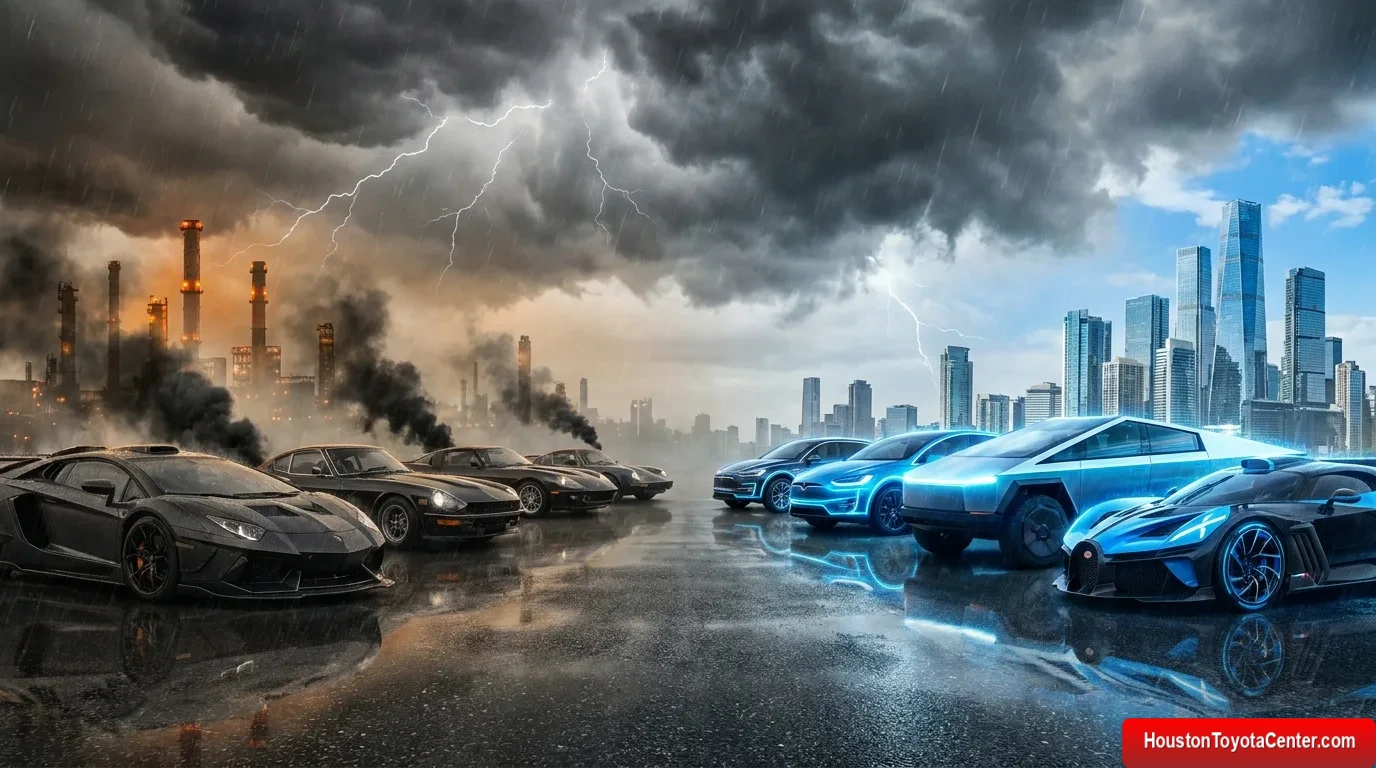
The automotive industry has always evolved under pressure. Sometimes that pressure comes from consumers demanding faster, safer, and more luxurious vehicles. Sometimes it comes from fuel prices, wars, technological breakthroughs, or environmental crises. In the modern era, however, one force has become especially powerful in shaping the future of cars: emission regulations.
The strictest emission standards in the world do far more than reduce pollution. They influence how engines are designed, how factories operate, what materials manufacturers choose, which technologies receive billions in investment, and even how cities plan transportation systems. A regulation written by policymakers in Brussels, California, or Beijing can reshape vehicle lineups across every continent.
Today’s cars are not merely transportation machines. They are rolling compliance systems engineered to satisfy increasingly demanding environmental laws. Whether consumers realize it or not, emission standards influence almost every aspect of a vehicle — from engine size and battery chemistry to aerodynamics, software tuning, and even the sound of the exhaust.
The rise of strict emissions regulations has created winners and losers among automakers. Some companies transformed themselves into leaders in electrification and efficiency. Others struggled with technological transitions, regulatory fines, or scandals that permanently damaged public trust. Entire segments of the automotive world, including large naturally aspirated engines and certain diesel technologies, have been pushed toward extinction.
FREE: Quickly identify and understand problems with your vehicle 🚘
CLICK HEREAt the same time, stricter standards have accelerated innovation at a pace rarely seen before in automotive history. Hybrid systems, advanced catalytic converters, lightweight materials, synthetic fuels, regenerative braking, battery-electric platforms, hydrogen experimentation, and intelligent energy management systems all grew partly because governments demanded cleaner transportation.
Understanding how the strictest emission standards shape global car design means understanding the intersection of engineering, economics, politics, climate science, and consumer behavior. It also means recognizing that regulations in one major market can eventually influence the design of vehicles sold worldwide.
This article explores how the world’s toughest emissions rules emerged, how they differ between regions, how they reshape vehicle engineering, and what they mean for the future of mobility.
The Origins of Automotive Emission Standards
For much of automotive history, emissions received little attention. Early cars were noisy, inefficient, and heavily polluting, but they existed in relatively small numbers. As vehicle ownership expanded rapidly during the twentieth century, especially after World War II, urban air pollution became impossible to ignore.
Cities like Los Angeles became infamous for dense smog caused largely by vehicle exhaust mixed with industrial pollution and sunlight. Scientists identified pollutants such as carbon monoxide (CO), nitrogen oxides (NOx), hydrocarbons (HC), and particulate matter (PM) as major contributors to respiratory illnesses and environmental degradation.
Governments eventually responded.
The United States became an early leader in automotive emission regulation. California, struggling with severe air quality problems, introduced pioneering rules during the 1960s. The federal government later established the Environmental Protection Agency (EPA) and passed the Clean Air Act, creating nationwide standards.
Europe followed with increasingly aggressive “Euro” standards. Japan introduced strict efficiency and pollution controls as well, motivated by dense urban populations and energy security concerns.
Over time, emission standards evolved from relatively simple pollutant limits into highly complex frameworks governing:
- Carbon dioxide emissions
- Fuel economy
- Particulate emissions
- Real-world driving pollution
- Evaporative emissions
- Battery sustainability
- Lifecycle environmental impact
- Manufacturing emissions
- Recycling requirements
Modern regulations no longer focus only on tailpipe pollution. Increasingly, they attempt to evaluate the total environmental footprint of a vehicle.
Understanding the Main Pollutants
To understand why emission standards shape car design so dramatically, it helps to understand what regulators are trying to reduce.
| Pollutant | Main Source | Environmental/Health Impact |
|---|---|---|
| Carbon Dioxide (CO2) | Fuel combustion | Climate change |
| Nitrogen Oxides (NOx) | High-temperature combustion | Smog, respiratory disease |
| Carbon Monoxide (CO) | Incomplete combustion | Toxic to humans |
| Hydrocarbons (HC) | Unburned fuel | Smog formation |
| Particulate Matter (PM) | Diesel combustion, direct injection engines | Lung and cardiovascular disease |
| Sulfur Oxides (SOx) | Sulfur in fuel | Acid rain, respiratory problems |
Different regulations prioritize different pollutants.
For decades, Europe focused heavily on reducing CO2 emissions because of climate targets and fuel economy concerns. The United States often concentrated more on smog-forming pollutants like NOx and hydrocarbons. China aggressively targeted urban pollution due to severe air quality crises in major cities.
As climate change became a dominant global issue, CO2 reduction increasingly moved to the center of automotive policy.
The World’s Strictest Emission Standards
Not all emission regulations are equally demanding. Some regions have become especially influential because of their economic power and aggressive environmental goals.
European Union: Euro Standards and CO2 Targets
Europe operates one of the most influential regulatory systems in the automotive world.
The Euro standards, introduced in the 1990s, progressively tightened allowable emissions from passenger vehicles. Each new generation — Euro 1 through Euro 7 — imposed lower limits for pollutants.
European regulators also established fleet-wide CO2 targets. Instead of regulating individual vehicles alone, manufacturers must ensure that the average emissions across all vehicles sold remain below specific thresholds.
This approach transformed vehicle strategy.
Automakers could no longer rely heavily on large-displacement engines without risking enormous fines. As a result:
- Turbocharged small engines replaced larger naturally aspirated engines
- Hybridization expanded rapidly
- Electric vehicle investment accelerated
- Lightweight construction became critical
- Aerodynamic optimization intensified
Europe’s rules became even more influential because many global manufacturers design vehicles capable of meeting EU requirements even when selling them elsewhere.
California: The Global Rulemaker
California deserves special attention because its regulations often become de facto global standards.
The California Air Resources Board (CARB) developed some of the strictest emission requirements in the world, including:
- Zero Emission Vehicle (ZEV) mandates
- Low Emission Vehicle (LEV) programs
- Strict evaporative emissions standards
- Advanced onboard diagnostics requirements
Because California represents such a massive automotive market, manufacturers often redesign entire vehicle platforms to comply.
Many other U.S. states adopted California’s standards, further amplifying their influence.
The state’s aggressive electric vehicle mandates helped accelerate the global EV transition. Automakers recognized that long-term compliance would require large-scale electrification.
China: Rapidly Escalating Standards
China transformed from a relatively permissive automotive market into one of the strictest and most influential regulatory powers.
Facing severe urban pollution and growing climate commitments, China implemented aggressive standards inspired partly by Europe while developing its own policies.
China’s New Energy Vehicle (NEV) system pushed manufacturers toward:
- Battery-electric vehicles
- Plug-in hybrids
- Fuel cell experimentation
- Domestic battery production
Because China is the world’s largest car market, automakers increasingly tailor global strategies around Chinese regulatory requirements.
Japan: Efficiency Through Precision
Japan historically emphasized fuel efficiency and technological refinement.
Japanese standards encouraged:
- Highly efficient combustion engines
- Lightweight engineering
- Hybrid technology leadership
- Precision manufacturing
Toyota’s dominance in hybrid technology emerged partly from Japan’s regulatory environment and fuel economy priorities.
How Emission Standards Influence Engine Design
Perhaps no aspect of the automobile has been more affected by emissions regulations than the internal combustion engine.
For over a century, engineers primarily optimized engines for power, reliability, and affordability. Today, emissions performance has become equally important.
Engine Downsizing
One major trend driven by emissions rules is engine downsizing.
Manufacturers realized that smaller engines generally consume less fuel and produce lower CO2 emissions under standardized testing conditions.
However, consumers still demanded strong performance.
The solution was turbocharging.
Small turbocharged engines can produce power comparable to larger naturally aspirated engines while theoretically reducing fuel consumption.
Examples include:
- 1.0-liter turbocharged three-cylinder engines replacing older 1.6-liter or 2.0-liter engines
- Four-cylinder turbo engines replacing V6 engines
- Turbocharged V6 engines replacing naturally aspirated V8s
This trend dramatically reshaped vehicle character. Cars became quieter, more torque-focused, and increasingly software-managed.
Direct Fuel Injection
Direct injection systems spray fuel directly into combustion chambers instead of intake ports.
Benefits include:
- Improved fuel efficiency
- More precise combustion control
- Reduced CO2 emissions
- Higher compression ratios
However, direct injection also introduced new particulate pollution challenges, forcing manufacturers to develop gasoline particulate filters.
This illustrates a recurring pattern in emissions engineering: solving one problem often creates another.
Variable Valve Timing and Cylinder Deactivation
Modern engines constantly adjust valve timing, lift, and even active cylinder count to optimize efficiency.
Cylinder deactivation systems temporarily shut down some cylinders during low-load conditions.
For example:
- A V8 may operate temporarily as a V4
- A six-cylinder engine may disable two cylinders during highway cruising
These technologies help manufacturers reduce fleet-average emissions without eliminating higher-performance vehicles entirely.
Exhaust Gas Recirculation (EGR)
EGR systems reduce NOx emissions by recirculating portions of exhaust gases back into combustion chambers.
This lowers combustion temperatures and reduces harmful nitrogen oxide formation.
Modern EGR systems became highly sophisticated because of increasingly strict standards.
Catalytic Converters and Aftertreatment Systems
Emission regulations transformed exhaust systems into extremely complex pollution-control systems.
Modern vehicles may include:
- Three-way catalytic converters
- Diesel particulate filters (DPFs)
- Selective catalytic reduction (SCR)
- AdBlue/DEF injection systems
- Oxygen sensors
- Particulate sensors
These systems add cost and engineering complexity but dramatically reduce harmful emissions.
Diesel vehicles, in particular, required increasingly elaborate aftertreatment technologies to satisfy NOx regulations.
The Rise and Fall of Diesel
Diesel technology represents one of the most important examples of how emission standards can reshape entire industries.
For many years, diesel engines appeared ideal for Europe’s climate goals because they produced lower CO2 emissions than gasoline engines.
European governments encouraged diesel adoption through tax incentives and policy support.
Manufacturers invested heavily in:
- High-pressure fuel injection
- Turbocharging
- Diesel particulate filters
- Advanced emissions control systems
By the early 2000s, diesel vehicles dominated many European markets.
However, diesel engines faced a major challenge: NOx emissions.
Meeting strict laboratory standards while maintaining performance and fuel economy proved extremely difficult.
This tension culminated in the Dieselgate scandal, where software manipulated emissions testing behavior.
The scandal had enormous consequences:
- Consumer trust collapsed
- Regulators intensified real-world testing
- Cities considered diesel bans
- Manufacturers accelerated electrification
- Diesel resale values declined
The diesel era demonstrates how regulatory pressure can fundamentally alter technological trajectories.
Why Electric Vehicles Became Essential
One of the clearest consequences of strict emission standards is the rapid rise of electric vehicles.
For many manufacturers, electrification evolved from an experimental niche into a regulatory necessity.
Fleet Average Emissions
Modern regulations often penalize automakers if their average fleet emissions exceed targets.
Electric vehicles help reduce those averages because they produce zero tailpipe emissions.
This creates strong incentives for manufacturers to:
- Expand EV lineups
- Increase EV sales volume
- Reduce dependence on combustion-only vehicles
In some cases, manufacturers reportedly sold EVs at low profit margins simply to avoid larger regulatory penalties.
Dedicated EV Platforms
Strict emissions rules accelerated the development of purpose-built electric architectures.
Instead of adapting gasoline platforms, companies designed entirely new EV-specific structures.
These platforms optimize:
- Battery placement
- Aerodynamics
- Weight distribution
- Cabin space
- Thermal efficiency
Examples include skateboard-style battery layouts that create flat floors and improved interior packaging.
Aerodynamics Became More Important
Electric vehicles made aerodynamic efficiency more critical than ever.
Reducing air resistance directly improves driving range.
As a result, modern car designs increasingly feature:
- Smooth body surfaces
- Flush door handles
- Covered underbodies
- Active grille shutters
- Narrow lighting elements
- Reduced frontal area
Some EVs now resemble aerodynamic sculptures shaped by wind tunnels as much as by traditional styling preferences.
Battery Technology Arms Race
Emission standards indirectly triggered massive investment in battery research.
Manufacturers compete intensely in areas such as:
- Energy density
- Charging speed
- Thermal stability
- Longevity
- Raw material sourcing
- Cost reduction
Battery innovation now sits at the center of automotive competitiveness.
Software Became a Core Part of Emissions Compliance
Modern emission compliance depends heavily on software.
Cars now contain advanced electronic control systems managing:
- Fuel injection timing
- Ignition timing
- Battery energy usage
- Regenerative braking
- Hybrid transitions
- Thermal management
- Exhaust aftertreatment behavior
A modern vehicle continuously analyzes sensor data to optimize emissions performance.
This software-centric evolution changed automotive engineering culture itself.
Traditional mechanical engineering expertise remains vital, but software development now plays an equally important role.
Automakers increasingly resemble technology companies.
Real-World Testing Changed Everything
For years, manufacturers optimized vehicles primarily for laboratory testing procedures.
However, regulators discovered major discrepancies between official test results and real-world emissions.
In response, many regions introduced:
- Real Driving Emissions (RDE) testing
- Portable emissions measurement systems
- More aggressive test cycles
- Stricter conformity requirements
These changes forced automakers to design vehicles that perform cleanly under broader real-world conditions.
This significantly increased engineering complexity because cars must now maintain low emissions during:
- Highway driving
- Cold starts
- High temperatures
- Mountain driving
- Aggressive acceleration
- Heavy traffic
The era of “test-cycle optimization” alone became far less viable.
Lightweight Materials and Structural Design
Reducing emissions often means reducing vehicle weight.
Lighter vehicles require less energy to accelerate and maintain speed.
This influenced material selection across the industry.
Manufacturers increasingly adopted:
- Aluminum
- High-strength steel
- Carbon fiber composites
- Magnesium components
- Advanced plastics
Weight reduction strategies affect nearly every part of a car:
- Seats
- Wheels
- Suspension systems
- Body panels
- Wiring
- Glass
However, balancing lightweight construction with safety requirements and affordability remains difficult.
Luxury and performance manufacturers often embraced expensive lightweight materials earlier than mass-market brands.
Hybridization as a Transitional Strategy
Not every manufacturer could immediately transition fully to electric vehicles.
Hybrid systems became a crucial intermediate solution.
Hybridization allows:
- Reduced fuel consumption
- Lower urban emissions
- Regenerative braking
- Smaller combustion engines
- Better compliance with fleet targets
Different hybrid approaches emerged:
| Hybrid Type | Description | Main Benefit |
| Mild Hybrid | Small electric assistance | Improved efficiency at low cost |
| Full Hybrid | Can drive short distances electrically | Significant fuel savings |
| Plug-in Hybrid | Larger battery with charging capability | Reduced daily fuel use |
| Range-Extended EV | Electric drive with combustion backup | Lower range anxiety |
Hybrid technology helped manufacturers bridge the gap between traditional combustion vehicles and fully electric futures.
Emission Standards and Supercars
Even exotic performance brands have not escaped emissions pressure.
Companies historically associated with massive engines and dramatic exhaust sounds now face difficult choices.
Manufacturers including Ferrari, Lamborghini, Porsche, and McLaren increasingly rely on:
- Hybrid systems
- Turbocharging
- Smaller engines
- Electrified drivetrains
- Advanced energy recovery systems
Some modern hypercars use Formula 1-inspired hybrid technologies partly because emissions regulations encouraged investment in electrification.
The transformation of the supercar industry demonstrates how deeply regulations influence automotive identity.
How Emission Standards Influence Car Styling
Emission standards do not affect only engineering. They also influence aesthetics.
Modern vehicle design increasingly reflects aerodynamic efficiency priorities.
The Aerodynamic Revolution
Reducing drag improves:
- Fuel economy
- EV range
- High-speed efficiency
- Emissions performance
As a result, many modern cars feature:
- Smoother rooflines
- Narrower mirrors or camera systems
- Reduced grille openings
- Active aerodynamic components
- Enclosed wheels on some EV concepts
Traditional aggressive styling cues sometimes conflict with efficiency goals.
Designers must balance visual identity with aerodynamic optimization.
Closed Front Grilles
Electric vehicles require less cooling airflow than combustion vehicles.
This allows designers to minimize or eliminate traditional front grilles.
As EV adoption grows, front-end design language across the industry is changing dramatically.
Wheel Design Optimization
Wheels strongly influence aerodynamic drag.
Modern efficiency-focused vehicles often use:
- Aero wheel covers
- Narrow tire designs
- Smooth wheel surfaces
Even wheel shape became part of emissions strategy.
Manufacturing Emissions and Sustainability
Governments increasingly examine emissions beyond the tailpipe.
This means manufacturers now face pressure to reduce:
- Factory emissions
- Supply chain pollution
- Battery production impacts
- Material extraction impacts
- Recycling waste
Automakers increasingly invest in:
- Renewable-powered factories
- Sustainable steel production
- Battery recycling facilities
- Low-carbon logistics
- Circular economy systems
Some manufacturers now market the environmental footprint of production itself as a competitive advantage.
The Cost of Compliance
Strict emissions standards bring enormous costs.
Manufacturers spend billions on:
- Research and development
- Battery plants
- Software engineering
- Emissions testing
- Regulatory certification
- Factory modernization
Smaller manufacturers often struggle more because they lack economies of scale.
This contributes to:
- Industry consolidation
- Partnerships and alliances
- Shared vehicle platforms
- Joint battery ventures
Compliance costs also influence vehicle pricing.
Consumers increasingly pay for sophisticated emissions technologies embedded within modern vehicles.
Globalization of Car Design
One fascinating consequence of strict regulations is the globalization of vehicle engineering.
Automakers often design vehicles to satisfy the strictest major markets rather than creating entirely separate models for each region.
This means:
- European standards influence cars sold in Asia
- California rules affect vehicles worldwide
- Chinese EV policies shape global battery strategies
Global platforms allow manufacturers to spread development costs across larger production volumes.
As a result, emission standards in one region increasingly affect drivers everywhere.
Consumer Behavior and Market Psychology
Regulations influence not only manufacturers but also consumer expectations.
Modern buyers increasingly associate advanced technology with environmental responsibility.
Features once considered unusual are becoming mainstream:
- Regenerative braking displays
- Eco driving modes
- Energy usage monitoring
- EV charging apps
- Battery preconditioning systems
Marketing strategies increasingly emphasize sustainability alongside performance.
Consumers now compare:
- Range efficiency
- Carbon footprint
- Charging speed
- Energy consumption
- Environmental branding
Emission standards indirectly reshaped automotive culture itself.
The Debate Around Regulation
Not everyone agrees on the pace or structure of emissions policy.
Supporters argue that strict standards:
- Reduce pollution-related deaths
- Accelerate technological innovation
- Combat climate change
- Improve energy efficiency
- Create cleaner cities
Critics argue that aggressive regulations may:
- Increase vehicle prices
- Reduce consumer choice
- Harm smaller manufacturers
- Create infrastructure challenges
- Depend heavily on mining and battery supply chains
The debate remains politically and economically significant.
However, few experts believe the automotive industry will reverse course entirely.
Electrification and emissions reduction now appear deeply embedded in long-term global strategy.
Emerging Technologies Shaped by Emission Rules
Future regulations continue driving experimentation with new technologies.
Solid-State Batteries
Solid-state batteries promise:
- Higher energy density
- Faster charging
- Improved safety
- Lower weight
Automakers hope these advances will help satisfy increasingly demanding efficiency targets.
Hydrogen Fuel Cells
Hydrogen vehicles remain controversial but continue receiving investment.
Potential advantages include:
- Fast refueling
- Long range
- Zero tailpipe emissions
Challenges include:
- Infrastructure costs
- Hydrogen production emissions
- Storage complexity
Some regions see hydrogen as especially valuable for heavy-duty transportation.
Synthetic Fuels
Synthetic e-fuels could allow combustion engines to operate with lower lifecycle emissions.
Supporters argue they may preserve existing infrastructure and enthusiast vehicle culture.
Critics question scalability and energy efficiency.
Nevertheless, synthetic fuels remain part of ongoing regulatory discussions.
Advanced AI Energy Management
Artificial intelligence increasingly optimizes energy use in modern vehicles.
AI systems may soon manage:
- Predictive battery conditioning
- Route-based energy optimization
- Adaptive regenerative braking
- Smart charging behavior
- Traffic-aware efficiency adjustments
Software intelligence is becoming as important as mechanical engineering.
How Trucks and SUVs Adapted
SUVs and pickup trucks present major regulatory challenges because they are larger and less aerodynamic.
Manufacturers responded through:
- Lightweight platforms
- Turbocharged engines
- Hybrid trucks
- Electric pickups
- Cylinder deactivation systems
- Active aerodynamics
Even massive vehicles increasingly incorporate efficiency-focused technologies once associated only with compact cars.
The popularity of SUVs forced regulators and automakers into a difficult balancing act between consumer demand and environmental goals.
Urban Design and Emission Policies
Emission standards influence more than vehicle engineering.
Cities increasingly integrate transportation policies with environmental objectives.
Examples include:
- Low-emission zones
- Congestion pricing
- EV-only urban areas
- Charging infrastructure expansion
- Restrictions on older diesel vehicles
Automakers must anticipate how these policies affect future demand.
Vehicle design increasingly reflects expectations about urban mobility.
The Competitive Advantage of Compliance
Manufacturers that adapt quickly to strict standards may gain major competitive advantages.
Strong emissions performance can help companies:
- Avoid regulatory fines
- Access more markets
- Improve brand reputation
- Attract environmentally conscious consumers
- Secure government incentives
Some companies transformed regulatory pressure into innovation leadership.
Others struggled because they delayed investment or relied too heavily on legacy technologies.
The modern automotive industry increasingly rewards long-term technological adaptability.
Regional Differences Still Matter
Despite globalization, regional differences remain important.
For example:
- American buyers still favor larger vehicles
- European cities prioritize compact efficiency
- China strongly influences EV adoption speed
- Developing markets may maintain combustion vehicles longer
Manufacturers therefore balance global standardization with local preferences.
This balancing act creates enormous engineering and logistical complexity.
The Future of Internal Combustion Engines
Many governments announced timelines for reducing or banning new combustion vehicle sales.
However, the internal combustion engine may not disappear immediately.
Future combustion systems could survive through:
- Hybrid integration
- Synthetic fuels
- Ultra-efficient thermal cycles
- Advanced emissions controls
Nevertheless, emissions standards are steadily narrowing the role of traditional engines.
The industry appears to be moving toward a future where combustion powertrains become increasingly specialized rather than dominant.
Lessons from the Automotive Transformation
The history of emission standards reveals several important lessons.
First, regulations can reshape technological evolution far more rapidly than market forces alone.
Second, environmental policy often produces unintended consequences and secondary innovations.
Third, engineering progress frequently emerges from constraints rather than unlimited freedom.
Automakers faced extraordinary pressure to reduce pollution while preserving:
- Performance
- Reliability
- Affordability
- Safety
- Consumer appeal
The resulting innovations transformed the automobile more dramatically than many people expected.
Cars today are cleaner, more efficient, more software-driven, and more aerodynamically optimized than vehicles from previous generations.
At the same time, this transformation created difficult economic, environmental, and political debates that continue evolving.
Conclusion
The strictest emission standards in the world have become one of the most powerful forces shaping global car design.
What began decades ago as efforts to reduce urban smog evolved into a worldwide restructuring of the automotive industry. Regulations now influence nearly every dimension of vehicle development, including engine architecture, battery technology, software systems, aerodynamics, manufacturing methods, supply chains, and even brand identity.
Modern vehicles are no longer designed solely around performance, comfort, or aesthetics. They are engineered within an increasingly complex framework of environmental compliance.
Some of the most important automotive trends of the twenty-first century — electrification, hybridization, lightweight materials, aerodynamic optimization, advanced software management, and sustainable manufacturing — accelerated because governments imposed stricter emissions requirements.
Whether one views these regulations as necessary environmental progress or as burdensome industrial constraints, their impact is undeniable.
The automotive world is entering a new era where efficiency, sustainability, and energy management increasingly define innovation. Future vehicles may look radically different from the cars that dominated roads for over a century, but that transformation is already well underway.
As emission standards continue tightening across major global markets, automakers will face even greater pressure to reinvent transportation yet again.
The next generation of vehicles will likely be shaped not only by what drivers want, but by what the planet demands.
Leave a Reply