
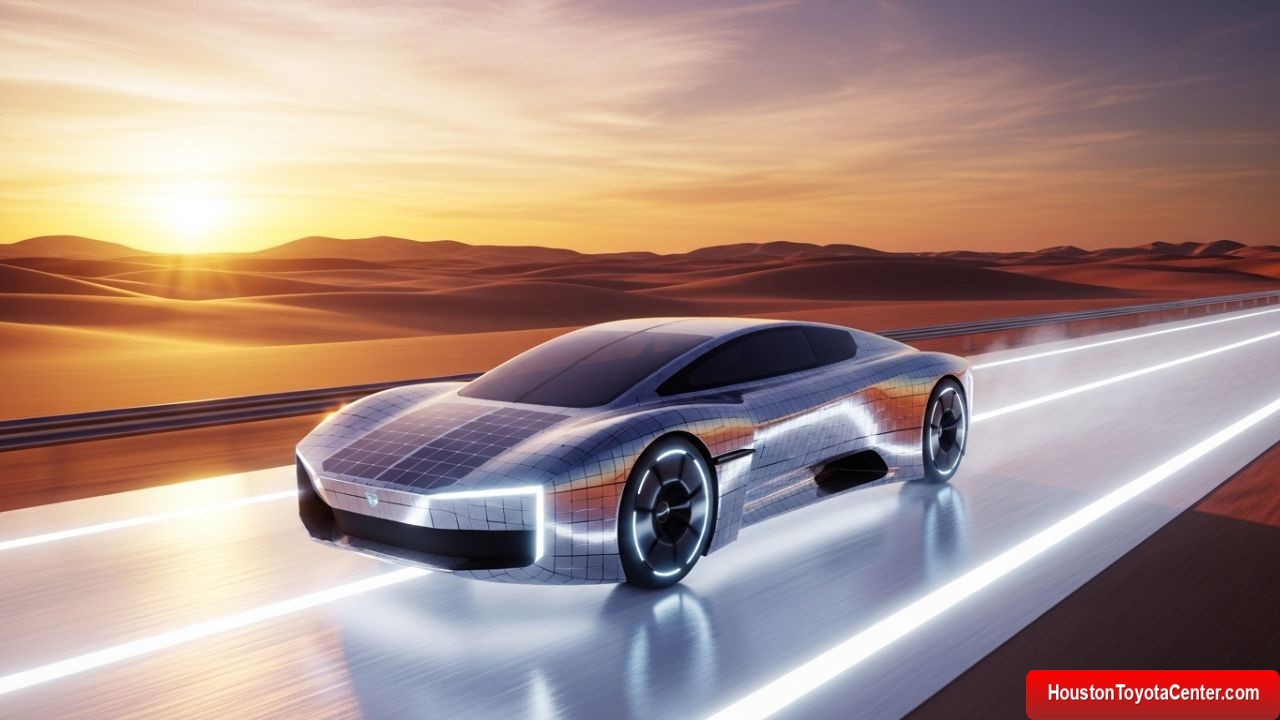
For as long as cars have existed, humans have dreamed of powering them with something cleaner, cheaper, and more abundant than fossil fuels. Electricity promised part of that future, but even electric vehicles still depend on energy produced elsewhere—often from non-renewable sources. Solar-powered cars, on the other hand, represent a much more radical idea: vehicles that generate their own fuel directly from sunlight.
The concept feels almost magical. A car that never needs a gas station or a charging cable. A car that quietly absorbs energy while parked or driving, converting sunlight into motion. A car that embodies true energy independence.
But is this vision realistic, or does it belong more to science fiction than to everyday transportation? Are solar-powered cars a feasible solution for mass mobility, or are they destined to remain experimental curiosities and engineering showcases?
To answer these questions, we must look beyond marketing slogans and futuristic prototypes. We must examine physics, engineering limits, economic realities, infrastructure challenges, and real-world use cases. Only then can we determine whether solar-powered cars are a viable future—or a beautiful but impractical fantasy.
FREE: Quickly identify and understand problems with your vehicle 🚘
CLICK HEREWhat Is a Solar-Powered Car, Really?
At its core, a solar-powered car is a vehicle that uses photovoltaic (PV) cells to convert sunlight into electrical energy, which is then used to power an electric motor or charge a battery.
However, not all solar-powered cars are the same. The term is often used loosely, which leads to confusion.
Pure Solar Cars vs. Solar-Assisted Cars
There are two main categories:
- Pure solar-powered cars: Vehicles that rely almost entirely on solar panels for propulsion.
- Solar-assisted electric vehicles: Electric cars that use solar panels to supplement energy, not replace charging entirely.
This distinction is critical. Pure solar cars exist mostly in research environments and competitions. Solar-assisted vehicles are the ones edging closer to commercial reality.
Core Components of a Solar-Powered Car
A typical solar-powered vehicle includes:
- Photovoltaic solar panels
- Power electronics (inverters, controllers)
- Electric motor(s)
- Battery storage (optional but common)
- Lightweight aerodynamic body
Each of these components introduces both opportunities and limitations, which shape the overall feasibility of solar-powered transportation.
The Physics Problem: How Much Energy Can the Sun Actually Provide?
The biggest challenge facing solar-powered cars is not design or cost—it’s physics.
Solar Energy Density
On a clear day, the maximum solar energy reaching Earth’s surface is about 1,000 watts per square meter under ideal conditions. Real-world averages are much lower due to:
- Weather
- Latitude
- Time of day
- Seasonal changes
- Panel efficiency losses
Modern high-efficiency solar panels convert about 20–25% of incoming sunlight into usable electricity.
That means one square meter of solar panel typically produces 200–250 watts under perfect conditions.
Surface Area Limitations
A standard passenger car has roughly 5–7 square meters of usable surface area for solar panels, assuming you cover the roof, hood, and trunk.
Even with optimistic assumptions:
- 6 m² × 250 W = 1,500 watts peak
That is roughly equivalent to:
- A hair dryer
- A small microwave
- About 2 horsepower
Now compare that to typical vehicles:
| Vehicle Type | Power Requirement |
|---|---|
| Small city EV | 15–25 kW |
| Highway cruising | 20–30 kW |
| Acceleration | 50–150 kW |
The gap is obvious. Solar panels alone cannot provide enough power for conventional driving, especially at highway speeds.
Why Solar Cars Work in Competitions but Not on Highways
Solar-powered cars often make headlines during events like the World Solar Challenge, where ultra-light vehicles cross Australia using nothing but sunlight.
These vehicles are engineering marvels—but they are not representative of everyday cars.
Key Differences Between Solar Race Cars and Consumer Vehicles
| Feature | Solar Race Cars | Consumer Cars |
|---|---|---|
| Weight | Extremely low (150–300 kg) | 1,300–2,000 kg |
| Speed | Optimized, steady | Variable, high-speed |
| Comfort | None | High |
| Safety | Minimal | Extensive regulations |
| Aerodynamics | Extreme | Compromised by design |
| Cost | Extremely high | Must be affordable |
Solar race cars prove that solar mobility is possible—but only when comfort, safety, practicality, and cost are almost entirely sacrificed.
Energy Storage: The Battery Dilemma
Because sunlight is intermittent, solar-powered cars almost always rely on batteries.
Why Batteries Are Necessary
- Sunlight is unavailable at night
- Cloud cover reduces output dramatically
- Peak solar generation rarely matches peak driving demand
Batteries allow solar energy to be stored and used later, smoothing out these fluctuations.
But Batteries Add Weight
Weight is the enemy of efficiency. Every additional kilogram increases rolling resistance and energy consumption.
This creates a paradox:
- Larger batteries allow more solar energy storage
- Larger batteries make the car heavier
- Heavier cars require more energy to move
This feedback loop severely limits how effective solar-only charging can be.
The Economics: Cost vs. Benefit
Even if solar-powered cars were technically viable, would they make economic sense?
Solar Panels Are Not Free
High-quality automotive-grade solar panels are expensive. They must:
- Be lightweight
- Withstand vibration
- Resist weather and impacts
- Integrate seamlessly into car bodies
These requirements make them far more costly than rooftop solar panels.
Cost Breakdown (Estimated)
| Component | Estimated Cost |
|---|---|
| Automotive solar panels | $2,000–$5,000 |
| Power electronics | $500–$1,500 |
| Integration & design | $1,000+ |
| Total added cost | $3,500–$7,500 |
Now compare this to the benefit.
In many climates, a solar roof might add 5–15 miles (8–24 km) of range per day under good conditions.
For most users, that’s helpful—but not transformative.
Real-World Examples: What Exists Today?
Several companies have attempted to bring solar-powered or solar-assisted cars to market.
Notable Projects and Vehicles
| Vehicle | Approach | Status |
|---|---|---|
| Lightyear 0 | Solar-assisted EV | Limited production |
| Aptera | Ultra-efficient solar EV | Pre-production |
| Toyota Prius Solar Roof | Auxiliary charging | Limited markets |
| Hyundai Sonata Solar | Battery support | Commercial |
These vehicles do not rely solely on solar power. Instead, they use sunlight to:
- Extend driving range
- Reduce grid charging frequency
- Power auxiliary systems
This hybrid approach is currently the most realistic implementation.
Urban Driving: Where Solar Cars Make the Most Sense
If solar-powered cars are ever going to succeed, cities are their best chance.
Why Cities Are Favorable
- Short driving distances
- Frequent parking outdoors
- Lower average speeds
- Regenerative braking efficiency
In urban environments, solar panels can meaningfully offset daily energy consumption—especially for commuters who drive less than 30 km per day.
The “Free Energy” Psychological Effect
Even if the energy contribution is modest, the psychological value is significant:
- Reduced range anxiety
- Feeling of independence
- Environmental satisfaction
These factors can influence consumer adoption as much as technical performance.
Environmental Impact: Are Solar Cars Truly Green?
Solar-powered cars are often portrayed as zero-emission vehicles, but the reality is more nuanced.
Manufacturing Footprint
Producing solar panels and batteries requires:
- Mining rare materials
- Energy-intensive manufacturing
- Global supply chains
However, over a vehicle’s lifetime, solar-assisted cars can reduce total emissions—especially when compared to fossil fuel vehicles.
Lifecycle Comparison
| Vehicle Type | Lifetime Emissions |
|---|---|
| Gasoline car | High |
| Standard EV (coal grid) | Medium |
| EV (renewable grid) | Low |
| Solar-assisted EV | Very low |
Solar power alone may not eliminate emissions, but it helps push mobility closer to sustainability.
Infrastructure: A Hidden Advantage
One overlooked benefit of solar-powered cars is their reduced dependence on infrastructure.
Less Pressure on Charging Networks
As EV adoption grows, charging infrastructure becomes a bottleneck. Solar-assisted cars help by:
- Reducing peak demand
- Charging while parked
- Spreading energy generation across time and space
In remote areas or developing regions, this advantage could be transformative.
The Design Challenge: Beauty vs. Efficiency
Solar-powered cars often look unusual—and that’s not accidental.
Why Solar Cars Look Strange
- Flat, wide surfaces maximize panel area
- Aerodynamics demand smooth, elongated shapes
- Traditional car aesthetics reduce efficiency
Mainstream consumers, however, value style and familiarity.
This tension between engineering efficiency and market appeal is one of the biggest obstacles to adoption.
Technological Breakthroughs That Could Change Everything
Solar-powered cars may seem limited today, but several emerging technologies could shift the equation.
Potential Game-Changers
- Higher-efficiency solar cells (30%+)
- Solid-state batteries with higher energy density
- Ultra-light materials
- Advanced energy management software
Each improvement alone is incremental, but together they could make solar-assisted driving far more impactful.
Solar Cars vs. Solar Infrastructure
Some critics argue that solar power is better used elsewhere.
The Alternative Argument
Instead of putting solar panels on cars, we could:
- Install solar on homes
- Build solar farms
- Power EV chargers directly from renewables
From a pure efficiency standpoint, this is often true.
However, solar cars offer distributed generation, resilience, and flexibility that centralized systems cannot.
Cultural and Symbolic Power
Beyond numbers and engineering, solar-powered cars represent something deeper.
They symbolize:
- Technological optimism
- Environmental responsibility
- Human ingenuity
- A desire for independence
These symbolic qualities matter. Many transformative technologies began as impractical ideas before becoming mainstream.
So… Feasibility or Fantasy?
The honest answer is: both.
What Solar-Powered Cars Are Not
- They are not replacements for charging infrastructure
- They are not fully solar-driven for most users
- They are not a silver bullet for transportation emissions
What Solar-Powered Cars Are
- A powerful supplement to electric mobility
- A meaningful efficiency booster
- A glimpse into a more decentralized energy future
Pure solar cars remain largely impractical for mass-market use. But solar-assisted vehicles are not fantasy—they are already here, quietly harvesting sunlight and reducing dependence on the grid.
Conclusion: The Sun Won’t Drive the Car Alone—But It Will Help
Solar-powered cars will not magically free us from energy constraints overnight. Physics ensures that sunlight alone cannot power heavy, fast, comfortable vehicles under all conditions.
Yet dismissing solar-powered cars as fantasy would be equally misguided.
They represent a strategic evolution, not a revolution. A step toward smarter energy use. A way to squeeze more value from every photon that hits our planet.
The future of mobility will not be powered by a single solution—but solar energy will almost certainly be part of the mix.
And sometimes, the line between fantasy and feasibility is simply time.
Leave a Reply