
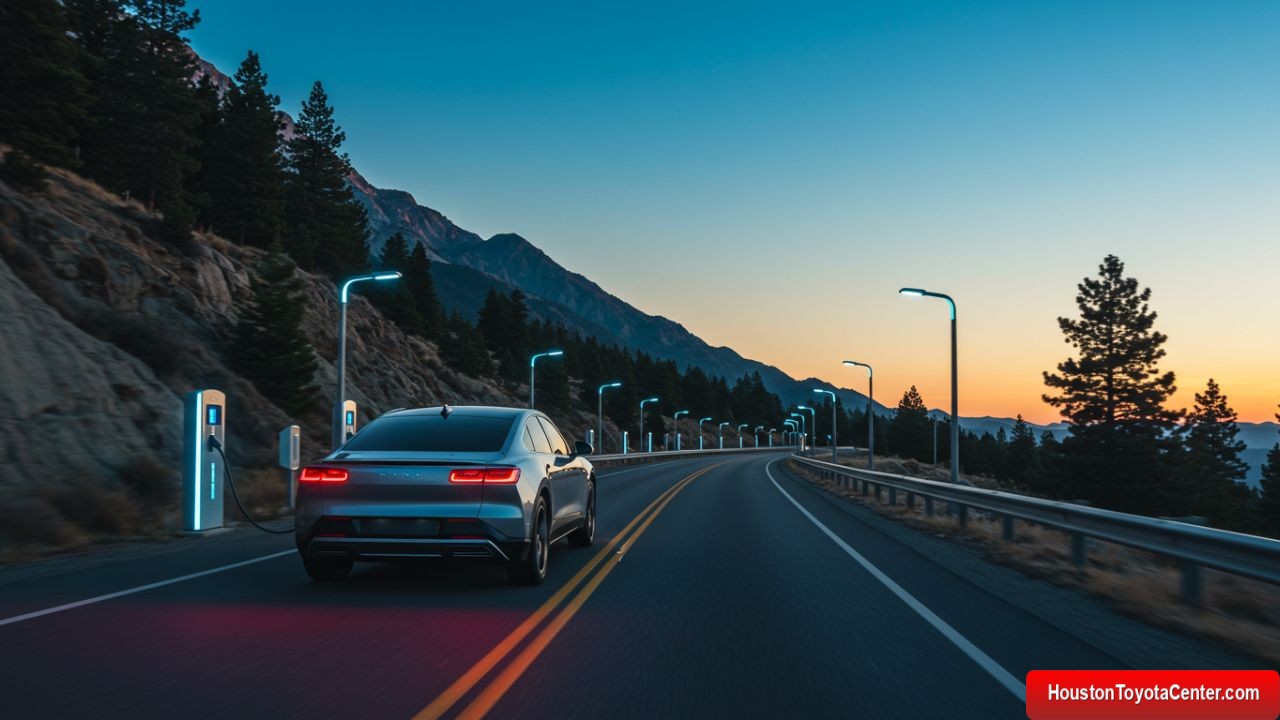
The open road has always been synonymous with freedom, adventure, and discovery. But in the age of electric vehicles (EVs), road trips have taken on a new dimension. While driving an EV is smooth, quiet, and environmentally friendly, it requires a slightly different approach to planning—especially when it comes to routes and charging stops.
If you’ve ever dreamed of hitting the highway in your EV but felt unsure about logistics, you’re not alone. The good news? With the right preparation, road-tripping in an EV can be just as convenient as with a gas-powered car—if not more enjoyable. Let’s dive deep into the art of planning, explore strategies to maximize your battery, and discover how to make the most out of your EV journey.
Why EV Road Trips Are Different
Unlike traditional vehicles, EVs rely on charging stations instead of gas pumps. That means you can’t just pull off at any exit and expect to fill up in 5 minutes. But far from being a limitation, this difference opens up new opportunities:
- Strategic Travel: You’ll plan your route more thoughtfully, which can lead you to explore places you might otherwise miss.
- Lower Costs: Charging your EV often costs less than refueling a gas car.
- Sustainability: You reduce your carbon footprint while still enjoying the adventure.
- Relaxation Breaks: Charging times encourage healthier pauses during long drives.
Step 1: Know Your EV’s Range
Every EV has a different range per full charge, depending on the model, battery size, and driving style. For example:
FREE: Quickly identify and understand problems with your vehicle 🚘
CLICK HERE| EV Model | Average Range (miles) | Fast Charging Speed (10–80%) | Typical Road Trip Role |
|---|---|---|---|
| Tesla Model 3 Long Range | 333 | 25–30 min | Highway champion |
| Ford Mustang Mach-E | 312 | 38–45 min | Adventure SUV |
| Hyundai IONIQ 5 | 303 | 18–25 min | Quick-charging traveler |
| Chevrolet Bolt EUV | 247 | 30–40 min | Budget-friendly explorer |
| Rivian R1T | 328 | 40–50 min | Rugged road-tripper |
👉 Knowing your range helps determine how far you can go between stops and which charging stations make the most sense.
Step 2: Choose the Right Route
Planning an EV trip means prioritizing routes with reliable charging infrastructure. Some apps and tools make this easy:
- PlugShare: Crowdsourced data on charging stations worldwide.
- A Better Route Planner (ABRP): Customizes trips based on your EV model and driving habits.
- Google Maps & Apple Maps: Both now include EV charging stations in their navigation systems.
- Tesla Supercharger Network: Exclusive to Tesla drivers, famous for convenience and speed.
When choosing your route, consider:
- Frequency of chargers: Look for corridors where stations are spaced every 50–100 miles.
- Charger types: Level 2 chargers are slower (good for overnight stays), while DC Fast Chargers are ideal for quick road-trip stops.
- Destination chargers: Hotels, restaurants, and attractions increasingly offer charging stations.
Step 3: Understand Charging Speeds
Not all chargers are created equal. Here’s a quick breakdown:
- Level 1 (120V): Adds ~2–5 miles per hour. Suitable for overnight home charging, not road trips.
- Level 2 (240V): Adds ~15–40 miles per hour. Great for hotels or longer meal stops.
- DC Fast Charging (350kW max): Adds ~180–250 miles in 20–40 minutes. Perfect for highway travel.
⏱️ Pro tip: Your charging speed also depends on your EV’s capability. Even if a charger can deliver 350kW, your EV might only accept 150kW.
Step 4: Build Charging Stops Into Your Journey
Think of charging as part of the road trip experience—not an inconvenience. Plan stops near:
- Scenic parks 🏞️
- Local diners and restaurants 🍔
- Shopping centers 🛍️
- Tourist attractions 🎡
This way, you’re exploring and enjoying while your car recharges.
For example, if you’re driving from Houston, Texas to Denver, Colorado in a Tesla Model Y:
- Stop in Dallas (Supercharger near restaurants).
- Charge again in Oklahoma City (next to museums).
- Pause in Amarillo, Texas (near the Route 66 historic district).
- Final top-up in Colorado Springs before reaching Denver.
Instead of just waiting, each stop becomes a mini adventure.
Step 5: Manage Your Energy Efficiently
Just like with gas mileage, how you drive affects your EV’s range. On a long trip:
- Maintain steady speeds: Sudden accelerations drain the battery faster.
- Use regenerative braking: Maximizes energy return.
- Be mindful of climate control: Heating and cooling can reduce range.
- Travel light: Heavy loads mean more energy consumption.
Pro tip: Use eco-driving modes when available.
Step 6: Prepare for the Unexpected
Even with careful planning, surprises can happen. Be ready for:
- Charger downtime: Always have an alternate station marked.
- Limited infrastructure in rural areas: Top up earlier than you think necessary.
- Weather conditions: Cold weather can reduce range by 20–30%.
Carry:
- Charging adapters.
- A portable Level 1 charger.
- A backup power bank for your phone.
- Snacks and water (in case of longer waits).
Real-Life EV Road Trip Scenarios
Family Vacation 🚐
A family driving a Hyundai IONIQ 5 from Houston to Orlando enjoys charging stops at malls and attractions. They spend the time stretching their legs, eating, and shopping—making the trip less tiring for kids.
Adventure Road Trip 🏔️
A couple in a Rivian R1T heads for the Rocky Mountains. They use charging stops as meal breaks in small towns, discovering hidden gems along the way.
Business Travel 💼
An entrepreneur in a Tesla Model 3 drives from Austin to Dallas. They use Superchargers located near coffee shops, combining charging breaks with email catch-ups.
The Cost Factor
One of the perks of EV road-tripping is lower fueling costs. Let’s compare:
| Trip (Houston → Denver) | Gas Car (~25 mpg) | EV (Tesla Model Y) |
|---|---|---|
| Distance: 1,030 miles | ~41 gallons | ~4–5 full charges |
| Fuel Price: $3.60/gallon | ~$148 | ~$60–$80 |
Savings: $70–$90 per trip. Multiply that over several trips, and the difference adds up fast.
EV-Friendly Road Trip Tips
- Book hotels with EV chargers.
- Precondition your battery before fast charging (some EVs do this automatically).
- Use apps to check charger availability in real time.
- Avoid arriving at a charger with less than 10% battery (just in case).
- Keep charging stops fun—treat them like mini destinations.
The Future of EV Road Trips
The EV road-tripping experience is improving rapidly:
- More chargers: Governments and private companies are investing heavily.
- Faster speeds: 10-minute charging sessions are becoming possible.
- Solar-powered stations: Making travel even greener.
- Vehicle-to-grid (V2G): Future EVs might share power back to the grid or other cars.
Soon, EV drivers will enjoy road trips with the same spontaneity as gas-powered cars—only cleaner, quieter, and cheaper.
Final Thoughts
Road-tripping in an EV requires preparation, but it also opens the door to a new kind of adventure. Instead of rushing from point A to B, you’ll pause, explore, and connect with the journey itself. With the right planning, apps, and mindset, your EV can take you anywhere—from the bustling streets of Houston to the mountain passes of Colorado or the sunny coasts of California.
So charge up, map your route, and get ready to hit the road—the electric way. ⚡
Leave a Reply