
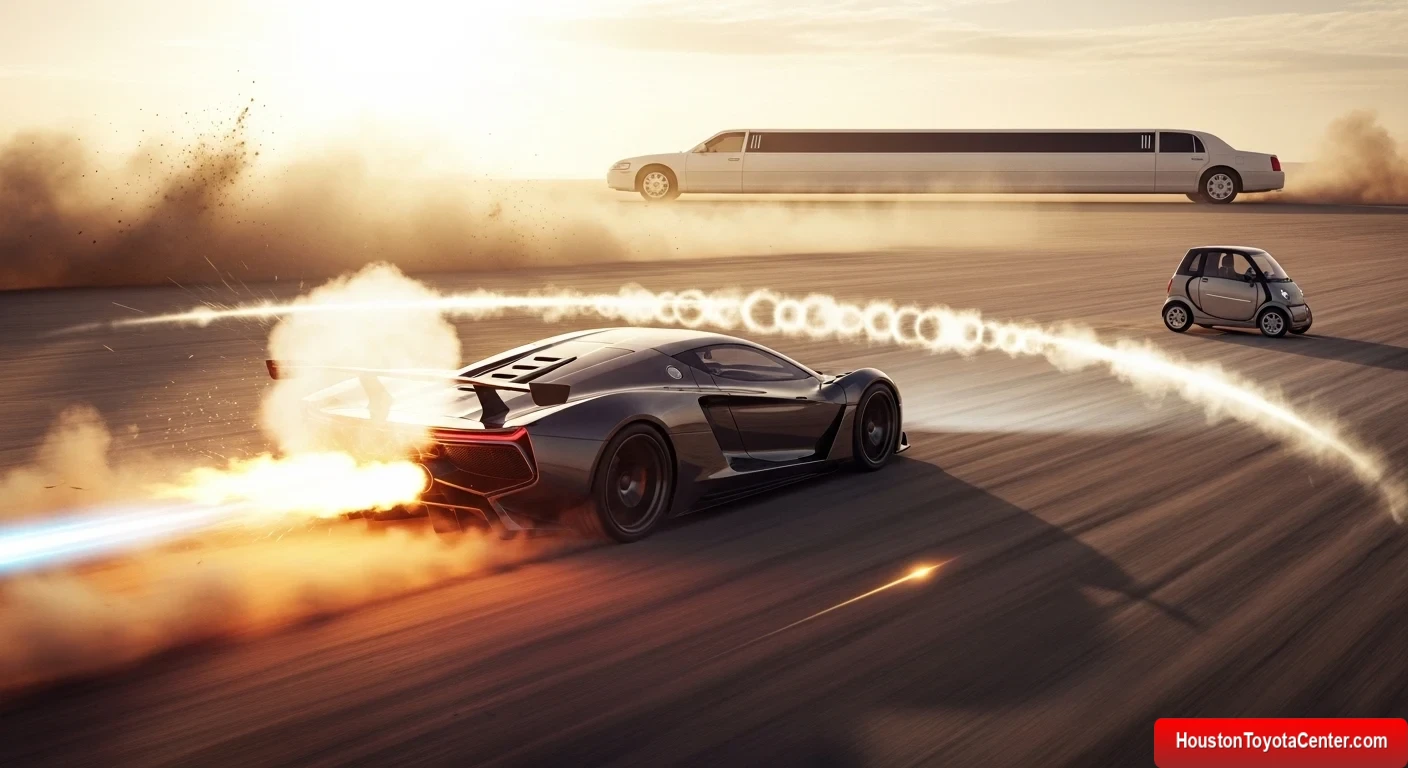
Cars have always been more than just machines for transportation. They represent human ambition, engineering brilliance, and the relentless pursuit of pushing limits. Over the past century, automakers, engineers, and visionaries have competed to create vehicles that redefine what is possible—whether that means achieving unimaginable speeds, traveling record-breaking distances, or reaching astonishing sizes and capabilities.
This article explores the fascinating world of record-breaking cars, diving deep into the categories that define automotive excellence: speed, endurance, size, efficiency, and beyond. From jet-powered land speed machines to electric vehicles that can cross continents, these records tell the story of human ingenuity in motion.
The Pursuit of Speed
The Evolution of Speed Records
Speed has always been the most captivating metric in the automotive world. Since the early 1900s, engineers have been obsessed with building faster vehicles. The first land speed record recognized was set in 1898 at just over 63 km/h. Today, that number has skyrocketed into the realm of supersonic travel.
What makes speed records so compelling is the combination of science, risk, and spectacle. These vehicles are not just cars—they are often closer to rockets on wheels.
FREE: Quickly identify and understand problems with your vehicle 🚘
CLICK HERELand Speed Record (LSR)
The official land speed record is governed by strict rules: the vehicle must travel over a measured distance in two opposite directions within a specific time frame. The average of these runs determines the final speed.
The current record stands at an astonishing 1,227.985 km/h (763.035 mph), set by the ThrustSSC in 1997. This vehicle became the first car to break the sound barrier on land.
Key Features of Record-Breaking Speed Cars
| Feature | Description |
|---|---|
| Propulsion | Jet or rocket engines instead of traditional internal combustion engines |
| Aerodynamics | Extremely streamlined bodies to reduce drag |
| Stability Systems | Advanced control systems to prevent flipping at high speeds |
| Materials | Heat-resistant alloys and composites |
| Tires | Solid aluminum or specially designed wheels (not rubber tires) |
Why Breaking the Sound Barrier Matters
Breaking the sound barrier is not just about speed—it’s about overcoming a fundamental physical limitation. As a vehicle approaches Mach 1, air resistance increases dramatically, and shockwaves form around the body. Successfully navigating this region requires extraordinary engineering.
The Future of Speed
Projects like Bloodhound SSC aim to push speeds beyond 1,600 km/h (1,000 mph). These vehicles combine jet engines with rocket boosters, representing the next frontier in land speed.
Endurance and Distance Records
While speed captures attention, endurance demonstrates reliability, efficiency, and resilience.
Longest Distance Driven
Distance records often highlight vehicles that can travel incredible lengths without failure. These records can be set under different conditions:
- Non-stop driving
- Single tank of fuel
- Electric range
- Lifetime mileage
Notable Distance Achievements
| Category | Record Description |
|---|---|
| Longest single journey | Over 741,000 km driven in one continuous journey |
| Highest mileage car | Over 5 million km accumulated by a single vehicle |
| Longest EV range | Over 1,000 km on a single charge (under optimal conditions) |
The Importance of Reliability
Cars that achieve long-distance records must excel in:
- Engine durability
- Fuel efficiency
- Thermal management
- Driver comfort
Unlike speed machines, endurance cars are often closer to production vehicles, making their achievements more relatable.
Electric Vehicles and Range Records
Electric vehicles (EVs) have transformed the endurance landscape. Early EVs struggled with limited range, but modern advancements in battery technology have changed that dramatically.
Some EVs can now travel over 600 km on a single charge under normal conditions, with experimental runs exceeding 1,000 km.
Size Matters: The Biggest and Smallest Cars
The Largest Cars Ever Built
When it comes to size, some vehicles push the boundaries of what can even be considered a “car.”
Characteristics of Giant Vehicles
- Length exceeding 30 meters
- Multiple axles (sometimes over 20 wheels)
- Custom-built for exhibitions or specialized purposes
One of the most famous oversized vehicles is the “American Dream,” a limousine stretching over 30 meters with features like a swimming pool and even a helipad.
Why Build Giant Cars?
- Marketing and publicity
- Engineering challenges
- Entertainment and spectacle
The Smallest Cars
On the opposite end of the spectrum, tiny cars demonstrate efficiency and clever design.
Features of Microcars
- Extremely compact dimensions
- Lightweight construction
- Minimalist interiors
Some of the smallest cars ever built are barely larger than a motorcycle, designed for urban environments where space is limited.
Fuel Efficiency and Eco Records
The Quest for Efficiency
As environmental concerns grow, efficiency records have become just as important as speed.
Most Fuel-Efficient Cars
Fuel efficiency records are often set in controlled competitions where teams optimize every aspect of the vehicle.
Techniques Used
- Ultra-lightweight materials
- Low rolling resistance tires
- Aerodynamic optimization
- Engine tuning for maximum efficiency
Some experimental cars have achieved fuel economy equivalent to thousands of kilometers per liter under ideal conditions.
Electric Efficiency
EVs are also competing in efficiency, measured in km/kWh.
Key Factors
- Battery technology
- Regenerative braking
- Software optimization
Acceleration Records
The Fastest 0–100 km/h Times
Acceleration records are particularly relevant to everyday drivers because they reflect real-world performance.
Modern hypercars can accelerate from 0 to 100 km/h in under 2 seconds, rivaling Formula 1 cars.
What Enables Extreme Acceleration?
| Factor | Explanation |
|---|---|
| Power-to-weight ratio | High horsepower combined with low weight |
| Traction | All-wheel drive systems |
| Tires | Specialized high-grip compounds |
| Aerodynamics | Downforce to keep the car planted |
Electric Cars and Instant Torque
Electric motors deliver maximum torque instantly, giving EVs a significant advantage in acceleration.
Unusual and Unique Records
The Longest Jump by a Car
Some cars have been modified to perform incredible stunts, including record-breaking jumps over hundreds of meters.
Highest Altitude Driven
Cars have reached altitudes over 6,700 meters above sea level, proving their capability in extreme environments.
Fastest Car on Ice
Driving on ice presents unique challenges due to reduced traction. Specialized vehicles have achieved speeds exceeding 300 km/h on frozen surfaces.
Technological Innovations Behind Records
Aerodynamics
Reducing drag is critical for both speed and efficiency. Engineers use wind tunnels and computational simulations to refine vehicle shapes.
Materials Science
Modern record-breaking cars rely on advanced materials such as:
- Carbon fiber
- Titanium
- High-strength aluminum alloys
These materials provide strength without excessive weight.
Powertrain Innovation
From traditional combustion engines to hybrid systems and fully electric drivetrains, powertrain technology continues to evolve.
The Role of Human Skill
Even the most advanced car requires a skilled driver. Record attempts often involve:
- Precise timing
- Exceptional reflexes
- Extensive training
Drivers must also handle extreme physical forces, especially in high-speed runs.
Risks and Challenges
Breaking records is not without danger. High-speed runs, in particular, involve significant risks:
- Mechanical failure
- Loss of control
- Environmental factors
Safety measures include:
- Reinforced cockpits
- Parachute braking systems
- Emergency protocols
Cultural Impact of Record-Breaking Cars
Inspiration and Innovation
Record-breaking cars inspire future generations of engineers and designers. Many technologies developed for these vehicles eventually make their way into consumer cars.
Media and Popularity
These cars often capture global attention, appearing in documentaries, films, and automotive shows.
Automotive Competition
Manufacturers use records as a way to showcase their capabilities and build brand prestige.
Comparing Record Categories
| Category | Focus Area | Example Achievement |
|---|---|---|
| Speed | Maximum velocity | Breaking the sound barrier |
| Distance | Endurance | Millions of kilometers driven |
| Size | Physical dimensions | 30+ meter limousine |
| Efficiency | Fuel or energy usage | Thousands of km per liter (experimental) |
| Acceleration | Quickness | 0–100 km/h under 2 seconds |
The Future of Record-Breaking Cars
Electric and Autonomous Records
As technology evolves, new types of records are emerging:
- Longest autonomous drive
- Fastest self-driving car
- Most efficient AI-controlled vehicle
Sustainable Innovation
Future records will likely emphasize sustainability, including:
- Zero emissions
- Renewable energy integration
- Recyclable materials
Space and Beyond
Some speculate that future “cars” may extend beyond Earth, with vehicles designed for lunar or Martian exploration.
Conclusion
Record-breaking cars are more than engineering marvels—they are symbols of humanity’s desire to push boundaries. Whether it’s achieving unimaginable speeds, traveling extraordinary distances, or redefining efficiency, these vehicles represent the cutting edge of innovation.
Each record tells a story: of determination, creativity, and the relentless pursuit of excellence. As technology continues to evolve, the limits of what cars can achieve will only expand, leading to new records that today may seem impossible.
The world of record-breaking cars is not just about numbers—it’s about what those numbers represent: the power of human ingenuity in motion.
Leave a Reply