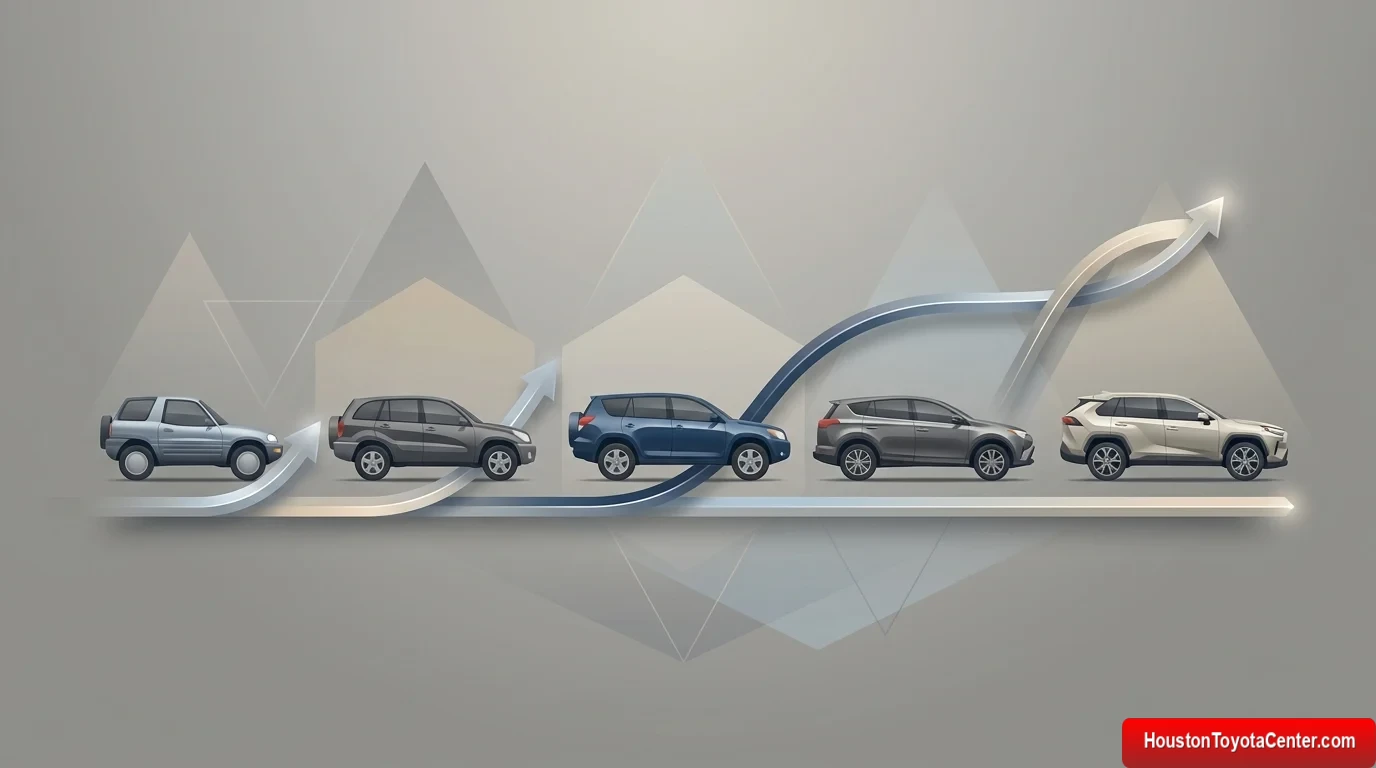
The Toyota RAV4 has become one of the most influential vehicles in automotive history. Since its debut in the mid-1990s, the RAV4 has transformed from a compact, unconventional crossover into one of the best-selling passenger vehicles globally. Its sales history reflects not only the success of a single model but also the broader shift in consumer preferences from sedans and wagons toward sport utility vehicles and crossovers.
Over nearly three decades, the RAV4 has consistently adapted to changing market conditions, evolving technologies, stricter environmental regulations, and consumer demands. Today, it stands as a benchmark in the compact SUV segment and serves as a key contributor to Toyota’s global sales performance.
Origins of the RAV4
The RAV4, which stands for “Recreational Active Vehicle with 4-Wheel Drive,” was introduced by Toyota in 1994 for the Japanese market and subsequently launched internationally. At the time, the automotive industry was dominated by traditional sedans, hatchbacks, and body-on-frame SUVs.
Toyota identified an emerging opportunity: consumers wanted the elevated driving position and practicality of an SUV without the bulk, fuel consumption, and off-road compromises associated with larger utility vehicles. The result was a compact crossover built on a passenger-car platform.
FREE: Quickly identify and understand problems with your vehicle 🚘
CLICK HEREThis approach was revolutionary. While modern crossovers dominate roads worldwide, the concept was still relatively new during the early 1990s. The RAV4 effectively helped establish the compact crossover SUV category.
Key Characteristics of the First Generation
- Compact dimensions
- Car-like driving dynamics
- Optional all-wheel drive
- Improved fuel efficiency compared with traditional SUVs
- Practical interior space
- Youth-oriented marketing
Toyota’s gamble proved successful, and the RAV4 quickly developed a loyal customer base.
First Generation Sales Performance (1994–2000)
The first-generation RAV4 exceeded many industry expectations. Initially introduced as a three-door model, Toyota later expanded the lineup with a five-door version to attract families seeking additional practicality.
Several factors contributed to strong early sales:
- Growing interest in outdoor lifestyles
- Increased urbanization
- Demand for versatile vehicles
- Rising popularity of compact SUVs
Although annual sales figures varied by region, the RAV4 steadily gained traction across Japan, North America, Europe, and Australia.
Market Impact
The first-generation RAV4 demonstrated that consumers were willing to embrace a vehicle that combined characteristics of both cars and SUVs. Its success encouraged other manufacturers to enter the crossover market, ultimately reshaping the global automotive industry.
The vehicle’s popularity established Toyota as a pioneer in a segment that would become one of the most competitive and profitable in the world.
Second Generation Expansion (2000–2005)
Toyota launched the second-generation RAV4 in 2000. The new model was larger, more refined, and better suited to family use.
The redesign reflected changing customer expectations. Buyers increasingly viewed compact SUVs not as niche recreational vehicles but as primary family transportation.
Improvements Included
| Area | Improvement |
|---|---|
| Interior Space | Larger cabin and cargo area |
| Safety | Enhanced structural design |
| Comfort | Better ride quality |
| Technology | Updated convenience features |
| Performance | Improved powertrain options |
These enhancements broadened the RAV4’s appeal and helped accelerate sales growth.
Global Sales Growth
During the early 2000s, compact SUV demand increased dramatically. The RAV4 benefited from Toyota’s strong reputation for reliability and resale value.
Many consumers who previously purchased sedans began switching to compact SUVs. The RAV4 was frequently among the top choices due to its balanced combination of practicality, efficiency, and dependability.
By the end of the second generation, Toyota had firmly established the RAV4 as one of the segment leaders.
Third Generation and Mainstream Success (2005–2012)
The third-generation RAV4 marked a significant turning point in the model’s history.
Toyota introduced a larger platform and expanded the vehicle’s capabilities. This generation was designed to appeal to a broader range of buyers, including families requiring additional seating and cargo capacity.
Major Changes
- Increased dimensions
- Available third-row seating in some markets
- More powerful engines
- Improved safety systems
- Enhanced comfort and refinement
The larger size allowed Toyota to compete more directly with midsize crossover alternatives while maintaining the efficiency benefits of the compact SUV segment.
Sales Momentum
During this period, crossover popularity surged globally.
The RAV4 benefited from several industry trends:
- Rising fuel prices encouraged buyers to seek efficient SUVs.
- Consumers increasingly preferred versatile vehicles.
- Families appreciated the elevated seating position.
- Improved safety ratings boosted confidence.
Sales volumes climbed steadily, particularly in North America, which emerged as one of the model’s most important markets.
Competition Intensifies
The success of the RAV4 attracted numerous competitors, including:
- Honda CR-V
- Ford Escape
- Nissan Rogue
- Hyundai Tucson
- Subaru Forester
Despite increased competition, the RAV4 maintained strong sales thanks to Toyota’s reputation and continuous product improvements.
Fourth Generation and Global Scale (2013–2018)
The fourth-generation RAV4 represented another major evolution.
Toyota focused heavily on efficiency, technology, and global appeal. The vehicle became more sophisticated while retaining the practicality that had made it successful.
Design Evolution
The fourth-generation model adopted a more modern appearance with:
- Sharper styling
- Improved aerodynamics
- Enhanced interior quality
- Updated infotainment systems
- Better fuel economy
Toyota also eliminated the rear-mounted spare tire found on previous generations, allowing for a cleaner design and improved cargo accessibility.
Hybrid Introduction
One of the most important developments during this generation was the introduction of hybrid technology.
Toyota had already achieved substantial success with hybrid vehicles through the Prius. Applying hybrid powertrains to the RAV4 created a compelling combination of:
- SUV practicality
- Reduced emissions
- Improved fuel economy
- Lower operating costs
The hybrid variant attracted environmentally conscious consumers while expanding the model’s customer base.
Sales Achievements
By the mid-2010s, the RAV4 was consistently among the best-selling SUVs worldwide.
Its popularity extended across multiple regions:
| Region | Importance to Sales |
| North America | Extremely High |
| Europe | High |
| Japan | Moderate |
| Australia | High |
| China | Growing |
Toyota’s global manufacturing network enabled the company to meet increasing demand efficiently.
Fifth Generation Dominance (2019–Present)
The launch of the fifth-generation RAV4 marked perhaps the most successful period in the model’s history.
Built on Toyota’s TNGA (Toyota New Global Architecture) platform, the vehicle delivered significant improvements in nearly every category.
Key Enhancements
- Stronger structure
- Better handling
- Increased safety
- Advanced driver assistance systems
- Improved hybrid technology
- More rugged design language
The redesign appealed to both existing owners and new customers entering the compact SUV market.
Sales Growth During the SUV Boom
The late 2010s and early 2020s saw unprecedented growth in SUV demand worldwide.
Several market factors contributed:
- Declining sedan sales
- Growing preference for crossover vehicles
- Improved fuel efficiency
- Increased consumer confidence in hybrid technology
- Expansion of family-oriented vehicle purchases
The RAV4 was perfectly positioned to capitalize on these trends.
North American Leadership
In North America, the RAV4 achieved remarkable success.
The model frequently ranked among:
- The best-selling SUVs
- The best-selling non-pickup vehicles
- Toyota’s highest-volume products
For several years, it competed directly with leading vehicles across all passenger segments.
Approximate U.S. Sales Trend
The following table illustrates the broader trend in RAV4 sales over time.
| Period | General Sales Trend |
| 1990s | Initial Growth |
| Early 2000s | Strong Expansion |
| Late 2000s | Continued Growth |
| Mid-2010s | Segment Leadership |
| 2020s | Record-Level Demand |
While exact annual figures fluctuate based on economic conditions and supply constraints, the overall trajectory has been overwhelmingly positive.
The Hybrid Effect on Sales
Hybrid technology has played a major role in the RAV4’s modern sales success.
Toyota’s extensive experience with electrification gave the company a competitive advantage.
Consumers increasingly sought vehicles offering:
- Lower fuel costs
- Reduced emissions
- Long-term reliability
- Familiar driving experiences
The RAV4 Hybrid delivered these benefits without requiring significant lifestyle changes.
Why Hybrid Sales Increased
Several factors encouraged adoption:
| Factor | Impact |
| Fuel Prices | Increased consumer interest |
| Environmental Awareness | Higher demand |
| Government Incentives | Improved affordability |
| Toyota Reputation | Enhanced trust |
| Technological Maturity | Reduced concerns |
As a result, hybrid variants became an increasingly important share of total RAV4 sales.
The Rise of the RAV4 Prime
Toyota expanded its electrification strategy with the introduction of the RAV4 Prime plug-in hybrid.
The model combined:
- Electric driving capability
- SUV practicality
- Strong acceleration
- Excellent efficiency
The RAV4 Prime quickly generated strong consumer demand.
In many markets, production capacity struggled to keep pace with interest from buyers seeking electrified transportation solutions.
Global Sales Milestones
Throughout its history, the RAV4 has achieved numerous significant milestones.
Key Achievements
- One of the earliest successful crossover SUVs
- Millions of units sold worldwide
- Multiple generations of sustained growth
- Strong global recognition
- Leadership in hybrid SUV adoption
Toyota’s ability to continuously refine the vehicle has helped maintain its competitiveness across changing market environments.
Factors Behind Long-Term Sales Success
The RAV4’s sustained popularity is not accidental. Several strategic advantages have contributed to its success.
Reliability
Toyota has long been associated with durability and dependability.
Many consumers prioritize reliability when purchasing vehicles, particularly family transportation.
The RAV4 consistently benefits from this reputation.
Practicality
The vehicle provides:
- Flexible cargo space
- Comfortable seating
- Easy entry and exit
- Everyday usability
These characteristics appeal to a wide range of demographics.
Fuel Efficiency
Compared with many traditional SUVs, the RAV4 offers competitive efficiency.
Hybrid variants further strengthen this advantage.
Safety
Modern RAV4 models feature advanced safety technologies, including:
- Automatic emergency braking
- Lane departure warning
- Adaptive cruise control
- Blind-spot monitoring
Safety has become a major purchase consideration for families.
Resale Value
Strong resale values encourage repeat purchases and improve ownership economics.
Toyota’s reputation helps maintain demand in both new and used vehicle markets.
Economic Events and Their Impact on Sales
The RAV4 has experienced numerous global economic cycles.
2008 Financial Crisis
The global recession affected vehicle sales across the industry.
However, the RAV4 remained relatively resilient due to:
- Strong brand loyalty
- Practical positioning
- Efficient operation
COVID-19 Pandemic
The pandemic created unprecedented disruptions.
Challenges included:
- Factory shutdowns
- Semiconductor shortages
- Logistics constraints
Despite these obstacles, consumer demand for the RAV4 remained strong.
In many markets, waiting lists and inventory shortages highlighted the model’s popularity.
Regional Sales Performance
North America
North America remains the largest and most influential RAV4 market.
Key drivers include:
- Strong SUV demand
- Family-oriented purchasing habits
- Toyota brand strength
Europe
European buyers increasingly embraced hybrid technology, benefiting RAV4 sales.
Environmental regulations further encouraged efficient vehicle adoption.
Asia
Sales performance varies by country, but Toyota’s extensive presence supports strong regional demand.
Australia
The RAV4 has consistently performed well due to:
- Versatility
- Fuel efficiency
- Reliability
- Suitability for diverse driving conditions
The RAV4 Versus Key Competitors
Throughout its history, the RAV4 has competed against numerous rivals.
| Competitor | Competitive Strength |
| Honda CR-V | Reliability and practicality |
| Nissan Rogue | Value and comfort |
| Ford Escape | Diverse powertrains |
| Hyundai Tucson | Technology and design |
| Kia Sportage | Features and pricing |
| Subaru Forester | All-wheel-drive reputation |
The RAV4’s ability to remain competitive across multiple dimensions has been essential to maintaining sales leadership.
How Consumer Preferences Changed
The RAV4’s sales history mirrors broader shifts in consumer behavior.
1990s
Consumers wanted compact adventure-oriented vehicles.
2000s
Families increasingly adopted compact SUVs as primary transportation.
2010s
Crossovers became mainstream.
2020s
Electrification and efficiency gained importance.
Toyota successfully adapted the RAV4 to each of these transitions.
Manufacturing and Production Strategy
Toyota’s global manufacturing network has been critical to meeting demand.
Production facilities across multiple regions provide:
- Reduced transportation costs
- Improved supply chain flexibility
- Faster delivery times
- Better responsiveness to local markets
This strategy supports sustained sales growth.
Future Sales Outlook
The future of the RAV4 appears promising.
Several trends support continued demand:
Electrification
Hybrid and plug-in hybrid variants are likely to remain major growth drivers.
SUV Popularity
Consumer preference for crossovers remains strong globally.
Brand Loyalty
Toyota continues to enjoy high levels of customer retention.
Technological Development
Advances in connectivity, safety systems, and efficiency should help maintain competitiveness.
Challenges Ahead
Despite its success, the RAV4 faces several challenges.
Increasing Competition
Virtually every major manufacturer now competes in the compact SUV segment.
Electric Vehicle Expansion
Battery-electric vehicles are becoming increasingly important.
Toyota must balance hybrid leadership with broader electrification efforts.
Regulatory Changes
Environmental standards continue to evolve worldwide.
Manufacturers must adapt products to comply with increasingly strict regulations.
Conclusion
The Toyota RAV4’s sales history represents one of the most successful product stories in modern automotive history. From its groundbreaking introduction in the 1990s to its current status as a global sales leader, the RAV4 has consistently evolved to meet changing consumer needs and market conditions.
Its journey reflects the rise of the crossover SUV itself. What began as an innovative alternative to traditional sport utility vehicles ultimately became one of the most influential vehicle categories in the world. Through multiple generations, Toyota refined the RAV4’s formula of practicality, reliability, efficiency, and value, allowing it to remain relevant in an increasingly competitive marketplace.
The addition of hybrid and plug-in hybrid technologies further strengthened its appeal, positioning the RAV4 at the intersection of SUV demand and vehicle electrification. As automotive markets continue to evolve, the RAV4’s adaptability suggests it will remain a major force in global vehicle sales for years to come.
Looking back at nearly three decades of growth, the RAV4 stands not only as a successful Toyota model but also as a symbol of how consumer preferences, technological innovation, and strategic product development can combine to create one of the world’s most enduring automotive success stories.
Leave a Reply