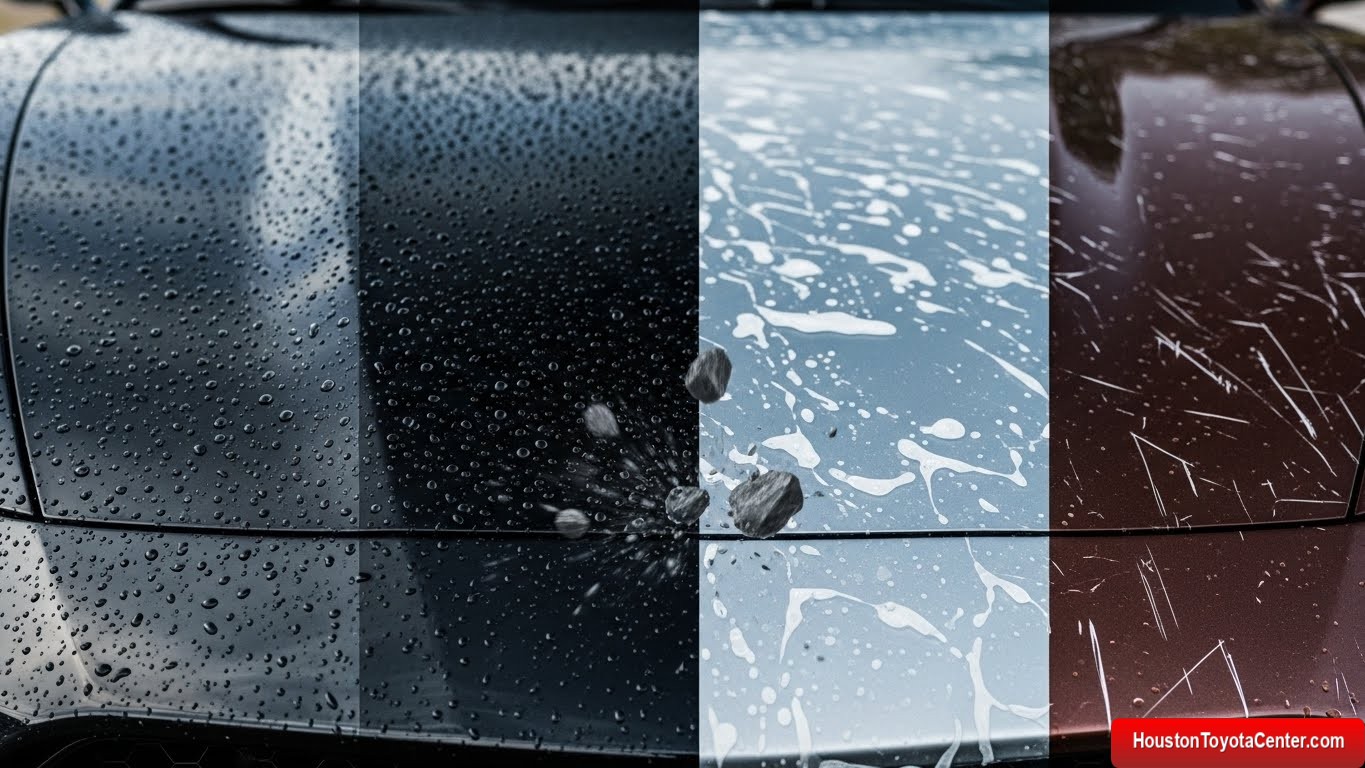
Your car’s exterior is more than just paint—it’s the first line of defense against the environment and the primary factor influencing curb appeal and resale value. Sunlight, rain, road debris, bird droppings, tree sap, salt, pollution, and improper washing all conspire to degrade automotive paint over time. Modern car owners therefore face an important decision: how to best protect the exterior finish.
Among the most popular options today are traditional wax, ceramic coatings, and paint protection film (PPF). Each promises protection and enhanced appearance, yet they differ dramatically in chemistry, performance, durability, cost, and ideal use cases.
This in-depth guide explores these three protection methods in detail. By the end, you’ll understand not only what each option does, but why one may be better suited to your car, your driving habits, and your long-term expectations.
Why Protecting Your Car’s Exterior Matters
Automotive paint is a multilayer system consisting of primer, base coat (color), and clear coat. The clear coat is thin—typically only 40–60 microns thick—and once damaged, it cannot regenerate.
FREE: Quickly identify and understand problems with your vehicle 🚘
CLICK HEREWithout protection, your paint is vulnerable to:
- UV oxidation and fading
- Chemical etching from bird droppings, bugs, and acid rain
- Micro-scratches and swirl marks
- Stone chips and road rash
- Staining from minerals and industrial fallout
Exterior protection isn’t just cosmetic. It preserves the integrity of the clear coat, reduces maintenance effort, and can significantly impact resale or trade-in value.
Overview of the Three Main Protection Options
Before diving deep, here’s a high-level comparison:
| Feature | Wax | Ceramic Coating | Paint Protection Film (PPF) |
|---|---|---|---|
| Primary Purpose | Shine & light protection | Chemical & UV protection | Physical impact protection |
| Durability | Weeks to months | 1–7 years | 5–10 years |
| Scratch Resistance | Very low | Moderate (micro-scratches) | High (chips & scratches) |
| Cost | Low | Medium–High | High |
| DIY Friendly | Very easy | Moderate–Hard | No |
| Visual Impact | Warm glow | Deep gloss | Near invisible |
Each solution excels in different areas, and understanding those differences is key.
Car Wax: The Traditional Choice
What Is Car Wax?
Car wax is the oldest and most familiar form of paint protection. Traditionally derived from carnauba wax, it creates a sacrificial layer on top of the clear coat. Modern waxes may include synthetic polymers or hybrid formulations, but the core concept remains the same.
Wax does not bond chemically with paint—it simply sits on top and gradually wears away.
Types of Car Wax
- Natural Carnauba Wax
- Derived from Brazilian palm leaves
- Known for warm, deep shine
- Short lifespan
- Synthetic Wax (Sealant)
- Polymer-based
- Longer durability than natural wax
- More reflective gloss
- Spray Wax
- Quick application
- Minimal protection
- Ideal as a drying aid or topper
Benefits of Wax
- Enhances gloss and depth
- Very affordable
- Easy DIY application
- Adds slickness to paint
- Great for enthusiasts who enjoy frequent detailing
Limitations of Wax
- Short lifespan (2–8 weeks)
- Minimal chemical resistance
- No real scratch or chip protection
- Requires frequent reapplication
- Degrades quickly under heat and sun
Wax is best viewed as cosmetic enhancement with mild protection, not a long-term solution.
Who Should Use Wax?
Wax is ideal if:
- You enjoy frequent car care routines
- Your car is garaged most of the time
- You want the cheapest solution
- You’re preparing a vehicle for a show or sale
Ceramic Coating: Modern Chemical Protection
What Is Ceramic Coating?
Ceramic coatings are liquid polymer solutions containing silicon dioxide (SiO₂) or silicon carbide (SiC). When applied, they chemically bond with the clear coat, forming a semi-permanent protective layer.
Unlike wax, ceramic coatings don’t simply sit on the surface—they become part of it.
How Ceramic Coatings Work
Once cured, the coating creates:
- A hard, glass-like surface
- Strong hydrophobic behavior
- High resistance to chemicals and UV rays
This dramatically reduces contamination bonding and makes the car easier to clean.
Benefits of Ceramic Coating
- Long-lasting protection (1–7 years)
- Exceptional water beading
- Strong UV and chemical resistance
- High-gloss, reflective finish
- Reduces swirl marks from washing
- Less frequent washing required
Limitations of Ceramic Coating
- Does not prevent rock chips
- Expensive compared to wax
- Requires proper surface prep
- Incorrect application can cause high spots
- Not fully scratch-proof
Ceramic coatings excel at preserving appearance, not stopping physical impacts.
DIY vs. Professional Ceramic Coating
DIY coatings
- Lower cost
- 6–12 months durability
- Risk of uneven application
Professional coatings
- Multi-layer systems
- Infrared curing
- Warranties available
- Requires paint correction beforehand
Who Should Use Ceramic Coating?
Ceramic coating is ideal if:
- You want long-term gloss and ease of maintenance
- Your car lives outdoors
- You value chemical resistance
- You’re willing to invest upfront
Paint Protection Film (PPF): The Ultimate Physical Shield
What Is Paint Protection Film?
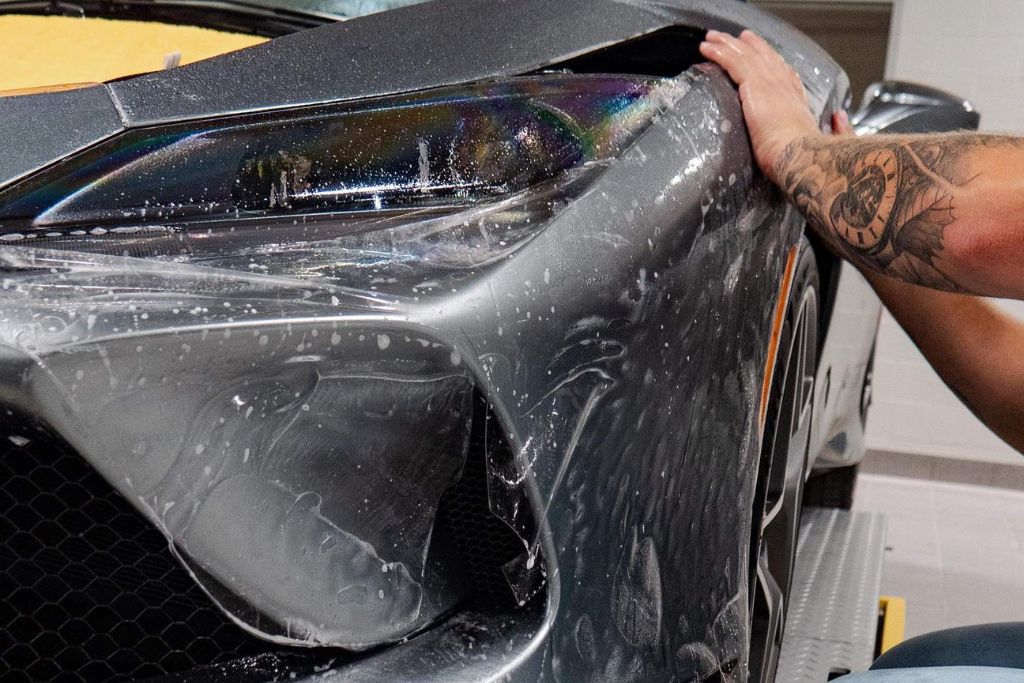
PPF is a transparent thermoplastic polyurethane (TPU) film applied directly to painted surfaces. Originally developed for military use, it’s now the gold standard for impact protection in automotive detailing.
PPF physically absorbs and disperses energy from impacts.
Key Features of PPF
- Self-healing under heat
- Thickness of 150–200 microns
- UV-resistant top layer
- Available in gloss, matte, or satin finishes
Benefits of PPF
- Best protection against rock chips
- Prevents scratches and swirl marks
- Self-healing technology
- Preserves original paint condition
- Long lifespan (5–10 years)
Limitations of PPF
- Highest cost
- Professional installation only
- Seams may be visible on partial installs
- Can yellow on low-quality films
- Does not enhance gloss as much as ceramic alone
Partial vs. Full PPF Coverage
- Partial PPF: bumper, hood edge, mirrors
- Full-front PPF: hood, fenders, bumper
- Full-body PPF: maximum protection, highest cost
Who Should Use PPF?
PPF is ideal if:
- You drive frequently on highways
- You own a luxury or performance car
- You plan to keep the vehicle long-term
- You want maximum physical protection
Combining Protection Methods: The Best of All Worlds
Many owners combine solutions:
PPF + Ceramic Coating
- PPF protects against impacts
- Ceramic enhances gloss and hydrophobicity
- Ceramic can be applied on top of PPF
Ceramic Coating + Wax
- Wax adds warmth to ceramic gloss
- Wax acts as a sacrificial topper
This layered approach offers comprehensive protection and aesthetics.
Cost Comparison (Approximate)
| Protection Type | Typical Cost Range |
|---|---|
| Wax | $20–$150 |
| Ceramic Coating | $500–$2,500 |
| Partial PPF | $600–$1,500 |
| Full PPF | $4,000–$8,000+ |
Prices vary by vehicle size, location, and installer expertise.
Maintenance Requirements
- Wax: Reapply every 1–2 months
- Ceramic: Use pH-neutral shampoos, annual inspections
- PPF: Avoid harsh chemicals, occasional sealant recommended
Proper maintenance is essential to maximize lifespan regardless of choice.
Environmental and Lifestyle Considerations
- Hot climates: Ceramic and PPF outperform wax
- Snow/salt regions: PPF excels
- Garage-kept cars: Wax may suffice
- Daily drivers: Ceramic or PPF recommended
Final Verdict: Which Is Right for You?
There is no universal “best” solution—only the best solution for your situation.
- Choose Wax if you want affordability and enjoy detailing.
- Choose Ceramic Coating if you want long-term shine and easy maintenance.
- Choose PPF if you want maximum protection against physical damage.
- Choose a Combination if you want the highest level of protection and appearance.
Your car is a significant investment. Protecting its exterior properly ensures it looks better, lasts longer, and retains more value for years to come.
Leave a Reply