
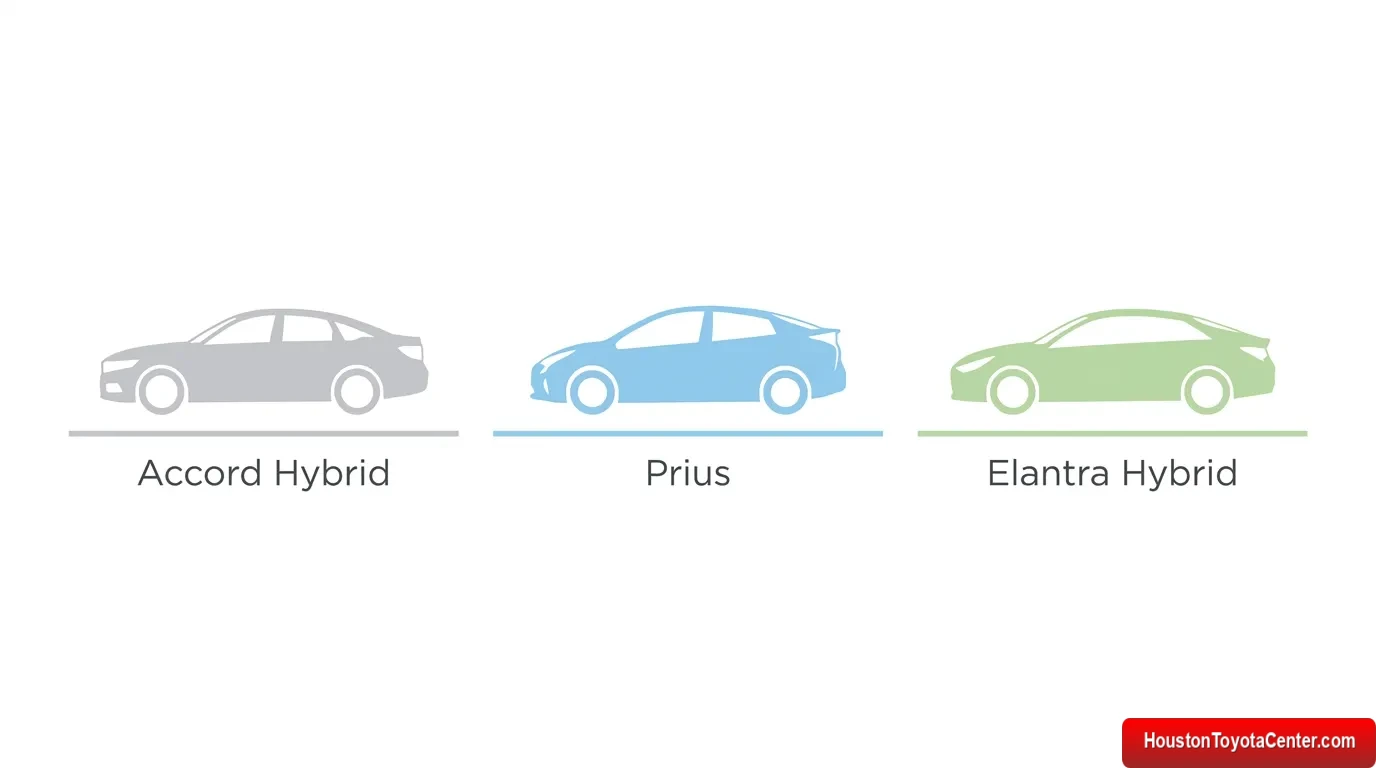
The automotive landscape has undergone a dramatic transformation over the past two decades, with hybrid vehicles evolving from niche curiosities to mainstream staples. At the center of this revolution stands the Toyota Prius, a name that has become synonymous with fuel efficiency and environmental consciousness. However, as we navigate through 2026, the question arises: does the Prius still reign supreme in an increasingly crowded hybrid marketplace? The answer is nuanced, requiring a careful examination of specifications, pricing, performance metrics, and the formidable competition that has emerged to challenge Toyota’s long-standing dominance.
The Current State of the Prius
The 2026 Toyota Prius represents the fifth generation of Toyota’s hybrid technology, delivering impressive improvements across multiple dimensions. With a starting MSRP of $28,550 for the base LE trim, the Prius positions itself competitively within the compact hybrid segment [[3]]. The vehicle achieves remarkable fuel economy figures, with EPA ratings reaching up to 57 mpg combined for certain configurations, though the standard front-wheel-drive model delivers 54 mpg combined (53 city/54 highway) [[3]]. This efficiency is powered by a 2.0-liter four-cylinder engine paired with two electric motors, generating 194 horsepower at 6,000 rpm [[3]].
The latest Prius iteration marks a significant departure from its utilitarian predecessors. Gone are the days when the Prius was criticized for its polarizing aesthetics. The current model boasts sporty styling that appeals to younger demographics while maintaining the aerodynamic efficiency that made earlier versions so fuel-efficient. U.S. News & World Report awards the 2026 Prius an overall score of 8.8, noting its “decent performance, very good fuel economy and sporty styling” [[2]]. This represents a notable improvement in perceived quality and driving dynamics compared to previous generations.
All-wheel drive is available across all trim levels for an additional $1,400, providing enhanced traction for drivers in regions with challenging weather conditions [[1]]. The cargo capacity stands at 23.8 cubic feet with all seats in place, which is adequate for daily commuting but falls short of some competitors in the compact hatchback category [[3]]. Safety features come standard, including blind spot monitoring, lane keep assist, pre-collision safety systems, and adaptive cruise control, ensuring that the Prius meets modern expectations for driver assistance technology [[3]].
FREE: Quickly identify and understand problems with your vehicle 🚘
CLICK HEREThe Competitive Landscape
While the Prius maintains its reputation for efficiency, it faces unprecedented competition from established automakers and emerging players alike. The Honda Accord Hybrid emerges as a particularly strong contender, earning a 9.2 score from U.S. News & World Report and positioning itself as a “fuel-efficient, comfortable and reliable family sedan” [[2]]. With an MSRP ranging from $33,795 to $39,495, the Accord Hybrid commands a premium price but justifies it with superior interior space, refined driving dynamics, and fuel economy ratings of 46-51 mpg city and 41-44 mpg highway [[2]]. For buyers prioritizing comfort and passenger space over maximum fuel efficiency, the Accord Hybrid presents a compelling alternative.
Hyundai has also made significant inroads into the hybrid market with models like the Elantra Hybrid, which ties with the Accord Hybrid at a 9.2 rating [[2]]. Priced between $25,450 and $29,800, the Elantra Hybrid offers exceptional value, achieving 49-51 mpg in the city and an impressive 52-58 mpg on the highway [[2]]. This makes it one of the most fuel-efficient non-plug-in hybrids available, directly challenging the Prius’s traditional advantage. The Hyundai Ioniq, though discontinued in its original form, paved the way for Hyundai’s current electrified lineup and demonstrated that competitors could match or exceed Toyota’s efficiency benchmarks.
The Toyota Camry Hybrid further complicates the picture within Toyota’s own lineup. Scoring 9.4 from U.S. News, the Camry Hybrid outperforms the Prius in overall ratings while offering midsize sedan practicality [[2]]. With prices ranging from $29,000 to $36,725, the Camry Hybrid provides more interior space and a smoother ride, appealing to buyers who want hybrid efficiency without sacrificing comfort [[2]]. This internal competition suggests that even Toyota recognizes the need to diversify its hybrid offerings beyond the Prius badge.
Performance and Driving Dynamics
The 2026 Prius accelerates from 0 to 60 mph in 7.2 seconds, which represents adequate performance for daily driving but falls short of sportier competitors [[3]]. The continuously variable automatic transmission (CVT) provides smooth power delivery but can produce the characteristic droning sound that some drivers find unappealing during hard acceleration. The vehicle’s curb weight of 3,097 pounds contributes to its efficiency but limits outright performance potential [[3]].
In comparison, the Honda Accord Hybrid offers a more engaging driving experience with better handling characteristics and a more refined powertrain. The Hyundai Elantra Hybrid, while not as powerful, delivers comparable efficiency with potentially lower ownership costs given Hyundai’s competitive warranty coverage. The plug-in hybrid variant of the Prius, known as the Prius Plug-In Hybrid, addresses some performance concerns by offering 220 horsepower and up to 44 miles of all-electric range, accelerating from 0 to 60 mph in just 6.6 seconds [[9]]. However, this comes at a significantly higher price point, starting around $32,000 before incentives.
Value Proposition and Total Cost of Ownership
When evaluating the Prius against its competition, total cost of ownership becomes a critical factor. Cars.com ranks the 2026 Prius as the best hatchback hybrid for the money, awarding it an efficiency-cost rating of 9 and calculating a score of 1.90 on their efficiency-cost scale [[1]]. This metric considers both purchase price and fuel economy, demonstrating that the Prius delivers excellent value for budget-conscious buyers seeking maximum efficiency per dollar spent.
Toyota’s hybrid component warranty extends to 10 years or 150,000 miles, providing peace of mind for long-term owners [[3]]. The brand’s reputation for reliability remains strong, with the Prius historically demonstrating low maintenance costs and excellent resale value. However, competitors have closed the gap in terms of reliability, with Honda and Hyundai both offering competitive warranty packages and improving their long-term dependability ratings.
The hybrid vehicle market itself is experiencing robust growth, valued at $166.37 billion in 2026 and projected to reach $262.91 billion by 2032, growing at a 7.7% compound annual growth rate [[29]]. This expansion reflects increasing consumer acceptance of hybrid technology and stricter emissions regulations worldwide. Other forecasts suggest even more aggressive growth, with some projections estimating the market will expand from $337.6 billion in 2026 to $2,367.0 billion by 2036 [[37]]. This booming market ensures continued innovation and competition, benefiting consumers through improved technology and more choices.
Technological Features and Innovation
The 2026 Prius comes equipped with an 8.0-inch infotainment display as standard, supporting wireless Android Auto and Apple CarPlay connectivity [[3]]. While functional, this screen size lags behind some competitors that offer larger displays with more advanced graphics and faster processing speeds. The vehicle includes six speakers, satellite radio with three months of complimentary service, and USB connectivity for media playback [[3]].
Safety technology represents a strong point for the Prius, with Toyota Safety Sense 3.0 providing comprehensive driver assistance features as standard equipment [[8]]. This includes pre-collision braking, lane departure alert with steering assist, automatic high beams, and dynamic radar cruise control. These features match or exceed what competitors offer, though some luxury-oriented hybrids provide more sophisticated systems with additional sensors and capabilities.
The plug-in hybrid variant offers enhanced technological features, including home charging capability and three distinct drive modes that allow drivers to optimize between electric-only operation, hybrid mode, and battery preservation [[7]]. This flexibility appeals to commuters with predictable daily routes who can maximize electric driving during weekdays while retaining gasoline backup for longer trips.
Market Position and Consumer Perception
Despite facing stiff competition, the Prius maintains its status as a benchmark in the hybrid segment. Its name recognition remains unparalleled, with “Prius” often used generically to refer to any hybrid vehicle. This brand equity provides Toyota with marketing advantages that newer competitors must work harder to overcome. However, the Prius no longer holds a monopoly on efficiency or innovation, forcing Toyota to compete on multiple fronts including design, technology, and driving experience.
Consumer preferences have evolved beyond pure fuel economy considerations. Modern buyers seek vehicles that combine efficiency with style, technology, and driving enjoyment. The 2026 Prius addresses these demands more effectively than previous generations, but competitors like the Honda Civic Hybrid (scoring 9.3) and various Hyundai models demonstrate that excellence in hybrid technology is no longer exclusive to Toyota [[2]].
Conclusion: Is the Prius Still the Best?
The answer depends on how one defines “best.” If the criterion is maximum fuel efficiency per dollar spent, the 2026 Toyota Prius remains an outstanding choice, particularly for buyers prioritizing low operating costs and proven reliability. Its 57 mpg combined rating in optimal configurations, competitive pricing starting at $28,550, and Toyota’s reputation for durability make it difficult to ignore [[1]][[2]].
However, if “best” encompasses overall driving experience, interior space, technology features, or specific use cases, several competitors offer compelling alternatives. The Honda Accord Hybrid provides superior comfort and refinement for families willing to pay a premium. The Hyundai Elantra Hybrid matches or exceeds the Prius’s efficiency while offering exceptional value. The Toyota Camry Hybrid delivers midsize practicality with excellent efficiency, appealing to those who find the Prius too compact.
The Prius Plug-In Hybrid variant addresses many performance and technology shortcomings of the standard model, offering 220 horsepower and substantial electric-only range for those with access to charging infrastructure [[9]]. This model represents Toyota’s acknowledgment that the hybrid market has matured beyond basic efficiency concerns.
Ultimately, the Prius remains among the best hybrid vehicles available in 2026, but it no longer stands alone at the summit. The competitive landscape has elevated, providing consumers with numerous excellent options tailored to different priorities and budgets. The Prius continues to excel in its core mission of delivering efficient, reliable transportation, but buyers should carefully evaluate their specific needs against the full spectrum of hybrid offerings before making a decision. In a market where excellence has become more common, the Prius must share the spotlight rather than dominate it exclusively. This evolution benefits consumers through increased choice, improved technology, and competitive pricing across the entire hybrid segment.
Leave a Reply