
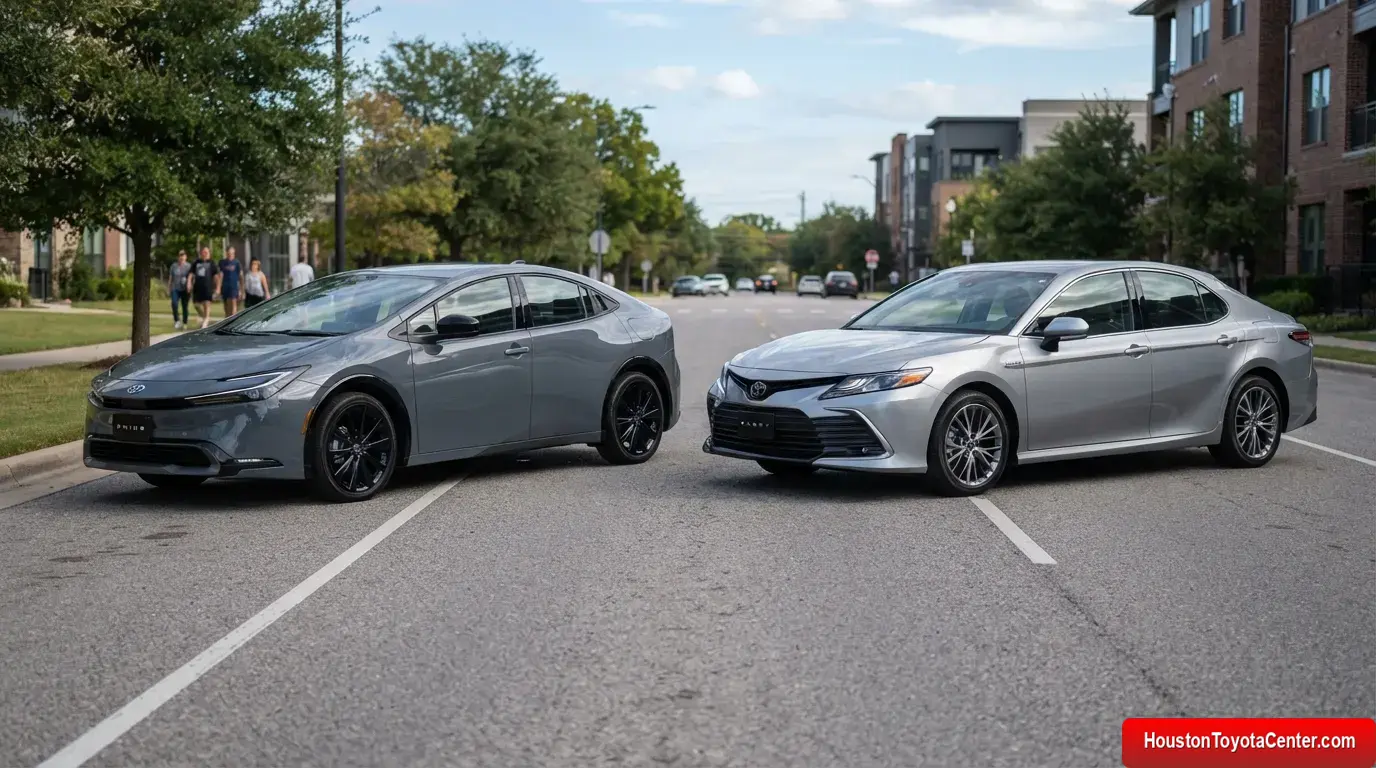
In the ever-evolving landscape of automotive technology, hybrid vehicles have emerged as a crucial bridge between traditional internal combustion engines and the all-electric future. Among the pioneers and leaders in this space stands Toyota, whose commitment to electrification has produced some of the most recognizable and successful hybrid vehicles on the market. Two names dominate conversations about Toyota’s hybrid lineup: the Prius and the Camry Hybrid. Both represent excellence in fuel efficiency, environmental consciousness, and technological innovation, yet they cater to distinctly different audiences with varying needs and preferences.
The debate between choosing a Prius versus a Camry Hybrid is not merely about comparing two cars; it represents a fundamental choice between two philosophies of automotive design and ownership. The Prius, introduced in 1997 as the world’s first mass-produced hybrid vehicle, has become synonymous with eco-friendly driving and maximum fuel efficiency. Its distinctive shape, often polarizing in its aesthetics, was engineered specifically to minimize aerodynamic drag and maximize energy conservation. Over multiple generations, the Prius has evolved from an oddity into an icon, representing a lifestyle choice for those who prioritize environmental impact above all else.
The Camry Hybrid, on the other hand, represents a different approach to hybridization. Built upon America’s best-selling sedan platform, the Camry Hybrid offers the familiar comfort, spaciousness, and driving dynamics that millions of Americans have come to expect from the Camry nameplate, enhanced by hybrid technology rather than defined by it. For many buyers, the Camry Hybrid represents a compromise-free solution: the ability to enjoy significant fuel savings without sacrificing the conventional sedan experience they’ve grown accustomed to.
This comprehensive comparison will delve deep into every aspect that matters when choosing between these two exceptional vehicles. We’ll examine their powertrains and performance characteristics, analyze real-world fuel economy figures, compare interior space and comfort levels, evaluate technology and safety features, assess total cost of ownership, and ultimately determine which vehicle better serves different types of drivers. Whether you’re a daily commuter concerned about gas prices, a family needing practical transportation, or an environmentally conscious consumer looking to reduce your carbon footprint, understanding the nuances between the Prius and Camry Hybrid will help you make an informed decision that aligns with your priorities and lifestyle.
FREE: Quickly identify and understand problems with your vehicle 🚘
CLICK HEREPowertrain and Performance Comparison
At the heart of any hybrid vehicle lies its powertrain system, and both the Prius and Camry Hybrid showcase Toyota’s sophisticated Hybrid Synergy Drive technology, though implemented differently to serve their respective purposes. The current-generation Prius utilizes a 2.0-liter four-cylinder engine paired with electric motors, producing a combined output of approximately 194 horsepower in standard configurations, with the all-wheel-drive variant offering slightly less at around 196 horsepower due to the additional rear motor. This represents a significant power increase from previous generations, addressing one of the historical criticisms of the Prius—lackluster acceleration.
The Camry Hybrid employs a larger 2.5-liter four-cylinder engine combined with electric motors, generating a robust 208 horsepower in front-wheel-drive configurations. This power advantage translates to noticeably stronger acceleration, with the Camry Hybrid achieving 0-60 mph times in the mid-7-second range, compared to the Prius’s approximately 7.5 to 8 seconds depending on trim and drivetrain configuration. While neither vehicle could be described as sporty in the traditional sense, the Camry Hybrid delivers more confident passing power and highway merging capability.
| Specification | Toyota Prius | Toyota Camry Hybrid |
|---|---|---|
| Engine Displacement | 2.0L 4-cylinder | 2.5L 4-cylinder |
| Combined Horsepower | 194 hp (FWD) / 196 hp (AWD) | 208 hp |
| Transmission | eCVT | eCVT |
| 0-60 mph Time | 7.5-8.0 seconds | 7.2-7.6 seconds |
| Drivetrain Options | FWD, AWD | FWD only |
The electronic continuously variable transmission (eCVT) in both vehicles operates seamlessly, providing smooth power delivery without the jerky shifts associated with traditional automatic transmissions. However, the driving experience differs significantly between the two. The Prius prioritizes efficiency in every aspect of its calibration, resulting in a lighter, more nimble feel that excels in stop-and-go city traffic where regenerative braking can capture maximum energy. The steering is light and precise, though some drivers may find it lacks feedback compared to conventional vehicles.
The Camry Hybrid, benefiting from its larger platform and more powerful engine, offers a more substantial driving experience. The suspension tuning provides better isolation from road imperfections, and the steering feels more weighted and connected. Highway stability is superior in the Camry Hybrid, with less wind noise and a more planted feel at higher speeds. The additional weight, while detrimental to ultimate efficiency, contributes to a sense of solidity and refinement that appeals to traditional sedan buyers.
Regenerative braking systems in both vehicles operate effectively, though the Prius’s system is more aggressive in its energy recovery, sometimes creating a noticeable deceleration effect when lifting off the accelerator. This characteristic requires an adjustment period for new Prius owners but ultimately maximizes efficiency. The Camry Hybrid’s regenerative braking is more subtle and closely mimics conventional braking feel, making the transition easier for drivers switching from non-hybrid vehicles.
For those considering winter driving or living in regions with inclement weather, the Prius offers an available all-wheel-drive system—a rarity in the compact hybrid segment. This AWD system uses an independent electric motor to power the rear wheels when needed, providing enhanced traction without the mechanical complexity and efficiency penalties of traditional AWD systems. The Camry Hybrid remains front-wheel drive only, which may be a consideration for buyers in snowy climates, though its weight distribution and electronic stability controls provide competent handling in adverse conditions.
Fuel Economy and Real-World Efficiency
When discussing hybrid vehicles, fuel economy naturally takes center stage, and this is where the philosophical differences between the Prius and Camry Hybrid become most apparent. The Prius, designed from the ground up as a maximum-efficiency vehicle, achieves EPA-estimated ratings of approximately 57 mpg city and 56 mpg highway for front-wheel-drive models, with all-wheel-drive variants rating slightly lower at around 54 mpg city and 50 mpg highway. These figures place the Prius among the most efficient non-plug-in hybrid vehicles available, rivaling even some plug-in hybrids when operating in hybrid mode.
The Camry Hybrid, while still impressively efficient, cannot match the Prius’s extraordinary numbers due to its larger size, greater weight, and more powerful engine. EPA estimates for the Camry Hybrid typically range from 51 mpg city to 53 mpg highway, depending on trim level and wheel size. While these figures are excellent for a midsize sedan and significantly better than comparable non-hybrid competitors, they represent a meaningful gap compared to the Prius.
| Driving Condition | Prius FWD | Prius AWD | Camry Hybrid |
|---|---|---|---|
| City MPG | 57 | 54 | 51 |
| Highway MPG | 56 | 50 | 53 |
| Combined MPG | 56 | 52 | 52 |
| Annual Fuel Cost* | ~$900 | ~$950 | ~$950 |
*Based on 15,000 miles annually and $3.50 per gallon
Real-world testing by automotive journalists and owner reports generally confirm these EPA estimates, though actual mileage varies based on driving style, climate, terrain, and maintenance. The Prius tends to exceed its EPA ratings in gentle city driving where regenerative braking and electric-only operation at low speeds maximize efficiency. Conversely, aggressive highway driving or mountainous terrain can reduce the Prius’s advantage, though it typically maintains a slight edge over the Camry Hybrid in most conditions.
One often-overlooked aspect of hybrid efficiency is the impact of driving habits. The Prius rewards careful, anticipatory driving with exceptional efficiency, while punishing aggressive acceleration and hard braking. Drivers who embrace the “Prius mindset”—smooth inputs, coasting to stops, and maintaining steady speeds—can consistently achieve 60+ mpg in mixed driving. The Camry Hybrid, while still responsive to efficient driving techniques, is more forgiving of spirited driving and maintains respectable efficiency even when pushed harder.
Climate control usage affects both vehicles similarly, with air conditioning and heating reducing efficiency by 10-15% in extreme temperatures. However, the Prius’s smaller cabin volume means climate systems work less hard to maintain comfortable temperatures, providing a minor efficiency advantage. Both vehicles feature eco modes that adjust throttle response, climate control operation, and other systems to maximize efficiency, though the Prius’s eco mode creates more noticeable changes in vehicle behavior.
Long-distance highway cruising reveals another interesting dynamic. While the Prius maintains its efficiency advantage in city driving, the gap narrows significantly on extended highway trips. The Camry Hybrid’s larger engine operates more efficiently at sustained highway speeds, and its superior aerodynamics at higher velocities (despite the Prius’s lower drag coefficient) help it close the efficiency gap. For buyers who primarily drive long highway commutes, the real-world difference may be smaller than EPA numbers suggest.
Interior Space, Comfort, and Practicality
Stepping inside these vehicles reveals stark differences in philosophy and execution. The Prius, constrained by its efficiency-focused design and compact exterior dimensions, offers adequate but not generous interior space. Front-seat passengers enjoy reasonable comfort with well-positioned seats and good visibility, though the low roofline and sloping rear window can create a somewhat confined feeling for taller individuals. Rear-seat space is the Prius’s most significant compromise, with limited legroom and headroom making extended journeys uncomfortable for adult passengers. The cargo area, while surprisingly usable at approximately 27 cubic feet with seats up, features an unusual hatchback design that some find awkward for loading larger items.
The Camry Hybrid, built on Toyota’s midsize sedan platform, provides substantially more interior volume in every dimension. Front-seat occupants benefit from wider seats, more adjustment range, and a more open, airy feeling created by the traditional sedan proportions. Rear-seat passengers enjoy legitimate comfort with ample legroom, sufficient headroom, and proper seat cushioning for adults on longer trips. The trunk offers approximately 15 cubic feet of space—less than the Prius’s hatchback configuration but more conventionally shaped and easier to access for typical sedan use cases.
| Interior Dimension | Prius | Camry Hybrid |
|---|---|---|
| Front Headroom | 39.0 inches | 38.3 inches |
| Front Legroom | 42.3 inches | 42.1 inches |
| Rear Headroom | 37.1 inches | 37.6 inches |
| Rear Legroom | 33.4 inches | 38.0 inches |
| Cargo Volume | 27.4 cu ft | 15.1 cu ft |
| Passenger Volume | 94.0 cu ft | 100.4 cu ft |
Material quality and fit-and-finish have improved dramatically in recent Prius generations, moving away from the hard, cheap plastics of earlier models toward softer-touch surfaces and more refined designs. However, the Camry Hybrid maintains an advantage in perceived quality, with better sound insulation, more premium materials in higher trims, and overall craftsmanship that feels more aligned with traditional midsize sedans. Noise levels are notably lower in the Camry Hybrid, particularly at highway speeds where wind and road noise are better suppressed.
Seating comfort favors the Camry Hybrid for most body types and driving durations. The Prius’s seats, while adequate for shorter trips, lack the cushioning and support needed for comfortable long-distance travel. The Camry Hybrid offers available leather upholstery, heated and ventilated front seats, and even a moonroof in higher trims—features either unavailable or rare in the Prius lineup. Climate control effectiveness is comparable, though the Camry Hybrid’s larger cabin takes slightly longer to heat or cool initially.
Practicality considerations extend beyond pure measurements. The Prius’s hatchback design offers versatility for carrying tall or bulky items that wouldn’t fit through a sedan trunk opening. Folding the rear seats creates a nearly flat load floor suitable for camping gear, bicycles, or furniture. The Camry Hybrid’s traditional trunk, while less versatile, provides secure, out-of-sight storage and easier loading of standard luggage. For families regularly transporting children, the Camry Hybrid’s easier rear-seat access and more comfortable child seat installation make it the more practical choice.
Storage solutions differ as well. The Prius features creative use of space with various cubbies and compartments, including a unique shelf above the dashboard in some configurations. The Camry Hybrid offers more conventional but generously sized storage areas, with larger door pockets, a substantial center console, and better-designed cupholders. Both vehicles provide adequate smartphone storage and charging options, though the Camry Hybrid typically offers more USB ports and wireless charging availability across trim levels.
Technology, Safety, and Modern Features
In today’s automotive landscape, technology and safety features play crucial roles in purchasing decisions, and both the Prius and Camry Hybrid come well-equipped with modern conveniences and protective systems. Toyota Safety Sense, the company’s suite of advanced driver-assistance features, comes standard on both vehicles, including pre-collision braking with pedestrian detection, lane departure alert with steering assist, automatic high beams, and dynamic radar cruise control. These systems perform competently in both vehicles, though the Camry Hybrid’s larger sensors and more powerful processing hardware occasionally provide slightly smoother operation.
Infotainment systems have evolved significantly in recent years. The current Prius features an available 12.3-inch touchscreen display running Toyota’s latest multimedia system, with wireless Apple CarPlay and Android Auto compatibility, voice recognition, and cloud-based navigation. Lower trims receive an 8-inch screen with similar functionality. The Camry Hybrid offers comparable technology, with an available 12.3-inch display in higher trims and an 8-inch screen standard on most models. Both systems have improved in responsiveness and user interface design, though some users still find Toyota’s software less intuitive than competitors’ offerings.
| Feature | Prius | Camry Hybrid |
|---|---|---|
| Standard Screen Size | 8.0 inches | 8.0 inches |
| Available Screen Size | 12.3 inches | 12.3 inches |
| Wireless CarPlay/Android Auto | Available | Available |
| Digital Instrument Cluster | Standard | Available |
| Head-Up Display | Not Available | Available (higher trims) |
| Premium Audio Option | JBL (available) | JBL (available) |
The Prius distinguishes itself with a standard digital instrument cluster that displays energy flow, efficiency metrics, and driving information in customizable formats. This tech-forward approach appeals to efficiency-minded drivers who enjoy monitoring their hybrid system’s operation. The Camry Hybrid offers an available digital gauge cluster in higher trims, but base models retain traditional analog gauges with a small digital display. An available head-up display in top-tier Camry Hybrid trims projects speed and navigation information onto the windshield, a feature absent from the Prius lineup.
Audio systems in both vehicles range from basic six-speaker setups to premium JBL systems with nine or more speakers. Sound quality is generally good in both, though the Camry Hybrid’s superior cabin insulation allows audio systems to perform better at higher volumes without competing with road noise. Both vehicles offer available wireless charging pads, multiple USB ports, and Bluetooth connectivity, with the Camry Hybrid typically offering more charging options across trim levels.
Advanced safety features beyond the standard Toyota Safety Sense suite include blind-spot monitoring with rear cross-traffic alert, available on most trims of both vehicles. The Camry Hybrid offers additional available features like a 360-degree camera system, parking assist, and adaptive front lighting in top trims. The Prius, focused on efficiency and value, keeps its feature set more streamlined, though recent generations have added more convenience technologies.
Driver assistance features perform similarly in both vehicles, with lane-keeping assistance that gently steers the vehicle back to center if drifting is detected, and adaptive cruise control that maintains safe following distances. The systems are well-calibrated and unobtrusive, though they can occasionally feel overly cautious in heavy traffic. Neither vehicle offers true hands-free driving capabilities, remaining firmly in the Level 2 automation category common to most mainstream vehicles.
Cost Analysis and Total Ownership Considerations
Understanding the financial implications of choosing between the Prius and Camry Hybrid requires examining multiple factors beyond sticker price. The Prius typically starts at a lower base MSRP, often beginning in the mid-$27,000 range for base models, while the Camry Hybrid usually starts around $29,000 to $30,000 depending on trim and options. However, this initial price difference narrows considerably when comparing similarly equipped models, as the Camry Hybrid’s base trim includes features that require upgrades in the Prius.
| Cost Factor | Prius | Camry Hybrid |
|---|---|---|
| Starting MSRP | ~$27,500 | ~$29,500 |
| Average Transaction Price | ~$30,000 | ~$33,000 |
| 5-Year Depreciation | ~40% | ~45% |
| Insurance Cost (annual) | ~$1,400 | ~$1,550 |
| Maintenance (annual avg.) | ~$450 | ~$500 |
| Resale Value (3-year) | ~65% | ~60% |
Depreciation patterns favor the Prius, which historically maintains stronger residual values due to its reputation for reliability and efficiency. After three years, a Prius typically retains approximately 65% of its original value, compared to roughly 60% for the Camry Hybrid. This difference becomes more pronounced over five years, where the Prius’s depreciation curve flattens while the Camry Hybrid continues declining at a faster rate. For buyers planning to sell or trade within three to five years, the Prius’s superior resale value can offset its lower initial equipment levels.
Insurance costs reflect the vehicles’ values and repair expenses, with the Prius typically costing slightly less to insure annually. The difference isn’t dramatic—usually $100 to $200 per year—but compounds over ownership. Both vehicles benefit from Toyota’s reputation for reliability, which keeps insurance rates reasonable compared to luxury brands or vehicles with poor reliability records.
Maintenance and repair costs are remarkably similar for both vehicles, reflecting Toyota’s consistent quality and the shared hybrid technology. Routine maintenance including oil changes, tire rotations, and brake inspections costs approximately $450 to $500 annually for both vehicles. The hybrid battery warranty covers eight years or 100,000 miles (whichever comes first), providing peace of mind for major component failures. Real-world data suggests hybrid batteries rarely fail within this period, and replacement costs, while expensive ($2,000 to $4,000), are uncommon during typical ownership periods.
Fuel savings represent the most significant ongoing cost difference. Assuming 15,000 miles annually and $3.50 per gallon, the Prius saves approximately $150 to $250 per year compared to the Camry Hybrid, depending on driving patterns. Over five years, this accumulates to $750 to $1,250 in fuel savings. While meaningful, this amount doesn’t fully justify choosing the Prius solely for economic reasons unless annual mileage is significantly higher or fuel prices rise substantially.
Total cost of ownership calculations must also consider financing costs, registration fees (which vary by state and sometimes favor hybrid vehicles with tax incentives), and potential HOV lane access benefits. Some states offer reduced registration fees or toll discounts for hybrid vehicles, though these programs are increasingly targeting plug-in hybrids and electric vehicles exclusively. The Prius and Camry Hybrid generally receive similar treatment in such programs, neither gaining significant advantages.
Making the Right Choice for Your Lifestyle
Selecting between the Prius and Camry Hybrid ultimately depends on individual priorities, driving patterns, and lifestyle requirements. The Prius emerges as the superior choice for specific buyer profiles: urban commuters navigating heavy traffic daily, environmentally conscious consumers prioritizing minimum carbon footprint, single individuals or couples without regular rear-seat passengers, and budget-conscious buyers seeking maximum fuel savings and strong resale value. The Prius rewards those who embrace its efficiency-focused philosophy and don’t require substantial interior space or traditional sedan dynamics.
The Camry Hybrid better serves different needs: families requiring comfortable rear-seat accommodation, frequent highway travelers valuing refinement and stability, buyers wanting hybrid efficiency without compromising conventional sedan experience, and those prioritizing interior space and cargo versatility in traditional forms. The Camry Hybrid appeals to traditionalists who want hybrid technology’s benefits without adapting to the Prius’s unique character and compromises.
Consider your typical driving scenarios carefully. If your daily commute involves extensive city driving with frequent stops, the Prius’s efficiency advantages multiply, potentially saving hundreds of dollars annually. Conversely, if you regularly undertake long highway journeys or carry passengers, the Camry Hybrid’s comfort and space advantages provide tangible daily benefits that may outweigh marginal fuel savings.
Budget considerations extend beyond purchase price to include your planned ownership duration. Short-term owners (three to five years) benefit from the Prius’s stronger resale value, while long-term owners (seven plus years) might prefer the Camry Hybrid’s comfort and space, accepting slightly faster depreciation for enhanced daily satisfaction. Those planning to keep their vehicle until it dies will find both equally reliable, making the decision purely about preference and needs.
Environmental impact, while favorable for both vehicles compared to conventional cars, does favor the Prius marginally. If minimizing your carbon footprint is a primary motivation, the Prius’s superior efficiency translates to lower lifetime emissions. However, the difference isn’t dramatic enough to override practical considerations for most buyers.
Ultimately, both vehicles represent excellent choices in the hybrid segment, each excelling in their intended roles. Test driving both vehicles back-to-back proves invaluable, as the driving experience differences become immediately apparent. Pay attention to rear-seat comfort if you regularly transport passengers, evaluate cargo space with your typical loads, and honestly assess whether the Prius’s efficiency advantages justify its compromises for your specific situation. Either choice delivers Toyota’s renowned reliability, impressive fuel economy, and modern technology—the decision rests on which vehicle’s strengths align with your life.
Leave a Reply