
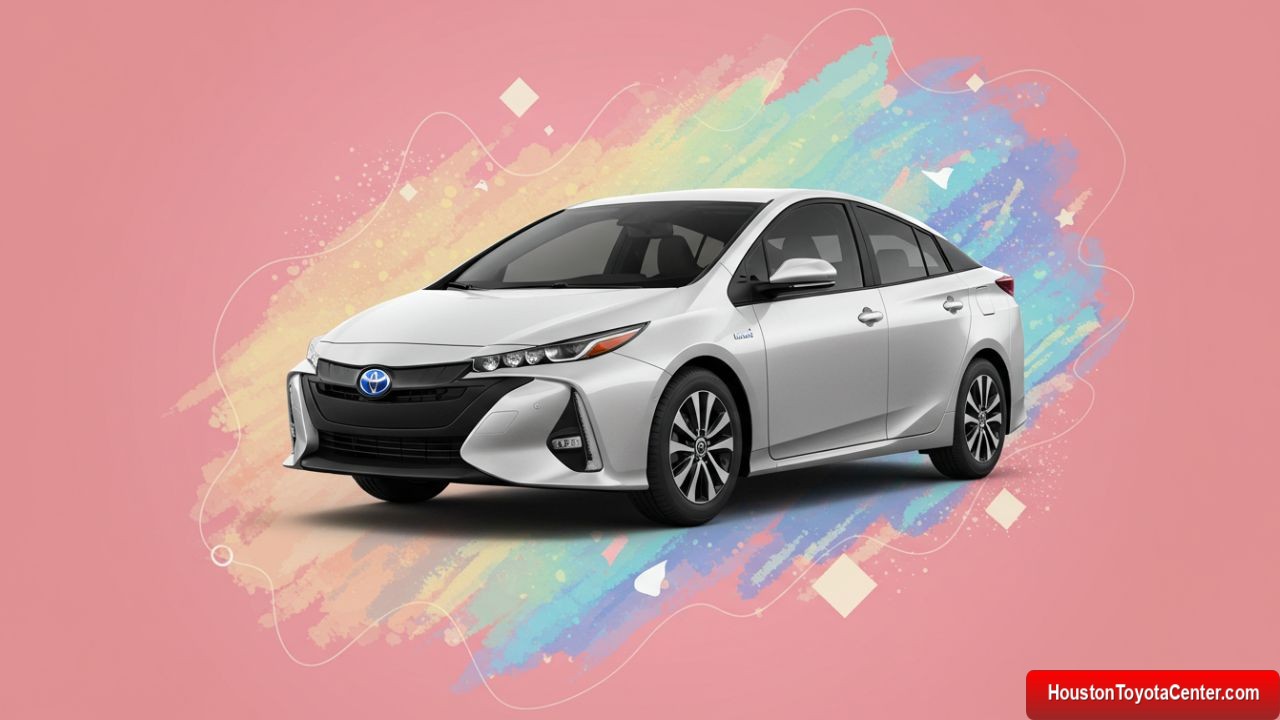
The Toyota Prius has long been associated with fuel efficiency, but its appeal has evolved far beyond the promise of saving money at the pump. In recent generations, Toyota has positioned the Prius as a technology-focused hybrid that combines an efficient powertrain with a growing collection of digital, safety and convenience features.
The result is a vehicle that increasingly competes not only on efficiency, but also on the technology expected from a modern passenger car.
A Hybrid Powertrain Built Around Efficiency
At the center of the Prius experience is Toyota’s hybrid technology. The system combines a gasoline engine with electric motor assistance and a battery pack, allowing the vehicle to use different sources of power depending on driving conditions.
One of the most important advantages of this architecture is its ability to operate efficiently in situations where conventional gasoline vehicles tend to consume more fuel. During low-speed driving, for example, the electric motor can contribute significantly to propulsion. During deceleration, regenerative braking helps recover energy that would otherwise be lost as heat.
FREE: Quickly identify and understand problems with your vehicle 🚘
CLICK HEREThis approach makes the Prius more than simply a gasoline car with an electric motor added to it. The vehicle’s electronic control systems continuously manage the relationship between the engine, electric motors, battery and transmission to deliver a balance between performance and efficiency.
For drivers, much of this technology works in the background. That is part of the appeal. The Prius does not require owners to constantly think about how the hybrid system is operating. Instead, the vehicle automatically determines how to distribute available power.
Regenerative Braking and Energy Management
Regenerative braking is another important piece of the Prius technology package.
When the driver slows down, the electric motor can operate as a generator. Rather than allowing all of the vehicle’s kinetic energy to disappear as heat through conventional friction brakes, part of that energy can be converted into electricity and stored in the hybrid battery.
The system has two important benefits. First, it contributes to overall efficiency. Second, it reduces some of the work required from the conventional braking system.
Drivers can also become accustomed to the distinctive feel of regenerative braking. The transition between regenerative braking and friction braking is managed electronically, with the vehicle attempting to maintain a predictable response.
For a hybrid that is designed around efficiency, this technology is fundamental rather than optional. It illustrates how the Prius integrates mechanical components and software into a single energy management system.
Driver Assistance Technology
Modern Prius models also place significant emphasis on driver assistance.
Toyota’s safety technology suite can include systems designed to monitor the road ahead, detect potential hazards and assist the driver in maintaining a safe position on the road. Depending on configuration and market, features can include pre-collision detection, adaptive cruise control, lane departure alerts and lane tracking assistance.
These systems are particularly useful on highways and during long journeys. Adaptive cruise control, for example, can automatically adjust the vehicle’s speed to maintain a selected following distance from traffic ahead.
Lane assistance systems can also provide steering support when appropriate. The technology is designed to reduce driver workload rather than eliminate the need for attention.
That distinction remains important. Driver assistance is not the same as autonomous driving. The driver remains responsible for monitoring the environment and controlling the vehicle.
A More Digital Cabin
Inside the Prius, technology is increasingly visible through its infotainment and instrument displays.
Depending on the trim and market, the vehicle can feature a central touchscreen, digital instrumentation and smartphone connectivity. These systems allow drivers to access navigation, entertainment, communication and selected vehicle functions without relying exclusively on physical controls.
The transition toward digital interfaces is part of a broader change across the automotive industry. Buyers now expect their vehicles to interact naturally with smartphones and other connected devices.
Wireless smartphone integration, where available, can make this experience more convenient by reducing the need for cables during everyday driving. Voice control and steering wheel controls can also help drivers interact with selected functions while keeping their attention closer to the road.
However, technology inside a car must be judged differently from technology in a smartphone. Automotive interfaces need to be readable at a glance, intuitive and resistant to distractions. A feature may look impressive on a specification sheet but have limited value if it is difficult to use while driving.
Connectivity and the Connected Vehicle
Connectivity has become another important part of the modern Prius experience.
Connected vehicle services can allow owners to interact with their cars through smartphone applications and online services. Depending on the market and subscription package, these services may provide access to vehicle information, remote functions, maintenance information and other features.
This creates a different relationship between the driver and the vehicle. Traditionally, a car was largely independent once it left the dealership. Modern connected vehicles can continue receiving software-related services and communicating with external systems throughout their ownership.
That shift also raises questions about privacy, subscriptions and long-term software support. Consumers are increasingly evaluating vehicles not only by their hardware but also by the digital ecosystem surrounding them.
The Role of the Hybrid Battery
The Prius battery is one of the most important technological components in the vehicle.
Unlike a conventional car battery, the hybrid battery is designed to work as part of the propulsion system. It stores electrical energy and supplies power to the electric motor when required.
The vehicle’s electronic systems constantly monitor battery conditions, including charge levels and operating requirements. This allows the Prius to use electrical energy strategically rather than simply treating the battery as a secondary power source.
Battery technology has also evolved considerably over the history of the Prius. Toyota has used different battery chemistries and configurations across generations and markets, reflecting improvements in energy density, packaging and durability.
For drivers, the important point is that the battery does not need to be manually managed under normal circumstances. The hybrid control system handles charging and power distribution automatically.
Plug-In Hybrid Technology
In markets where the Prius Plug-in Hybrid is offered, the technology story becomes even more interesting.
A plug-in hybrid uses a larger battery that can be charged externally. This allows the vehicle to travel farther using electric power alone before relying more heavily on the gasoline engine.
The concept provides a bridge between conventional hybrids and fully electric vehicles. Drivers who have access to charging can use electricity for shorter daily trips while retaining a gasoline engine for longer journeys.
This flexibility can be particularly attractive to consumers who want to reduce fuel consumption but are not ready to depend entirely on public or home charging infrastructure.
The plug-in system also demonstrates how the Prius platform has adapted to changing expectations around electrification.
Efficiency Monitoring
One of the more subtle technological features of the Prius is the amount of information it provides about energy consumption.
Displays can show information about power flow, fuel economy and hybrid system operation. These visualizations give drivers a clearer understanding of how the vehicle is using energy.
For some owners, this information becomes part of the driving experience. Smooth acceleration, strategic braking and anticipation of traffic can influence efficiency.
Toyota has effectively turned energy management into something that can be observed and, to a degree, learned.
This is an important difference between simply owning an efficient vehicle and actively understanding how efficiency is achieved.
Technology Designed to Work Quietly
Perhaps the most interesting aspect of Prius technology is how much of it operates without demanding attention.
The hybrid control system is constantly making decisions. Electric motors can assist the engine, the engine can shut off when conditions permit, regenerative braking can recover energy and the battery can provide electrical power when appropriate.
Most of these processes happen automatically.
That makes the Prius different from some technology products that constantly demand interaction. Its most important technological achievement may be the ability to hide complexity behind a relatively simple driving experience.
The driver presses the accelerator, steers and brakes. Behind those actions, a sophisticated network of electronic controls manages energy and propulsion.
How the Technology Changes the Driving Experience
Technology is most useful when it changes how a vehicle feels and functions in everyday life.
In the Prius, the hybrid system can make urban driving particularly efficient because frequent stops and low-speed operation create opportunities for electric assistance and regenerative braking.
On highways, adaptive driver assistance and connectivity features can reduce fatigue during longer journeys. Digital displays can provide useful information without requiring the driver to rely on separate devices.
At the same time, the growing amount of technology means there is a learning curve. Drivers moving from a conventional gasoline vehicle may need time to become familiar with regenerative braking, hybrid energy displays and driver assistance alerts.
That is not necessarily a disadvantage. Modern cars are increasingly complex machines, and the Prius provides a clear example of that transformation.
The Technology Trade-Off
No technology package is perfect, and the Prius is no exception.
Advanced driver assistance can be useful, but some drivers may find alerts intrusive. Large digital displays can provide extensive information, but excessive menus can complicate simple tasks. Connected services can add convenience, but some features may depend on subscriptions or compatible devices.
There is also the broader question of long-term ownership. As vehicles become more software-dependent, buyers need to consider how well digital features are likely to age.
These considerations do not diminish the Prius’s technological achievements. They simply show that evaluating a modern vehicle requires more than counting features.
Verdict
The Toyota Prius remains one of the automotive industry’s most recognizable examples of technology being used to improve efficiency.
Its hybrid powertrain, regenerative braking, battery management, driver assistance systems, digital displays and connected features work together to create a vehicle that is substantially more technologically sophisticated than the early Prius models that established the nameplate.
The most impressive aspect is not any single feature. It is the integration of multiple systems into a vehicle that can manage much of its complexity automatically.
For buyers interested in fuel efficiency, electrification and modern driver technology, the Prius offers a compelling combination. It demonstrates how automotive technology has moved beyond simply adding more equipment and toward creating systems that actively manage energy, safety and convenience.
The Prius may have started its reputation as an economy-focused hybrid, but its latest technology shows a broader ambition. It is now a showcase for how software, electrification and intelligent vehicle systems can work together in an everyday car.
Leave a Reply