
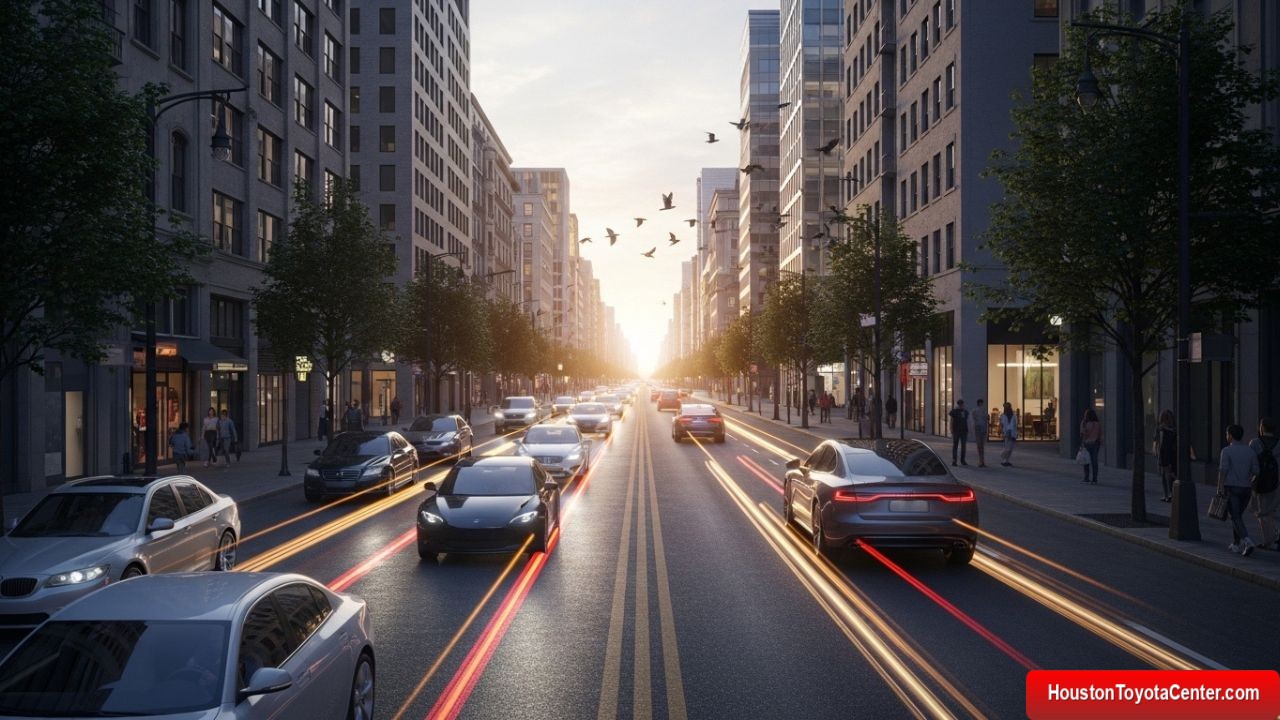
Cities have always had a soundtrack. From the clatter of horse-drawn carriages on cobblestone streets to the rhythmic hum of combustion engines, urban life has never been silent. Yet in the last century, the rapid expansion of motorized transportation has fundamentally reshaped how cities sound—and not always for the better. Traffic noise is now one of the most pervasive forms of environmental pollution in the world, affecting billions of people daily.
Noise pollution is not just an annoyance. It is a public health issue, an urban planning challenge, and an environmental concern rolled into one. Chronic exposure to high noise levels has been linked to sleep disturbances, cardiovascular disease, cognitive impairment in children, stress-related illnesses, and a measurable decline in overall quality of life. For many city dwellers, especially those living near busy roads, airports, or industrial areas, silence has become a luxury.
Enter electric vehicles (EVs). Often celebrated for their role in reducing greenhouse gas emissions and air pollution, EVs also promise something less visible but equally transformative: quieter cities. Without the roar of internal combustion engines, electric cars, buses, and scooters glide through streets with a near-silent efficiency that feels almost futuristic.
But the story is more complicated than it seems. While EVs do reduce certain types of urban noise, they do not eliminate noise pollution altogether. In some cases, they simply change its character. This article explores how electric vehicles are reshaping the soundscape of cities—why they make urban environments quieter, where they fall short, and what “mostly” really means when we talk about silence in the age of electrification.
FREE: Quickly identify and understand problems with your vehicle 🚘
CLICK HEREUnderstanding Noise Pollution in Urban Environments
What Is Noise Pollution?
Noise pollution refers to unwanted or harmful sounds that disrupt normal activities, communication, sleep, or health. Unlike air or water pollution, noise leaves no physical residue, yet its effects can be profound and long-lasting.
Urban noise pollution typically comes from:
- Road traffic (cars, trucks, motorcycles)
- Public transportation (buses, trains, trams)
- Construction activities
- Industrial operations
- Aircraft
- Emergency sirens and alarms
Among these, road traffic is the dominant source in most cities worldwide. The constant presence of vehicles creates a baseline noise level that rarely drops, even at night.
Measuring Noise: Decibels and Perception
Noise is commonly measured in decibels (dB), a logarithmic scale that reflects the intensity of sound. However, human perception of noise is not purely numerical. A 10 dB increase is perceived roughly as a doubling of loudness, making small numerical changes feel significant.
Typical urban noise levels include:
- Quiet residential street at night: ~30–40 dB
- Normal conversation: ~60 dB
- Busy city traffic: ~70–85 dB
- Motorcycle or truck at close range: ~90–100 dB
Prolonged exposure to levels above 65 dB is associated with increased health risks.
Why Traffic Noise Is So Hard to Escape
Traffic noise is uniquely intrusive because it is:
- Continuous rather than intermittent
- Present both day and night
- Difficult to block completely, even indoors
- Closely tied to daily necessities like commuting and deliveries
Unlike loud music or construction, traffic noise is often normalized. People learn to live with it, even as it slowly erodes well-being.
The Internal Combustion Engine: A Noisy Legacy
Where the Noise Comes From
Traditional vehicles powered by internal combustion engines (ICE) generate noise from several sources:
- Engine combustion and vibration
- Exhaust systems
- Gearboxes and transmissions
- Cooling fans
- Mechanical friction
At low speeds, engine and exhaust noise dominate. This is especially noticeable during acceleration, idling at intersections, or stop-and-go traffic.
Urban Amplification of Engine Noise
Cities amplify vehicle noise in subtle ways:
- Tall buildings reflect sound, creating echo chambers
- Narrow streets trap noise at street level
- Traffic congestion increases idling and acceleration
- Hard surfaces like asphalt and concrete reflect rather than absorb sound
The result is a persistent acoustic pressure that feels omnipresent.
Electric Vehicles and the Promise of Quieter Streets
Why EVs Are Quieter by Design
Electric vehicles differ fundamentally from combustion vehicles:
- No explosions inside cylinders
- No exhaust systems
- Fewer moving mechanical parts
- Smoother torque delivery
An electric motor operates with minimal vibration and near-silent rotation. At low speeds, EVs can be almost eerily quiet compared to traditional cars.
This difference is most noticeable in:
- Residential neighborhoods
- Parking lots
- Traffic jams
- City centers with speed limits below 30–40 km/h (20–25 mph)
The Low-Speed Advantage
At speeds below approximately 30 km/h, engine noise is the dominant source of vehicle sound. Because EVs lack this noise, they dramatically reduce overall sound levels in these conditions.
This makes a big difference in:
- School zones
- Residential streets
- Pedestrian-heavy areas
- Delivery routes
- Ride-sharing and taxi services
For cities aiming to improve livability, this is a major win.
The Science of Sound: Tires, Roads, and Speed
When EVs Stop Being Quieter
As vehicle speed increases, the main source of noise shifts:
- From engine noise
- To tire-road interaction
- And aerodynamic noise
At speeds above 40–50 km/h (25–30 mph), tire noise often becomes louder than the engine—whether the vehicle is electric or not.
This means:
- On highways, EVs are only marginally quieter
- On rough road surfaces, differences shrink further
- At very high speeds, sound levels can be nearly identical
Tire Noise Explained
Tire noise is caused by:
- Air being compressed and released in tire treads
- Vibrations transmitted to the road surface
- Resonance inside the tire cavity
Heavier vehicles tend to produce more tire noise. Since EVs are often heavier due to battery packs, this can partially offset their quieter motors.
Comparing Noise Sources: EVs vs ICE Vehicles
| Noise Source | ICE Vehicles | Electric Vehicles |
|---|---|---|
| Engine noise (low speed) | High | Very low |
| Exhaust noise | Present | None |
| Tire-road noise | Moderate | Moderate to high |
| Aerodynamic noise | Moderate | Moderate |
| Idling noise | Constant | Near silent |
This table highlights a key insight: EVs eliminate some noise sources entirely, but others remain unchanged.
Health Impacts of Reduced Traffic Noise
Better Sleep and Lower Stress
Even small reductions in nighttime noise can significantly improve sleep quality. EV adoption in residential areas has been linked to:
- Fewer nighttime awakenings
- Lower perceived stress levels
- Improved mental well-being
Noise does not need to wake someone fully to be harmful. Subconscious disturbances can still trigger stress responses in the body.
Cardiovascular Benefits
Chronic exposure to traffic noise increases the risk of:
- Hypertension
- Heart attacks
- Stroke
By reducing baseline noise levels, especially in dense neighborhoods, EVs can contribute to long-term cardiovascular health improvements.
Cognitive Effects on Children
Studies have shown that children exposed to high noise levels may experience:
- Reduced reading comprehension
- Slower cognitive development
- Increased attention problems
Quieter streets near schools and homes can create healthier learning environments.
The Safety Paradox: When Quiet Becomes a Risk
The Problem of Silent Vehicles
While quieter vehicles benefit communities, they introduce a new challenge: safety. Pedestrians, cyclists, and visually impaired individuals often rely on sound cues to detect approaching vehicles.
At low speeds, EVs can be too quiet to notice.
Artificial Vehicle Sounds
To address this, many countries require EVs to emit artificial sounds at low speeds. These systems, known as Acoustic Vehicle Alerting Systems (AVAS), activate below certain speed thresholds.
Common features include:
- Soft humming or whirring sounds
- Increasing pitch with speed
- Automatic deactivation at higher speeds
This reintroduces some noise—but in a controlled and predictable way.
Electric Buses and Public Transportation
A Quiet Revolution in Mass Transit
Electric buses represent one of the most significant opportunities for noise reduction. Traditional diesel buses are among the loudest vehicles in cities, especially during acceleration and braking.
Electric buses offer:
- Near-silent acceleration
- Reduced vibration
- Lower noise at bus stops
For residents living along bus routes, the difference can be dramatic.
Benefits for Drivers and Passengers
Reduced noise improves:
- Driver concentration and comfort
- Passenger experience
- Communication inside the vehicle
Public transport becomes more appealing when it is not associated with constant noise.
Urban Design in a Quieter World
Rethinking City Soundscapes
As EV adoption increases, cities have an opportunity to rethink how they manage sound:
- Expanding pedestrian zones
- Encouraging low-speed traffic areas
- Using noise-absorbing materials in roads
- Designing streets for people, not just cars
Quieter vehicles make these changes more impactful.
The Role of Policy
Policies that accelerate EV adoption can amplify noise reduction benefits:
- Incentives for electric taxis and delivery fleets
- Electrification of municipal vehicles
- Low-emission and low-noise zones
Noise pollution rarely gets the same policy attention as air pollution, but EVs make it easier to address both at once.
The Limits of Electrification
EVs Are Not a Cure-All
Electric vehicles do not eliminate:
- Traffic congestion
- Tire and road noise
- Honking and human behavior
- Aircraft and construction noise
In fact, quieter vehicles can sometimes encourage higher speeds or increased traffic if not managed carefully.
The Risk of Rebound Effects
If driving becomes more pleasant and less noisy, people may:
- Drive more often
- Choose cars over walking or cycling
- Increase total vehicle miles traveled
Without broader transport reforms, these effects could offset some noise gains.
Beyond EVs: What Really Makes Cities Quiet
Fewer Cars, Not Just Quieter Ones
The quietest cities are not those with the most EVs—but those with:
- Strong public transportation
- Safe cycling infrastructure
- Walkable neighborhoods
- Reduced car dependency
EVs are a tool, not a solution in isolation.
Cultural Shifts in Urban Living
True noise reduction requires:
- Changing how people move
- Prioritizing shared spaces
- Valuing silence as a public good
Electric vehicles make this easier, but they do not guarantee it.
The Future Sound of Cities
A Subtler Urban Experience
As EVs become the norm, cities may sound different—not silent, but calmer. The harsh roar of engines may give way to:
- Softer background hums
- More human voices
- Natural sounds previously drowned out
Birdsong, footsteps, and conversations may reclaim space in the urban soundscape.
Designing for Pleasant Sound, Not Silence
Complete silence is neither realistic nor desirable. Cities thrive on energy and interaction. The goal is not silence—but balance.
EVs help reduce the most aggressive and stressful sounds, making room for a healthier acoustic environment.
Conclusion: Quieter, But Not Silent
Electric vehicles are transforming cities in ways that go beyond emissions and climate goals. By eliminating engine and exhaust noise, they significantly reduce urban sound pollution—especially at low speeds and in residential areas.
However, the promise of quieter cities comes with caveats. Tire noise, safety requirements, traffic volume, and human behavior all limit how silent streets can become. EVs change the nature of noise more than they eliminate it.
Still, “mostly quieter” is no small achievement. For millions of urban residents, even modest reductions in noise can mean better sleep, lower stress, improved health, and a higher quality of life.
In the end, electric vehicles are not the final answer to noise pollution—but they are one of the most powerful steps toward cities that sound as livable as they look.
Leave a Reply