
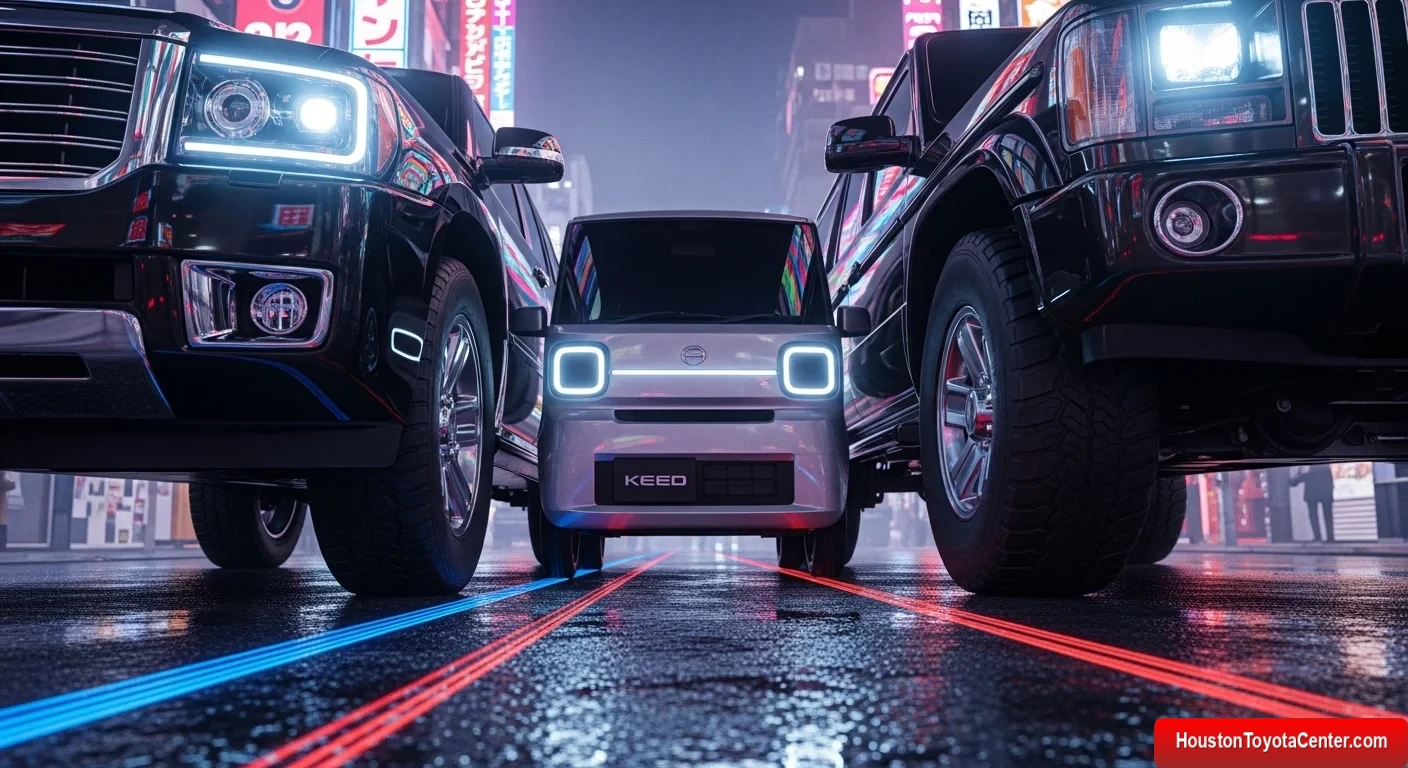
Japan’s automotive landscape is unlike any other in the world. While global markets often emphasize larger vehicles—SUVs, trucks, and luxury sedans—Japan has cultivated a thriving ecosystem around something much smaller, more efficient, and deeply practical: the kei car. Officially known as keijidōsha (軽自動車), these compact vehicles represent a fascinating intersection of government policy, engineering ingenuity, and cultural adaptation.
Despite their modest size, kei cars play a massive role in Japan’s transportation system. They are economical, cleverly designed, and tailored to the realities of urban density and rural accessibility. For decades, they’ve also served as a proving ground for innovation, where automakers push the limits of space efficiency, fuel economy, and creative engineering.
This article explores the origins, evolution, design philosophy, cultural impact, and global relevance of kei cars, offering a comprehensive look into one of the most distinctive automotive segments in the world.
What Exactly Is a Kei Car?
A kei car is a category of small vehicles defined by Japanese regulations. To qualify, a car must meet strict limits on size and engine capacity. As of current standards, kei cars must adhere to:
FREE: Quickly identify and understand problems with your vehicle 🚘
CLICK HERE- Maximum length: 3.4 meters
- Maximum width: 1.48 meters
- Maximum height: 2.0 meters
- Maximum engine displacement: 660cc
- Maximum power output: 64 horsepower (regulated but often informally observed)
These constraints are not arbitrary—they are central to the philosophy of kei cars. By imposing limits, the Japanese government created a category that encourages efficiency, affordability, and practicality.
Historical Origins: Post-War Necessity
The kei car category was introduced in 1949, during Japan’s post-war reconstruction. At the time, the country faced economic hardship, limited resources, and a pressing need for affordable transportation.
Large vehicles were impractical for most citizens. Roads were narrow, infrastructure was underdeveloped, and personal income was low. The government responded by creating incentives for ultra-compact vehicles, including:
- Lower taxes
- Reduced insurance costs
- Easier ownership requirements
This policy opened the door for automakers to experiment with small vehicles that could meet the needs of everyday people.
Companies like Suzuki, Honda, and Daihatsu quickly embraced the opportunity, launching early kei models that prioritized simplicity and affordability.
Evolution Over the Decades
1950s–1960s: The Birth of the Segment
Early kei cars were basic and often underpowered. Many resembled motorized scooters with minimal protection from the elements. However, as technology improved, these vehicles became more practical and reliable.
The introduction of models like the Suzuki Suzulight marked a turning point. It featured a front-engine, front-wheel-drive layout—an advanced configuration for its time.
1970s–1980s: Growth and Refinement
As Japan’s economy grew, so did consumer expectations. Kei cars evolved to include better safety features, improved comfort, and more sophisticated designs.
Manufacturers began experimenting with different body styles:
- Hatchbacks
- Vans
- Pickup trucks
The segment diversified, appealing to both urban commuters and rural users.
1990s–2000s: Modernization
By the 1990s, kei cars had become a mature segment. Regulations were updated to allow slightly larger dimensions and more powerful engines (up to 660cc).
During this period, iconic models like the Honda Life and Daihatsu Move gained popularity.
2010s–Present: Innovation and Popularity
Today, kei cars are more advanced than ever. They feature:
- Hybrid and electric powertrains
- Advanced safety systems
- High-tech infotainment
Models like the Honda N-Box have become best-sellers in Japan, often outselling larger vehicles.
Design Philosophy: Maximizing Every Inch
One of the most remarkable aspects of kei cars is their design. Engineers must work within tight constraints, yet still deliver a functional and appealing product.
Space Efficiency
Kei cars are masters of interior packaging. Despite their small footprint, they often provide:
- Seating for four adults
- Ample headroom
- Flexible cargo configurations
Tall, boxy shapes are common because they maximize vertical space.
Lightweight Construction
To maintain performance with small engines, kei cars are designed to be lightweight. This improves:
- Fuel efficiency
- Handling
- Acceleration
Clever Engineering
Manufacturers employ creative solutions, such as:
- Sliding doors for tight parking spaces
- Fold-flat seats for cargo versatility
- Compact turbocharged engines for added power
Economic Advantages
Kei cars are not just small—they are financially attractive.
Lower Ownership Costs
Owners benefit from:
- Reduced vehicle taxes
- Lower insurance premiums
- Cheaper registration fees
In some rural areas, kei cars are even exempt from the requirement to prove ownership of a parking space—a significant advantage in Japan.
Fuel Efficiency
With small engines and lightweight construction, kei cars achieve excellent fuel economy, often exceeding 20–30 km/L.
Maintenance Savings
Parts are generally cheaper, and servicing is simpler compared to larger vehicles.
Cultural Significance
Kei cars are deeply embedded in Japanese culture. They are not seen as inferior or “budget” vehicles—instead, they represent practicality and smart design.
Urban Life
In crowded cities like Tokyo and Osaka, kei cars are ideal for navigating narrow streets and limited parking.
Rural Utility
In rural regions, kei trucks and vans are indispensable. Farmers, small business owners, and tradespeople rely on them for daily tasks.
Personal Expression
Many kei cars are highly customizable. Owners often modify them with:
- Unique paint jobs
- Custom wheels
- Interior upgrades
Some models even embrace quirky, playful designs that reflect individuality.
Types of Kei Vehicles
Kei cars are not limited to one form. The segment includes a wide variety of vehicle types:
| Type | Description |
|---|---|
| Hatchbacks | Compact and efficient for city driving |
| Vans | Boxy designs with maximum interior space |
| Pickup Trucks | Small utility vehicles for work purposes |
| Sports Cars | Lightweight, fun-to-drive models |
| SUVs (Mini) | Rugged styling in a compact form |
Kei Sports Cars
Yes, even sports cars exist in this segment. The Honda Beat and Suzuki Cappuccino are beloved by enthusiasts for their nimble handling and engaging driving experience.
Technological Innovations
Despite their size, kei cars often feature cutting-edge technology.
Safety Systems
Modern kei cars include:
- Collision avoidance systems
- Lane departure warnings
- Adaptive cruise control
Hybrid and Electric Options
Manufacturers are increasingly introducing eco-friendly variants, aligning with global trends toward sustainability.
Infotainment
Touchscreens, smartphone integration, and navigation systems are common, even in entry-level models.
Challenges Facing Kei Cars
While kei cars are successful in Japan, they face several challenges:
Limited Global Appeal
Outside Japan, kei cars are less common due to:
- Different safety standards
- Consumer preference for larger vehicles
- Highway performance limitations
Regulatory Constraints
Strict size and power limits can restrict innovation in certain areas.
Competition
Compact cars from global markets often offer more power and space, albeit at higher costs.
Global Influence
Although kei cars are primarily a Japanese phenomenon, their influence is growing.
Export Markets
Some kei models are exported to countries with similar needs for compact transportation.
Inspiration for Microcars
The kei concept has inspired microcar development worldwide, particularly in urban environments.
Electric Mobility
As cities seek sustainable solutions, the principles behind kei cars—efficiency, compactness, affordability—are becoming increasingly relevant.
The Future of Kei Cars
The future looks promising, but it will require adaptation.
Electrification
Electric kei cars could become a cornerstone of urban mobility, offering zero-emission transportation in dense cities.
Autonomous Technology
Self-driving features may enhance safety and convenience, especially for elderly drivers—a growing demographic in Japan.
Continued Innovation
Manufacturers will likely continue pushing the boundaries of what’s possible within kei regulations.
Why Kei Cars Matter
Kei cars are more than just small vehicles—they are a reflection of a broader philosophy:
- Efficiency over excess
- Practicality over prestige
- Innovation within constraints
In a world facing environmental challenges and urban congestion, these principles are increasingly relevant.
Conclusion
Kei cars represent one of the most unique and successful automotive experiments in history. Born out of necessity, they have evolved into a sophisticated and indispensable part of Japan’s transportation system.
Their blend of affordability, efficiency, and clever design makes them a compelling solution to modern mobility challenges. While they may not dominate global markets, their influence is undeniable—and their relevance is only growing.
As cities around the world grapple with congestion, pollution, and limited space, the kei car offers a glimpse into a more sustainable and practical future of transportation.
Leave a Reply