
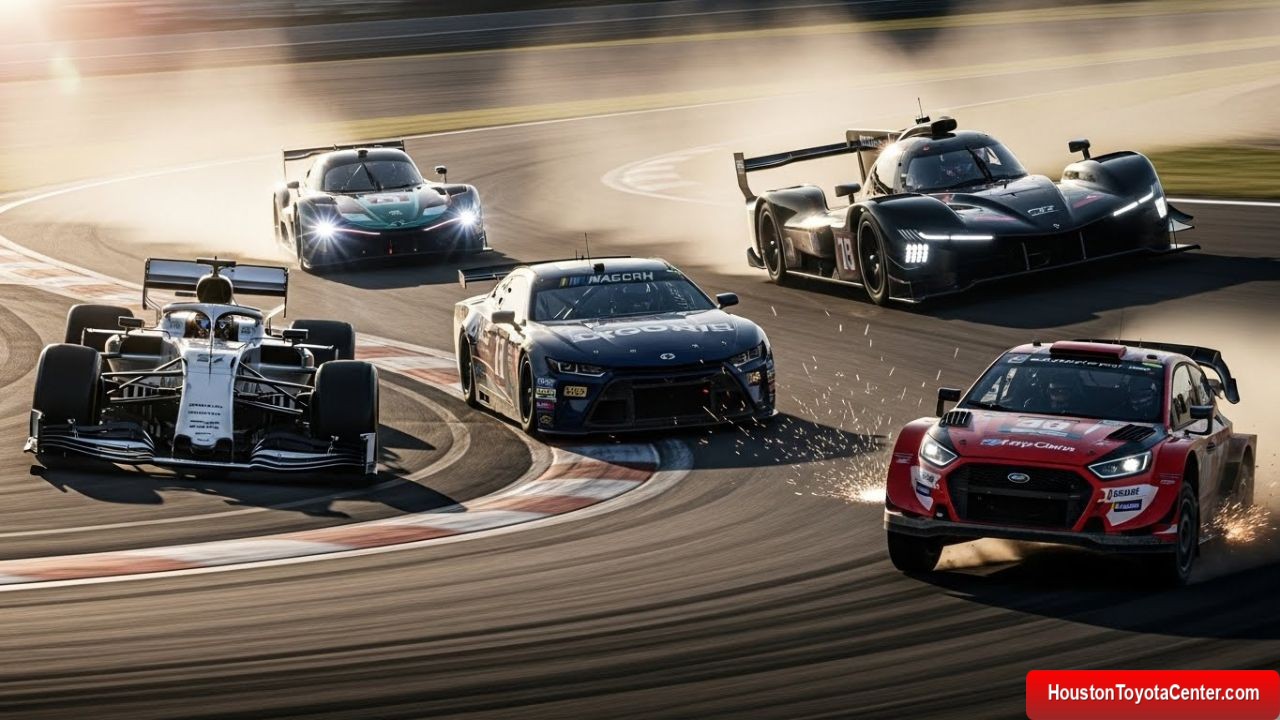
Professional motorsports is one of the most complex, demanding, and technologically advanced competitive environments on the planet. From the precision of Formula 1 to the bruising intensity of NASCAR oval racing, from the endurance-driven strategy of the World Endurance Championship to the extreme terrains of rally, each discipline represents a unique blend of engineering, athleticism, risk, and spectacle. Although these categories share the same fundamental goal—mobility at the very edge of physics—they differ immensely in culture, history, technology, and racecraft.
To step inside the world of professional motorsports is to explore a dynamic intersection of human and mechanical performance. Engineers and drivers operate as one, teams function like military-grade units, and vehicles are transformed into high-speed laboratories where innovation happens lap by lap. This article takes you behind the scenes of four major motorsport pillars—Formula 1 (F1), NASCAR, the World Endurance Championship (WEC), and Rally—revealing what makes each world special, how they evolved, and why they continue to capture audiences worldwide.
The Core Elements Shared Across Professional Motorsports
Before diving into each discipline, it’s crucial to understand the core foundations that unify them:
1. Engineering Excellence
Racing machines are built to stretch the boundaries of what’s mechanically possible. Aerodynamics, materials science, hybrid systems, tire compounds, telemetry, and simulation tools push technological progress in every series. Motorsports often serve as incubators for consumer automotive innovations such as ABS, traction control, hybrid efficiency models, and lightweight composites.
FREE: Quickly identify and understand problems with your vehicle 🚘
CLICK HERE2. Driver Skill and Athletic Conditioning
Modern drivers are elite athletes. Their training includes:
- neck and core strength,
- high-intensity cardiovascular conditioning,
- heat-tolerance training (especially relevant in enclosed cockpits),
- reaction-time exercises,
- mental conditioning for focus and race strategy.
Drivers experience extreme G-forces, sensory overload, and decision-making pressures that few other sports can replicate.
3. Team Coordination
Behind every driver is a vast support network:
- race engineers,
- strategists,
- mechanics,
- aerodynamicists,
- logistics coordinators,
- data analysts,
- pit crews.
In sports like F1 or WEC, teams may consist of hundreds of personnel operating in a distributed structure across multiple continents.
4. Logistics and Global Movement
Racing teams travel with enormous quantities of equipment. A Formula 1 team, for example, transports up to 50 tons of gear per race. NASCAR haulers crisscross the United States, while WEC and rally teams navigate remote environments.
5. Strategy and Data Analysis
From tire wear and fuel loads to weather patterns and real-time GPS telemetry, strategy is where races are won and lost. Today’s motorsport teams often employ data science and AI to optimize decisions.
Formula 1: The Pinnacle of Speed, Precision, and Technology
Formula 1 is widely recognized as the world’s premier motorsport category. The combination of cutting-edge engineering, global prestige, glamorous venues, and rivalries between both drivers and manufacturers elevates F1 into an almost mythical level of competition.
The Cars: Rolling Laboratories at 300 km/h
Modern F1 cars are hybrid machines blending:
- internal combustion engines (ICE) capable of 15,000 rpm,
- energy recovery systems (ERS) that harvest thermal and kinetic energy,
- ultra-lightweight carbon fiber monocoques,
- massively complex aerodynamics including ground-effect venturi tunnels.
Every component must balance performance, reliability, safety, and sustainability. F1’s technological arms race is both its greatest asset and its most controversial feature, pushing budgets into the hundreds of millions annually.
The Drivers: Precision Athletes
F1 drivers operate under extreme physical and cognitive pressures:
- braking forces up to 6G,
- cockpit temperatures exceeding 50°C,
- razor-thin margins for error,
- tire management strategies that require constant adaptation.
A driver must combine reflex speed, endurance, spatial awareness, and strategic thinking. They must also work closely with engineers to translate “feel” into data-driven development.
Race Weekends and Strategy
An F1 weekend includes:
- Free practice sessions for setup optimization,
- A high-stakes knockout qualifying format,
- A Grand Prix typically lasting 90 minutes or 305 km.
Strategic considerations include:
- tire compounds (soft/medium/hard),
- undercut vs. overcut pit strategies,
- safety car timing,
- DRS-enabled overtaking opportunities,
- energy recovery deployment.
Team Culture and Rivalries
Teams like Ferrari, Mercedes, and Red Bull Racing are not just competitors—they are global brands with decades-long legacies. The relationships and rivalries between teams and drivers shape much of the drama that fans love.
NASCAR: America’s High-Speed Theater of Grit and Strategy
NASCAR represents an entirely different branch of motorsport: loud, physical, unpredictable, and deeply rooted in American culture. While outsiders often misunderstand it as “just turning left,” NASCAR racing is an incredibly sophisticated ecosystem with its own unique challenges.
The Cars: Stock Car Evolution
NASCAR vehicles, especially in the Cup Series, are designed to survive close-contact racing, high speeds on both ovals and road courses, and long-distance endurance. While they appear simpler than F1 cars, they are meticulously engineered with powerful V8 engines, steel tube-frame chassis, and aerodynamic tweaks specific to each track type.
Racing Style: Pack Battles and Strategic Chaos
NASCAR racing involves:
- enormous drafting packs,
- bump-drafting,
- side-draft maneuvers,
- multi-car crashes (“the big one”),
- frequent restarts that tighten fields.
Strategy in NASCAR is unpredictable due to:
- long race distances (sometimes 500 miles),
- caution flag timing,
- pit stop variations,
- fuel mileage gambles.
The mental toughness required is immense. Drivers must battle for hours inches away from opponents at speeds over 300 km/h.
Fan Culture and Atmosphere
NASCAR’s fanbase is unique, embracing traditions such as:
- tailgating,
- driver loyalty (often generational),
- patriotic ceremonies,
- driver-fan autograph sessions.
Tracks like Daytona, Talladega, and Bristol have become temples of American motorsport.
WEC: The Marathon of Motorsport
The World Endurance Championship (WEC) is built around one of the oldest and most prestigious events in racing history: the 24 Hours of Le Mans. While F1 is a sprint and NASCAR is a tactical brawl, WEC is an engineering endurance trial that tests machinery, teamwork, and human resilience.
The Cars: Hypercars and LMP Prototypes
WEC machines include:
- Hypercar (LMH/LMDh) platforms with hybrid or non-hybrid systems,
- Highly efficient aerodynamics optimized for stability and endurance,
- Fuel-conservation technology,
- Multiple classes sharing the track simultaneously.
The multi-class dynamic creates constant overtaking and strategic complexity.
Driver Teams and Stints
Unlike F1 or NASCAR, WEC cars have multiple drivers who rotate through stints lasting anywhere from 1 to 4 hours. They must:
- manage fatigue,
- adapt to day/night transitions,
- handle changing track temperatures,
- maintain consistency rather than outright pace.
Strategy: The Art of Survival
Endurance racing strategy includes:
- tire rotation strategies,
- fuel mapping and hybrid deployment,
- brake and engine wear management,
- traffic navigation.
A car may complete over 5,000 km in a single race. Victory at Le Mans is considered one of motorsport’s greatest achievements.
Rally: The Ultimate Test of Driver Skill and Terrain Conquest
Rally racing stands apart from circuit-based motorsport by taking place on public roads, gravel paths, deserts, snow fields, and mountain passes. It is arguably the purest form of the sport, as drivers attack unpredictable terrain rather than competing against a pack of rivals in wheel-to-wheel combat.
The Cars: Lightweight, All-Terrain Beasts
Rally cars (WRC or other categories) are built for:
- explosive acceleration,
- rugged suspension travel,
- anti-lag turbo systems,
- AWD traction,
- durability under extreme shock.
They must tackle everything from snowstorms in Sweden to scorching Sardinian gravel.
Co-Drivers: The Unsung Heroes
Rally co-drivers read pace notes—cryptic verbal instructions describing the next corners, dips, crests, and jumps. The synergy between driver and co-driver is crucial. A single miscommunication at 180 km/h on a forest road can end the race instantly.
Rally Formats and Challenges
Special stages are timed individually; cumulative times determine the winner. Drivers may face:
- changing terrain,
- blind corners,
- unpredictable weather,
- limited equipment repair windows.
Rally is perhaps the most dangerous and adrenaline-fueled form of motorsport, demanding bravery and precision.
Comparing the Disciplines: Styles, Skills, and Technologies
Below is a comparative table summarizing key differences:
Motorsport Category Comparison
| Feature | Formula 1 | NASCAR | WEC | Rally |
|---|---|---|---|---|
| Primary Environment | Permanent circuits, street tracks | Ovals + road courses | Circuits incl. Le Mans | Off-road, mixed surfaces |
| Race Duration | ~1.5 hours | 2.5–4 hours | 6–24 hours | Staged over several days |
| Car Type | Open-wheel, hybrid prototypes | Stock cars (silhouette) | Prototypes + hypercars | Modified production cars |
| Driving Skill Focus | Precision, tire management, tactical racecraft | Pack racing, drafting, endurance focus | Consistency, stamina, multi-driver teamwork | Terrain adaptability, pace note reading |
| Team Size | 500–1000 staff per top team | ~100+ crew per Cup team | 100s across multiple classes | Small crews, high flexibility |
| Physical Demands | High G-forces, heat, neck strain | Long races, heavy steering | Fatigue management | Brutal terrain, split-second reactions |
| Global Reach | Worldwide | Primarily USA | Worldwide | Worldwide |
| Hero Events | Monaco GP | Daytona 500 | 24 Hours of Le Mans | Rally Finland, Monte Carlo |
Inside the Ecosystem: Money, Politics, and Technology
Motorsports is a massive business ecosystem combining:
- sponsors,
- manufacturers,
- broadcasters,
- governments (who host races),
- regulatory bodies (FIA, NASCAR organization).
Budgets and Engineering Arms Races
Top-tier motorsports budgets can be staggering:
| Series | Top Team Annual Budget (Approx.) |
|---|---|
| Formula 1 | $140M+ (regulated cap, not including salaries & marketing) |
| WEC Hypercars | $20M–$50M |
| NASCAR Cup Series | $20M–$30M |
| WRC Rally Teams | $10M–$20M |
Even with cost caps, engineering innovation drives competition.
The Influence of Rules
Rulebooks shape racing.
- F1 uses rules to promote closer competition, such as ground-effect cars or budget caps.
- NASCAR introduces packages to alter aerodynamics, reduce dominance, or enhance overtaking.
- WEC adjusts Balance of Performance (BoP) to equalize hypercars.
- Rally limits engine sizes, restricts testing, and governs pace notes.
Motorsport constantly evolves through rule changes, sparking debates and shaping eras.
Behind the Scenes: What Fans Rarely See
1. Simulation and Virtual Tools
Teams use:
- driver simulators,
- digital twins,
- CFD (computational fluid dynamics),
- AI-driven predictive modeling.
2. Pit Crew Training
Pit stops are choreographed with military precision. F1 crews rehearse thousands of repetitions to consistently achieve sub-2.0 second stops.
3. Data Analysis Rooms
Live telemetry rooms monitor every sensor in real time. Strategists communicate continuously with pit walls.
4. Psychological Conditioning
Drivers undergo mental coaching to handle:
- fear,
- fatigue,
- disappointment,
- pressure from sponsors,
- maintaining focus at 300 km/h.
Why Fans Love Motorsports
Motorsports tap into the primal thrill of speed and the human desire to push boundaries. Fans are drawn to:
- the sound,
- the danger,
- the rivalries,
- the stories of innovation,
- the personalities of drivers,
- the connection between car culture and competition.
Whether it’s the glamour of Monaco, the brutality of Talladega, the magic of Le Mans night racing, or the snowy forests of Rally Sweden, each category offers a distinct emotional experience.
The Future of Motorsports
The landscape is evolving with:
- electrification (Formula E, hybrid rally cars, hydrogen prototypes),
- sustainability targets,
- esports integration,
- autonomous and AI testing platforms,
- new fan engagement strategies through social media and virtual experiences,
- increased global expansions into new markets.
While purists sometimes lament the reduction of engine noise or the limitations of regulation, motorsport has proven adept at reinventing itself. Its essence remains: the pursuit of speed, mastery, and human-machine harmony.
Conclusion
Professional motorsports is not a monolith—it’s an ecosystem of diverse, specialized disciplines. F1 represents ultimate engineering sophistication, NASCAR showcases raw racing psychology and pack dynamics, WEC tests stamina and technology over unimaginable distances, and rally pushes drivers to their absolute limit across unpredictable terrain. Together, they reflect humanity’s eternal fascination with going faster, improving technology, conquering challenges, and celebrating the symbiosis between driver and machine.
From glamorous paddocks to dusty forest stages, from night-time endurance battles to roaring oval spectacles, the world of motorsports remains one of the most thrilling, multifaceted, and culturally rich sporting landscapes on earth.
Leave a Reply