
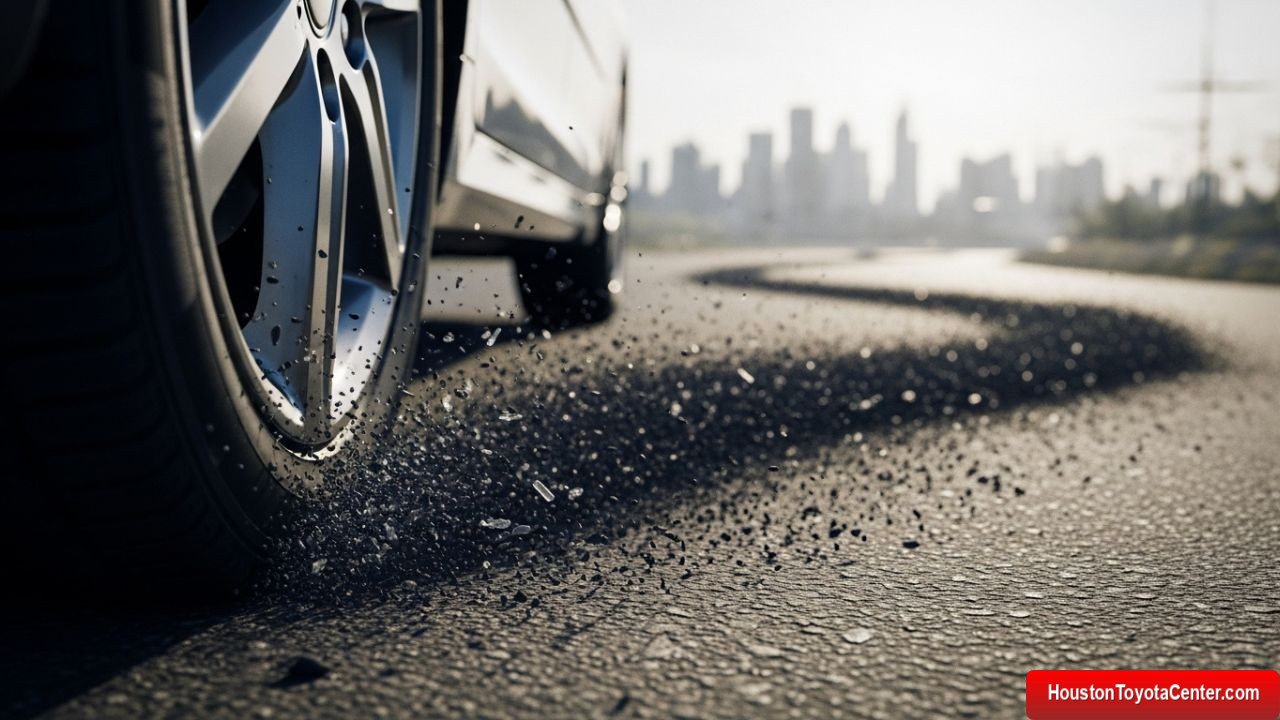
When people think about microplastic pollution, images of floating bottles, shredded packaging, or cosmetic microbeads often come to mind. Oceans clogged with plastic debris have become the defining visual of environmental harm in the modern age. Yet one of the most significant sources of microplastics does not float in the sea, sparkle under the sun, or even look like plastic at all. It rolls silently beneath our vehicles every day.
Tire wear is now recognized as one of the largest contributors to microplastic pollution worldwide. Unlike discarded plastic waste, tire-derived microplastics are generated continuously, unintentionally, and invisibly through normal driving. Every time a vehicle accelerates, brakes, or turns, microscopic fragments of tire material are scraped off and released into the environment. These particles accumulate on roads, wash into waterways, become airborne, and ultimately infiltrate ecosystems, food chains, and even human lungs.
The irony is striking: tires are essential for mobility, economic activity, and modern life, yet they represent a largely unregulated and underestimated source of pollution. Because tire particles do not resemble traditional plastics and originate from a product associated with safety rather than waste, their environmental impact has long flown under the radar.
This article explores how tire wear contributes to microplastic pollution, examining the science behind tire composition, the mechanisms of particle generation, pathways of environmental distribution, ecological and human health impacts, and emerging strategies to mitigate this growing problem. Understanding this issue is critical, not only for policymakers and scientists, but for anyone who drives, walks near roads, or relies on clean air and water—which is to say, everyone.
FREE: Quickly identify and understand problems with your vehicle 🚘
CLICK HEREWhat Are Tires Made Of? Understanding the Material Problem
At first glance, a tire appears to be made of rubber, and historically, that would have been mostly true. Early tires relied heavily on natural rubber derived from latex-producing trees. Modern tires, however, are complex composite products engineered for durability, grip, fuel efficiency, and safety.
A typical passenger car tire contains a mix of materials, including:
- Natural rubber
- Synthetic rubber polymers
- Carbon black and silica fillers
- Steel and textile reinforcements
- Chemical additives such as antioxidants, plasticizers, and vulcanization agents
While natural rubber is biodegradable under certain conditions, synthetic rubbers are petroleum-based plastics. These synthetic polymers are resistant to degradation and persist in the environment in ways similar to other microplastics.
Synthetic Rubber as a Form of Plastic
Synthetic rubber is produced from petrochemicals such as styrene and butadiene. Common types include styrene-butadiene rubber (SBR) and butadiene rubber (BR), both of which are classified as polymers. From a chemical standpoint, these materials behave like plastics: they fragment into smaller particles rather than breaking down into benign substances.
When tire fragments are generated through wear, they often consist of a blend of rubber polymers, fillers, and road material. This hybrid composition complicates classification but does not diminish their environmental persistence or biological impact.
Chemical Additives and Toxicity
Beyond polymer content, tires contain hundreds of chemical additives designed to improve performance and longevity. Some of these chemicals, such as zinc compounds and aromatic hydrocarbons, are toxic to aquatic life even at low concentrations. When tire particles enter water systems, they do not merely act as inert debris but as carriers of harmful substances.
This chemical complexity makes tire wear particles particularly concerning compared to more uniform plastic microbeads or fibers.
How Tire Wear Generates Microplastics
Tire wear is an unavoidable consequence of friction. Unlike plastic litter, which results from improper disposal, tire particles are created during normal, lawful, and necessary activities.
Mechanical Abrasion
The primary mechanism of tire wear is abrasion between the tire tread and road surface. Factors influencing abrasion include:
- Vehicle weight
- Driving speed
- Acceleration and braking behavior
- Road surface texture
- Tire design and compound hardness
Each interaction between tire and road shears off tiny fragments, many of which are smaller than 100 micrometers. A significant portion of these particles fall into the microplastic size range (less than 5 millimeters).
Thermal Stress and Deformation
Tires heat up during driving. Repeated cycles of heating and cooling weaken the polymer structure, making the material more susceptible to fragmentation. High-speed driving and underinflated tires increase thermal stress, accelerating particle release.
Urban Driving and Stop-and-Go Traffic
Urban environments produce disproportionately high levels of tire wear. Frequent braking, turning, and acceleration in cities lead to increased abrasion. This means that densely populated areas often experience higher concentrations of tire-derived microplastics in air, soil, and water.
Quantifying Tire Wear Emissions
While estimates vary, research suggests that tire wear contributes between 30% and 50% of all microplastics released into the environment in many industrialized regions. Unlike other sources, these emissions occur continuously and scale directly with traffic volume.
Where Do Tire Microplastics Go? Environmental Pathways
Once generated, tire wear particles disperse through multiple environmental pathways. Their final destination depends on particle size, weather conditions, and surrounding infrastructure.
Roadside Accumulation
Larger particles tend to accumulate near roads, mixing with dust, soil, and organic matter. These roadside deposits can persist for long periods, gradually breaking down into smaller fragments.
Stormwater Runoff
Rainfall washes tire particles from road surfaces into storm drains. In many cities, stormwater systems discharge directly into rivers, lakes, and coastal waters without treatment. This makes road runoff one of the most significant pathways for aquatic contamination.
Atmospheric Transport
Smaller tire particles can become airborne, especially in dry conditions. These particles contribute to particulate matter (PM10 and PM2.5) in urban air. Airborne tire microplastics can travel kilometers from their source, increasing exposure far beyond roadways.
Soil and Agricultural Impact
Tire particles deposited on land may infiltrate soil, where they interact with microorganisms and plant roots. Over time, these particles can enter agricultural systems, raising concerns about food contamination.
Tire Wear vs Other Microplastic Sources
To understand the scale of the issue, it helps to compare tire wear with other well-known sources of microplastics.
| Source | Primary Environment | Estimated Contribution | Intentional? |
|---|---|---|---|
| Tire wear | Roads, air, waterways | Very high | No |
| Synthetic clothing fibers | Water systems | High | No |
| Plastic packaging degradation | Marine and land | Moderate | No |
| Cosmetic microbeads | Water systems | Low (regulated in many regions) | Yes |
| Industrial plastic pellets | Marine and land | Moderate | No |
Unlike many sources that can be reduced through consumer behavior or bans, tire wear is deeply embedded in transportation systems, making mitigation more complex.
Ecological Impacts of Tire-Derived Microplastics
The ecological consequences of tire wear particles extend across multiple ecosystems and trophic levels.
Aquatic Toxicity
Studies have shown that chemicals leached from tire particles can be lethal to fish, invertebrates, and amphibians. One compound in particular, derived from tire antioxidants, has been linked to mass die-offs of salmon in urban streams.
Even when not immediately lethal, exposure can impair reproduction, growth, and immune function in aquatic organisms.
Bioaccumulation and Food Webs
Microplastics can be ingested by plankton, insects, and small fish. As predators consume contaminated prey, particles and associated chemicals move up the food chain. While tire particles may not accumulate in the same way as some toxins, their constant presence ensures ongoing exposure.
Soil Ecosystems
In soil, tire microplastics can alter microbial communities and affect nutrient cycling. Earthworms and other soil organisms ingest particles, potentially reducing soil health and fertility over time.
Human Health Implications
Although research is still emerging, evidence suggests that tire-derived microplastics pose risks to human health.
Inhalation Exposure
Airborne tire particles contribute to fine particulate pollution in cities. These particles can penetrate deep into the lungs, where they may cause inflammation or carry toxic substances.
Epidemiological studies have linked traffic-related air pollution to respiratory and cardiovascular diseases, and tire wear is increasingly recognized as a contributing factor.
Water and Food Contamination
Tire microplastics have been detected in drinking water sources and agricultural soils. While direct causal links to specific health outcomes are still being studied, the presence of persistent synthetic particles in food and water raises legitimate concerns.
Chemical Exposure
Additives in tires can leach out after particles enter the body. Some of these chemicals are suspected endocrine disruptors or carcinogens, though definitive human studies remain limited.
Why Tire Wear Pollution Has Been Overlooked
Several factors have contributed to the underestimation of tire wear as a pollution source:
- Lack of visual impact compared to plastic waste
- Difficulty in measuring emissions accurately
- Fragmented responsibility across industries
- Focus on tailpipe emissions rather than non-exhaust sources
As vehicle exhaust emissions decline due to electrification and regulation, tire and brake wear now represent a growing proportion of transportation-related pollution.
Electric Vehicles and the Tire Wear Paradox
Electric vehicles (EVs) are often promoted as an environmental solution, but they introduce a new dimension to the tire wear problem.
Increased Vehicle Weight
EVs are generally heavier than comparable internal combustion vehicles due to battery mass. Increased weight leads to higher tire wear rates, potentially increasing microplastic emissions.
Instant Torque
Electric motors deliver immediate torque, which can increase abrasion during acceleration if not managed carefully through vehicle design and driving behavior.
This does not negate the climate benefits of EVs but highlights the need for holistic environmental assessments.
Mitigation Strategies and Technological Solutions
Addressing tire wear microplastic pollution requires coordinated efforts across multiple sectors.
Improved Tire Design
Manufacturers are exploring new materials and compounds that reduce abrasion without compromising safety. This includes alternative fillers, optimized tread patterns, and longer-lasting compounds.
Road Surface Innovation
Smoother, more durable road surfaces can reduce tire wear. Permeable pavements may also help capture particles before they enter waterways.
Stormwater Treatment Systems
Installing filtration systems in storm drains can trap tire particles before discharge. Some pilot projects have demonstrated promising results using sediment traps and biofiltration.
Driving Behavior and Urban Planning
Encouraging smoother driving, reducing traffic congestion, and promoting public transportation can all reduce tire wear. Urban design that minimizes stop-and-go traffic can have a measurable impact.
Policy and Regulation: The Road Ahead
Currently, tire wear is largely unregulated as a pollution source. However, this is beginning to change.
Potential regulatory approaches include:
- Setting standards for tire abrasion rates
- Requiring disclosure of tire composition
- Incorporating non-exhaust emissions into air quality regulations
- Funding research into health and ecological impacts
International cooperation will be essential, as tire pollution does not respect borders.
What Can Individuals Do?
While systemic solutions are crucial, individuals are not powerless.
Practical steps include:
- Maintaining proper tire pressure
- Choosing high-quality, durable tires
- Driving smoothly and avoiding aggressive acceleration
- Supporting policies and companies that prioritize sustainable transportation
Small actions, multiplied across millions of drivers, can make a meaningful difference.
Conclusion: Rethinking Mobility in a Microplastic World
Tire wear microplastic pollution challenges traditional notions of environmental responsibility. It is not the result of careless disposal or consumer neglect, but of everyday activities essential to modern life. This makes it both more difficult and more urgent to address.
As societies transition toward cleaner energy and more sustainable transportation, non-exhaust emissions like tire wear must be brought into the conversation. Ignoring them risks undermining progress in air quality, water protection, and public health.
Understanding how tire wear contributes to microplastic pollution is the first step toward meaningful change. The road ahead will require innovation, regulation, and collective awareness—but the cost of inaction will be paid silently, particle by particle, beneath our wheels.
Leave a Reply