
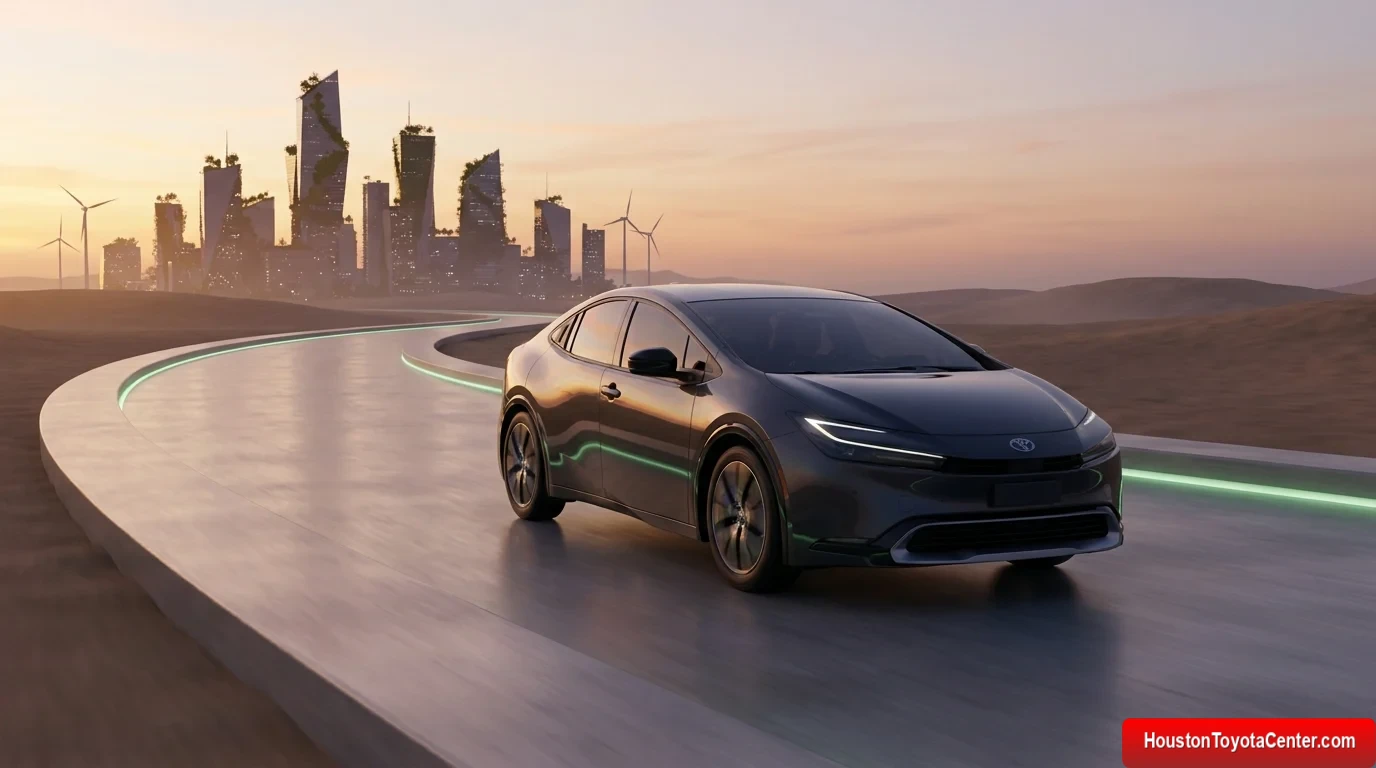
Few automobiles have had as profound an impact on the global automotive industry as the Toyota Prius. When Toyota introduced the Prius in Japan in 1997 and later expanded it internationally, many observers viewed it as an experimental niche vehicle aimed at environmentally conscious consumers. At the time, gasoline-powered vehicles dominated roads worldwide, and hybrid technology was largely considered impractical for mass-market adoption.
Yet over the following decades, the Prius transformed from an unconventional compact sedan into one of the most influential vehicles in automotive history. It altered how manufacturers approached fuel efficiency, accelerated investment in alternative powertrains, reshaped consumer perceptions of environmental responsibility, and laid critical groundwork for the electrification movement that continues today.
The Prius did not merely introduce a new technology. It changed the industry’s priorities. It demonstrated that innovation could be measured not only by horsepower, speed, or luxury, but also by efficiency, sustainability, and intelligent engineering.
Understanding how the Toyota Prius revolutionized the auto industry requires examining the automotive landscape before its arrival, the technological breakthroughs that made it possible, its influence on competitors, and the lasting legacy it continues to leave on transportation worldwide.
FREE: Quickly identify and understand problems with your vehicle 🚘
CLICK HEREThe Automotive World Before the Prius
During the late twentieth century, the automotive industry followed a familiar formula. Vehicle development focused primarily on:
- Increasing performance
- Improving comfort
- Expanding vehicle size
- Enhancing styling
- Adding convenience features
Fuel economy remained important, particularly after the oil crises of the 1970s, but it was rarely the primary selling point for consumers.
Manufacturers competed by offering:
| Priority Area | Typical Industry Focus Before Prius |
|---|---|
| Performance | More horsepower and acceleration |
| Design | Larger vehicles and distinctive styling |
| Luxury | Premium materials and comfort |
| Safety | Airbags, ABS, crash protection |
| Efficiency | Secondary concern in most markets |
Most consumers viewed environmentally friendly vehicles as compromises. The prevailing assumption was simple:
Good fuel economy meant sacrificing performance, comfort, or practicality.
Hybrid technology existed in research laboratories and prototype programs, but few believed it could succeed commercially. Battery limitations, high costs, and technological complexity created significant barriers.
Toyota saw an opportunity where others saw risk.
Toyota’s Vision for the Future
In the early 1990s, Toyota began preparing for what executives believed would be a major shift in transportation.
Several trends influenced their thinking:
- Growing concerns about climate change
- Increasing urban pollution
- Rising fuel consumption worldwide
- Potential future fuel shortages
- Anticipated tightening of emissions regulations
Toyota launched a development initiative known internally as the “G21 Project.”
Its goal was ambitious:
Create a vehicle for the twenty-first century that dramatically improved fuel efficiency without sacrificing practicality.
Rather than simply refining existing gasoline engines, Toyota engineers explored entirely new approaches.
The result would become the Prius.
The name “Prius” comes from the Latin word meaning “before” or “to precede,” reflecting Toyota’s intention to create a vehicle ahead of its time.
The Birth of Mass-Market Hybrid Technology
The most revolutionary aspect of the Prius was not its design but its powertrain.
Toyota developed what became known as the Toyota Hybrid System (THS), later refined into Hybrid Synergy Drive.
This system combined:
- A gasoline engine
- An electric motor
- A battery pack
- Advanced power management software
Instead of relying solely on one source of power, the vehicle intelligently switched between gasoline and electric propulsion.
How the System Worked
The Prius introduced several innovations that were unfamiliar to most drivers.
Electric Assistance
During acceleration, the electric motor supplemented the gasoline engine, reducing fuel consumption.
Regenerative Braking
Instead of wasting energy during braking, the Prius captured kinetic energy and converted it into electricity.
Automatic Engine Shutoff
When stopped in traffic, the gasoline engine could shut off entirely.
Intelligent Power Management
Computers continuously optimized energy use based on driving conditions.
These features significantly improved efficiency while maintaining usability.
For consumers, the experience required almost no behavioral changes.
Drivers simply drove the vehicle normally.
The technology worked in the background.
Overcoming Skepticism
The first-generation Prius faced substantial skepticism.
Critics questioned:
- Battery durability
- Long-term reliability
- Maintenance costs
- Performance limitations
- Consumer demand
Many industry experts predicted hybrid vehicles would remain niche products.
Some argued consumers would never pay a premium for improved fuel economy.
Others doubted batteries could survive years of real-world use.
Toyota responded by focusing on reliability and quality.
The company invested heavily in testing and refinement.
Over time, Prius owners reported remarkably strong reliability records, helping build trust in hybrid technology.
This reliability became one of the Prius’s greatest strengths.
Instead of becoming known as a technological experiment, it became known as a dependable daily driver.
The Second-Generation Prius and Mainstream Success
The true breakthrough arrived with the second-generation Prius in 2003.
Toyota redesigned the vehicle extensively.
Key improvements included:
- Better fuel economy
- Larger interior space
- Distinctive aerodynamic styling
- Improved performance
- Enhanced hybrid technology
The new design looked noticeably different from conventional vehicles.
Rather than hiding its efficiency-focused engineering, Toyota embraced it visually.
The Prius became instantly recognizable.
Consumers increasingly viewed ownership as a statement about environmental responsibility.
For the first time, a fuel-efficient vehicle became a cultural symbol.
The Prius as a Cultural Phenomenon
The Prius achieved something unusual in automotive history.
It became a social signal.
Owners often purchased the vehicle not only because of fuel savings but also because it represented values such as:
- Environmental awareness
- Technological progress
- Sustainability
- Innovation
- Social responsibility
Celebrities, business leaders, and public figures adopted the Prius.
Its visibility increased dramatically.
Unlike luxury vehicles that signaled wealth, the Prius signaled environmental consciousness.
This shift altered automotive marketing strategies across the industry.
Manufacturers began recognizing that sustainability itself could become a desirable brand attribute.
Changing Consumer Expectations
One of the Prius’s most important contributions was changing what consumers expected from vehicles.
Before the Prius, efficiency was often viewed as a compromise.
After the Prius, efficiency increasingly became a competitive advantage.
Consumers began asking questions such as:
- How many miles per gallon does it achieve?
- What are its emissions levels?
- Does it include electrification technology?
- What is its environmental impact?
Manufacturers could no longer ignore these considerations.
Fuel efficiency moved from the margins of automotive purchasing decisions toward the center.
The Prius helped redefine value.
Influence on Competing Automakers
The success of the Prius sent shockwaves through the industry.
Competitors realized Toyota had established leadership in a potentially transformative technology.
Major manufacturers responded by accelerating hybrid development.
Industry Response
| Manufacturer | Hybrid Initiatives Following Prius Success |
|---|---|
| Honda | Expanded Insight and hybrid lineup |
| Ford | Introduced Escape Hybrid and Fusion Hybrid |
| General Motors | Invested heavily in hybrid programs |
| Hyundai | Developed proprietary hybrid systems |
| Nissan | Increased electrification research |
| Volkswagen | Expanded alternative powertrain efforts |
The Prius demonstrated there was genuine consumer demand for cleaner vehicles.
Competitors could no longer dismiss hybrid technology as a niche experiment.
Creating a New Automotive Segment
The Prius effectively created a new category:
The mainstream hybrid vehicle.
Before the Prius, alternatives to conventional gasoline vehicles occupied limited market segments.
After the Prius, hybrids became a recognized category alongside:
- Sedans
- SUVs
- Trucks
- Sports cars
Manufacturers began offering hybrid versions of existing vehicles.
This expansion dramatically increased consumer exposure to electrified transportation.
The hybrid segment became a stepping stone toward broader electrification.
Technological Leadership and Innovation
Toyota’s hybrid technology leadership extended beyond a single vehicle.
The Prius served as a rolling laboratory.
Each generation introduced improvements in:
- Battery technology
- Motor efficiency
- Software optimization
- Aerodynamics
- Energy recovery systems
These advancements eventually spread throughout Toyota’s lineup.
Hybrid technology expanded into:
- Compact cars
- Mid-size sedans
- SUVs
- Luxury vehicles
- Commercial vehicles
The knowledge gained through Prius development benefited the entire company.
Environmental Impact
The Prius played a significant role in reducing vehicle emissions globally.
While no individual model can solve environmental challenges alone, the Prius demonstrated that meaningful reductions were possible at scale.
Key environmental benefits included:
Reduced Fuel Consumption
Millions of gallons of gasoline were saved through hybrid operation.
Lower Carbon Emissions
Improved fuel efficiency directly reduced carbon dioxide output.
Reduced Urban Pollution
Hybrid systems lowered emissions in stop-and-go city driving.
Industry-Wide Influence
Perhaps most importantly, the Prius encouraged broader adoption of cleaner technologies.
Its indirect impact likely exceeds the direct emissions reductions generated by Prius sales alone.
The Business Case for Sustainability
Before the Prius, many executives viewed environmental initiatives primarily as regulatory obligations.
The Prius changed this perception.
Toyota demonstrated that sustainability could generate:
- Revenue growth
- Brand loyalty
- Technological leadership
- Market differentiation
- Long-term profitability
This business lesson influenced corporate strategies throughout the industry.
Environmental innovation increasingly became viewed as an investment rather than a cost.
Aerodynamics and Efficiency Engineering
The Prius also changed how manufacturers approached vehicle design.
Toyota emphasized aerodynamic efficiency to maximize fuel economy.
Design choices included:
- Smooth body contours
- Reduced drag coefficients
- Optimized airflow management
- Lightweight materials
These principles later spread across the industry.
Today, aerodynamic optimization is a central component of vehicle development.
Many modern electric vehicles owe part of their design philosophy to efficiency lessons popularized by the Prius.
The Prius and Government Policy
The Prius arrived at a time when governments were increasing focus on emissions reduction.
Its success influenced policy discussions worldwide.
Regulators gained evidence that:
- Consumers would buy efficient vehicles.
- Advanced powertrains could be commercially viable.
- Emissions reductions could coexist with practicality.
Many governments subsequently introduced:
- Fuel economy standards
- Tax incentives
- Hybrid vehicle benefits
- Electrification programs
The Prius became a real-world example supporting policy initiatives.
Building Consumer Trust in Electrification
Perhaps the Prius’s greatest achievement was psychological rather than technological.
It helped consumers become comfortable with electrified vehicles.
Many people experienced:
- Electric motors
- Battery systems
- Regenerative braking
- Computerized power management
for the first time through a Prius.
This familiarity reduced resistance to future technologies.
Without widespread hybrid adoption, the transition to plug-in hybrids and battery-electric vehicles might have progressed more slowly.
The Prius functioned as an educational bridge between traditional cars and the electric future.
The Path Toward Electric Vehicles
The modern electric vehicle revolution did not emerge in isolation.
It evolved through several stages:
| Era | Dominant Innovation |
|---|---|
| Traditional Age | Internal combustion engines |
| Hybrid Age | Toyota Prius and similar vehicles |
| Plug-In Age | Plug-in hybrid systems |
| EV Age | Fully electric vehicles |
The Prius played a crucial role in this progression.
It proved that:
- Consumers would accept electrification.
- Manufacturers could profit from advanced powertrains.
- Battery technologies could survive daily use.
- Efficiency could become a major selling point.
These lessons helped pave the way for today’s EV market.
Economic Impact on the Industry
The Prius forced competitors to allocate billions of dollars toward research and development.
New investments flowed into:
- Battery technologies
- Electric motors
- Power electronics
- Energy management software
- Advanced manufacturing
Entire supply chains evolved around hybrid and electric technologies.
New partnerships formed between automakers and battery manufacturers.
The industry’s innovation trajectory shifted dramatically.
Global Market Expansion
The Prius achieved success across diverse international markets.
North America
Consumers embraced fuel savings and environmental benefits.
Europe
Efficiency and emissions reduction aligned with regulatory trends.
Asia
Urban congestion and fuel economy concerns supported adoption.
Emerging Markets
The Prius demonstrated the feasibility of advanced powertrains in diverse conditions.
Its global reach amplified its influence.
Lessons for Automotive Innovation
The Prius offers several important lessons about innovation.
Innovation Requires Long-Term Thinking
Toyota invested years before significant returns emerged.
Risk Can Create Leadership
The company entered a market segment that barely existed.
Reliability Matters
Advanced technology succeeds only when consumers trust it.
Timing Is Critical
The Prius arrived as environmental awareness began increasing globally.
Culture Influences Adoption
The Prius succeeded partly because it became more than transportation.
It became a symbol.
Criticisms and Challenges
Despite its success, the Prius faced criticism.
Common concerns included:
- Higher purchase prices
- Battery replacement costs
- Unconventional styling
- Limited performance compared with sports-oriented vehicles
Some environmental advocates argued that hybrids did not go far enough.
Others believed fully electric vehicles represented a superior long-term solution.
These criticisms were not entirely unfounded.
However, the Prius was never intended to be the final destination.
It was a transitional technology that moved the industry forward.
Evolution Through Multiple Generations
Toyota continuously refined the Prius.
Each generation improved:
| Generation | Key Advancements |
|---|---|
| First Generation | Mass-market hybrid introduction |
| Second Generation | Mainstream acceptance |
| Third Generation | Greater efficiency and performance |
| Fourth Generation | Advanced platform engineering |
| Fifth Generation | More attractive styling and improved driving dynamics |
The vehicle evolved while remaining committed to its original mission: maximizing efficiency through intelligent engineering.
The Prius Legacy in Modern Vehicles
Today, many technologies once considered revolutionary have become common.
Examples include:
- Regenerative braking
- Start-stop systems
- Energy management software
- Electrified drivetrains
- Efficiency-focused aerodynamics
The Prius helped normalize these innovations.
Even vehicles that share little visual resemblance to the Prius often incorporate principles it popularized.
Its DNA can be found throughout the modern automotive landscape.
How the Prius Changed Automotive Competition
Before the Prius, competition centered largely on:
- Power
- Luxury
- Styling
After the Prius, another dimension emerged:
Efficiency leadership.
Manufacturers increasingly competed on:
- Fuel economy
- Emissions reduction
- Electrification capabilities
- Sustainability initiatives
This represented a fundamental shift in industry priorities.
The Prius changed the rules of competition.
The Broader Impact Beyond Automobiles
The Prius influenced discussions extending beyond transportation.
It became part of larger conversations regarding:
- Climate change
- Renewable energy
- Sustainable development
- Technological innovation
- Corporate responsibility
The vehicle demonstrated that environmental improvements could be integrated into mainstream consumer products.
This lesson resonated far beyond the automotive sector.
Conclusion: A Vehicle That Redefined an Industry
The Toyota Prius stands as one of the most transformative vehicles ever produced. Its significance extends far beyond sales numbers or fuel economy ratings. The Prius fundamentally altered how automakers think about technology, efficiency, sustainability, and the future of mobility.
By successfully introducing mass-market hybrid technology, Toyota challenged long-held assumptions about what consumers wanted and what automobiles could achieve. It demonstrated that environmental responsibility and commercial success were not mutually exclusive. It encouraged competitors to innovate, accelerated investment in electrification, and helped prepare consumers for a future increasingly defined by alternative powertrains.
Today’s automotive industry—with its hybrid SUVs, plug-in vehicles, advanced battery systems, and rapidly growing electric vehicle segment—exists in part because the Prius proved a different path was possible. While newer technologies may eventually eclipse hybrids, the Prius will remain a landmark achievement that bridged the gap between the traditional gasoline era and the electrified future.
Its true legacy is not simply that it was a successful hybrid vehicle. Its legacy is that it changed the direction of the global automotive industry.
Leave a Reply