
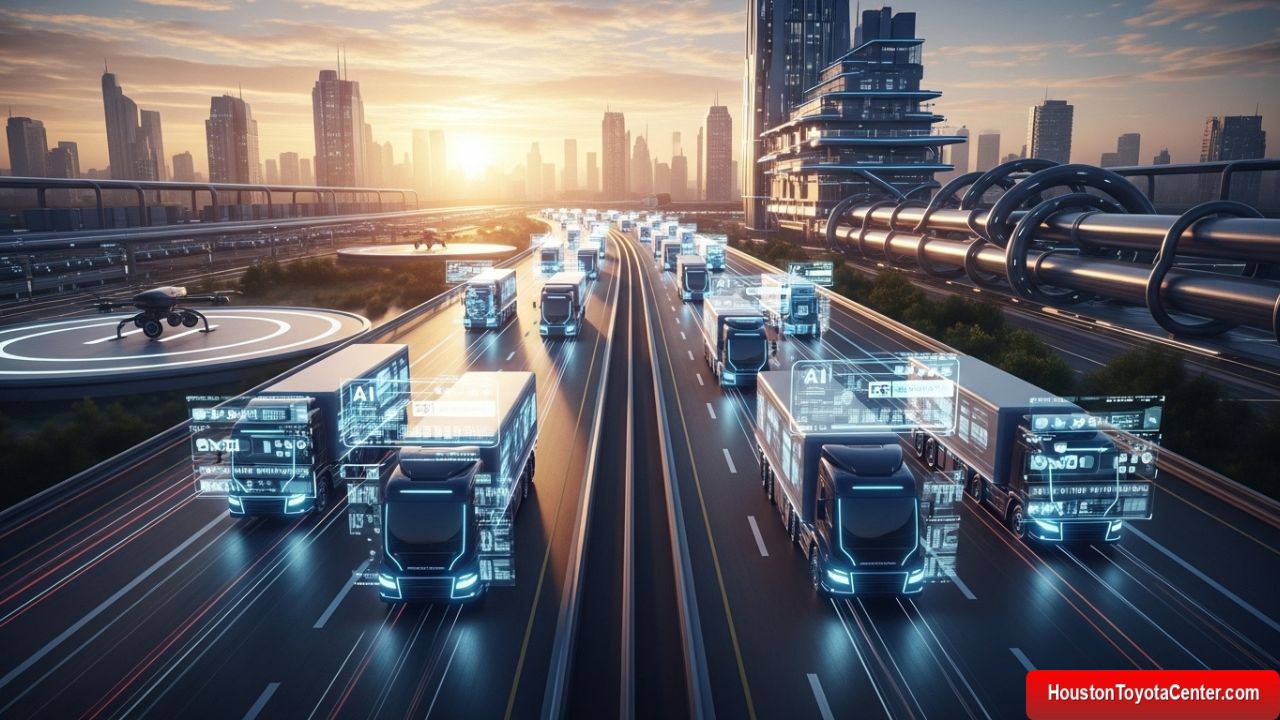
The global logistics industry is on the brink of a transformation unlike any seen since the invention of the internal combustion engine. Autonomous trucks—self-driving heavy vehicles capable of operating with minimal or no human intervention—promise to redefine how goods move across the world. By leveraging artificial intelligence, sensors, and real-time data analytics, these vehicles could deliver a new era of efficiency, safety, and sustainability in freight transportation.
The Current Challenges in Logistics
Before we understand how autonomous trucks could revolutionize logistics, it’s important to see the current pain points in the industry:
- Driver Shortages:
Across North America, Europe, and Asia, there is a severe shortage of truck drivers. The American Trucking Associations (ATA) estimates a shortage of more than 80,000 drivers in the U.S. alone. As the population ages and fewer young workers enter the field, the problem is intensifying. - High Operational Costs:
Fuel, maintenance, and labor costs make up the majority of expenses for trucking companies. Labor alone accounts for nearly 35–45% of total logistics costs. - Inefficiency and Downtime:
Human drivers must rest and adhere to strict working-hour regulations, meaning trucks spend a large percentage of time idle. These inefficiencies drive up delivery times and costs. - Accidents and Safety Concerns:
Human error contributes to over 90% of traffic accidents. Fatigue, distraction, or impaired driving cause massive losses in lives, goods, and property every year. - Environmental Pressure:
Governments and consumers alike are pushing for greener transportation. Traditional diesel-powered fleets face increasing scrutiny and regulation, driving a need for smarter, cleaner logistics systems.
Enter Autonomous Trucks: The Game Changer
Autonomous trucks promise to address many of these issues simultaneously. They combine AI algorithms, LiDAR sensors, radar systems, and high-precision GPS to perceive their environment, plan optimal routes, and drive safely without human intervention.
These systems can operate 24/7, make fewer mistakes, and reduce costs. Companies like Waymo, Aurora, TuSimple, and Embark are already conducting large-scale pilot programs in the U.S., with successful autonomous freight routes covering thousands of miles.
FREE: Quickly identify and understand problems with your vehicle 🚘
CLICK HERELevels of Automation
To understand the transition to full autonomy, it’s essential to look at the SAE Levels of Driving Automation:
| Level | Description | Human Involvement |
|---|---|---|
| 0 | No Automation | Full control by the driver |
| 1 | Driver Assistance | Basic functions like cruise control |
| 2 | Partial Automation | The system can control steering and acceleration, but the driver must supervise |
| 3 | Conditional Automation | The system can handle most driving tasks, but human intervention may be needed |
| 4 | High Automation | The vehicle can operate independently in most environments |
| 5 | Full Automation | No human driver required under any conditions |
Most autonomous trucks today operate between Levels 3 and 4, where they can navigate highways without human input but still require safety drivers for complex urban maneuvers.
The Core Technologies Behind Autonomous Trucks
Autonomous vehicles rely on several interconnected systems:
1. Sensor Fusion
Cameras, LiDAR, radar, and ultrasonic sensors collect environmental data. The fusion of these data points allows the truck to “see” its surroundings in 360 degrees.
2. Artificial Intelligence
AI processes sensor input, predicts movement of other vehicles, and decides actions like braking, accelerating, or changing lanes.
3. Mapping and Localization
High-definition 3D maps and GPS ensure precise positioning, often accurate to within a few centimeters.
4. Connectivity (V2X Communication)
Vehicle-to-Everything (V2X) allows trucks to communicate with other vehicles, infrastructure, and logistics systems, improving coordination and safety.
5. Cloud and Edge Computing
Massive data from sensors is processed both locally (edge computing) for immediate decisions and remotely (cloud) for long-term analysis and optimization.
Benefits of Autonomous Trucks in Logistics
1. Increased Efficiency
Autonomous trucks can operate 24 hours a day, with only minimal downtime for refueling or maintenance. This means faster deliveries and optimized use of vehicle assets.
2. Lower Costs
Without the need for rest periods or salaries for long-haul drivers, logistics companies can reduce operational costs by up to 45%. Automation also cuts fuel waste by enabling more consistent driving patterns.
3. Improved Safety
AI never gets tired, distracted, or impaired. With advanced sensors and algorithms, autonomous trucks could dramatically reduce accidents and save thousands of lives each year.
4. Reduced Carbon Emissions
Autonomous systems optimize driving behavior, minimizing unnecessary acceleration or idling, which can significantly reduce CO₂ emissions.
5. Enhanced Supply Chain Reliability
Predictable, automated routes make delivery times more reliable. This strengthens just-in-time (JIT) inventory systems and reduces costly delays.
Economic Impacts
The rise of autonomous trucks will reshape the entire logistics landscape, influencing jobs, infrastructure, and global trade.
| Aspect | Impact |
|---|---|
| Employment | Some driving jobs may disappear, but new roles in AI supervision, fleet monitoring, and maintenance will emerge |
| Infrastructure | Highways and depots will require digital connectivity upgrades |
| Freight Costs | Long-haul freight costs may drop by 30–50% |
| Market Competition | Smaller carriers may merge or collaborate to afford autonomous technology |
| Sustainability | Cleaner, smarter logistics could align with ESG (Environmental, Social, Governance) goals |
Case Studies: Companies Leading the Way
1. Waymo Via
A division of Alphabet Inc., Waymo Via focuses on autonomous freight delivery. It has completed fully autonomous runs between Texas and Arizona, demonstrating commercial viability for long-haul transport.
2. TuSimple
TuSimple has conducted extensive real-world testing, completing driverless runs over 80 miles without human intervention. Their partnerships with UPS and Navistar highlight the growing industry confidence.
3. Aurora
Founded by former Google and Tesla engineers, Aurora is developing a scalable autonomous trucking platform that integrates directly with existing logistics operations.
4. Embark Trucks
Embark’s technology focuses on “transfer hubs,” where autonomous trucks handle the highway portion while human drivers complete local deliveries. This hybrid model could speed up adoption.
Ethical and Social Challenges
Autonomous trucking is not without controversy. Some key issues include:
1. Job Displacement
Millions of professional truck drivers worldwide may face unemployment. Policymakers and companies must create retraining programs to help workers transition into new tech-based roles.
2. Safety and Liability
If an autonomous truck causes an accident, who is responsible? The manufacturer, the fleet operator, or the software developer? Legal frameworks are still catching up.
3. Cybersecurity
As vehicles become more connected, they are vulnerable to hacking. Ensuring the cybersecurity of autonomous fleets is crucial to prevent catastrophic accidents or theft.
4. Ethical Decision-Making
In critical situations, AI systems may face moral dilemmas—such as choosing between colliding with an obstacle or swerving into another vehicle. Programming ethics into algorithms remains a major challenge.
The Environmental Perspective
Autonomous trucks are also part of the larger sustainability movement. Their precise driving reduces fuel consumption, and their compatibility with electric drivetrains opens the door to carbon-neutral freight transport.
Some analysts predict that electric autonomous trucks could cut logistics-related CO₂ emissions by up to 60% in the next two decades. Combined with renewable energy and smart logistics systems, the environmental benefits are immense.
Barriers to Adoption
Despite the excitement, full adoption of autonomous trucking faces hurdles:
- Regulatory uncertainty across regions and states
- High upfront costs of technology integration
- Public trust issues regarding AI-driven vehicles
- Complex weather and road conditions challenging sensor reliability
- Data privacy and security concerns
However, these barriers are gradually being addressed through policy discussions, infrastructure investments, and technological advancements.
The Future Outlook: 2030 and Beyond
Industry experts predict that by 2030, autonomous trucks could make up 10–15% of all long-haul freight vehicles in developed countries. Early deployments will likely focus on highway corridors with consistent routes, such as Los Angeles to Dallas or Rotterdam to Berlin.
As technology matures, autonomous trucks will expand into more complex routes, eventually handling intercity and cross-border logistics.
Human and Machine Collaboration
Contrary to the popular belief that automation will completely replace humans, the future may be more collaborative. In the near term, we’ll likely see “human-in-the-loop” systems where remote operators oversee fleets of autonomous trucks.
These operators can intervene in complex situations while managing multiple vehicles simultaneously—much like air traffic controllers. This hybrid approach combines human judgment with machine precision.
Global Implications
North America
The U.S. leads in autonomous trucking tests, with states like Texas, Arizona, and Nevada offering supportive regulations and vast open highways ideal for testing.
Europe
The EU is focusing on cross-border platooning—multiple trucks driving in automated convoys to reduce fuel use and traffic congestion.
Asia
China and Japan are rapidly advancing autonomous trucking tech, integrating it with smart cities and digital logistics ecosystems.
Will Autonomous Trucks Replace All Drivers?
Probably not—at least not soon. Local delivery, complex urban navigation, and specialized cargo still require human oversight. Instead, autonomous trucks will complement human drivers, taking over long, repetitive highway segments, while people handle the “first and last mile” of deliveries.
Conclusion: A New Era of Logistics
Autonomous trucks are more than just a technological novelty—they are the next evolutionary step in global logistics. By reducing costs, improving safety, and enabling 24/7 operations, they promise a future where goods move faster, cleaner, and more predictably than ever before.
However, this revolution must be managed responsibly. Collaboration between governments, businesses, and workers will be essential to ensure that automation creates opportunities rather than inequality.
As the world embraces AI-driven logistics, one thing is clear: the road to the future will be autonomous, efficient, and transformative. 🚛✨
Leave a Reply