
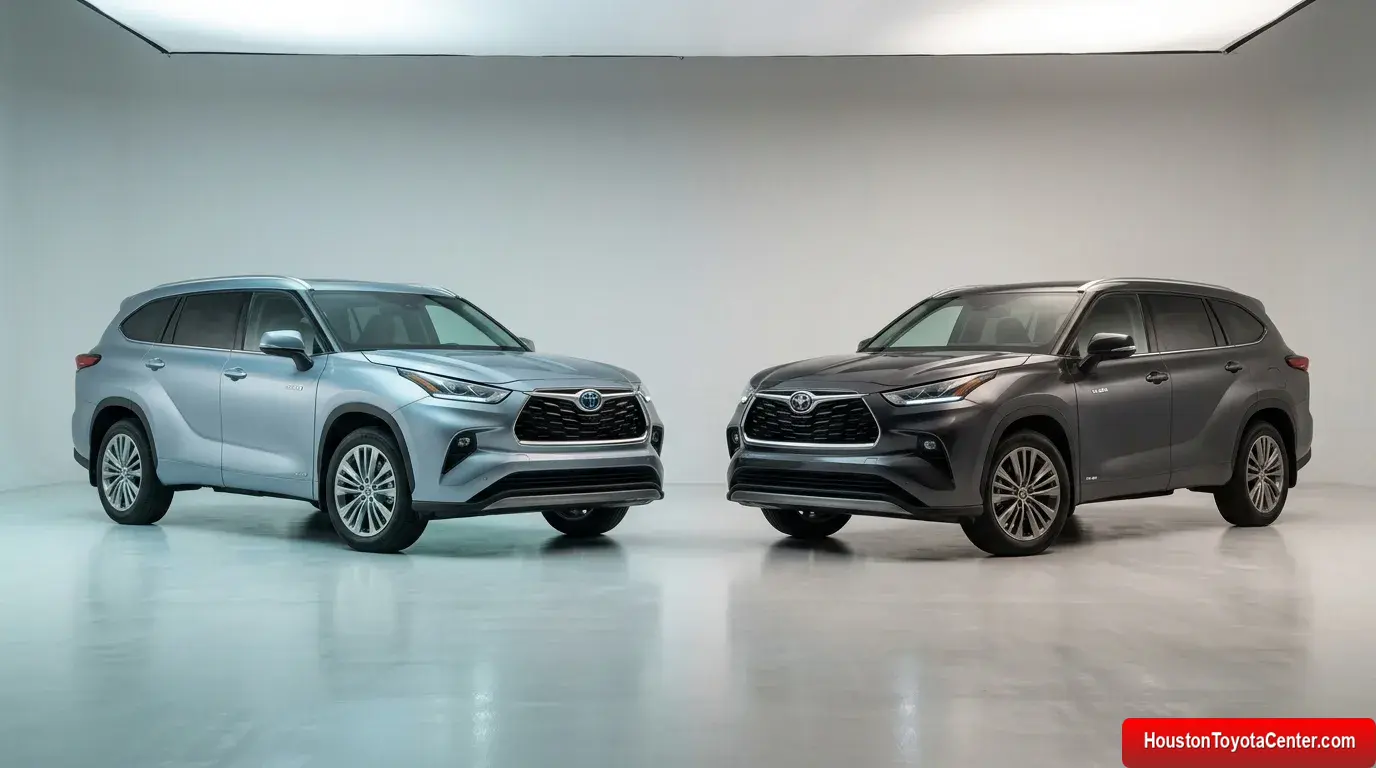
For SUV shoppers looking for a practical three-row vehicle, the Toyota Highlander presents a choice that is becoming increasingly important: traditional gasoline power or a hybrid powertrain.
For the 2026 model year, the Toyota Highlander continues to offer both options, but the two versions are designed with noticeably different priorities in mind. The gasoline Highlander emphasizes stronger towing capability, higher horsepower and a more conventional driving experience. The Highlander Hybrid, meanwhile, focuses on fuel efficiency while retaining the practicality expected from a midsize three-row SUV.
At first glance, the decision might appear simple. The hybrid uses less fuel, while the gas model costs less and produces more power. But the real choice depends on how the vehicle will be used, how many miles it will cover each year and what the owner values most.
So, which Highlander should you pick?
FREE: Quickly identify and understand problems with your vehicle 🚘
CLICK HEREThe Biggest Difference Is Under the Hood
The 2026 Highlander gas models use a 2.4-liter turbocharged four-cylinder engine producing 265 horsepower and 310 lb.-ft. of torque. The engine is paired with an eight-speed automatic transmission and all-wheel drive is now standard across the gas lineup.
The Highlander Hybrid takes a different approach. It combines a 2.5-liter four-cylinder gasoline engine with electric motors for a manufacturer-rated 243 combined net horsepower. Its hybrid system uses a separate rear electric motor as part of the standard all-wheel-drive system.
On paper, the gas Highlander has the advantage in outright horsepower. It also delivers substantially more towing capacity. Gas models can tow up to 5,000 pounds, while the Highlander Hybrid is rated for up to 3,500 pounds.
That distinction matters.
If your Highlander will regularly pull a substantial trailer, boat or recreational equipment, the gas model makes a stronger case. If towing is an occasional requirement and fuel economy is more important, the hybrid becomes much more attractive.
Fuel Economy Is the Hybrid’s Main Argument
This is where the Highlander Hybrid separates itself from the gas model.
For 2026, Toyota lists the gas Highlander at an estimated 21 mpg in the city, 28 mpg on the highway and 24 mpg combined. The Hybrid XLE is rated at 35 mpg in the city, 35 mpg on the highway and 35 mpg combined. The Hybrid Limited and Hybrid Platinum are rated at 35 mpg city, 34 mpg highway and 35 mpg combined.
That is a substantial difference.
Using the combined ratings, the hybrid achieves roughly 46 percent higher fuel economy than the gas model. Put another way, a driver covering the same distance would theoretically use significantly less gasoline in the hybrid.
The advantage is particularly interesting because the hybrid does not require the owner to plug the vehicle into a charger. Toyota describes the Highlander Hybrid as a gasoline-powered hybrid that combines an internal combustion engine with electric motors. The system manages the interaction between gasoline and electric power automatically.
For drivers who like the idea of electrification but do not want to deal with charging infrastructure, that can be a major benefit.
The Hybrid Costs More, But Not by as Much as You Might Expect
Price is usually the first argument against choosing a hybrid, but the gap between comparable Highlander versions is relatively manageable.
The 2026 Highlander XLE starts at $46,270, while the Highlander Hybrid XLE starts at $48,020. That puts the initial difference at $1,750 before destination charges, taxes, options and other costs.
That price premium is important, but it is not enormous for a vehicle in this category.
The question is whether the fuel savings can justify spending more upfront.
There is no universal answer because the result depends on fuel prices, annual mileage, driving conditions and how long the vehicle is kept. A driver who covers a high number of miles every year may benefit considerably from the hybrid’s efficiency. Someone who drives relatively little may take much longer to recover the initial price difference through fuel savings.
This is one reason the hybrid makes more sense as a long-term ownership decision rather than simply as a purchase-price decision.
City Drivers Have a Particularly Strong Reason to Consider the Hybrid
The Highlander Hybrid’s powertrain is designed to take advantage of electric assistance during everyday driving. That makes the hybrid especially appealing to drivers who spend a lot of time in urban traffic, where frequent acceleration and deceleration create opportunities for the hybrid system to recover and reuse energy.
The system also allows EV driving at low speeds for short distances under appropriate conditions. Toyota says the Highlander Hybrid offers selectable Normal, Eco and Sport modes, along with an EV mode button.
The result is a driving experience that can feel different from a traditional gasoline SUV.
Instead of relying exclusively on the gasoline engine, the hybrid constantly manages the relationship between the engine, electric motors and battery. For drivers who spend their days commuting through traffic, that efficiency can become one of the vehicle’s most noticeable advantages.
Highway drivers can still benefit from the hybrid, but the difference in fuel consumption may feel less dramatic depending on speed, weather, terrain and driving habits.
The Gas Highlander Still Has a Very Strong Case
Choosing the gas model does not mean choosing an outdated or inefficient SUV.
The 2026 Highlander gas powertrain is a modern turbocharged four-cylinder with 265 horsepower and 310 lb.-ft. of torque. Toyota also gives the gas models an eight-speed automatic transmission and a towing capacity of up to 5,000 pounds.
For some buyers, those characteristics will matter more than fuel economy.
The gas Highlander is the better fit for someone who frequently travels with heavy loads, spends weekends towing or simply prefers the response of a conventional turbocharged engine. It is also the less expensive way into the Highlander lineup.
The gas model can therefore be viewed as the practical choice for buyers who prioritize capability and purchase price.
Both Versions Keep the Highlander’s Family-Friendly Formula
The decision between gas and hybrid does not mean choosing between two completely different SUVs.
Both versions retain the Highlander’s three-row configuration and family-oriented design. Toyota offers seating for up to seven or eight passengers depending on configuration, while the hybrid battery is installed under the second-row seats so it does not sacrifice passenger or cargo space.
That is an important detail.
Some shoppers may assume that choosing a hybrid means giving up usable interior space. In the Highlander, Toyota has integrated the hybrid hardware without turning the vehicle into a compromise-heavy alternative.
Both powertrains also benefit from the Highlander’s available technology and safety equipment. Toyota Safety Sense 2.5+ is standard, while higher trims can add features such as a 12.3-inch multimedia display, premium JBL audio, a panoramic roof and additional driver-assistance technology.
In other words, the choice is primarily about the powertrain rather than a fundamental difference in the vehicle’s role.
What About Maintenance?
Hybrid technology often raises questions about long-term maintenance and battery durability.
Modern hybrids are engineered to operate as integrated systems, and Toyota has decades of experience producing hybrid vehicles. Still, buyers should avoid assuming that every ownership cost will automatically be lower simply because a vehicle uses less fuel.
The hybrid has additional electrical and powertrain components that are not found in a conventional gasoline vehicle. At the same time, the gasoline engine in a hybrid can operate differently from an engine that provides all of the vehicle’s propulsion.
The most sensible approach is to look at the total ownership picture rather than assuming one version will always be cheaper to maintain.
Fuel consumption, warranty coverage, scheduled maintenance, insurance, depreciation and expected ownership period should all be considered before making the final decision.
Which Highlander Is Better for Long Trips?
For long-distance highway travel, the answer becomes more nuanced.
The gas Highlander offers more horsepower and considerably more towing capacity. If a road trip involves a trailer or heavy cargo, the gasoline version is the obvious choice.
For a conventional family road trip without towing, however, the hybrid’s 35 mpg combined rating can be compelling. The ability to travel farther on a tank of gasoline can reduce fuel stops and make high-mileage ownership more economical.
The right choice therefore depends on what “long trips” actually means.
A family that spends weekends towing a camper should look closely at the gas Highlander. A family that drives hundreds of highway miles every month without towing may find the hybrid more appealing.
Which One Should You Buy?
For most buyers, the decision can be simplified into a few questions.
Choose the Highlander Hybrid if fuel economy is your top priority. The 35 mpg combined rating is the headline advantage, and the hybrid delivers that efficiency without requiring external charging. It is particularly appealing for high-mileage drivers, commuters and families that want lower gasoline consumption without moving to a fully electric SUV.
Choose the gas Highlander if towing and performance matter more. Its 265-horsepower turbocharged engine, 310 lb.-ft. of torque and 5,000-pound towing capacity give it a clear advantage for drivers who regularly carry or pull heavy loads.
Choose the hybrid if you plan to keep the SUV for many years and drive a lot. The higher initial price can be easier to justify when fuel savings accumulate over thousands of miles.
Choose the gas version if your annual mileage is relatively low. The lower starting price may make more sense if the vehicle spends most of its life parked and fuel savings would take many years to offset the initial premium.
The Verdict
The 2026 Toyota Highlander Hybrid is the more efficiency-focused choice, while the gas Highlander is the more capability-focused option.
Neither is universally better.
The hybrid delivers an impressive 35 mpg combined rating, standard all-wheel drive and up to 3,500 pounds of towing capacity. The gas model counters with 265 horsepower, 310 lb.-ft. of torque and up to 5,000 pounds of towing capability. The starting-price gap between comparable XLE models is $1,750.
For the average family that spends most of its time commuting, running errands and taking road trips without heavy towing, the Highlander Hybrid is arguably the more compelling long-term choice. Its fuel economy advantage is too significant to ignore, especially for drivers who accumulate substantial mileage.
For buyers who need maximum towing capability or simply prefer the stronger output of a turbocharged gasoline engine, the conventional Highlander remains the better tool.
Ultimately, the question is not whether the hybrid is better than the gas model. It is whether saving fuel or maximizing capability matters more in your everyday life.
For efficiency, pick the Highlander Hybrid.
For towing and stronger conventional performance, pick the Highlander Gas.
For buyers who want a little of everything, the decision comes down to how many miles they drive and what they expect their three-row SUV to do.
Leave a Reply