
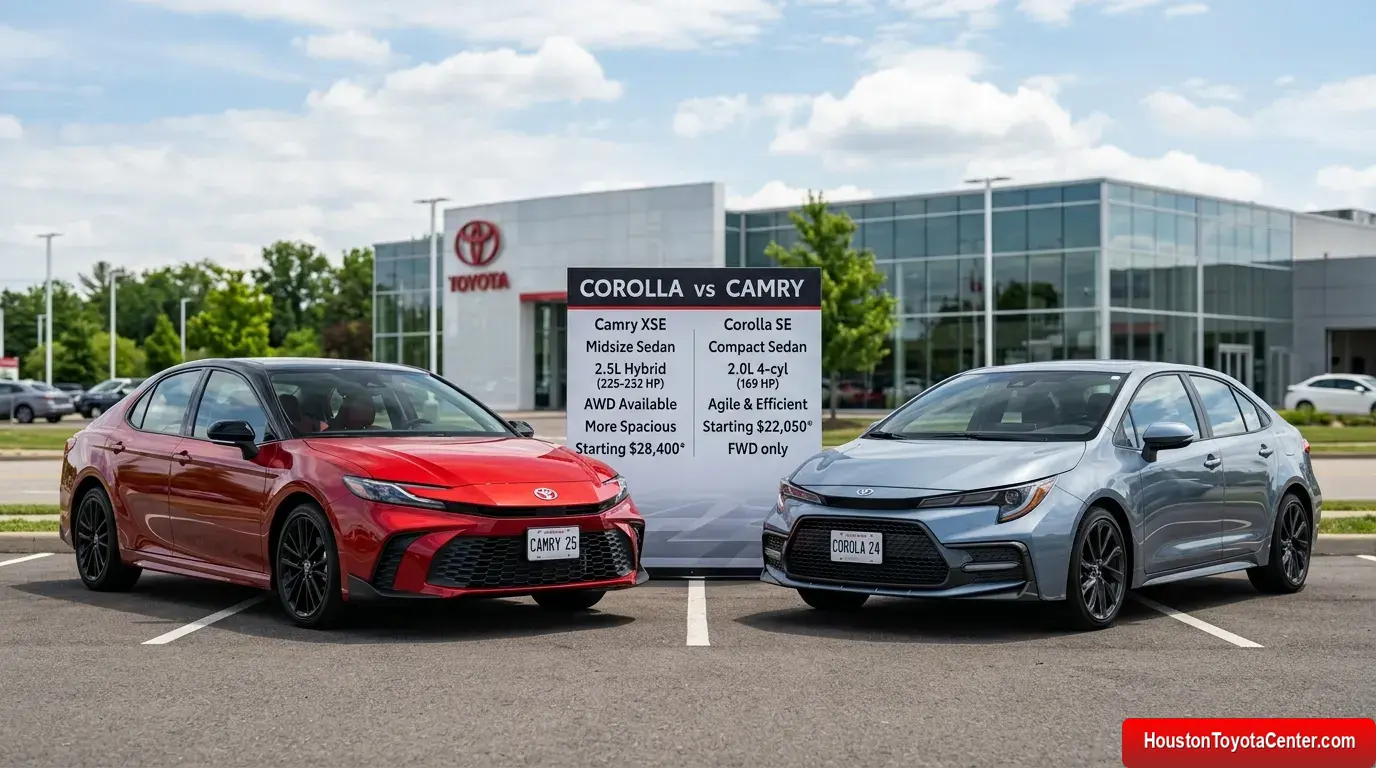
When it comes to choosing a reliable, efficient, and well-built sedan, few names carry as much weight in the automotive world as Toyota. For decades, the Japanese automaker has dominated the compact and midsize sedan segments with two of its most iconic models: the Toyota Corolla and the Toyota Camry. Both vehicles have earned reputations for exceptional reliability, strong resale values, and practicality that appeals to millions of drivers worldwide. However, despite sharing the Toyota badge and many engineering philosophies, these two sedans serve distinctly different purposes and cater to different types of drivers.
The question isn’t simply which car is “better” — because both are excellent in their own right — but rather which one aligns more closely with your specific needs, budget, driving habits, and lifestyle preferences. Whether you’re a first-time car buyer, a growing family, a daily commuter, or someone who values performance and comfort, understanding the nuanced differences between the Corolla and Camry can help you make an informed decision that you’ll be happy with for years to come.
In this comprehensive guide, we’ll explore every aspect of these two popular Toyota sedans, from pricing and fuel economy to interior space, technology features, safety ratings, and driving dynamics. By the end, you’ll have a clear picture of which model best suits your unique situation.
Understanding the Segments: Compact vs. Midsize
Before diving into specific comparisons, it’s essential to understand the fundamental difference between these two vehicles: they belong to different vehicle classes.
FREE: Quickly identify and understand problems with your vehicle 🚘
CLICK HEREThe Toyota Corolla is classified as a compact sedan, which means it’s smaller, lighter, and generally more affordable. Compact cars are designed for efficiency, maneuverability, and value. They’re ideal for urban environments, younger buyers, and anyone prioritizing low operating costs. The Corolla has been Toyota’s entry-level sedan for over five decades, and it remains one of the best-selling cars globally.
The Toyota Camry, on the other hand, is a midsize sedan. This classification means it offers more interior space, a larger trunk, more powerful engine options, and typically a higher level of standard equipment and refinement. Midsize sedans like the Camry strike a balance between the affordability of compacts and the luxury of full-size vehicles, making them popular with families, professionals, and drivers who want more comfort without sacrificing too much efficiency.
This segment distinction is crucial because it influences nearly every aspect of the driving experience, from how the car handles on the highway to how much cargo you can fit in the trunk.
Pricing and Value Proposition
One of the most significant factors in any car-buying decision is price. Here, the Corolla holds a clear advantage, though the Camry offers compelling value for those willing to spend more.
Starting Prices and Trim Levels
The Toyota Corolla typically starts at a lower Manufacturer’s Suggested Retail Price (MSRP) than the Camry. For the 2024-2025 model years, the base Corolla LE trim usually begins around $21,000-$22,000, while the Camry LE starts closer to $26,000-$27,000. This represents a difference of approximately $5,000-$6,000 at the entry level.
Both vehicles offer multiple trim levels that progressively add features, technology, and sometimes performance enhancements:
| Trim Level | Corolla Approx. Price Range | Camry Approx. Price Range |
|---|---|---|
| Base (LE) | $21,000 – $22,000 | $26,000 – $27,000 |
| Mid-Level (SE/XLE) | $23,000 – $25,000 | $28,000 – $31,000 |
| Top-Tier (XSE/XLE Premium) | $26,000 – $28,000 | $32,000 – $36,000 |
| Hybrid Variants | $23,000 – $26,000 | $28,000 – $33,000 |
Note: Prices vary by region, dealer incentives, and optional packages.
As you can see, even fully loaded Corollas typically cost less than base-model Camrys. However, when comparing similarly equipped trims, the price gap narrows, and the Camry’s additional space and features may justify the premium for some buyers.
Long-Term Ownership Costs
Beyond the sticker price, it’s important to consider total cost of ownership, which includes fuel, insurance, maintenance, and depreciation.
Fuel Costs: Both vehicles offer excellent fuel economy, but the Corolla’s smaller size and lighter weight give it a slight edge. More on this in the next section.
Insurance: Insurance premiums are generally lower for the Corolla due to its lower replacement value and statistically lower repair costs. The difference might range from $100 to $300 annually, depending on your location and driving record.
Maintenance: Toyota vehicles are renowned for their reliability, and both the Corolla and Camry benefit from this reputation. Routine maintenance costs are comparable, though the Camry’s larger components (brakes, tires, etc.) may cost slightly more to replace. Both models typically require minimal unscheduled repairs during their first five years of ownership.
Depreciation: Both vehicles hold their value exceptionally well compared to competitors. The Corolla tends to depreciate slightly slower in percentage terms because of its lower initial price, but the Camry often retains more absolute dollar value due to its higher starting price. After five years, you might expect to recover 55-65% of the Corolla’s original value and 50-60% of the Camry’s, though this varies significantly based on condition, mileage, and market demand.
Fuel Economy and Efficiency
For many buyers, especially those with long commutes or tight budgets, fuel economy is a critical consideration. Both the Corolla and Camry excel in this area, particularly when equipped with Toyota’s hybrid powertrains.
Gasoline Models
The standard gasoline-powered Corolla is equipped with a 2.0-liter four-cylinder engine producing approximately 169 horsepower. Paired with a continuously variable transmission (CVT), it delivers impressive fuel economy ratings:
- City: 31-32 mpg
- Highway: 40-41 mpg
- Combined: 34-35 mpg
The Camry, being larger and heavier, uses a 2.5-liter four-cylinder engine producing around 203 horsepower. Its fuel economy ratings are still very respectable:
- City: 28-29 mpg
- Highway: 39-40 mpg
- Combined: 32-33 mpg
The difference is modest — roughly 2-3 mpg in combined driving — but over the course of a year and thousands of miles, this can translate to meaningful savings, especially for high-mileage drivers.
Hybrid Models
Toyota pioneered mainstream hybrid technology, and both the Corolla and Camry offer hybrid variants that significantly improve fuel efficiency.
The Corolla Hybrid combines a 1.8-liter four-cylinder engine with an electric motor, producing a combined 121 horsepower. While less powerful than the gasoline model, it achieves remarkable efficiency:
- City: 53 mpg
- Highway: 52 mpg
- Combined: 52 mpg
The Camry Hybrid uses a more robust 2.5-liter four-cylinder engine paired with electric motors, generating a combined 208 horsepower. It offers an excellent balance of power and efficiency:
- City: 51 mpg
- Highway: 53 mpg
- Combined: 52 mpg
Interestingly, both hybrids achieve nearly identical combined fuel economy ratings, though the Camry Hybrid does so while providing significantly more power. For drivers who want maximum efficiency without sacrificing acceleration, the Camry Hybrid is an outstanding choice.
Real-World Considerations
It’s worth noting that real-world fuel economy can vary based on driving style, terrain, weather conditions, and traffic patterns. Aggressive acceleration, frequent stop-and-go traffic, and cold weather can all reduce fuel economy. Conversely, gentle driving, proper tire inflation, and regular maintenance can help you achieve or even exceed EPA estimates.
For most drivers, the fuel cost difference between the Corolla and Camry will be relatively small unless you drive extensively (15,000+ miles per year). At current gas prices, the annual difference might range from $100 to $300, which should be weighed against other factors like space, comfort, and features.
Interior Space and Comfort
This is where the Camry begins to distinguish itself from the Corolla. As a midsize sedan, the Camry offers noticeably more room for passengers and cargo, which can make a significant difference in daily comfort and practicality.
Passenger Space
The Corolla provides adequate space for four adults, though the rear seat can feel cramped for taller passengers on longer journeys. Front-seat occupants will find plenty of room, with good headroom and legroom for most body types.
The Camry, by contrast, offers generous space in both rows. Rear-seat passengers benefit from significantly more legroom (approximately 38 inches versus 34-35 inches in the Corolla), making it much more comfortable for adults on extended trips. The wider cabin also means shoulder room is better, reducing the feeling of confinement.
If you regularly transport adult passengers in the back seat — whether family members, friends, or clients — the Camry’s superior rear-seat space is a compelling advantage.
Cargo Capacity
Trunk space is another area where the Camry excels:
- Corolla: Approximately 13.1 cubic feet
- Camry: Approximately 15.1 cubic feet
That extra two cubic feet might not sound like much, but it can make a meaningful difference when loading groceries, luggage, sports equipment, or other items. The Camry’s trunk is also wider and deeper, making it easier to fit larger or oddly shaped items.
Both vehicles feature 60/40 split-folding rear seats that expand cargo capacity when needed, though the Camry’s larger overall dimensions mean it can accommodate bulkier items more easily.
Seat Comfort and Materials
Both sedans offer comfortable seating, but the Camry typically provides a more refined experience. Higher trim levels feature soft-touch materials, available leather upholstery, heated and ventilated seats, and even massaging functions in top-tier models. The Corolla’s interior is well-designed and functional, but it uses more hard plastics and simpler materials, particularly in base trims.
Ride quality also differs. The Camry’s longer wheelbase and more sophisticated suspension tuning result in a smoother, quieter ride that better absorbs road imperfections. The Corolla is comfortable enough for daily driving but can feel slightly firmer and noisier, especially on rough roads or at highway speeds.
Technology and Features
Modern car buyers expect a robust suite of technology features, and both Toyota models deliver, though the Camry generally offers more advanced options and larger displays.
Infotainment Systems
Both vehicles come standard with Toyota’s latest infotainment system, featuring:
- Touchscreen Display: 7-inch standard, with available 8-inch or larger screens on higher trims
- Apple CarPlay and Android Auto: Standard wireless connectivity on most trims
- Voice Recognition: For hands-free control of navigation, music, and phone calls
- Bluetooth Connectivity: For audio streaming and phone integration
- USB Ports: Multiple ports for charging devices
The Camry often features larger standard screens and more premium audio systems, including available JBL premium sound systems with more speakers and better sound quality. The Corolla’s system is fully functional but may feel less impressive in terms of screen size and audio fidelity.
Driver Assistance and Safety Technology
Toyota Safety Sense is standard on both vehicles, representing one of the most comprehensive suites of driver assistance features in the industry. This includes:
- Pre-Collision System with Pedestrian Detection: Automatically applies brakes if a collision is imminent
- Lane Departure Alert with Steering Assist: Helps keep the vehicle centered in its lane
- Automatic High Beams: Adjusts headlights based on surrounding traffic
- Dynamic Radar Cruise Control: Maintains a set distance from vehicles ahead
- Road Sign Assist: Recognizes and displays certain road signs
Higher trim levels add additional features like blind-spot monitoring, rear cross-traffic alert, parking assist, and surround-view cameras. The Camry typically offers more of these advanced features as standard or available options, reflecting its positioning as a more premium vehicle.
Connectivity and Convenience
Both vehicles offer modern connectivity features, including:
- Wi-Fi hotspot capability (often through a subscription service)
- Remote start and climate control via smartphone app
- Digital key functionality on newer models
- Over-the-air software updates
The Camry may offer additional convenience features like a hands-free power trunk, memory seats, and a head-up display on higher trims, enhancing the overall ownership experience.
Performance and Driving Dynamics
While neither the Corolla nor the Camry is designed as a sports car, they offer different driving experiences that may appeal to different preferences.
Engine Options and Power
The Corolla’s 2.0-liter engine produces adequate power for daily driving, with 169 horsepower providing reasonable acceleration for merging onto highways and passing slower vehicles. The CVT transmission prioritizes smoothness and efficiency over sporty engagement, though it can feel somewhat unresponsive during aggressive acceleration.
The Camry’s 2.5-liter engine delivers 203 horsepower, providing noticeably stronger acceleration and more confident highway passing ability. An available all-wheel-drive system (unique in the midsize sedan segment) adds traction and confidence in adverse weather conditions. For enthusiasts, the Camry also offers a V6 engine option in certain trims, producing 301 horsepower and delivering genuine performance credentials.
Handling and Ride Quality
The Corolla’s smaller size and lighter weight make it nimble and easy to maneuver in tight spaces, such as crowded city streets or parking garages. However, this agility comes at the cost of some stability at higher speeds and over uneven surfaces.
The Camry feels more planted and stable, thanks to its longer wheelbase and more sophisticated suspension. It absorbs bumps and road imperfections more effectively, resulting in a calmer, more composed ride. Highway cruising is notably more relaxed in the Camry, with less wind noise and vibration reaching the cabin.
Hybrid Driving Experience
Both hybrid models offer smooth, quiet operation, particularly at low speeds where the electric motor dominates. The transition between electric and gasoline power is seamless in both vehicles. The Camry Hybrid’s more powerful electric motors provide stronger acceleration from a standstill, making it feel more responsive in city driving.
Regenerative braking in both hybrids helps recapture energy during deceleration, though some drivers may need time to adjust to the slightly different pedal feel compared to conventional braking systems.
Safety Ratings and Reliability
Safety and reliability are two areas where both the Corolla and Camry excel, continuing Toyota’s longstanding reputation for building dependable, safe vehicles.
Crash Test Ratings
Both vehicles earn top marks from major safety organizations:
- IIHS (Insurance Institute for Highway Safety): Both the Corolla and Camry typically earn “Top Safety Pick” or “Top Safety Pick+” ratings, indicating excellent performance in crash tests and available safety features.
- NHTSA (National Highway Traffic Safety Administration): Both models generally receive five-star overall safety ratings, with high scores in frontal, side, and rollover protection.
The Camry’s larger size provides some inherent advantages in certain crash scenarios, particularly in collisions with smaller vehicles, but both cars offer excellent occupant protection.
Reliability Records
Toyota consistently ranks among the most reliable automotive brands, and both the Corolla and Camry benefit from this heritage. According to various reliability studies and consumer reports:
- Both vehicles typically experience fewer problems than average during their first three to five years of ownership
- Major mechanical failures are rare, with most issues being minor electrical or cosmetic concerns
- Both models have strong track records for lasting well beyond 200,000 miles with proper maintenance
The Corolla’s simpler design and fewer complex features may contribute to slightly better long-term reliability statistics, but the difference is marginal. Either vehicle should provide many years of trouble-free service.
Warranty Coverage
Both vehicles come with Toyota’s standard warranty package:
- Basic Warranty: 3 years/36,000 miles
- Powertrain Warranty: 5 years/60,000 miles
- Hybrid Component Warranty: 8 years/100,000 miles (for hybrid models)
- Corrosion Perforation Warranty: 5 years/unlimited miles
Extended warranty options are available for purchase, and Toyota’s certified pre-owned program offers additional peace of mind for used car buyers.
Who Should Choose the Corolla?
The Toyota Corolla is an excellent choice for:
First-Time Car Buyers: The Corolla’s lower price point makes it more accessible for young drivers or those purchasing their first vehicle. Lower insurance costs and excellent fuel economy help keep ongoing expenses manageable.
Urban Dwellers: The Corolla’s compact dimensions make it easier to park and navigate through congested city streets. Its nimble handling is well-suited to stop-and-go traffic and tight parking spaces.
Budget-Conscious Drivers: If minimizing both upfront and ongoing costs is a priority, the Corolla delivers exceptional value. Lower purchase price, better fuel economy, and reduced insurance premiums add up to significant savings over time.
Single Individuals or Couples Without Children: For those who don’t regularly transport rear-seat passengers or large amounts of cargo, the Corolla provides sufficient space without the extra cost and size of the Camry.
High-Mileage Commuters: While both cars are efficient, the Corolla’s slightly better fuel economy can result in meaningful savings for those driving 15,000+ miles annually.
Minimalists: If you prefer a simple, straightforward vehicle without excessive features or complexity, the base Corolla delivers exactly what you need without unnecessary extras.
Who Should Choose the Camry?
The Toyota Camry is ideal for:
Growing Families: The Camry’s spacious rear seat and larger trunk make it much more practical for families with children. Installing car seats is easier, and there’s room for strollers, diaper bags, and other family essentials.
Frequent Road Trippers: The Camry’s superior comfort, quieter cabin, and more powerful engine make long-distance driving more enjoyable. Passengers will appreciate the extra legroom, and the larger trunk accommodates luggage more easily.
Professionals and Business Users: The Camry’s more upscale interior, available premium features, and refined driving experience project a more professional image. It’s suitable for client transportation or those who spend significant time driving for work.
Drivers Prioritizing Comfort: If ride quality, cabin quietness, and seat comfort are top priorities, the Camry delivers a noticeably more refined experience than the Corolla.
Those Wanting More Power: The Camry’s stronger engine options, including the available V6, provide better acceleration and highway passing capability. The hybrid model offers an excellent balance of power and efficiency.
All-Weather Drivers: The Camry’s available all-wheel-drive system provides enhanced traction in snow, rain, and other challenging conditions, making it a safer choice for those living in regions with harsh winters.
Buyers Seeking Long-Term Value: While the Camry costs more initially, its higher feature content, greater versatility, and strong resale value may provide better overall value for those planning to keep the vehicle for many years.
Making the Final Decision
Choosing between the Corolla and Camry ultimately comes down to assessing your specific needs, priorities, and budget. Here are some key questions to help guide your decision:
What’s your budget? If you’re working with strict financial constraints, the Corolla offers excellent value at a lower price point. If you can afford the premium, the Camry provides more space, features, and refinement.
How many people do you regularly transport? If you frequently carry adult passengers in the rear seat, the Camry’s superior space is worth considering. For solo drivers or couples, the Corolla is perfectly adequate.
What’s your typical driving environment? Urban drivers may appreciate the Corolla’s maneuverability, while those doing lots of highway driving might prefer the Camry’s stability and comfort.
Do you need all-wheel drive? Only the Camry offers this option, which could be crucial for drivers in snowy or rainy climates.
How important is fuel economy? Both vehicles are efficient, but the Corolla has a slight edge in gasoline models. Hybrids from both lineups offer exceptional efficiency.
What features matter most to you? Make a list of must-have features and check which model offers them within your budget.
How long do you plan to keep the vehicle? Both cars are reliable long-term investments, but the Camry’s additional space and features may remain relevant longer as your needs evolve.
Conclusion
The Toyota Corolla and Toyota Camry represent two of the best values in the automotive marketplace, each excelling in its respective segment. The Corolla is a masterclass in efficient, affordable transportation, offering everything most drivers need in a compact, economical package. The Camry elevates the experience with more space, power, comfort, and features, justifying its higher price for those who value these attributes.
There’s no wrong choice here — both vehicles embody Toyota’s commitment to quality, reliability, and customer satisfaction. The Corolla proves that you don’t need to spend a lot to get a great car, while the Camry demonstrates that spending a bit more can yield significant improvements in comfort and capability.
Take the time to test drive both models, ideally back-to-back, to experience the differences firsthand. Pay attention to how each car fits your body, how comfortable the seats feel, how intuitive the controls are, and how each vehicle handles the types of driving you do most often. Consider your current needs and how they might change in the coming years.
Whether you choose the practical, efficient Corolla or the spacious, refined Camry, you’ll be joining millions of satisfied Toyota owners who appreciate the peace of mind that comes with owning one of the most trusted names in automobiles. Both vehicles will serve you well, providing years of reliable, economical, and enjoyable transportation. The best choice is simply the one that aligns most closely with your unique lifestyle and priorities.
Leave a Reply