
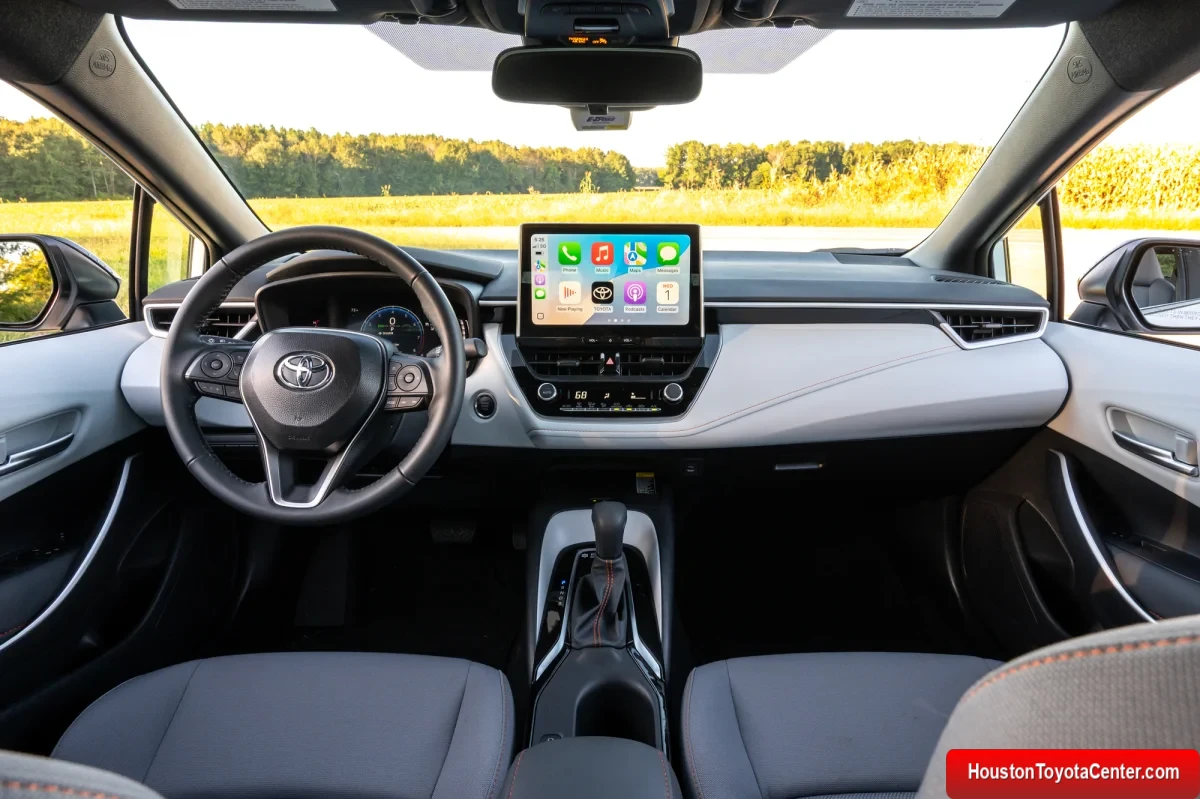
The Toyota Corolla has built one of the strongest reputations in the automotive industry by consistently delivering reliability, practicality, efficiency, and value. Over the decades, it evolved from a simple compact sedan into a refined and technologically sophisticated vehicle capable of competing with far more expensive rivals in comfort and interior quality. While buyers often focus on fuel economy and reliability when discussing the Corolla, the cabin experience has become one of the model’s most important strengths.
Modern drivers spend significant time inside their vehicles. Daily commuting, road trips, traffic congestion, family transportation, and even remote work habits have elevated the importance of comfort, seating ergonomics, noise insulation, cabin technology, and interior flexibility. The latest Corolla generations demonstrate Toyota’s understanding of these changing expectations.
This review explores the Corolla’s interior design, seating comfort, material quality, technology integration, passenger space, ride refinement, climate control systems, storage solutions, lighting, and overall usability. It also examines how different trims influence the ownership experience and why the Corolla continues to appeal to drivers seeking comfort without sacrificing affordability.
First Impressions of the Corolla Cabin
Entering a modern Corolla reveals a cabin designed around simplicity, visibility, and user-friendly ergonomics. Toyota intentionally avoided an overly futuristic approach that could age quickly or confuse drivers. Instead, the interior blends clean horizontal lines, soft-touch materials, intuitive controls, and balanced proportions.
FREE: Quickly identify and understand problems with your vehicle 🚘
CLICK HEREOne of the first things drivers notice is the sense of openness. The dashboard sits relatively low, allowing for improved forward visibility and reducing the feeling of confinement often associated with compact sedans. Thin A-pillars further contribute to visibility and make urban driving easier.
The dashboard layout is structured logically. Frequently used controls are positioned within comfortable reach, while infotainment screens are elevated closer to the driver’s line of sight. This reduces distraction and helps drivers maintain focus on the road.
The Corolla also benefits from thoughtful color combinations. Depending on trim level, buyers can choose black, gray, macadamia, or mixed-tone interiors that enhance the cabin atmosphere. Higher trims add contrast stitching and textured surfaces that create a more upscale appearance.
Even before discussing specific comfort features, the Corolla communicates a sense of calmness and usability. Nothing feels excessively complicated, and that simplicity contributes significantly to long-term ownership satisfaction.
Seating Comfort and Ergonomics
Seating is one of the most important aspects of any interior review because it directly influences fatigue, posture, and driving enjoyment. Toyota invested considerable effort into improving Corolla seat design over recent generations.
Front Seat Comfort
The front seats provide a balanced combination of softness and support. Unlike overly cushioned seats that become uncomfortable during long drives, the Corolla’s seats maintain structural support while still feeling welcoming during short commutes.
Toyota designed the seat shape to accommodate a wide variety of body types. The seatbacks feature moderate bolstering that keeps occupants stable during cornering without making entry and exit difficult.
The driving position is another strength. Drivers can usually find a natural seating posture quickly due to generous seat adjustment ranges. Most trims include manual seat adjustments, while higher trims offer power-adjustable driver seating with lumbar support.
Lumbar support becomes especially valuable during extended highway driving. Lower back fatigue can develop quickly in poorly designed compact sedans, but the Corolla performs impressively well in this category.
Seat height placement also deserves recognition. The seating position feels neither excessively low nor awkwardly elevated. Drivers experience a slightly sporty orientation while still maintaining excellent outward visibility.
Rear Seat Comfort
Rear passenger comfort has historically been a weakness in compact sedans, but the Corolla performs better than many competitors in its class.
Legroom is adequate for average-sized adults, and the rear bench provides enough cushioning for longer journeys. While taller passengers may eventually desire more knee space during extended trips, the cabin dimensions remain practical for families and ride-sharing situations.
Headroom remains acceptable even in trims equipped with sunroofs. The roofline avoids aggressive coupe-like styling that would compromise passenger space.
The rear seatback angle is another underrated detail. Toyota selected a recline angle that promotes a more relaxed posture rather than the upright seating common in older compact sedans.
Rear passengers also benefit from strategically positioned air vents and USB charging ports in many trims, helping improve overall comfort during travel.
Interior Material Quality
One of the most dramatic improvements in modern Corolla generations involves material quality. Earlier Corolla models prioritized durability above all else, often resulting in hard plastics and plain surfaces. Today’s Corolla balances durability with refinement much more effectively.
Dashboard and Door Panels
Higher-contact surfaces across the dashboard and doors now include soft-touch materials in many trims. These surfaces improve both tactile satisfaction and visual sophistication.
The dashboard design uses layered textures that create depth without becoming visually cluttered. Satin metallic accents help break up large surfaces and contribute to a more premium atmosphere.
Door armrests are comfortably padded, which becomes surprisingly important during long drives. The placement of controls also feels natural and ergonomic.
Even lower trims avoid feeling excessively cheap. While hard plastics remain present in less visible areas, Toyota carefully positions them where they are least likely to negatively impact the ownership experience.
Upholstery Choices
Toyota offers several upholstery configurations depending on market and trim level.
| Trim Level Style | Typical Upholstery | Comfort Impression |
|---|---|---|
| Base Trims | Cloth | Durable and breathable |
| Mid-Level Trims | Premium Cloth | Softer texture with improved support |
| Sport Trims | SofTex Synthetic Leather | Sportier appearance with easier cleaning |
| Luxury-Oriented Trims | Mixed SofTex and Fabric | Premium feel with temperature balance |
The cloth seats deserve particular praise because they remain breathable in hot climates and comfortable during colder weather. Some synthetic leather alternatives from competitors can become uncomfortable during temperature extremes.
Toyota’s SofTex material offers a compelling compromise between luxury appearance and practical ownership. It is easier to clean than traditional fabric and more environmentally friendly than some conventional leather treatments.
Build Quality and Durability
The Corolla continues Toyota’s tradition of exceptional assembly quality. Interior panels generally fit together tightly, minimizing rattles and vibrations over time.
This durability contributes heavily to the Corolla’s long-term value retention. Even after years of ownership, many Corolla interiors maintain their structural integrity and visual consistency.
Buttons and controls also demonstrate excellent tactile feedback. Climate controls click positively, steering wheel buttons feel substantial, and the gear selector operates with reassuring precision.
These details may seem small individually, but collectively they create an interior environment that feels dependable and refined.
Cabin Quietness and Noise Isolation
Noise isolation is one of the most important indicators of interior refinement. In previous decades, compact sedans often suffered from excessive tire noise, wind intrusion, and engine harshness. The modern Corolla performs significantly better.
Road Noise Reduction
Toyota improved insulation materials throughout the cabin, particularly around the floor, firewall, and wheel wells. As a result, road noise remains reasonably controlled even at highway speeds.
The suspension tuning also contributes indirectly to quietness. Harsh impacts are dampened effectively, reducing the amount of vibration transmitted into the cabin.
Wheel and tire choices influence the experience as well. Larger wheels available on sport-oriented trims can generate slightly more road noise, while smaller wheels with taller tire sidewalls generally provide a softer and quieter ride.
Wind Noise Management
Aerodynamic improvements help reduce wind turbulence around mirrors and door seals. At urban speeds, the cabin remains impressively quiet.
Even during highway cruising, conversations can occur comfortably without raising voices excessively. This contributes to reduced fatigue during long-distance travel.
Engine Noise
The Corolla’s engine remains relatively subdued during normal acceleration. Under aggressive throttle inputs, the continuously variable transmission may allow engine revs to rise noticeably, but overall refinement remains respectable for the segment.
Hybrid variants often provide an even quieter experience at lower speeds because electric operation reduces engine usage during city driving.
Ride Comfort and Suspension Tuning
Ride quality is a major component of overall interior comfort because passengers experience suspension behavior constantly.
Toyota tuned the Corolla’s suspension to prioritize stability and composure without becoming overly soft. The result is a ride that absorbs most urban imperfections effectively while still maintaining confidence during cornering.
Urban Driving Comfort
City streets present numerous challenges including potholes, expansion joints, speed bumps, and uneven pavement. The Corolla handles these situations with impressive maturity.
The suspension absorbs minor impacts smoothly, preventing excessive cabin disturbance. Occupants experience fewer sharp jolts compared to some sportier competitors.
Steering calibration also contributes to comfort. The steering remains light during parking maneuvers while maintaining adequate precision at higher speeds.
Highway Stability
Long-distance comfort depends heavily on straight-line stability and suspension composure. The Corolla tracks confidently on highways, minimizing the need for constant steering corrections.
The seats, suspension, and cabin quietness combine effectively to create a relaxed driving environment.
Crosswind stability has improved noticeably in recent generations due to platform refinements and improved structural rigidity.
Sport-Oriented Trims
Sport trims such as the SE and XSE introduce firmer suspension calibrations designed to enhance handling response. These versions still maintain respectable comfort levels, though ride firmness becomes slightly more noticeable on rough pavement.
Drivers seeking maximum comfort may prefer trims equipped with smaller wheels and softer suspension tuning.
Climate Control and Air Quality Features
Climate management strongly influences daily driving satisfaction, especially in regions with extreme temperatures.
Automatic Climate Control
Many Corolla trims include automatic climate control systems capable of maintaining consistent cabin temperatures with minimal driver intervention.
The controls are refreshingly straightforward. Toyota resisted the industry trend of hiding essential climate functions within touchscreen menus. Physical buttons and knobs remain available for quick adjustments.
This design improves usability and reduces distraction while driving.
Air Vent Placement
Vent positioning throughout the cabin promotes effective airflow distribution. Front occupants receive strong airflow without excessive direct blasting, while rear vents improve passenger comfort in the second row.
The system generally cools and heats the cabin quickly due to the Corolla’s manageable interior size.
Heated Features
Higher trims may include heated front seats and heated steering wheels depending on market availability.
Seat heating performance is particularly useful during winter mornings and contributes to a more premium ownership experience.
Cabin Air Filtration
Toyota also includes advanced cabin air filtration systems designed to reduce dust, pollen, and airborne contaminants.
This feature becomes increasingly important for urban drivers and individuals with allergies.
Infotainment and Technology Integration
Modern comfort extends beyond physical seating and ride quality. Technology integration now plays a central role in user satisfaction.
Toyota significantly modernized the Corolla’s infotainment systems in recent generations.
Touchscreen Interface
The central touchscreen sits high on the dashboard for easier visibility. Screen sizes vary depending on trim level, but most configurations provide sufficient clarity and responsiveness.
The interface prioritizes simplicity over excessive visual complexity. Menus remain easy to navigate, and essential features are accessible quickly.
Toyota improved processing speed and touch responsiveness compared to earlier systems, resulting in smoother operation.
Smartphone Connectivity
Apple CarPlay and Android Auto integration have become essential features for many buyers.
The Corolla supports these systems effectively, allowing drivers to access navigation, messaging, music streaming, and voice assistants through familiar smartphone interfaces.
Wireless connectivity availability varies by trim and market.
Voice Commands
Voice recognition systems continue improving across the automotive industry, and the Corolla includes useful voice-command functionality for navigation, communication, and media control.
While not flawless, the system reduces the need for manual interaction during driving.
Audio Systems
Standard audio systems provide respectable clarity for daily use, but premium JBL audio systems available in higher trims deliver significantly improved sound quality.
The upgraded systems offer stronger bass response, cleaner high frequencies, and better overall balance.
Music enthusiasts will appreciate the enhanced immersion during longer journeys.
Instrument Cluster and Driver Information
The instrument cluster serves as the communication center between vehicle and driver.
Toyota designed the Corolla’s gauge layout to remain highly readable under varying lighting conditions.
Analog and Digital Balance
Many trims combine analog gauges with digital information displays. This hybrid approach preserves familiarity while introducing modern functionality.
Drivers can monitor fuel economy, navigation directions, safety alerts, trip information, and hybrid energy flow depending on vehicle configuration.
Fully Digital Displays
Higher trims increasingly feature larger digital instrument displays capable of customization.
These systems allow drivers to prioritize the information most relevant to their preferences.
The graphics remain clean and readable without overwhelming the user with unnecessary complexity.
Storage Solutions and Practicality
Comfort also involves practicality. A comfortable vehicle becomes frustrating quickly if it lacks adequate storage and organization.
The Corolla addresses daily usability through numerous thoughtful storage solutions.
Front Storage Areas
The center console provides useful storage for wallets, phones, keys, and small personal items.
Cupholders are positioned conveniently without interfering with gear selector operation.
Door pockets accommodate water bottles and additional storage items effectively.
Wireless charging pads are available in select trims, reducing cable clutter.
Rear Passenger Convenience
Rear seat pockets, USB charging ports, and cupholders improve passenger convenience significantly.
Families particularly benefit from these additions during road trips and daily transportation duties.
Trunk Space
The Corolla sedan provides a reasonably spacious trunk for the compact segment.
The trunk opening is wide enough to simplify loading luggage, groceries, and larger objects.
Fold-down rear seats increase cargo flexibility further.
Hybrid models sacrifice only minimal cargo space despite battery placement.
Lighting and Cabin Ambience
Interior lighting contributes more to perceived comfort than many buyers initially realize.
Toyota uses strategically positioned lighting elements to improve nighttime usability while maintaining a relaxing atmosphere.
Ambient Lighting
Higher trims include subtle ambient lighting around key cabin areas.
Rather than creating an overly flashy environment, the lighting remains understated and elegant.
This restrained approach aligns with the Corolla’s broader design philosophy.
Reading and Utility Lights
Overhead lighting provides strong illumination for nighttime entry and reading.
Cargo area lighting also improves practicality when loading items after dark.
Exterior Influence on Interior Comfort
Features such as automatic headlights and rain-sensing wipers indirectly improve comfort by reducing driver workload.
Convenience technologies help drivers focus more comfortably on the driving experience itself.
Interior Design Philosophy
The Corolla’s interior design reflects Toyota’s broader philosophy of balancing practicality, reliability, and modern refinement.
Unlike some competitors that aggressively pursue dramatic styling trends, Toyota favors timelessness.
This approach offers several advantages.
First, the cabin ages gracefully. Designs heavily dependent on trendy shapes or futuristic gimmicks can feel outdated quickly.
Second, usability remains excellent because controls prioritize functionality.
Third, conservative elegance appeals to a broad audience including commuters, families, students, retirees, and fleet buyers.
The Corolla demonstrates that an interior does not need extravagant luxury materials to feel welcoming and refined.
Corolla Hybrid Interior Experience
The Corolla Hybrid deserves separate attention because its powertrain characteristics influence cabin comfort significantly.
Quiet Urban Driving
Electric-assisted operation allows the hybrid to move quietly at low speeds, especially in traffic and parking environments.
This creates a calmer and more relaxing atmosphere during daily commuting.
Smooth Power Delivery
Hybrid systems deliver immediate low-speed torque, reducing the abruptness sometimes associated with traditional gasoline engines.
Acceleration feels smoother and more linear during gentle driving.
Fuel Economy and Psychological Comfort
Excellent fuel economy indirectly contributes to comfort by reducing stress associated with fuel costs and refueling frequency.
Drivers often report a more relaxed driving style when operating hybrids because the vehicle encourages smoother acceleration habits.
Family Friendliness and Daily Usability
Many Corolla buyers choose the vehicle for practical family transportation.
The interior supports this role effectively.
Child Seat Compatibility
Rear seat access remains relatively straightforward, and the rear doors open wide enough to simplify child seat installation.
ISOFIX/LATCH anchors are typically easy to access.
Cleaning and Maintenance
Interior surfaces resist wear effectively and are generally easy to clean.
This becomes especially important for families with children or pets.
Toyota’s upholstery materials prioritize long-term durability without appearing overly industrial.
Visibility and Safety Confidence
Excellent outward visibility improves confidence during school drop-offs, parking maneuvers, and urban driving.
The combination of visibility and driver assistance technologies creates a reassuring ownership experience.
Driver Assistance Features and Comfort
Modern comfort increasingly includes stress reduction through safety technology.
Toyota equips the Corolla with extensive driver assistance systems under the Toyota Safety Sense package.
Adaptive Cruise Control
Adaptive cruise control significantly reduces fatigue during highway driving.
The system automatically adjusts following distance and speed based on surrounding traffic.
Long-distance travel becomes more relaxing as a result.
Lane Keeping Assistance
Lane tracing and lane departure systems help reduce driver workload.
These systems are calibrated relatively smoothly compared to some competitors that intervene too aggressively.
Blind Spot Monitoring
Blind spot monitoring improves confidence during lane changes, especially in dense traffic.
Parking Assistance
Rearview cameras and parking sensors simplify urban parking situations.
Some trims may also include advanced parking support technologies.
Collectively, these systems contribute meaningfully to psychological comfort and driving confidence.
Comparison With Competitors
Understanding the Corolla’s interior strengths becomes easier when comparing it with other compact sedans.
Corolla vs Honda Civic
The Honda Civic often emphasizes sportier driving dynamics and more aggressive styling.
The Corolla counters with a softer, calmer, and more traditional comfort-oriented environment.
Some buyers may prefer the Civic’s dynamic personality, while others appreciate the Corolla’s understated refinement and simplicity.
Corolla vs Hyundai Elantra
The Hyundai Elantra features bold styling and extensive technology integration.
However, the Corolla often feels more cohesive and mature in overall execution.
Toyota’s reputation for long-term durability also strengthens the Corolla’s appeal.
Corolla vs Mazda3
The Mazda3 arguably offers the most premium-feeling interior among mainstream compact sedans.
However, the Corolla frequently provides superior rear passenger space and more straightforward usability.
The Corolla also tends to prioritize ride comfort slightly more.
Corolla vs Nissan Sentra
The Nissan Sentra delivers impressive front-seat comfort, but the Corolla generally offers stronger technology integration and more refined hybrid options.
Long-Term Ownership Experience
Short test drives rarely reveal the complete interior ownership experience. Long-term comfort depends on durability, ergonomics, and consistency over time.
The Corolla excels in this area.
Seat Durability
Seat cushioning generally maintains shape effectively even after years of use.
Fabric wear resistance remains excellent, particularly in cloth-equipped models.
Resistance to Cabin Rattles
Toyota’s strong assembly standards help minimize squeaks and rattles as mileage increases.
This contributes significantly to the perception of quality over time.
Technology Reliability
Infotainment systems and electronic features tend to operate consistently with relatively few issues.
Reliable technology improves ownership satisfaction because drivers can trust the systems daily.
Regional Climate Considerations
Interior comfort depends partly on environmental conditions.
The Corolla adapts reasonably well across different climates.
Hot Climate Performance
Cloth upholstery remains breathable during hot weather, while effective air conditioning rapidly cools the cabin.
Tinted glass and available sunshades further improve comfort.
Cold Climate Performance
Heated seats, heated mirrors, and strong cabin insulation help maintain winter comfort.
The Corolla’s efficient climate systems warm the interior quickly.
Humidity and Airflow
The ventilation system performs effectively in humid environments by reducing fogging and maintaining consistent airflow.
Accessibility and Ease of Entry
Compact sedans sometimes suffer from awkward ingress and egress, particularly for older passengers.
The Corolla performs relatively well in this area.
Door openings are reasonably sized, and seat height placement simplifies entry compared to lower sports sedans.
Controls are also clearly labeled and logically positioned.
Drivers transitioning from older vehicles typically adapt quickly to the Corolla’s layout.
Steering Wheel and Driver Interaction
The steering wheel serves as the primary physical connection between driver and vehicle.
Toyota designed the Corolla’s steering wheel with comfort and practicality in mind.
Grip and Material Quality
Higher trims include leather-wrapped steering wheels that feel soft yet durable.
Grip thickness remains comfortable for extended driving sessions.
Control Layout
Integrated controls allow easy access to audio, phone, driver assistance, and information display functions.
Button placement minimizes accidental inputs.
Steering Feel
The electrically assisted steering prioritizes smoothness and predictability.
While not aggressively sporty, it complements the Corolla’s comfort-focused personality effectively.
Fuel Efficiency and Comfort Relationship
Fuel efficiency may not seem directly connected to comfort, but the relationship is significant.
Efficient vehicles often require fewer fuel stops during long trips, reducing travel interruptions.
The Corolla’s efficient engines and hybrid systems support stress-free commuting and economical ownership.
Drivers also tend to operate fuel-efficient vehicles more calmly, indirectly enhancing cabin comfort.
Emotional Experience Inside the Corolla
Beyond measurable specifications, interior comfort also involves emotional response.
The Corolla succeeds because it creates a sense of reliability and predictability.
Drivers feel comfortable quickly because the cabin avoids unnecessary complexity.
Controls behave as expected, visibility inspires confidence, and materials communicate durability.
This emotional comfort becomes increasingly important during daily use.
Some luxury vehicles impress initially but become tiring due to excessive technological complexity or uncomfortable ergonomics. The Corolla avoids that problem through thoughtful restraint.
Areas Where the Corolla Could Improve
No vehicle is perfect, and the Corolla still has areas where improvement is possible.
Rear Passenger Space
Although respectable for the segment, rear legroom may feel limited for taller passengers during long journeys.
Mid-size sedans naturally provide greater spaciousness.
Base Trim Features
Lower trims may lack certain premium comfort features such as heated seats, advanced ambient lighting, or power passenger adjustments.
Infotainment Learning Curve
While improved significantly, some users may still find Toyota’s infotainment interface less visually polished than certain competitors.
Road Noise on Sport Trims
Larger wheels and sport-oriented tires can introduce slightly more road noise on rough pavement.
However, these compromises remain relatively minor considering the Corolla’s price category.
Why the Corolla Continues to Succeed
The Corolla’s enduring popularity results from balance.
Toyota rarely attempts radical reinvention with the Corolla. Instead, the company continuously refines the qualities that matter most to mainstream buyers.
The interior reflects this philosophy perfectly.
Comfort features are implemented thoughtfully rather than extravagantly. Technology supports usability rather than overwhelming occupants. Materials prioritize durability while still feeling modern and attractive.
Most importantly, the Corolla delivers a consistently pleasant daily experience.
Owners often describe the vehicle as easy to live with, and that characteristic may ultimately matter more than flashy specifications.
Best Corolla Trims for Comfort
Different trims emphasize different priorities.
LE Trim
The LE trim usually represents the best value for comfort-focused buyers.
It combines excellent fuel economy, soft ride quality, and practical features without unnecessary sport-oriented compromises.
XLE Trim
The XLE trim targets buyers seeking a more premium atmosphere.
Additional comfort features, upgraded materials, enhanced technology, and extra convenience systems improve overall refinement.
Hybrid Variants
Hybrid trims offer exceptional commuting comfort due to quieter low-speed operation and outstanding fuel efficiency.
SE and XSE Trims
Sport-oriented trims appeal to drivers who prioritize styling and handling.
These models remain comfortable but introduce slightly firmer ride characteristics.
Road Trip Experience
The true test of interior comfort often emerges during long-distance travel.
The Corolla performs impressively well for a compact sedan.
Front seats remain supportive after several hours of driving, climate systems maintain stable temperatures effectively, and cabin quietness helps reduce fatigue.
Adaptive cruise control and smartphone integration further improve long-trip convenience.
Fuel efficiency also extends driving range between stops.
Passengers benefit from practical storage areas and reliable connectivity options.
While larger vehicles naturally provide greater space, the Corolla maximizes comfort within its compact footprint.
Interior Styling Longevity
Automotive interior trends evolve rapidly.
Some vehicles age poorly because their designs depend heavily on temporary fashion trends.
The Corolla’s restrained aesthetic helps preserve long-term visual appeal.
Clean lines, logical layouts, and moderate use of decorative elements create a timeless environment.
Owners are therefore less likely to feel that their vehicle appears outdated after only a few years.
Sustainability and Material Considerations
Modern consumers increasingly value sustainability.
Toyota has gradually incorporated more environmentally conscious manufacturing approaches and interior materials.
SofTex synthetic upholstery represents one example of Toyota’s attempt to reduce environmental impact while maintaining durability and comfort.
Hybrid variants also align strongly with sustainability-focused ownership priorities.
Final Verdict
The Toyota Corolla has matured into one of the most comfortable and refined compact sedans available for mainstream buyers.
Its interior succeeds not because of dramatic luxury or excessive technological spectacle, but because of intelligent design choices that improve daily usability.
Comfortable seating, excellent ergonomics, effective climate control, strong visibility, refined ride quality, reliable technology, and impressive long-term durability combine to create a highly satisfying cabin experience.
The Corolla understands its audience exceptionally well. Most buyers want a vehicle that feels welcoming, dependable, efficient, and easy to use every single day. Toyota delivers exactly that.
Drivers seeking extravagant luxury may still gravitate toward premium brands, while enthusiasts pursuing maximum sportiness may choose more aggressive competitors. However, for individuals prioritizing balanced comfort, practicality, reliability, and value, the Corolla remains one of the strongest choices in the automotive market.
Its interior demonstrates that true comfort is not always about complexity or extravagance. Sometimes, the most satisfying experience comes from thoughtful simplicity executed with precision.
Leave a Reply