
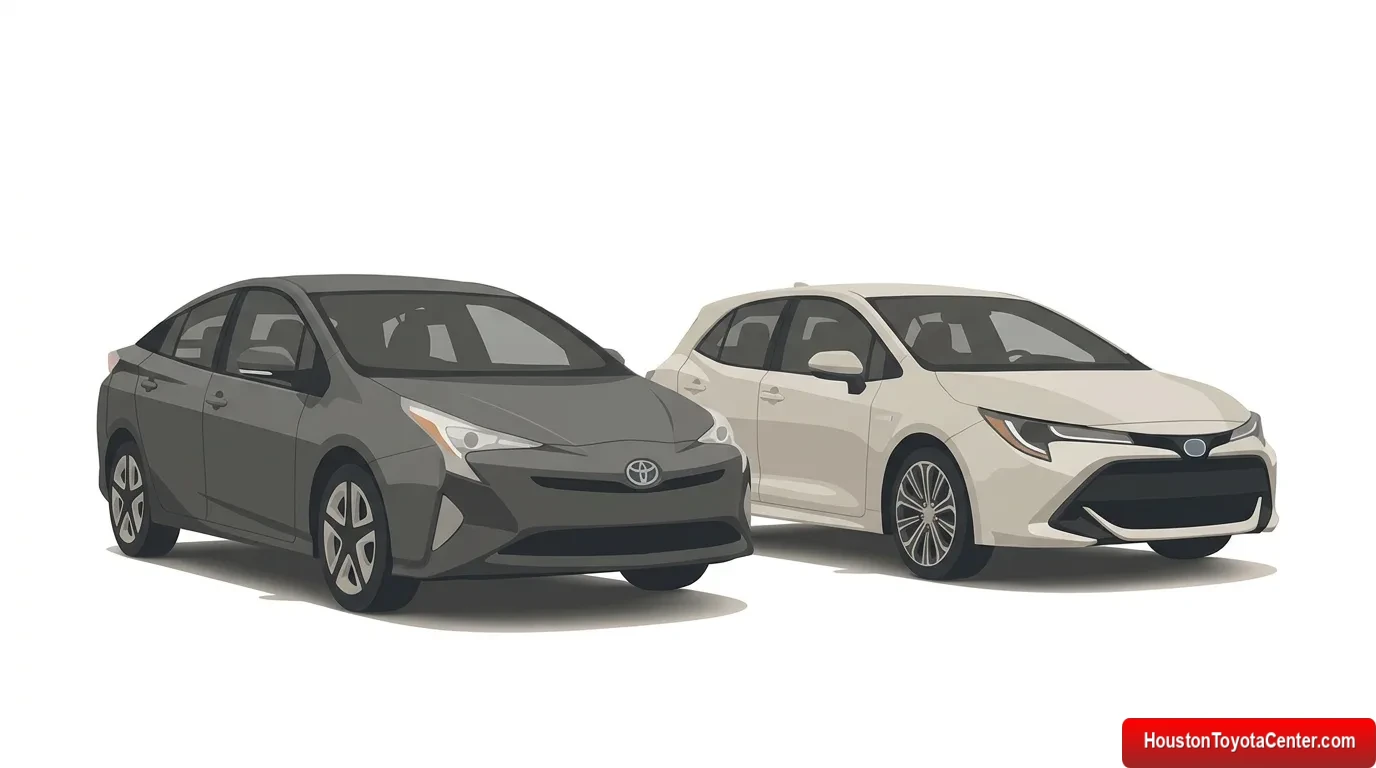
The hybrid vehicle market has experienced explosive growth over the past two decades, transforming from a niche curiosity into a mainstream automotive category that appeals to environmentally conscious consumers and budget-minded drivers alike. At the forefront of this revolution stands Toyota, the company that essentially created the modern hybrid segment with the introduction of the original Prius in 1997. Today, Toyota offers multiple hybrid options across its lineup, creating an interesting dilemma for potential buyers: should you choose the iconic Prius, the vehicle that defined the category, or opt for the more conventional Corolla Hybrid, which brings hybrid efficiency to one of the world’s best-selling compact cars?
This comprehensive comparison will examine every aspect of these two compelling vehicles, helping you determine which hybrid Toyota better suits your lifestyle, driving needs, and financial considerations. We’ll explore performance characteristics, fuel economy, interior space, technology features, safety systems, pricing, ownership costs, and real-world usability to provide you with the information necessary to make an informed decision.
Historical Context and Market Positioning
Understanding the heritage and market positioning of both vehicles provides crucial context for this comparison. The Toyota Prius launched in Japan in 1997 and reached North American markets in 2000, becoming synonymous with hybrid technology and environmental consciousness. For years, the Prius stood alone as Toyota’s primary hybrid offering, developing a distinctive identity that attracted early adopters and eco-conscious consumers willing to embrace its unconventional styling and unique driving experience.
The Corolla Hybrid represents a different approach to hybridization. Introduced globally in various markets before arriving in North America, the Corolla Hybrid applies Toyota’s proven hybrid technology to its best-selling compact sedan. This strategy allows Toyota to offer hybrid efficiency within a familiar, conventional package that doesn’t require buyers to compromise on traditional automotive aesthetics or driving dynamics. The Corolla nameplate carries enormous brand recognition and customer loyalty, having sold over 50 million units worldwide since its introduction in 1966.
FREE: Quickly identify and understand problems with your vehicle 🚘
CLICK HEREThese distinct backgrounds create fundamentally different value propositions. The Prius offers a purpose-built hybrid experience with maximum efficiency and distinctive character, while the Corolla Hybrid delivers hybrid benefits wrapped in a conventional compact car package that appeals to traditional buyers seeking improved fuel economy without dramatic changes to their automotive expectations.
Exterior Design and Styling Philosophy
The visual differences between these two vehicles immediately communicate their divergent design philosophies. The current-generation Prius features bold, aerodynamic styling with a low-slung profile, sharp character lines, and distinctive lighting signatures. Toyota’s designers prioritized aerodynamic efficiency, resulting in a coefficient of drag that ranks among the best in the industry. The Prius’s wedge-shaped silhouette, flush door handles, and carefully sculpted body panels all contribute to reduced air resistance, directly supporting its efficiency goals.
Recent Prius generations have moved away from the controversial styling of earlier models, adopting a more sophisticated and athletic appearance. The available two-tone paint schemes, larger wheels, and aggressive front fascia give the Prius a premium presence that challenges traditional notions of what an efficient vehicle should look like. The Prime plug-in hybrid variant takes this further with even more distinctive styling elements that signal its advanced powertrain technology.
The Corolla Hybrid maintains the conservative, inoffensive styling that has made the Corolla one of the world’s most popular vehicles. Its proportions follow traditional sedan conventions with a balanced three-box design, moderate ride height, and familiar grille treatment. The hybrid variant differs minimally from gasoline-powered Corollas, with subtle badging and minor aerodynamic tweaks being the primary visual distinctions. This approach appeals to buyers who want hybrid efficiency without drawing attention to their environmental choices or standing out in parking lots.
For buyers concerned with resale value and broad appeal, the Corolla’s conventional styling offers advantages. It won’t polarize opinions or date quickly as design trends evolve. However, the Prius’s distinctive appearance creates stronger brand recognition and can serve as a conversation starter for those proud of their eco-friendly transportation choice. The styling decision ultimately reflects personal preferences regarding how much you want your vehicle to communicate about your values and priorities.
Powertrain Performance and Driving Dynamics
Both vehicles utilize Toyota’s fourth-generation hybrid system, combining a gasoline engine with electric motors and a battery pack to deliver impressive efficiency. However, the implementation differs significantly between the two models, creating distinct driving experiences.
The Prius typically features a 1.8-liter or 2.0-liter four-cylinder engine paired with electric motors, producing combined system output ranging from 121 to 194 horsepower depending on the specific variant. The standard Prius emphasizes efficiency above all else, with power delivery optimized for smooth, economical operation rather than spirited performance. Acceleration feels adequate for daily driving but lacks the urgency that some drivers prefer. The continuously variable transmission (CVT) simulation provides seamless power delivery, though some drivers notice the characteristic droning sound associated with CVT operation during hard acceleration.
The Corolla Hybrid employs a 1.8-liter four-cylinder engine with hybrid synergy drive, generating approximately 121 horsepower in combined system output. While the power figures appear similar to the base Prius, the Corolla’s slightly heavier weight and different tuning result in marginally slower acceleration times. Real-world testing shows the Corolla Hybrid reaching 60 mph in approximately 10.5 seconds, compared to the Prius’s 9.8 to 10.2 seconds depending on trim level. These differences are noticeable but not dramatic in everyday driving scenarios.
Handling characteristics reveal more significant distinctions. The Prius benefits from a lower center of gravity due to battery placement and its overall design philosophy. Combined with a wider track and more sophisticated suspension tuning, the Prius offers surprisingly competent handling for an efficiency-focused vehicle. Body control remains composed through corners, and steering feedback, while not sporty, provides adequate information for confident driving. The available all-wheel-drive variant adds capability in adverse weather conditions, though it slightly reduces fuel economy.
The Corolla Hybrid follows traditional compact sedan dynamics with predictable, if unexciting, handling. The suspension prioritizes comfort over agility, absorbing road imperfections effectively while maintaining reasonable composure. Steering feel is light and easy, suitable for urban commuting and highway cruising but lacking the precision enthusiasts might desire. The Corolla’s higher seating position provides good visibility, contributing to driver confidence in various conditions.
Noise, vibration, and harshness levels differ subtly between the two vehicles. The Prius generally achieves quieter cabin operation at highway speeds thanks to superior aerodynamics and additional sound insulation. Wind noise remains minimal even at elevated speeds, though tire noise can become apparent on rougher surfaces. The Corolla Hybrid produces slightly more wind noise due to its less aerodynamic shape, though overall refinement remains competitive within the compact sedan segment.
Fuel Economy and Efficiency Analysis
Fuel economy represents the primary reason most buyers consider hybrid vehicles, making this comparison critical for decision-making. Both vehicles deliver exceptional efficiency by conventional standards, but meaningful differences exist that impact long-term ownership costs.
| Metric | Toyota Prius (FWD) | Toyota Corolla Hybrid |
|---|---|---|
| EPA City MPG | 57-58 | 53 |
| EPA Highway MPG | 56-57 | 52 |
| EPA Combined MPG | 56-57 | 52 |
| Annual Fuel Cost* | $900-$950 | $1,000-$1,050 |
| Range per Tank | Approximately 590 miles | Approximately 570 miles |
| CO2 Emissions (g/mi) | 158-160 | 171 |
*Based on 15,000 annual miles and $3.50 per gallon
The Prius maintains its efficiency crown with EPA ratings that consistently exceed the Corolla Hybrid by 4-5 MPG across all driving cycles. This advantage stems from the Prius’s superior aerodynamics, lighter weight, and powertrain optimization specifically for maximum efficiency. Over five years of ownership assuming 15,000 annual miles, this difference translates to approximately 375-400 gallons of gasoline saved, worth roughly $1,300-$1,400 at current fuel prices.
Real-world testing often reveals smaller gaps than EPA numbers suggest, as individual driving habits, climate conditions, and route characteristics significantly impact actual fuel consumption. Aggressive acceleration, frequent short trips, extreme temperatures, and heavy accessory use can reduce real-world efficiency below EPA estimates for both vehicles. Conversely, gentle driving techniques, proper tire maintenance, and favorable conditions can help owners achieve or exceed EPA ratings.
The Prius Prime plug-in hybrid variant deserves special mention for buyers with regular access to charging infrastructure. With approximately 44 miles of all-electric range, the Prime can handle most daily commutes without using any gasoline. When the battery depletes, it operates as a conventional hybrid delivering around 54 MPG combined. For buyers who can charge regularly, the Prime offers dramatically lower operating costs and near-zero emissions for typical daily driving patterns.
Environmental impact extends beyond fuel consumption to include manufacturing processes, battery production, and end-of-life recycling. Both vehicles benefit from Toyota’s extensive hybrid experience and established recycling programs for nickel-metal hydride and lithium-ion batteries. The Prius’s longer history means more data exists regarding long-term reliability and environmental footprint, though the Corolla Hybrid benefits from shared technology and manufacturing processes.
Interior Space and Practicality
Interior accommodations significantly influence daily satisfaction with any vehicle, and these two hybrids offer different approaches to space utilization. The Prius features a unique interior layout optimized for its aerodynamic exterior shape. The sloping roofline creates a distinctive greenhouse area that provides excellent forward visibility but reduces rear headroom compared to conventional sedans. Front-seat occupants enjoy comfortable seating positions with adequate adjustment ranges, though the low seating position requires some adaptation for taller drivers.
Cargo capacity presents an interesting contrast. The Prius hatchback configuration provides 27.4 cubic feet of cargo space behind the rear seats, expanding to 50.7 cubic feet with seats folded. This versatile arrangement accommodates various items including groceries, luggage, sporting equipment, and even furniture pieces with creative packing. The wide opening and flat load floor enhance usability, though the relatively low roof height limits vertical clearance for tall items.
The Corolla Hybrid follows traditional sedan conventions with a separate trunk compartment offering 13.1 cubic feet of cargo space. While this figure appears substantially smaller than the Prius’s capacity, the enclosed trunk provides security and weather protection that the Prius’s open hatch cannot match. Items remain hidden from view and protected from rain, snow, and potential theft. The Corolla’s trunk opening is narrower than the Prius’s hatch, limiting access for bulky items, but the depth proves adequate for typical shopping trips and weekend getaways.
Rear passenger space favors the Corolla Hybrid in several dimensions. Legroom measures approximately 34.8 inches compared to the Prius’s 33.4 inches, providing noticeable comfort advantages for taller passengers on longer journeys. Headroom in the Corolla reaches 37.1 inches versus the Prius’s 35.6 inches, reducing the cramped feeling that some rear passengers experience in the Prius due to its sloping roofline. However, the Prius compensates somewhat with better outward visibility from rear seats and easier entry/exit thanks to its hatchback configuration.
Material quality and fit-and-finish remain competitive in both vehicles, reflecting Toyota’s reputation for solid build quality. The Prius often receives slightly higher-grade materials in upper trim levels, with soft-touch surfaces on frequently contacted areas and attractive accent materials. The Corolla Hybrid maintains consistent quality throughout its trim range, though base models feature more hard plastics to maintain affordability. Neither vehicle approaches luxury-brand refinement, but both exceed expectations for their price points.
Technology and Infotainment Systems
Modern vehicles increasingly compete on technology features, and both hybrids offer comprehensive infotainment systems with varying levels of sophistication depending on trim selection. The Prius typically features Toyota’s latest multimedia interface with touchscreen displays ranging from 8 to 12.3 inches depending on configuration. The system supports wireless Apple CarPlay and Android Auto, eliminating cable clutter while maintaining smartphone integration. Voice recognition has improved significantly in recent generations, though occasional misunderstandings still frustrate users.
Available digital instrument clusters in higher Prius trims provide customizable displays showing energy flow, fuel economy history, navigation directions, and other vehicle information. The head-up display option projects critical information onto the windshield, allowing drivers to maintain focus on the road while accessing speed, navigation prompts, and safety alerts. These features enhance the Prius’s tech-forward image and appeal to buyers who prioritize cutting-edge interfaces.
The Corolla Hybrid offers similar technology packages but sometimes lags one generation behind the Prius in terms of screen size and feature availability. Base models include 7-inch touchscreens with wired smartphone connectivity, while higher trims upgrade to 8-inch displays with wireless capabilities. The interface remains intuitive and responsive, though graphics and animation quality don’t quite match the Prius’s more premium presentation. Digital gauge clusters are available but less common than in the Prius lineup.
Audio systems vary considerably across trim levels. Base models in both vehicles include six-speaker systems adequate for casual listening, while premium configurations feature JBL audio systems with eight or nine speakers delivering richer sound quality. The Prius’s superior cabin isolation enhances audio enjoyment by reducing road and wind noise interference. Satellite radio, HD radio, and streaming service integration work seamlessly in both vehicles when equipped with appropriate subscriptions.
Connectivity features include multiple USB ports, Bluetooth pairing for phones and audio devices, and available Wi-Fi hotspot capability. Over-the-air software updates keep systems current with bug fixes and feature improvements, though Toyota’s update frequency lags behind some competitors. Mobile app integration allows remote vehicle monitoring, lock/unlock functions, and location services through Toyota’s connected services platform, available via subscription after initial trial periods.
Safety Features and Crash Test Performance
Safety represents a critical consideration for any vehicle purchase, and both hybrids benefit from Toyota’s commitment to protective technologies. Standard safety equipment includes Toyota Safety Sense, a suite of active safety features incorporating pre-collision braking with pedestrian detection, lane departure alert with steering assist, automatic high beams, and dynamic radar cruise control. These systems work together to prevent accidents or mitigate their severity, providing valuable assistance in various driving scenarios.
Higher trim levels add blind-spot monitoring with rear cross-traffic alert, parking sensors, and surround-view camera systems that eliminate blind zones during low-speed maneuvers. The Prius often receives these features as standard equipment on more trim levels compared to the Corolla Hybrid, where they may remain optional or restricted to top-tier configurations. This difference affects overall value propositions for safety-conscious buyers comparing similarly priced variants.
Crash test ratings from the Insurance Institute for Highway Safety (IIHS) and National Highway Traffic Safety Administration (NHTSA) demonstrate strong performance from both vehicles. The Prius typically earns Top Safety Pick or Top Safety Pick+ designations from IIHS, indicating superior performance across multiple crash scenarios including frontal offset, side impact, roof strength, and head restraint evaluations. The Corolla Hybrid achieves similar ratings, though specific scores vary by model year and testing protocols.
Structural integrity benefits from Toyota’s global architecture featuring high-strength steel reinforcements in critical areas. Multiple airbags including front, side, curtain, and knee airbags provide comprehensive occupant protection. Whiplash protection systems minimize neck injuries during rear-end collisions, while child seat anchors facilitate secure installation of restraint systems. Emergency response features include automatic collision notification that contacts emergency services following severe impacts.
Driver assistance technologies continue evolving with each model year. Recent updates include improved camera and radar systems with enhanced detection capabilities, refined algorithms reducing false alarms, and expanded operational ranges for adaptive cruise control. Night-time pedestrian detection has improved significantly, addressing previous limitations in low-light conditions. However, no system replaces attentive driving, and owners must understand the limitations of semi-autonomous features.
Pricing and Value Proposition
Purchase price significantly influences buying decisions, and understanding the cost structure helps identify which vehicle offers better value for specific budgets. Base model pricing for the Corolla Hybrid typically starts around $24,000-$25,000, while the Prius begins approximately $27,000-$28,000 depending on current market conditions and available incentives. This $2,000-$3,000 difference reflects the Prius’s more specialized engineering, additional standard features, and unique positioning in Toyota’s lineup.
Mid-level trims narrow the price gap somewhat as both vehicles add comparable features. The Corolla Hybrid SE or XLE configurations reach $27,000-$29,000, overlapping with base and mid-level Prius trims. At these price points, buyers must carefully compare feature lists to determine which vehicle provides better equipment for the money. The Prius often includes more standard technology and safety features, while the Corolla may offer preferred interior materials or convenience features at similar prices.
Top-tier configurations see the Prius pulling ahead in price, with XLE and Limited trims reaching $32,000-$36,000. The Prius Prime plug-in hybrid commands premium pricing starting around $33,000 and exceeding $40,000 for fully loaded variants. The Corolla Hybrid’s highest trim levels typically cap around $30,000-$31,000, maintaining its position as the more affordable option throughout the lineup.
| Trim Level | Corolla Hybrid Price Range | Prius Price Range | Key Differentiators |
|---|---|---|---|
| Base/LE | $24,000-$25,500 | $27,000-$28,500 | Prius includes more standard tech |
| Mid-Level | $27,000-$29,000 | $29,000-$31,000 | Comparable features, different packaging |
| Premium | $29,500-$31,000 | $32,000-$36,000 | Prius offers more luxury features |
| Plug-in Hybrid | N/A | $33,000-$42,000 | Exclusive to Prius lineup |
Depreciation patterns favor the Prius historically, with stronger residual values reflecting its iconic status and proven reliability record. However, the Corolla’s massive sales volume and universal appeal also support respectable resale values. Five-year depreciation typically ranges from 40-45% for both vehicles, though specific percentages vary by trim level, condition, mileage, and regional market factors. Certified pre-owned programs from Toyota dealerships provide additional peace of mind for used vehicle purchases.
Insurance costs depend on multiple factors including driver history, location, coverage levels, and vehicle-specific risk assessments. The Prius sometimes qualifies for hybrid discounts from insurers recognizing its safety features and lower accident frequencies among hybrid owners. However, repair costs for the Prius’s specialized components can offset these savings. The Corolla Hybrid benefits from widespread parts availability and straightforward repair procedures, potentially reducing long-term insurance expenses.
Ownership Costs and Long-Term Reliability
Beyond purchase price, total cost of ownership determines true value over a vehicle’s lifecycle. Both hybrids benefit from Toyota’s legendary reliability reputation, with extensive data supporting exceptional longevity when properly maintained. Hybrid-specific components including batteries, inverters, and electric motors have proven remarkably durable, with many early Prius examples exceeding 200,000 miles with minimal issues.
Maintenance requirements follow similar patterns for both vehicles, though the Prius’s extended service intervals for certain components provide slight advantages. Oil changes remain necessary every 5,000-10,000 miles depending on driving conditions, while brake pads last significantly longer than conventional vehicles thanks to regenerative braking systems. Tire rotation, air filter replacement, and fluid checks follow standard schedules. The Corolla Hybrid’s conventional service network ensures easy access to qualified technicians everywhere.
Hybrid battery replacement represents a common concern, though actual failure rates remain low. Toyota warranties hybrid batteries for 8 years or 100,000 miles (whichever comes first), with many batteries lasting well beyond this period. Replacement costs range from $2,000-$4,000 depending on battery type and labor rates, though refurbished options and independent specialists offer more affordable alternatives. Battery degradation occurs gradually, typically reducing electric-only range in plug-in models rather than causing complete failure.
Fuel savings accumulate steadily over ownership, with the Prius’s superior efficiency generating greater annual savings. Assuming 15,000 annual miles and $3.50 per gallon, the Prius saves approximately $100-$150 annually compared to the Corolla Hybrid. Over ten years, this difference reaches $1,000-$1,500, partially offsetting the Prius’s higher initial purchase price. Actual savings vary based on driving patterns, fuel prices, and individual efficiency achievements.
Warranty coverage remains comprehensive for both vehicles, with basic coverage spanning 3 years or 36,000 miles and powertrain protection extending to 5 years or 60,000 miles. Hybrid component warranties provide 8 years or 100,000 miles of coverage, while corrosion perforation protection lasts 5 years with unlimited mileage. Roadside assistance and rental car reimbursement accompany new vehicle purchases, enhancing ownership convenience during unexpected breakdowns.
Making Your Decision: Which Hybrid Fits Your Life?
Choosing between the Corolla Hybrid and Prius ultimately depends on your specific priorities, driving patterns, and personal preferences. The Prius excels for buyers prioritizing maximum fuel efficiency, distinctive styling, and cutting-edge technology. Its superior aerodynamics, lower emissions, and available plug-in hybrid capability make it ideal for environmentally conscious consumers willing to embrace unconventional design for tangible efficiency gains. Urban commuters benefiting from frequent stop-and-go traffic will appreciate the Prius’s optimized hybrid system, while highway drivers value its quiet, refined cruising characteristics.
The Corolla Hybrid serves buyers seeking hybrid efficiency within a familiar, conventional package. Its traditional sedan styling appeals to those uncomfortable with the Prius’s distinctive appearance or concerned about resale value in conservative markets. The slightly lower purchase price makes hybrid technology accessible to budget-conscious buyers, while comparable reliability and lower maintenance complexity provide peace of mind. Families appreciating the Corolla’s rear seat space and trunk security find practical advantages over the Prius’s hatchback configuration.
Consider your annual mileage carefully when evaluating these options. High-mileage drivers benefit disproportionately from the Prius’s superior efficiency, with fuel savings accumulating rapidly enough to justify the higher purchase price within three to five years. Low-mileage drivers may never recoup the Prius’s price premium through fuel savings alone, making the Corolla Hybrid’s lower initial cost more attractive despite slightly inferior efficiency.
Driving environment matters significantly. Urban areas with congested traffic maximize hybrid benefits through extensive regenerative braking and electric-only operation at low speeds. Suburban and rural drivers covering longer distances at steady highway speeds see smaller efficiency gaps between the two vehicles, though the Prius maintains advantages through superior aerodynamics. Cold climate residents should note that both vehicles experience reduced efficiency in winter conditions, though the Prius’s thermal management systems handle extreme temperatures slightly better.
Technology preferences influence the decision considerably. Buyers wanting the latest digital interfaces, advanced driver assistance features, and premium audio systems will find more comprehensive offerings in higher-trim Prius models. Those satisfied with adequate technology and preferring simplicity may appreciate the Corolla Hybrid’s straightforward approach without overwhelming feature complexity.
Resale considerations extend beyond pure depreciation percentages to include market demand and buyer pools. The Prius attracts specific demographics interested in hybrid technology and environmental responsibility, while the Corolla appeals to broader audiences seeking reliable, efficient transportation without stylistic statements. Regional preferences vary, with coastal markets showing stronger Prius demand while heartland states favor conventional Corolla styling.
Conclusion
The Toyota Corolla Hybrid and Prius represent two excellent approaches to hybrid transportation, each excelling in different areas while sharing core strengths including reliability, efficiency, and low operating costs. The Prius justifies its premium pricing through superior fuel economy, distinctive character, and advanced technology, appealing to buyers who view their vehicle as an expression of environmental values and technological enthusiasm. The Corolla Hybrid delivers hybrid benefits within a conventional, affordable package that minimizes compromise while maximizing accessibility for mainstream buyers.
Neither vehicle represents a wrong choice, as both deliver on Toyota’s promise of dependable, efficient transportation. Your decision should reflect honest assessment of your priorities regarding styling preferences, budget constraints, technology desires, and intended usage patterns. Test driving both vehicles proves essential, as subjective impressions of comfort, visibility, and driving dynamics often determine long-term satisfaction more than specification sheets suggest.
The hybrid market continues evolving rapidly, with increasing competition from domestic and international manufacturers offering compelling alternatives. However, Toyota’s decades of hybrid experience, extensive dealer network, and proven reliability record maintain significant advantages for buyers prioritizing peace of mind alongside efficiency. Whether you choose the iconic Prius or the practical Corolla Hybrid, you’re investing in proven technology that reduces fuel consumption, lowers emissions, and delivers the dependable transportation that built Toyota’s global reputation.
As fuel prices fluctuate and environmental regulations tighten, hybrid vehicles like these become increasingly sensible choices for mainstream buyers. The question isn’t whether to buy a hybrid, but which hybrid best matches your individual needs. By carefully considering the factors outlined in this comparison, you can select the Toyota hybrid that will serve you reliably and efficiently for years to come, contributing to both your financial wellbeing and environmental stewardship.
Leave a Reply