
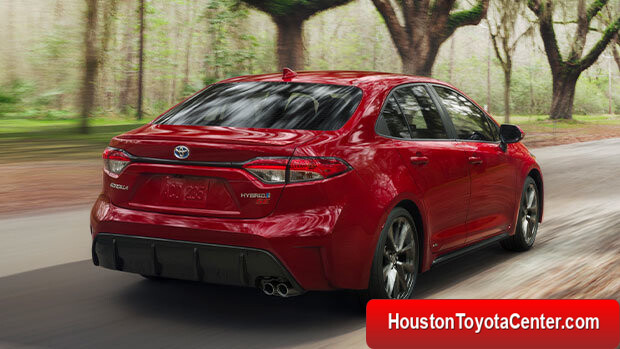
The Toyota Corolla has built its reputation on a straightforward formula: practical dimensions, efficient powertrains, reasonable pricing and a long history of everyday usability. For decades, however, all-wheel drive was not a defining part of the Corolla story. That has changed.
Toyota now offers all-wheel drive on the Corolla Hybrid in the United States, giving buyers the option to combine the compact sedan’s fuel efficiency with additional traction. The technology is not available across the entire Corolla range, but its presence signals an important shift in how Toyota is positioning one of its best-known nameplates.
For drivers considering a Corolla with AWD, the most important question is no longer whether the technology exists. It does. The more relevant question is what kind of AWD experience buyers can expect, how the system works and what could happen as Toyota prepares the Corolla for another major redesign.
AWD Is Already Part of the Corolla Lineup
For the 2026 model year, Toyota offers Electronic On-Demand All-Wheel Drive on the Corolla Hybrid LE and Corolla Hybrid SE. The system is paired with Toyota’s fifth-generation hybrid technology and a 1.8-liter four-cylinder engine.
FREE: Quickly identify and understand problems with your vehicle 🚘
CLICK HEREThe 2026 Corolla Hybrid produces 138 net combined horsepower. Toyota lists the front-wheel-drive Hybrid LE at an estimated 53 mpg city, 46 mpg highway and 50 mpg combined. The AWD version is rated at 51 mpg city and 44 mpg highway, illustrating the efficiency tradeoff associated with adding all-wheel-drive capability.
For the 2026 model year, the Corolla Hybrid LE AWD starts at $26,375, while the Hybrid SE AWD starts at $28,815, according to Toyota’s U.S. vehicle listings. The conventional gasoline Corolla does not offer AWD in the standard lineup.
The 2027 model year continues that strategy. Toyota has confirmed the Corolla Hybrid LE and Hybrid SE will be available with Electronic On-Demand AWD. The 2027 Corolla Hybrid retains the fifth-generation Toyota Hybrid System, a 1.8-liter four-cylinder engine and 138 net combined horsepower.
That makes one point particularly clear: Corolla AWD is currently a hybrid proposition in the U.S. market.
How the Corolla’s AWD System Works
The Corolla Hybrid does not use a traditional mechanical four-wheel-drive layout with a driveshaft running from the front of the vehicle to a conventional rear differential.
Instead, Toyota uses a separate electric motor mounted at the rear axle. This is known as Electronic On-Demand All-Wheel Drive.
Under normal conditions, the Corolla can operate primarily through its front-driven system. When additional traction is useful, the rear electric motor can provide power to the rear wheels.
Toyota says the system can act proactively during off-the-line acceleration to help suppress front-wheel slip. It can also respond when the front wheels begin to lose traction. According to Toyota, the system can contribute to cornering behavior by helping reduce understeer.
For the average driver, the significance is less about having a complicated mechanical system and more about how quietly the technology works in the background.
There is no need for the driver to manually select a conventional four-wheel-drive mode. The electronic system manages the rear motor as needed.
That approach fits the Corolla’s broader mission. Rather than transforming the sedan into an off-road vehicle, Toyota is using AWD as a traction and confidence feature while retaining the efficiency advantages of a hybrid powertrain.
What AWD Can Mean in Everyday Driving
For many Corolla buyers, the appeal of AWD is not extreme terrain. It is the ability to deal with imperfect road conditions.
Rain, slippery intersections, loose surfaces and occasional snow can all reduce the amount of grip available to a vehicle. AWD can help distribute propulsion to more than two driven wheels, potentially improving traction during acceleration.
That does not mean an AWD Corolla becomes a winter specialist or an off-road machine.
Tires remain one of the most important factors affecting traction, braking and handling. AWD can help a vehicle put power down when conditions are slippery, but it does not eliminate the limitations created by poor tires, excessive speed or inadequate braking distance.
This distinction is particularly important because AWD is sometimes misunderstood as an all-purpose safety solution. It is better understood as a drivetrain feature designed primarily to improve traction under certain conditions.
For an urban or suburban driver who encounters heavy rain, occasional snow or steep, slippery roads, the Corolla Hybrid AWD concept is therefore relatively simple: additional traction without moving into a larger SUV.
The Efficiency Question
One of the most interesting aspects of Corolla AWD is that Toyota has not simply added an all-wheel-drive system to a conventional gasoline sedan.
The technology is integrated into the hybrid architecture.
That allows Toyota to use an electric motor for the rear axle rather than relying on a conventional mechanical connection between the front and rear wheels. The result is a compact AWD arrangement that fits naturally with the company’s hybrid strategy.
There is, however, an efficiency cost.
For 2026, the Corolla Hybrid LE achieves an estimated 53 mpg city and 46 mpg highway in front-wheel-drive configuration. The LE AWD is rated at 51 mpg city and 44 mpg highway. The Hybrid SE is rated at 50 mpg city and 43 mpg highway, while the SE AWD is rated at 47 mpg city and 41 mpg highway.
Those numbers show that buyers are not getting AWD for free in efficiency terms. The difference is relatively modest, but drivers who prioritize maximum fuel economy may still have a reason to choose FWD.
The tradeoff is straightforward: FWD emphasizes efficiency, while AWD adds traction capability.
What Drivers Can Expect From the 2027 Corolla AWD
Toyota’s 2027 Corolla Hybrid lineup maintains the same basic formula.
The Hybrid LE and Hybrid SE can be equipped with Electronic On-Demand AWD, while the Hybrid XLE remains a front-wheel-drive configuration in Toyota’s U.S. announcement.
The 2027 Corolla Hybrid uses the same fifth-generation Toyota Hybrid System and produces 138 net combined horsepower. Toyota says the Hybrid LE FWD and Hybrid XLE can achieve a manufacturer-estimated 53 mpg city, 46 mpg highway and 50 mpg combined.
Toyota also lists the 2027 Corolla Hybrid LE AWD at a $26,575 base MSRP and the Hybrid SE AWD at $29,015, before the company’s dealer processing and handling fee.
In other words, drivers looking for a new Corolla with AWD do not need to wait for a future generation. The technology is already available, and Toyota is carrying it forward into the 2027 model year.
AWD Does Not Mean a More Powerful Corolla
Another important point is that AWD and performance are not the same thing.
The Corolla Hybrid’s AWD system is primarily about traction. The rear electric motor is not intended to turn the compact sedan into a high-performance sports car.
The 138-horsepower hybrid powertrain remains focused on efficiency and everyday usability. Drivers should therefore expect smooth acceleration and practical performance rather than the aggressive response associated with performance-oriented AWD systems.
Toyota’s broader Corolla family tells a different story.
The 2026 GR Corolla, for example, uses Toyota’s GR-FOUR all-wheel-drive system and a turbocharged 1.6-liter three-cylinder engine producing 300 horsepower. It is a fundamentally different vehicle from the Corolla Hybrid AWD.
The distinction matters because “Corolla AWD” can refer to very different engineering philosophies.
The hybrid system is designed around efficiency and traction. The GR Corolla’s AWD system is designed around high-performance driving.
For mainstream Corolla shoppers, the hybrid AWD model is the relevant option.
The Bigger Question: What Happens With the Next Corolla?
The Corolla is approaching another important stage in its product cycle.
Toyota has already shown a future Corolla concept, and automotive industry reporting indicates that the next-generation model is expected to adopt a broader range of powertrain technologies.
According to Car and Driver, Toyota is developing a next-generation hybrid system using a new 1.5-liter gasoline engine and electric motor. The publication reports that Toyota engineers expect the future hybrid system to improve efficiency by approximately 10 to 20 percent compared with the current setup.
More recent reporting from Car and Driver describes a possible next-generation Corolla for 2028 with gasoline, hybrid, plug-in hybrid and potentially battery-electric powertrains.
Importantly for AWD shoppers, the publication reports that an all-wheel-drive version of the future hybrid could use an additional electric motor on the rear axle, similar in principle to the arrangement already used by Toyota on the current Corolla Hybrid.
That is significant, but it should be treated as future product reporting rather than a complete official specification sheet.
Toyota has not publicly confirmed every detail of the next-generation Corolla’s U.S. powertrain lineup, pricing, performance figures or AWD availability.
A More Flexible Corolla Could Be Coming
The potential expansion of Corolla powertrain choices reflects a broader change in the compact-car market.
Consumers are increasingly being offered multiple electrification levels rather than a simple choice between gasoline and battery-electric vehicles.
Toyota appears to be preparing the Corolla for that environment.
A future Corolla could potentially offer a conventional gasoline model for buyers who want simplicity, a hybrid for efficiency, a plug-in hybrid for increased electric driving and an EV for customers ready to move away from gasoline entirely.
If AWD remains available on the hybrid, the system could become part of a much broader drivetrain strategy.
That could make the Corolla unusual among compact sedans. Instead of abandoning the traditional gasoline-powered model while moving directly toward electrification, Toyota appears to be pursuing several technologies simultaneously.
The result could give future Corolla buyers more ways to tailor the vehicle to their driving needs.
What AWD Buyers Should Consider
For anyone shopping for a Corolla AWD today, the decision comes down to a few practical questions.
First, consider how often additional traction is actually useful. Drivers living in areas with regular snow or frequent slippery conditions may place greater value on AWD than drivers who spend most of their time on dry roads.
Second, consider fuel economy. The AWD versions remain efficient, but the FWD models achieve higher EPA ratings. For high-mileage drivers, that difference may matter over several years of ownership.
Third, consider the trim level. Toyota currently restricts Corolla Hybrid AWD to specific grades, so buyers cannot simply combine AWD with every Corolla configuration.
Finally, consider timing. The 2026 and 2027 Corolla Hybrid already provide a known AWD solution, while the next-generation Corolla remains less fully defined.
For shoppers who want a proven configuration with published specifications, the current Corolla Hybrid AWD has the advantage of being an established product. For those more interested in the future of the nameplate, the next-generation Corolla could bring significant changes in powertrain technology.
The Bottom Line
The Corolla AWD story is no longer hypothetical.
Toyota already offers all-wheel drive on the Corolla Hybrid LE and SE in the United States, using an electronic system with a dedicated rear electric motor. The technology is designed to provide additional traction when needed while preserving the fundamental characteristics that have made the Corolla popular: efficiency, compact dimensions and everyday practicality.
The 2027 model year reinforces that direction rather than changing it. AWD remains linked to the hybrid powertrain, while Toyota continues to develop a broader next-generation Corolla strategy.
Looking further ahead, reports about the future Corolla suggest that AWD could remain part of the equation as Toyota introduces newer hybrid technology and potentially expands the model into plug-in hybrid and electric territory. Those future details remain subject to confirmation.
For drivers, the message is relatively clear. A Corolla with AWD is no longer a distant possibility. It is already available, but in a specific hybrid configuration. And as the Corolla enters its next chapter, all-wheel drive could become an increasingly important part of Toyota’s strategy for keeping its compact sedan relevant in a rapidly changing automotive market.
Leave a Reply