
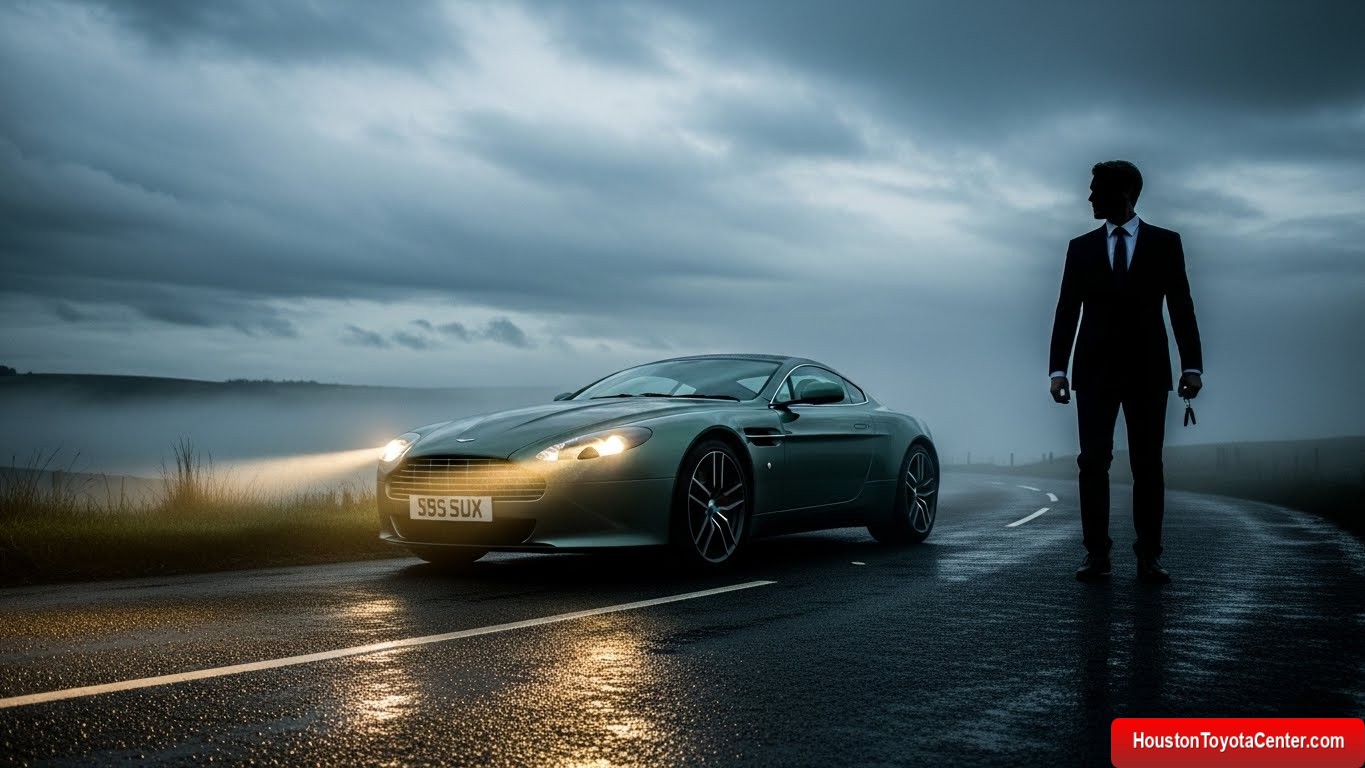
Few automotive brands carry the same emotional weight, cultural symbolism, and historical resonance as Aston Martin. To many, it is not merely a manufacturer of luxury sports cars but a living embodiment of British craftsmanship, elegance, and restrained power. Over the decades, Aston Martin has come to represent a unique fusion of art and engineering—an ethos where performance is inseparable from beauty and where tradition evolves carefully rather than being discarded.
Perhaps no other association has cemented Aston Martin’s global identity more powerfully than its relationship with James Bond, the world’s most famous fictional spy. Since first appearing on screen in the 1960s, Aston Martin has become inseparable from the Bond mythos. The car is not just Bond’s transportation; it is an extension of his character—sophisticated, deadly, impeccably dressed, and unmistakably British.
This article explores Aston Martin from multiple dimensions: its origins, its craftsmanship philosophy, its technological evolution, its Bond legacy, and its position in the modern automotive world. More importantly, it examines why Aston Martin remains a symbol of timeless luxury in an industry increasingly driven by mass production, digital interfaces, and rapid change.
The Origins of Aston Martin: A British Dream Takes Shape
Founding Vision
Aston Martin was founded in 1913 by Lionel Martin and Robert Bamford. The name itself reflects its origins: “Aston” refers to the Aston Hill Climb in Buckinghamshire, where Lionel Martin raced cars, and “Martin” is derived from his surname. From the very beginning, the brand was rooted in motorsport ambition and mechanical experimentation.
FREE: Quickly identify and understand problems with your vehicle 🚘
CLICK HEREUnlike many mass-market automakers, Aston Martin never aimed to produce cars for everyone. The founders envisioned machines that would combine speed, exclusivity, and craftsmanship, a philosophy that still defines the brand more than a century later.
Early Struggles and Perseverance
The company faced numerous financial challenges throughout its early decades. World War I interrupted production, and the interwar years were marked by limited resources and unstable ownership. Yet Aston Martin survived, largely due to the unwavering belief that quality mattered more than quantity.
This resilience became part of Aston Martin’s DNA. Rather than chasing rapid expansion, the brand refined its identity slowly, building a reputation among enthusiasts who valued precision engineering and understated luxury.
British Craftsmanship: The Soul of Aston Martin
Hand-Built Philosophy
One of the most distinctive aspects of Aston Martin is its commitment to hand-built vehicles. Even in an era dominated by automation and robotics, Aston Martin maintains a significant level of human involvement in the assembly process.
At the company’s facilities in Gaydon, England, skilled craftsmen assemble interiors by hand, carefully stitching leather, fitting veneers, and polishing surfaces. This approach ensures that each vehicle carries subtle variations—small imperfections that paradoxically enhance its authenticity.
Materials That Matter
Aston Martin interiors are renowned for their use of premium materials:
- Full-grain leather, sourced from carefully selected hides
- Natural wood veneers, often book-matched for symmetry
- Brushed aluminum and carbon fiber, depending on the model
Each material is chosen not only for its appearance but for how it ages over time. An Aston Martin is designed to grow more beautiful with use, developing a patina rather than showing wear.
The Human Touch in a Digital Age
While many luxury manufacturers rely heavily on screens and digital interfaces, Aston Martin strikes a careful balance. Physical buttons, rotary knobs, and tactile surfaces remain central to the driving experience.
This emphasis on touch reinforces the idea that an Aston Martin is felt as much as it is driven. The brand understands that luxury is not just visual—it is sensory.
Engineering Excellence: Performance with Restraint
Power Without Excess
Aston Martin’s approach to performance differs from many high-performance competitors. Rather than chasing extreme horsepower figures, the brand focuses on balanced power delivery, refined handling, and emotional engagement.
The engines—whether naturally aspirated V12s of the past or modern twin-turbo V8s—are tuned to deliver a smooth, linear surge of power rather than abrupt acceleration. This makes Aston Martins equally suited for long-distance touring and spirited driving.
Chassis and Dynamics
Modern Aston Martins are built on advanced aluminum architectures that combine rigidity with lightweight construction. This allows for precise handling without compromising ride comfort.
Key engineering principles include:
- Near-perfect weight distribution
- Adaptive suspension systems
- Steering tuned for feedback rather than artificial sharpness
The result is a driving experience that feels confident, composed, and elegant, even at high speeds.
Aston Martin and James Bond: A Partnership for the Ages
The Birth of a Legend
The relationship between Aston Martin and James Bond began in 1964 with the film “Goldfinger.” Bond’s car of choice, the Aston Martin DB5, instantly became one of the most famous cars in cinematic history.
Equipped with fictional gadgets such as machine guns, ejector seats, and rotating license plates, the DB5 captured the imagination of audiences worldwide. More importantly, it perfectly matched Bond’s persona—luxurious yet lethal.
Why Aston Martin Fits James Bond
James Bond is the embodiment of British sophistication combined with ruthless efficiency. Aston Martin mirrors this duality:
- Elegant design concealing immense power
- Advanced technology hidden beneath classic styling
- Confidence without ostentation
Other cars may appear flashier or more aggressive, but Aston Martin’s restraint aligns perfectly with Bond’s understated authority.
Evolution Across Bond Films
Over the decades, various Aston Martin models have appeared in Bond films:
| Bond Film | Aston Martin Model | Significance |
|---|---|---|
| Goldfinger (1964) | DB5 | Iconic debut |
| The Living Daylights (1987) | V8 Vantage | Cold War-era aggression |
| GoldenEye (1995) | DB5 | Nostalgic revival |
| Casino Royale (2006) | DBS | Gritty realism |
| Skyfall (2012) | DB5 | Emotional symbolism |
| No Time to Die (2021) | DB5 & Valhalla | Past meets future |
Each appearance reinforced the car as an integral part of Bond’s identity rather than a mere product placement.
Design Language: Timeless, Not Trend-Driven
Sculpted Elegance
Aston Martin design is often described as timeless, and this is no accident. Rather than following fleeting trends, the brand focuses on proportion, flow, and balance.
Signature elements include:
- The iconic Aston Martin grille
- Long hoods and short rear decks
- Muscular rear haunches
These features have evolved subtly over time, ensuring that even older models never look outdated.
Interior Design Philosophy
Inside, Aston Martin cabins are designed to feel like bespoke gentlemen’s lounges rather than high-tech cockpits. While modern infotainment systems are present, they never dominate the experience.
The emphasis is on comfort, craftsmanship, and driver engagement rather than distraction.
Exclusivity and Ownership Experience
Low Production, High Desire
Unlike mass luxury brands, Aston Martin produces relatively few vehicles each year. This exclusivity enhances desirability and ensures that ownership feels special.
Owners are not just customers; they become part of a heritage-driven community.
Customization and Personalization
Through programs like Q by Aston Martin, buyers can commission highly personalized vehicles, selecting everything from unique paint colors to custom interior materials.
This bespoke approach reinforces the idea that each Aston Martin is a personal expression, not a standardized product.
Modern Challenges and Reinvention
Balancing Heritage and Innovation
In the 21st century, Aston Martin faces significant challenges:
- Electrification and emissions regulations
- Competition from technology-focused luxury brands
- Changing consumer expectations
Yet the company has responded by carefully integrating new technologies while preserving its core identity.
Hybrid and Electric Future
Models like the Valhalla and future electric platforms demonstrate Aston Martin’s commitment to sustainability without abandoning performance or craftsmanship.
Rather than rushing into full electrification, the brand is taking a measured, deliberate approach, consistent with its heritage.
Cultural Impact Beyond Film
Symbol of British Identity
Aston Martin has become an unofficial ambassador of British design and engineering. It represents a version of Britain that values tradition, elegance, and quiet confidence.
Presence in Art and Popular Culture
From music videos to luxury advertising, Aston Martin consistently appears as a symbol of success that does not need to shout. It is luxury for those who understand rather than those who seek attention.
Why Aston Martin Still Matters
In an era where many cars feel interchangeable, Aston Martin stands apart. It reminds us that machines can have soul, that craftsmanship still has value, and that progress does not require abandoning tradition.
The bond between Aston Martin and James Bond is not just cinematic—it is philosophical. Both represent a world where elegance and danger coexist, where style enhances substance rather than replacing it.
Conclusion: A Legacy That Endures
Aston Martin is more than a car brand. It is a narrative of perseverance, craftsmanship, and identity. From its humble beginnings in early 20th-century Britain to its status as James Bond’s trusted companion, Aston Martin has remained remarkably consistent in its values.
While the automotive world continues to change at unprecedented speed, Aston Martin moves forward with confidence, guided by its past rather than burdened by it. As long as there is a desire for beauty, performance, and authenticity, Aston Martin will remain not just relevant—but essential.
Leave a Reply