
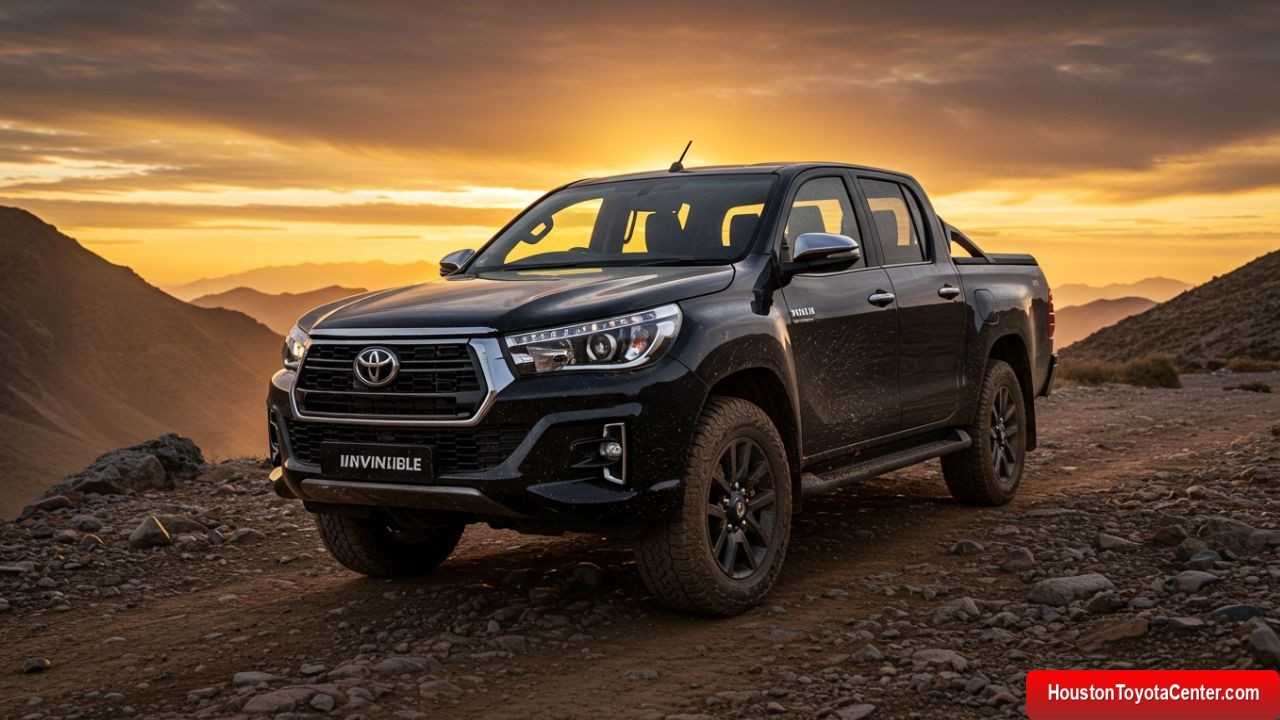
The Toyota Hilux stands as one of the most legendary pickup trucks in automotive history. Known for its indestructible reputation, global ubiquity, and remarkable durability in the harshest conditions imaginable, this vehicle has earned a cult-like following among enthusiasts worldwide. From the deserts of Africa to the mountains of South America, from war zones to remote mining operations, the Hilux has proven time and again that it can survive where other vehicles fail. Yet despite its stellar reputation and massive international success, there exists one glaring exception: the United States. The Toyota Hilux is effectively banned from being sold in America, creating what many consider one of the automotive industry’s most perplexing mysteries.
This prohibition isn’t rooted in safety concerns, environmental regulations, or quality issues. Instead, the absence of the Hilux from American showrooms represents a complex intersection of trade policy, protectionist legislation, corporate strategy, and historical circumstance that has kept this iconic truck away from U.S. consumers for decades. To understand why Americans cannot purchase new Hilux models requires diving deep into the intricate world of international trade agreements, the infamous “Chicken Tax,” market dynamics, and Toyota’s strategic decisions about which vehicles best serve the American marketplace.
The Legend of the Hilux: A Global Phenomenon
Before exploring why the Hilux doesn’t exist in America, it’s essential to understand what makes this truck so special and why its absence generates such curiosity among automotive enthusiasts.
Unmatched Durability and Reliability
The Hilux has earned its reputation through decades of real-world testing in conditions that would destroy most vehicles. Launched in 1968, the Hilux has undergone eight generations of development, with each iteration building upon the foundation of rugged reliability. The truck has become synonymous with dependability in regions where maintenance facilities are scarce and replacement parts nearly impossible to find.
FREE: Quickly identify and understand problems with your vehicle 🚘
CLICK HEREKey factors contributing to the Hilux’s legendary status include:
- Simple mechanical design that prioritizes function over complexity
- Robust construction using proven materials and engineering principles
- Extensive global testing across diverse climates and terrains
- Proven longevity with many examples exceeding 500,000 miles with basic maintenance
- Adaptability to various configurations including single cab, double cab, chassis cab, and specialized variants
Global Sales Dominance
The numbers speak volumes about the Hilux’s international appeal. In numerous markets across Asia, Africa, Australia, the Middle East, and South America, the Hilux consistently ranks among the best-selling vehicles overall, not just within the pickup segment. In countries like Thailand, Australia, and various African nations, the Hilux dominates sales charts year after year.
| Region | Annual Hilux Sales (Approximate) | Market Position |
|---|---|---|
| Southeast Asia | 200,000+ units | #1 Pickup Truck |
| Australia | 45,000+ units | Top 3 Overall Vehicle |
| Middle East | 150,000+ units | Leading Commercial Vehicle |
| Africa | 180,000+ units | Most Popular Pickup |
| South America | 120,000+ units | Top Segment Seller |
| Europe | 80,000+ units | Growing Market Share |
These figures demonstrate that the Hilux isn’t merely surviving in international markets—it’s thriving and often dominating competition from established brands including Ford, Chevrolet, Nissan, and Mitsubishi.
Cultural Icon Status
Beyond mere transportation, the Hilux has achieved cultural significance. It appears prominently in films, documentaries, and news coverage from conflict zones around the world. The truck’s ability to operate in extreme conditions has made it a favorite among humanitarian organizations, military forces, adventure travelers, and commercial operators who require absolute dependability.
British television presenter Jeremy Clarkson famously tested a first-generation Hilux to destruction on Top Gear, subjecting it to abuse that included submersion in the ocean, collision with a tree, placement atop a demolishing building, and finally setting it on fire. Despite these extreme tests, the truck continued to run, cementing its reputation in popular culture as virtually indestructible.
The Chicken Tax: America’s Protectionist Barrier
The primary reason the Hilux cannot be purchased new in the United States stems from a piece of legislation known as the “Chicken Tax,” a 25% tariff on light trucks imported into America. This tax, implemented in 1964, fundamentally altered the landscape of the American automotive market and created an environment where importing vehicles like the Hilux became economically unfeasible.
Historical Origins
The Chicken Tax emerged from a trade dispute between the United States and European countries, particularly France and West Germany, during the early 1960s. When these nations imposed tariffs on American chicken imports, President Lyndon Johnson retaliated by placing a 25% tariff on several imported goods, including brandy, dextrin, potato starch, and—most significantly for our story—light trucks.
While the tariffs on brandy, dextrin, and potato starch were eventually eliminated, the 25% tax on imported light trucks remained in place, becoming one of the most enduring and impactful pieces of automotive trade legislation in American history.
How the Chicken Tax Works
The Chicken Tax applies specifically to vehicles classified as light trucks, which includes pickups, vans, and certain SUVs. The 25% tariff is applied to the vehicle’s value at importation, making foreign-manufactured trucks significantly more expensive than domestically produced alternatives.
Impact calculation example:
If a Hilux costs $25,000 to manufacture and ship to the United States:
- Base cost: $25,000
- Chicken Tax (25%): $6,250
- Total landed cost before dealer markup: $31,250
This substantial price increase makes it difficult for imported trucks to compete with American-made alternatives that aren’t subject to the tariff.
Strategic Responses to the Chicken Tax
Automakers have developed various strategies to work around the Chicken Tax, though none have proven ideal for bringing the Hilux to America:
- Domestic Manufacturing: Building trucks within the United States avoids the tariff entirely. This is why Toyota manufactures the Tundra and Tacoma in North America rather than importing them.
- Vehicle Reclassification: Some manufacturers have attempted to classify vehicles differently to avoid the truck designation, though regulators have generally closed these loopholes.
- Complete Knock-Down (CKD) Kits: Importing vehicles in pieces for final assembly in America can sometimes reduce tariff exposure, though this approach involves significant logistical complexity.
- Market Segmentation: Accepting that certain models won’t be economically viable in the U.S. market and focusing on alternatives that can be produced domestically.
Toyota has chosen the fourth option regarding the Hilux, focusing instead on trucks that can be manufactured within North America to avoid the Chicken Tax entirely.
Toyota’s American Strategy: The Tundra and Tacoma Solution
Rather than attempting to navigate the complexities of importing the Hilux, Toyota developed an alternative strategy focused on creating trucks specifically designed for the American market and manufactured within North America.
The Tacoma: Mid-Size Excellence
Introduced in 1995, the Toyota Tacoma was designed explicitly for the North American market, replacing the Toyota Pickup (which itself was closely related to the Hilux). The Tacoma has evolved through multiple generations, growing in size, capability, and sophistication while maintaining Toyota’s reputation for reliability.
Tacoma advantages in the U.S. market:
- Manufactured in San Antonio, Texas, and Baja California, Mexico, avoiding import tariffs
- Designed specifically for American consumer preferences
- Extensive dealer network and service infrastructure
- Strong resale value and proven reliability record
- Available in configurations appealing to both work and lifestyle buyers
The Tundra: Full-Size Capability
For customers requiring full-size truck capability, Toyota introduced the Tundra in 2000. Like the Tacoma, the Tundra is manufactured in North America (currently in San Antonio, Texas), allowing it to compete directly with American full-size trucks without facing the Chicken Tax.
The Tundra represents Toyota’s commitment to the American truck market, offering:
- Competitive towing and payload capacities
- Advanced technology features
- Multiple cab and bed configurations
- Hybrid powertrain options in recent generations
- Comprehensive warranty and dealer support
Why Not Just Import the Hilux?
Given the Hilux’s global success, why doesn’t Toyota simply import it and accept the 25% tariff? Several factors make this approach impractical:
Economic Viability: Even with the Hilux’s reputation, adding 25% to the price would make it uncompetitive against domestically produced alternatives. American consumers have numerous excellent truck options from Ford, Chevrolet, GMC, Ram, Toyota (Tacoma/Tundra), Nissan, and Honda, all available without the tariff penalty.
Market Fit: The Hilux is designed primarily for international markets with different priorities than American buyers. U.S. consumers generally prefer larger trucks with more powerful engines, greater comfort features, and specific styling cues that differ from global market preferences.
Regulatory Compliance: While the Hilux meets safety and emissions standards in numerous countries, adapting it to meet specific U.S. Federal Motor Vehicle Safety Standards (FMVSS) and Environmental Protection Agency (EPA) requirements would require significant engineering investment.
Brand Positioning: Toyota has carefully positioned the Tacoma and Tundra in the American market. Introducing the Hilux could create internal competition and confuse consumers about which Toyota truck best suits their needs.
Production Capacity: Toyota’s North American manufacturing facilities are optimized for Tacoma and Tundra production. Retooling for Hilux production or establishing separate import logistics would require substantial investment with uncertain returns.
The Regulatory Landscape: Beyond the Chicken Tax
While the Chicken Tax represents the primary barrier, additional regulatory considerations complicate any potential Hilux introduction to the American market.
Safety Standards
The United States maintains some of the world’s most stringent vehicle safety requirements through the National Highway Traffic Safety Administration (NHTSA). Vehicles sold in America must comply with Federal Motor Vehicle Safety Standards covering:
- Crashworthiness and occupant protection
- Lighting and visibility requirements
- Brake performance standards
- Tire and wheel specifications
- Child restraint systems
- Electronic stability control
- Advanced driver assistance systems
While the Hilux meets safety standards in numerous countries, U.S. regulations often exceed international requirements, necessitating specific modifications and testing.
Emissions Regulations
The Environmental Protection Agency (EPA) and California Air Resources Board (CARB) maintain strict emissions standards that vehicles must meet before sale in the United States. These standards continue to tighten, requiring increasingly sophisticated emissions control systems.
Adapting the Hilux’s powertrains to meet U.S. emissions requirements would involve:
- Engine recalibration and potentially redesign
- Additional emissions control equipment
- Extensive testing and certification processes
- Ongoing compliance monitoring
Consumer Expectations
American truck buyers have specific expectations that differ from international markets:
| Feature | U.S. Market Preference | Global Market (Hilux) Focus |
|---|---|---|
| Engine Size | V6/V8 preferred | Diesel four-cylinder common |
| Cab Configuration | Crew cab dominant | Single/double cab variety |
| Bed Length | Short/standard beds popular | Longer beds common |
| Technology | Advanced infotainment expected | Basic functionality sufficient |
| Comfort | Car-like ride quality desired | Utilitarian focus acceptable |
| Price Sensitivity | Value-conscious but feature-rich | Extreme value priority |
These differences mean that even if regulatory and tariff barriers were removed, the Hilux might not perfectly align with American consumer preferences without significant modification.
The Gray Market: Can You Import a Hilux Anyway?
For determined enthusiasts, the question arises: can you personally import a Hilux into the United States? The answer involves navigating complex regulations with significant limitations.
The 25-Year Rule
Under federal law, vehicles less than 25 years old must meet all applicable U.S. safety and emissions standards to be legally imported. However, vehicles 25 years or older are exempt from these requirements, allowing their importation with minimal restrictions.
This means that Hilux models from 1998 and earlier can theoretically be imported by individuals, though practical challenges remain:
- Finding right-hand drive vehicles suitable for conversion
- Locating parts for maintenance and repair
- Navigating customs documentation
- Potential state-level registration complications
Show or Display Exemption
Vehicles imported under the “Show or Display” exemption must be at least 21 years old and imported solely for exhibition purposes. These vehicles cannot be registered for regular road use, limiting their practical utility.
Substantial Similarity Determination
In rare cases, the NHTSA may determine that a foreign-market vehicle is “substantially similar” to a U.S.-certified version, allowing importation with modifications. However, since no U.S.-market Hilux exists, this pathway isn’t available.
Practical Reality
While technically possible to import older Hilux models, the process involves:
- Significant expense for purchase, shipping, and customs
- Time-consuming paperwork and regulatory navigation
- Limited availability of parts and service expertise
- Potential resale difficulties
- Insurance complications
For most enthusiasts, these challenges outweigh the benefits, keeping Hilux ownership in America confined to a small community of dedicated importers.
Comparative Analysis: Hilux vs. American Market Alternatives
To understand what American consumers miss by not having access to the Hilux, let’s examine how it compares to available alternatives.
Strengths of the Hilux Philosophy
The Hilux embodies certain qualities that resonate with enthusiasts:
Simplicity and Serviceability: The Hilux’s straightforward mechanical design makes it easier and cheaper to maintain, particularly in regions lacking sophisticated service infrastructure. American trucks have grown increasingly complex, with advanced electronics and systems requiring specialized diagnostic equipment.
Diesel Powertrain Options: Globally, diesel engines dominate the pickup market due to superior fuel economy and torque characteristics. The U.S. market offers limited diesel pickup options, with most manufacturers favoring gasoline engines.
Global Parts Availability: The Hilux’s worldwide presence means parts are available virtually everywhere, an advantage for international travelers or those living in remote areas.
Proven Longevity: The Hilux’s reputation for reaching high mileages with minimal issues stems from conservative engineering choices prioritizing durability over cutting-edge features.
Where American Trucks Excel
Conversely, trucks designed for the U.S. market offer advantages:
Power and Performance: American full-size trucks typically offer more powerful engines with higher towing and payload capacities than the Hilux.
Comfort and Refinement: U.S. trucks emphasize car-like ride quality, quiet cabins, and luxury features that appeal to buyers using trucks for daily driving.
Technology Integration: Advanced infotainment systems, driver assistance features, and connectivity options are more prevalent in American-market trucks.
Dealer Support: Extensive dealer networks provide convenient service, warranty coverage, and readily available parts.
Resale Value: Trucks like the Tacoma and F-150 maintain strong resale values in the American market, supported by robust demand.
The Future: Will the Hilux Ever Come to America?
Looking forward, several factors could potentially change the Hilux’s status in the United States, though significant obstacles remain.
Potential Pathways
Trade Agreement Changes: Future modifications to international trade agreements could eliminate or reduce the Chicken Tax, though political realities make this unlikely in the near term.
Manufacturing Relocation: If Toyota decided to manufacture the Hilux in North America, it could avoid the tariff. However, this would require substantial investment and might cannibalize Tacoma and Tundra sales.
Electric Vehicle Transformation: The transition to electric vehicles could reshape the tariff landscape. If the Chicken Tax doesn’t apply to electric trucks or if new regulations emerge, an electric Hilux variant might face different barriers.
Market Evolution: Changing consumer preferences toward smaller, more efficient trucks could create space for a Hilux-sized vehicle, though Toyota already addresses this segment with the Tacoma.
Realistic Assessment
Despite occasional speculation, several factors suggest the Hilux won’t arrive in America soon:
- Established Product Lineup: Toyota’s Tacoma and Tundra successfully serve the American market, generating strong sales and profits.
- Investment Requirements: Adapting the Hilux for U.S. regulations and consumer preferences would require hundreds of millions in development costs.
- Tariff Barrier: The 25% Chicken Tax remains firmly in place with little political momentum for removal.
- Brand Strategy: Toyota has deliberately differentiated its global and American truck offerings, with no indication of changing this approach.
- Consumer Acceptance: American buyers have embraced domestically produced Toyota trucks, reducing demand for an imported alternative.
Conclusion: Understanding the Absence
The absence of the Toyota Hilux from American showrooms represents far more than a simple regulatory restriction. It embodies the complex interplay of international trade policy, protectionist legislation, corporate strategy, market dynamics, and consumer preferences that shape the global automotive industry.
The Chicken Tax, born from a 1960s trade dispute over poultry, continues to influence which vehicles Americans can purchase nearly six decades later. This enduring legacy demonstrates how historical policy decisions can have long-lasting impacts on market availability and consumer choice.
Toyota’s decision to focus on the Tacoma and Tundra rather than attempting to import the Hilux reflects pragmatic business strategy. By manufacturing trucks within North America, Toyota avoids the tariff burden while delivering vehicles specifically designed for American preferences. This approach has proven successful, with both models achieving strong sales and customer satisfaction ratings.
For enthusiasts longing to experience the Hilux legend firsthand, options remain limited to importing older models or traveling abroad. The gray market provides a narrow pathway for dedicated collectors, though practical challenges limit widespread adoption.
Ultimately, the Hilux’s absence from America serves as a reminder that the automotive marketplace operates within frameworks shaped by politics, economics, and history—not merely engineering excellence or consumer demand. The truck’s legendary status persists globally precisely because it serves markets with different priorities, regulations, and economic conditions than those found in the United States.
As the automotive industry evolves toward electrification and autonomous technologies, the regulatory landscape may shift in ways that affect vehicle availability. Whether the Hilux will ever officially reach American shores remains uncertain, but its legend continues to grow internationally, inspiring admiration from enthusiasts who recognize exceptional engineering regardless of market boundaries.
For now, American drivers must content themselves with the excellent Tacoma and Tundra, while admiring the Hilux from afar—a testament to how trade policy, corporate strategy, and market forces combine to determine which vehicles grace our roads. The Hilux remains what it has always been: a global icon of durability and dependability, beloved worldwide yet forever excluded from the American automotive landscape by circumstances beyond its considerable capabilities.
Leave a Reply