
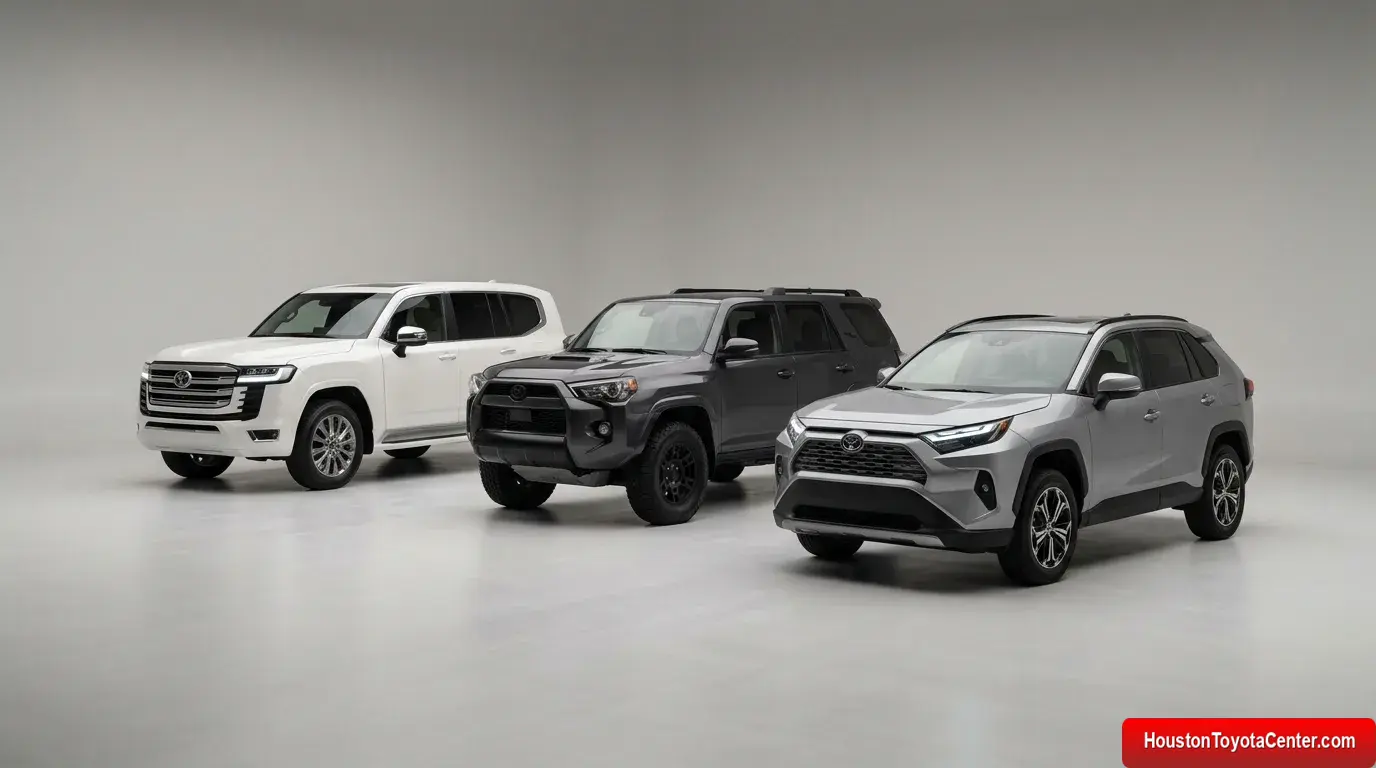
Toyota has built a reputation for dependable vehicles, practical engineering, and strong long-term value. From the compact RAV4 to the rugged 4Runner, several SUVs in the Japanese automaker’s lineup appeal to drivers who prioritize durability, everyday usability, and lower ownership risks. However, choosing the right model requires looking beyond the badge and considering the vehicle’s generation, powertrain, maintenance history, and intended use.
For drivers shopping for a new or used sport utility vehicle, reliability remains one of the most important factors in the buying decision. A dependable SUV can reduce unexpected repair bills, minimize time spent at the workshop, and provide greater confidence during daily commutes and long-distance trips. Toyota has become closely associated with these benefits, although reliability varies across individual models and model years.
Consumer Reports has consistently placed Toyota among the strongest automotive brands for predicted reliability. In its December 2025 brand reliability rankings, Toyota ranked first, based on owner survey data covering approximately 380,000 vehicles. The publication also noted that conventional hybrids generally continued to perform well, while plug-in hybrids and fully electric vehicles presented greater reliability challenges across the broader market. These findings provide useful context for buyers evaluating Toyota’s SUV range.
But which Toyota SUVs deserve the closest attention? The RAV4, RAV4 Hybrid, Highlander, 4Runner, and Land Cruiser each offer a different balance of practicality, comfort, efficiency, and rugged capability. Understanding their strengths and limitations can help buyers identify the best match for their needs.
FREE: Quickly identify and understand problems with your vehicle 🚘
CLICK HERE1. Toyota RAV4: A Practical Choice for Everyday Reliability
The Toyota RAV4 is one of the brand’s most recognizable SUVs, combining compact dimensions with useful cargo space, comfortable seating, and everyday versatility. It is designed for drivers who want the elevated driving position of an SUV without the size and operating costs associated with a larger vehicle.
Its appeal comes from a straightforward ownership proposition. The RAV4 is suitable for commuting, family errands, weekend trips, and occasional journeys on unpaved roads. Depending on the version, buyers can choose front-wheel drive or all-wheel drive, along with different equipment levels and powertrain configurations.
Reliability assessments support the RAV4’s position as a model worth considering. Consumer Reports predicted that the 2025 RAV4 would be more reliable than the average new vehicle of the same model year, drawing on data from the 2023, 2024, and 2025 model years. That is an encouraging indication, although it should not be interpreted as a guarantee that every vehicle will be trouble-free.
Used-car shoppers should pay particular attention to service records, previous accident damage, transmission behavior, cooling system condition, and the operation of electronic equipment. A well-maintained RAV4 from an established generation can be an attractive option for drivers seeking a versatile vehicle without unnecessary complexity.
Best for: Commuters, small families, first-time SUV buyers, and drivers who want a practical vehicle for a wide range of everyday situations.
2. Toyota RAV4 Hybrid: Efficiency Without Sacrificing Practicality
The Toyota RAV4 Hybrid combines the familiar utility of the standard RAV4 with a hybrid powertrain designed to reduce fuel consumption. By pairing a gasoline engine with electric motors and a battery, the system can improve efficiency, particularly in stop-and-go traffic and urban driving.
For buyers who cover substantial distances every year, lower fuel consumption can make a meaningful difference to ownership costs. The hybrid system also delivers smooth low-speed operation, making the vehicle well suited to congested streets and regular commuting.
Reliability is an important part of the appeal. Consumer Reports rated the 2025 RAV4 Hybrid as much more reliable than other vehicles from the same model year. This assessment is based on reported ownership experience and should be considered alongside the particular vehicle’s maintenance history and any applicable recalls.
Hybrid technology does introduce additional components, including electric motors, power electronics, and a high-voltage battery. These systems require appropriate inspection and diagnosis when problems arise. Buyers considering a used example should confirm that the hybrid system has been maintained according to the manufacturer’s recommendations and that the battery and related components have been checked when appropriate.
The RAV4 Hybrid is especially compelling for drivers who want a balance between fuel economy, passenger space, and everyday convenience. It avoids the need to plug in, making it easier to use for people who lack access to home charging.
Best for: High-mileage commuters, urban drivers, and families looking to reduce fuel expenses while retaining conventional SUV practicality.
3. Toyota 4Runner: A Rugged SUV With a Durability-Focused Reputation
The Toyota 4Runner occupies a different position in the lineup. Rather than focusing primarily on urban efficiency, it emphasizes off-road capability, substantial ground clearance, and a design suited to demanding driving conditions.
Its appeal extends to outdoor enthusiasts, travelers, and drivers who regularly encounter rough roads. Depending on the generation and configuration, the 4Runner offers features designed to support off-road use, including specialized four-wheel-drive systems and terrain-oriented equipment.
The model’s long-standing reputation for durability makes it a frequent consideration in discussions about dependable SUVs. However, buyers should distinguish the reputation of older 4Runner generations from the performance of newer vehicles with redesigned engines, transmissions, and electronic systems.
Consumer Reports’ assessment of the 2025 4Runner described its predicted reliability as much better than that of other vehicles from the same model year. This is a positive signal for the redesigned generation, but it does not eliminate the uncertainty associated with new mechanical architectures or individual vehicle defects.
Potential buyers should also consider fuel consumption, tire costs, and the possibility of additional wear from off-road driving. A vehicle used for towing, trail driving, or frequent travel on rough surfaces may require more attention to suspension components, brakes, tires, and underbody protection than one used exclusively on paved roads.
For used models, a detailed inspection is particularly important. Signs of corrosion, underbody impacts, neglected fluid changes, and poorly executed modifications can undermine the benefits of an otherwise capable vehicle.
Best for: Outdoor enthusiasts, drivers who need genuine off-road capability, and buyers who prioritize rugged construction over maximum fuel efficiency.
4. Toyota Highlander: Family Comfort With Room for More Passengers
The Toyota Highlander targets families who need more interior space than a compact SUV can provide. With three-row seating in many configurations, it offers flexibility for school runs, family vacations, and everyday transportation involving several passengers.
Comfort and convenience are central to its appeal. The Highlander provides a more family-oriented driving experience than the 4Runner, with an emphasis on road manners, passenger amenities, and practical storage.
Its reliability picture, however, deserves a more careful examination. Toyota’s brand-wide reputation should not be treated as proof that every Highlander generation or powertrain is equally dependable. Consumer Reports described the 2025 Highlander as having about average reliability compared with other vehicles from the same model year. The publication’s reported trouble spots included body hardware, exhaust components, the drive system, brakes, and various powertrain systems.
That finding does not make the Highlander a poor choice. Instead, it illustrates why model-specific research matters. Buyers should compare the exact model year and engine configuration they intend to purchase, rather than relying exclusively on the manufacturer’s overall reputation.
Families should also assess the third row in person. Although it increases seating capacity, the available space may be less suitable for adults on extended journeys than the first two rows. Cargo capacity can also become limited when all seats are occupied.
For used examples, inspect the brakes, suspension, air conditioning, power-operated features, and service history. Buyers should check for outstanding safety recalls using the vehicle identification number before completing a purchase.
Best for: Families who need three-row flexibility, comfortable highway travel, and a versatile vehicle for everyday responsibilities.
5. Toyota Land Cruiser: A Longstanding Name in Durability
The Toyota Land Cruiser has a particularly strong historical association with durability and long-distance travel. Across its various generations and international markets, it has been used in environments where vehicle dependability, ground clearance, and the ability to travel far from major service centers are important considerations.
Its traditional strengths include a robust design, off-road capability, and a reputation built over decades of use in demanding conditions. For buyers who need an SUV for remote travel, challenging terrain, or adventure-focused driving, the Land Cruiser remains an appealing option.
Nevertheless, the newest Land Cruiser should be assessed on its own merits rather than receiving an automatic reliability endorsement based on its predecessors.
Consumer Reports rated the 2025 Land Cruiser as less reliable than other vehicles from the same model year. The assessment identified several areas for monitoring, including brakes, engine-related systems, climate control, and in-car electronics.
This distinction is especially important because the current model uses a more modern powertrain and electronic architecture than many older Land Cruisers. New technology can improve efficiency, performance, and drivability, but it also means that historical experience with previous generations cannot fully predict the ownership experience of a redesigned vehicle.
Prospective buyers should determine whether they genuinely need the Land Cruiser’s capabilities. Its size, purchase price, and operating costs may be difficult to justify for drivers whose routine consists primarily of urban commuting.
Best for: Adventure travelers, drivers who regularly encounter challenging terrain, and buyers who value off-road capability and a historically significant SUV nameplate.
What Makes a Toyota SUV Reliable?
Choosing a reliable SUV involves more than identifying a manufacturer with a strong reputation. Several factors can have a direct effect on the likelihood of expensive repairs and the vehicle’s long-term condition.
Maintenance History
Regular oil changes, appropriate fluid replacements, scheduled inspections, and prompt attention to warning lights can help protect major mechanical components. A complete service record is particularly valuable when purchasing a used vehicle because it provides evidence of how the previous owner cared for it.
Model Year and Generation
Two SUVs carrying the same name can have substantially different mechanical systems. A redesigned model may introduce a new engine, transmission, hybrid system, or electronic platform. Buyers should therefore research the precise model year rather than assuming that every vehicle in a long-running lineup has the same reliability record.
Powertrain Selection
Conventional gasoline engines and non-plug-in hybrids can both be sensible choices, depending on the vehicle and its intended use. Hybrid models may offer excellent fuel economy, but their condition and maintenance requirements should be evaluated appropriately. There is no universal rule that one powertrain is always more reliable than another.
Driving Conditions
Frequent short trips, heavy towing, extreme temperatures, dusty roads, and aggressive off-road use can increase wear on certain components. A vehicle used primarily for highway commuting may experience a different pattern of wear from an SUV regularly driven on rough trails.
Recalls and Pre-Purchase Inspections
Safety recalls should be checked before buying any vehicle, regardless of brand reputation. A qualified mechanic can also inspect the engine, transmission, brakes, suspension, tires, cooling system, and electronic features. For a used hybrid, the inspection should include the relevant hybrid components.
Which Toyota SUV Is the Best Choice for Long-Term Ownership?
The best choice depends on what reliability means for the individual buyer.
For most everyday drivers, the Toyota RAV4 is a strong starting point because it offers a useful combination of space, versatility, and encouraging reliability assessments. The RAV4 Hybrid deserves particular attention from buyers who want to reduce fuel consumption without moving to a plug-in vehicle.
The 4Runner is better suited to people who need a rugged SUV and are willing to accept higher fuel costs in exchange for off-road capability. The Highlander makes sense for families who need three-row seating, although its model-specific reliability record should be examined carefully. The Land Cruiser remains an appealing option for demanding travel, but the newest generation should not be assumed to match every predecessor’s long-term track record.
Ultimately, the most reliable Toyota SUV is not necessarily the newest, largest, or most expensive model. It is the vehicle whose particular generation and powertrain have a convincing reliability record, whose maintenance history can be verified, and whose capabilities match the owner’s real needs.
Toyota’s reputation provides a useful starting point, not a substitute for research. By comparing model-year reliability data, checking recalls, obtaining a professional inspection, and prioritizing consistent maintenance, buyers can make a more informed decision and improve their chances of enjoying dependable ownership for years to come.
Leave a Reply