
How Toyota’s best-selling nameplate evolved from a compact family car into a global design icon
Few cars have maintained a place in the global automotive conversation for as long as the Toyota Corolla. Introduced in 1966, the compact Japanese model began life as a practical family car designed for a rapidly changing society. Over the decades, it became something much more significant: a rolling record of automotive design, industrial progress, and shifting consumer expectations.
The Corolla has never depended on a single dramatic styling statement. Instead, its success has been built on a remarkable ability to adapt. Its proportions, surfaces, lighting, interiors, and driving character have changed repeatedly, reflecting the priorities of each era. At times conservative, at times adventurous, the Corolla has moved from simple three-box sedans to expressive hatchbacks, sporty coupes, and increasingly sophisticated hybrid vehicles.
Its design history is therefore more than a sequence of model updates. It is a story about how the automobile changed, and how Toyota learned to make a familiar nameplate feel relevant to new generations.
1960s: The beginning of a global design story
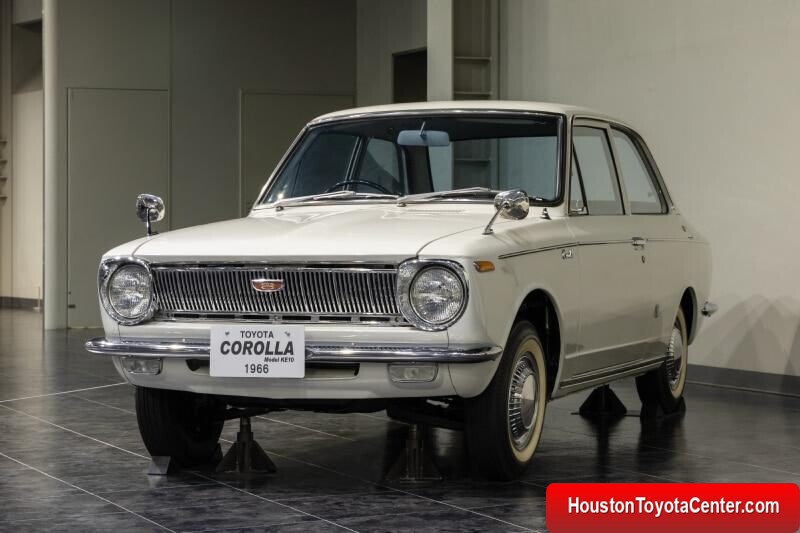
When the first-generation Corolla arrived in 1966, Japan was experiencing rapid economic growth. More families were entering the middle class, cities were expanding, and personal transportation was becoming an increasingly important part of everyday life.
FREE: Quickly identify and understand problems with your vehicle 🚘
CLICK HEREToyota positioned the Corolla as an accessible compact car, but its design was not without ambition. The original model featured a clean, upright silhouette, a relatively compact footprint, and a straightforward three-box sedan shape. Its styling was practical, yet it carried the optimism of a country moving confidently into the modern era.
The first Corolla generation was available in several body styles, including sedan, wagon, and coupe variants. These versions shared a recognizable design language while serving different customer needs. The result was a family of vehicles that felt coherent without being visually identical.
Details such as chrome trim, simple circular lamps, and carefully defined body contours gave the car a period character. The styling was not intended to shock the market. It was meant to look modern, dependable, and approachable.
That balance would become one of the Corolla’s defining design principles.
1970s: More confidence, more variety
By the 1970s, the Corolla had established itself in multiple international markets. Its second and third generations reflected the changing expectations of buyers who wanted greater comfort, stronger performance, and more expressive styling.
The body shapes became more substantial, while designers experimented with longer proportions, sharper lines, and more elaborate front-end treatments. The influence of international automotive trends was increasingly visible. In many markets, compact cars were no longer seen merely as inexpensive transportation. They were becoming lifestyle products.
The Corolla coupe gained particular attention among enthusiasts. Its sportier profile, lower roofline, and more dynamic proportions demonstrated that a practical nameplate could also carry an emotional appeal.
During this period, Toyota also expanded the Corolla’s body-style range. Sedans, wagons, liftbacks, and coupes allowed the same name to reach customers with very different priorities. The design challenge was to create a recognizable family identity across vehicles with distinct silhouettes.
The answer was often found in shared details: grille shapes, lamp arrangements, crease lines, and overall visual simplicity. These elements helped establish continuity as the Corolla grew beyond its original Japanese market.
1980s: The decade of sharp lines and enthusiast appeal
The 1980s brought one of the most recognizable shifts in Corolla design. The fourth-generation Corolla, introduced in the late 1970s, helped establish a more angular aesthetic, while the fifth-generation models of the early 1980s embraced the geometric language of the decade.
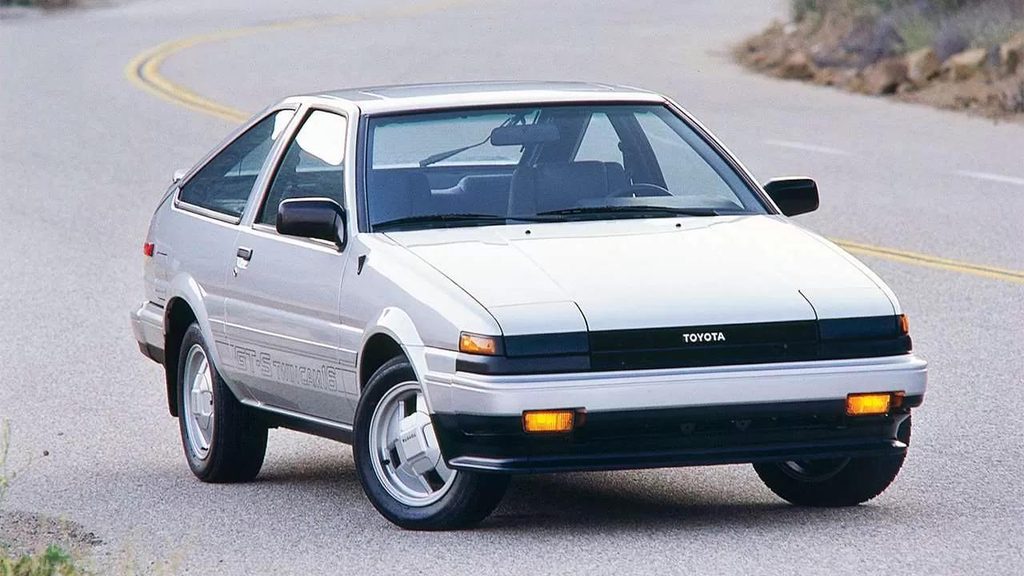
Straight lines, crisp edges, rectangular headlights, and sharply defined body panels became common visual features. Compared with the rounded forms that would dominate later decades, these cars looked precise and architectural.
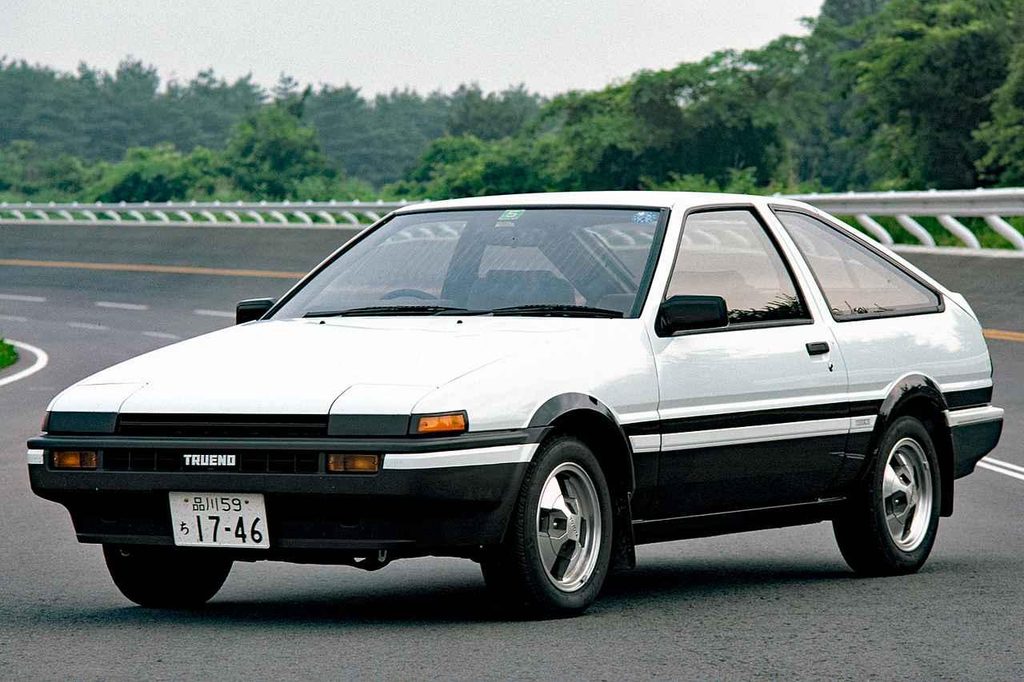
This was also the era in which the Corolla’s performance-oriented reputation became especially important. The AE86, part of the fifth-generation Corolla family, remains one of the most celebrated examples of Toyota’s ability to combine everyday practicality with motorsport and enthusiast culture.
Its lightweight proportions, rear-wheel-drive layout, and compact coupe or hatchback design gave it a distinctive place in automotive history. While not every Corolla was designed for performance, the AE86 demonstrated that the nameplate could inspire passion beyond ordinary transportation.
From a design perspective, the 1980s Corolla was about visual confidence. The surfaces were clear, the graphics were bold, and the car often appeared wider and more planted than its predecessors. The design language communicated precision rather than softness.
It was a style that matched the technological optimism of the period.
1990s: Aerodynamics and the move toward modernity
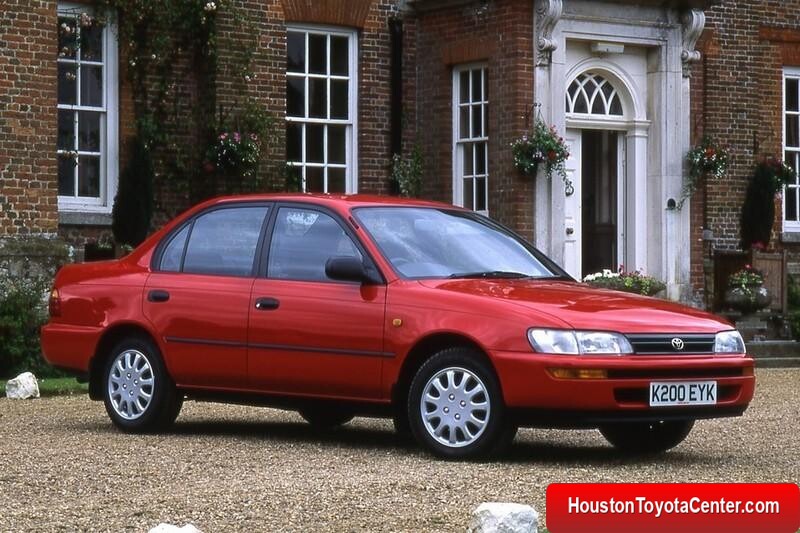
The 1990s marked a major transition in automotive design. Aerodynamics became increasingly important, safety regulations influenced body structures, and computer-aided design allowed manufacturers to develop more refined shapes.
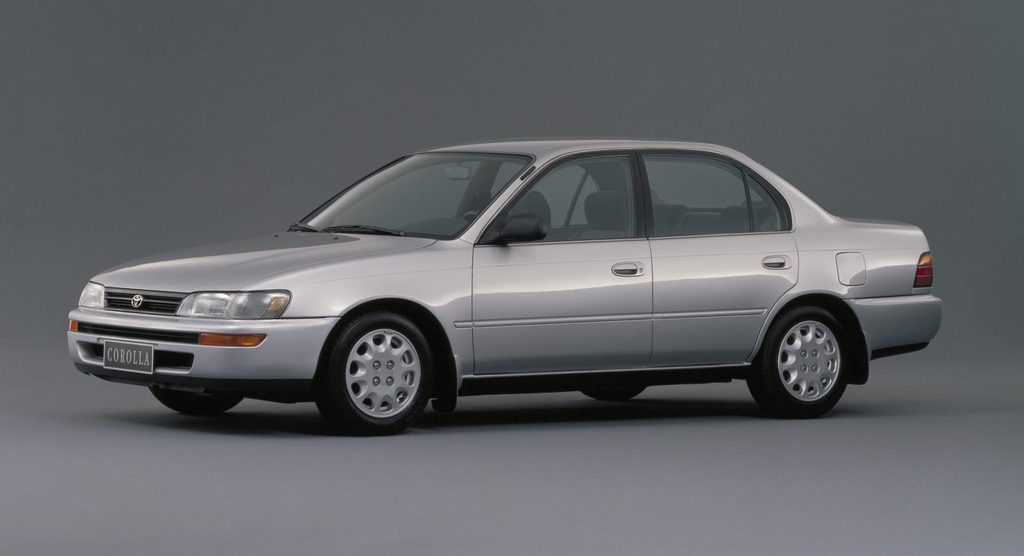
The seventh-generation Corolla, introduced in the early 1990s, represented a move toward smoother surfaces and more rounded proportions. Its design was less dependent on sharp creases and more focused on integrated forms.
Headlights became more aerodynamic, bumpers blended more naturally into the body, and the overall silhouette became softer. The visual result was a car that appeared more mature and internationally oriented.
This was also a period when Toyota’s global strategy became increasingly important. Corolla models sold in different regions did not always share identical styling, reflecting local preferences and market requirements. Nevertheless, the name continued to represent a consistent promise of practicality and reliability.
The 1990s Corolla often looked deliberately understated. Its design was clean rather than theatrical, with an emphasis on efficiency and usability. This approach helped it appeal to families, commuters, and fleet buyers.
At the same time, the model’s interior design began to evolve. Dashboards became more sculpted, instrument clusters more integrated, and cabin materials more varied. The Corolla was gradually moving away from the purely functional interiors associated with many earlier compact cars.
2000s: Global identity and a more sculpted silhouette
Entering the 21st century, the Corolla faced a more competitive automotive market. Compact cars from Japan, South Korea, Europe, and the United States were becoming increasingly sophisticated. Buyers expected better safety, comfort, refinement, and visual appeal.
The ninth-generation Corolla, launched around the turn of the century, introduced a more contemporary and rounded appearance. Its styling was characterized by smoother bodywork, more prominent lighting elements, and a greater emphasis on cabin space.
The tenth-generation Corolla, introduced in the mid-2000s, continued this evolution with a more structured and substantial appearance. The front end became a stronger visual focal point, while the side profile communicated greater stability and presence.
During this period, the Corolla’s design identity varied significantly between regions. North American sedans, European hatchbacks, and other market-specific versions could look quite different. This diversity reflected Toyota’s strategy of adapting the nameplate to local tastes rather than imposing one global shape everywhere.
The design of the Corolla was becoming less about a single universal appearance and more about a global family of related products.
Inside, the emphasis shifted toward perceived quality and technology. Larger displays, improved seating, additional storage, and more sophisticated control layouts became important elements of the compact-car experience.
The Corolla remained recognizable, but the definition of a compact family car was changing.
2010s: From conservative sedan to expressive family
The 2010s brought another significant shift in Toyota’s design philosophy. As the automotive industry became more competitive, Toyota began to pursue more distinctive styling across its lineup.
The eleventh-generation Corolla, introduced in the early 2010s, adopted a more assertive front end and stronger character lines. Its design was more angular than the previous generation, with a sharper grille and more expressive lighting.
The changes reflected a broader movement in the automotive industry. Buyers were increasingly interested in vehicles that communicated personality, even when those vehicles were primarily used for commuting.
The Corolla’s design also became more diversified. In some markets, the sedan adopted a more mature and formal appearance. In others, hatchback versions offered a sportier alternative, with shorter rear overhangs and more dynamic proportions.
The twelfth-generation Corolla, introduced from 2018 onward in many markets, marked another important moment. Built on Toyota’s TNGA platform architecture, it benefited from a lower center of gravity and more flexible design possibilities.
The result was a Corolla with a more planted stance, more dramatic front styling, and a stronger relationship between its exterior and interior design.
The sedan featured a lower-looking profile and more sculpted surfaces. The hatchback pushed the sporty character further, with a compact rear section and a visually energetic silhouette.
For a nameplate traditionally associated with restraint, this was a bold transformation.
2020s: Design meets electrification and digital life
In the 2020s, the Corolla entered a market shaped by electrification, digital connectivity, stricter safety expectations, and changing consumer habits.
Hybrid powertrains became increasingly important in many markets, and the Corolla’s design had to accommodate new technology without abandoning its practical identity. The modern Corolla continues to be offered in several body styles, including sedan, hatchback, and wagon variants depending on the market.
Its exterior design is defined by a more confident front fascia, narrow lighting elements, sculpted side surfaces, and a stronger visual relationship between the wheels and the body. The overall impression is more athletic than that of earlier generations.
The interior has also changed dramatically. Digital instrument displays, infotainment screens, driver-assistance systems, and connected services have become part of the Corolla experience. What was once a simple dashboard designed around analog gauges and physical controls is now a more technology-focused environment.
Yet Toyota has generally retained a clear emphasis on usability. The cabin is designed to be familiar rather than intimidating, with controls and information presented in ways intended to serve everyday drivers.
This balance is central to the Corolla’s continuing appeal. The car may look more sophisticated, but it remains fundamentally designed for ordinary life.
A design philosophy built on adaptation
Looking across six decades of Corolla history, one pattern stands out: the model has rarely tried to define the future on its own terms. Instead, it has adapted to the future as it arrived.
In the 1960s, that meant creating a modern compact car for a growing middle class. In the 1970s, it meant offering more variety and comfort. In the 1980s, it meant sharper styling and a connection to enthusiast culture. In the 1990s, aerodynamics and global design trends took priority.
The 2000s brought a more sculpted, international identity. The 2010s introduced greater visual confidence, while the 2020s have emphasized technology, hybridization, and contemporary proportions.
The Corolla’s success is partly explained by this flexibility. Its design has changed enough to remain current, but not so dramatically that the nameplate loses its identity.
That is a difficult balance for any automaker to achieve.
Why the Corolla remains a design icon
The Corolla may not always be the most visually radical car in its class, but its influence is difficult to ignore. It has appeared in countless cities, suburban driveways, dealerships, and family histories around the world.
Its design has become familiar precisely because it has been so widely experienced. Generations of drivers have encountered different versions of the Corolla at different stages of their lives. For some, it is the car they learned to drive. For others, it is a dependable family vehicle or an affordable first purchase.
That emotional connection gives the Corolla a unique place in automotive design history.
The car’s importance is not limited to a particular generation, engine, or body style. It lies in the continuity of the name itself, and in Toyota’s ability to reinterpret that name for changing times.
The road ahead
As the automotive industry moves toward greater electrification and increasingly digital vehicles, the Corolla’s next design chapter will be shaped by new challenges.
Future compact cars will need to balance aerodynamic efficiency, battery and hybrid technology, safety systems, interior space, and manufacturing costs. They will also need to compete with a growing range of electric vehicles and crossovers.
For the Corolla, the question is not simply how futuristic it can look. It is how successfully it can preserve the qualities that have made it relevant for so long.
The nameplate’s history suggests that adaptation will remain its greatest strength.
Conclusion
The Toyota Corolla’s design history is a reflection of more than sixty years of automotive change. From the upright simplicity of the original 1966 model to the sculpted, technology-rich vehicles of the modern era, each generation has responded to the needs and expectations of its time.
Some Corollas were defined by chrome and clean lines. Others by angular styling, aerodynamic curves, or expressive front fascias. Together, they form one of the most extensive design stories in the automotive world.
The Corolla has endured not because it has remained unchanged, but because it has continued to evolve without losing sight of its purpose.
That may be the most enduring design achievement of all: creating a car that can change with the world, while remaining unmistakably itself.
Leave a Reply