
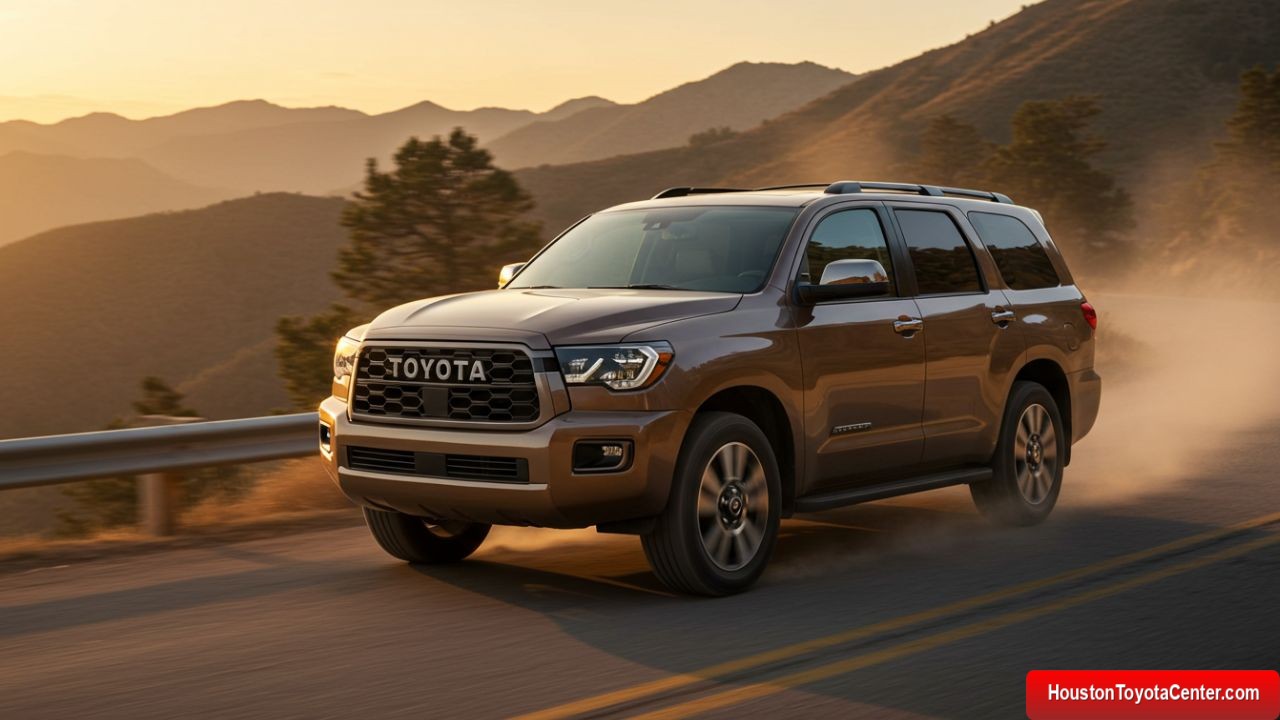
The automotive landscape has undergone a dramatic transformation in recent years, with full-size SUVs emerging as one of the most competitive and rapidly evolving segments in the industry. Among the pioneers leading this charge is Toyota, whose iconic Sequoia has been completely reinvented for a new generation of drivers who demand more than just transportation—they seek capability, luxury, technology, and sustainability all wrapped into one formidable package. The latest iteration of the Sequoia represents not merely an update to an existing model, but a comprehensive reimagining of what a full-size SUV can be in the modern era.
A Legacy of Excellence
To truly appreciate the significance of the current Sequoia, it’s essential to understand its heritage. First introduced in 2001, the original Sequoia was Toyota’s answer to the growing American appetite for large, capable SUVs that could handle everything from family road trips to serious off-road adventures. Named after the majestic redwood trees of California, the Sequoia embodied strength, durability, and an unmistakable presence on the road.
Over two decades, the Sequoia evolved through multiple generations, each building upon the foundation of reliability and capability that Toyota had established. However, by the late 2010s, the automotive world was changing rapidly. Consumer preferences were shifting toward more fuel-efficient vehicles, advanced technology integration was becoming standard rather than optional, and the rise of electrification was beginning to reshape the entire industry. Toyota recognized that to remain competitive in the full-size SUV segment, the Sequoia needed more than incremental improvements—it required a complete reinvention.
The Third Generation: A Bold New Direction
The third-generation Sequoia, unveiled for the 2023 model year, marked a watershed moment for Toyota’s flagship SUV. This wasn’t simply a refresh or facelift; it was an entirely new vehicle built from the ground up on Toyota’s TNGA-F (Toyota New Global Architecture – Frame) platform. This body-on-frame architecture, shared with the redesigned Tundra pickup truck, provided a stronger, more rigid foundation while simultaneously reducing weight compared to its predecessor.
FREE: Quickly identify and understand problems with your vehicle 🚘
CLICK HEREPowertrain Revolution
Perhaps the most significant change came under the hood. For the first time in Sequoia history, Toyota eliminated the traditional V8 engine option that had defined previous generations. In its place came the i-FORCE MAX hybrid powertrain, a twin-turbocharged 3.4-liter V6 paired with an electric motor-generator integrated into the transmission. This innovative system delivers an impressive 437 horsepower and 583 lb-ft of torque, surpassing the output of many V8 competitors while offering significantly better fuel economy.
| Specification | Previous Generation V8 | Current i-FORCE MAX Hybrid |
|---|---|---|
| Engine Type | 5.7L V8 | 3.4L Twin-Turbo V6 + Electric Motor |
| Horsepower | 381 hp | 437 hp |
| Torque | 401 lb-ft | 583 lb-ft |
| Fuel Economy (Combined) | 15 mpg | 22 mpg |
| Transmission | 6-speed automatic | 10-speed automatic |
This powertrain represents Toyota’s commitment to balancing performance with efficiency. The hybrid system doesn’t just improve fuel economy—it enhances driving dynamics. The electric motor provides instant torque fill during acceleration, eliminating turbo lag and delivering smooth, responsive power across the entire RPM range. Drivers experience the best of both worlds: V8-like power when needed, with four-cylinder efficiency during cruising.
Design Philosophy: Form Meets Function
The exterior design of the new Sequoia reflects a careful balance between aggressive styling and practical functionality. Toyota’s designers adopted a more angular, muscular aesthetic that conveys strength without sacrificing aerodynamic efficiency. The front fascia features a bold grille flanked by sleek LED headlights that sweep back along the fenders, creating a distinctive visual signature that’s immediately recognizable even at night.
The profile maintains the commanding road presence expected of a full-size SUV, with pronounced wheel arches housing wheels up to 20 inches in diameter. The rear design incorporates vertical taillights that echo the vertical lines of the sequoia trees that inspired the name, while also improving visibility and safety. Throughout the design, attention to detail is evident—from the precisely sculpted body panels to the thoughtful placement of functional elements like roof rails and tow hooks.
Inside, the cabin represents a quantum leap forward in terms of materials, craftsmanship, and technology. Toyota has elevated the interior to compete directly with luxury brands, offering premium leather upholstery, genuine wood trim options, and soft-touch surfaces throughout. The seating configuration typically accommodates seven or eight passengers, with second-row captain’s chairs available on higher trims providing enhanced comfort and easier third-row access.
Technology Integration: Connected and Capable
The technological advancements in the new Sequoia are perhaps its most impressive feature set. At the heart of the infotainment system sits a massive 14-inch touchscreen display (on higher trims), running Toyota’s latest multimedia interface. This system supports wireless Apple CarPlay and Android Auto, over-the-air updates, and voice recognition that actually understands natural language commands. The interface is intuitive, responsive, and customizable, allowing drivers to prioritize the information and controls they use most frequently.
For families and adventure seekers alike, the available rear-seat entertainment system keeps passengers engaged during long journeys. Multiple USB-C charging ports are strategically placed throughout the cabin, ensuring everyone stays connected. The premium JBL audio system, with up to 14 speakers including a subwoofer, transforms the cabin into a mobile concert hall.
Safety technology has also received substantial upgrades. The Sequoia comes standard with Toyota Safety Sense 2.5+, a comprehensive suite of driver assistance features including:
- Pre-Collision System with Pedestrian Detection
- Full-Speed Range Dynamic Radar Cruise Control
- Lane Departure Alert with Steering Assist
- Lane Tracing Assist
- Automatic High Beams
- Road Sign Assist
- Blind Spot Monitor with Rear Cross-Traffic Alert
Higher trims add even more sophisticated systems, such as a 360-degree camera system, parking assist, and adaptive front lighting that adjusts beam patterns based on steering input and vehicle speed.
Off-Road Capability: Built for Adventure
While the Sequoia excels as a comfortable family hauler and luxurious daily driver, it hasn’t forgotten its roots as a capable off-road vehicle. The TRD Pro trim, in particular, showcases Toyota’s commitment to serious off-road performance. This variant features specialized Fox internal bypass shocks, a lifted suspension providing additional ground clearance, all-terrain tires, and unique styling elements that distinguish it from other trims.
The four-wheel-drive system employs a robust two-speed transfer case with low-range gearing for extreme terrain. Electronic locking differentials ensure power reaches the wheels with traction, while multi-terrain select modes optimize vehicle settings for specific conditions like mud, sand, rocks, or snow. Crawl Control acts as an automated low-speed cruise control for off-road situations, allowing drivers to focus on steering while the system manages throttle and braking.
Towing capacity remains impressive despite the switch to hybrid power. The Sequoia can tow up to 9,520 pounds when properly equipped, making it suitable for hauling boats, trailers, or recreational vehicles. The integrated trailer brake controller and tow/haul mode further enhance towing capability and safety.
Trim Levels and Customization
Toyota offers the Sequoia in several trim levels, each targeting different buyer priorities and budgets:
SR5: The entry-level trim provides excellent value with standard features including the hybrid powertrain, Toyota Safety Sense 2.5+, and comfortable seating for up to eight passengers. It’s an ideal choice for buyers who want Sequoia capability without luxury extras.
Limited: Stepping up to Limited adds premium touches like leather-trimmed seats, heated and ventilated front seats, a power liftgate, and upgraded audio. This trim strikes an excellent balance between features and price.
Platinum: The Platinum trim represents the pinnacle of Sequoia luxury, featuring semi-aniline leather, real wood trim, a panoramic moonroof, and advanced driver assistance features. It competes directly with luxury-brand SUVs while maintaining Toyota’s reputation for reliability.
TRD Pro: Designed for off-road enthusiasts, the TRD Pro includes specialized suspension components, all-terrain tires, unique exterior styling, and interior accents that emphasize its rugged capabilities. It’s the go-to choice for buyers who plan to venture beyond paved roads.
Capstone: Introduced as the ultra-luxury variant, Capstone features exclusive two-tone paint options, unique 22-inch wheels, premium leather with contrast stitching, and additional sound deadening for an exceptionally quiet ride. It represents Toyota’s ambition to compete in the premium SUV segment.
Sustainability and Environmental Responsibility
The shift to hybrid power in the Sequoia aligns with Toyota’s broader environmental strategy and responds to increasingly stringent emissions regulations worldwide. By achieving 22 mpg combined—a significant improvement over the previous generation’s 15 mpg—the new Sequoia reduces both fuel costs and environmental impact without compromising capability.
Toyota’s approach to sustainability extends beyond the powertrain. The company has implemented more sustainable manufacturing processes, reduced water usage in production, and increased the use of recycled materials in vehicle construction. The Sequoia’s improved aerodynamics also contribute to better efficiency, demonstrating how thoughtful design can yield environmental benefits.
Looking ahead, Toyota has indicated that electrified variants of the Sequoia may be in development, potentially including plug-in hybrid or even fully electric versions as battery technology continues to advance and charging infrastructure expands. This forward-thinking approach ensures the Sequoia will remain relevant as the automotive industry transitions toward electrification.
Market Position and Competition
The full-size SUV segment is fiercely competitive, with established players including the Chevrolet Tahoe, GMC Yukon, Ford Expedition, and Nissan Armada. Luxury brands like Cadillac, Lincoln, and Infiniti also offer compelling alternatives. The Sequoia distinguishes itself through several key advantages:
Reliability: Toyota’s legendary reputation for dependability gives the Sequoia a significant edge. Owners can expect fewer repairs and lower long-term ownership costs compared to many competitors.
Resale Value: Toyota vehicles consistently maintain strong resale values, and the Sequoia is no exception. This translates to lower total cost of ownership over the vehicle’s lifetime.
Hybrid Efficiency: No competitor in the full-size SUV segment offers a hybrid powertrain with comparable performance and efficiency. This unique selling proposition appeals to environmentally conscious buyers who don’t want to sacrifice capability.
Technology: The latest Sequoia’s tech offerings rival or exceed those of competitors, particularly in terms of standard safety features and infotainment capabilities.
However, the Sequoia faces challenges as well. Some critics note that the elimination of the V8 engine may disappoint traditionalists who prefer the sound and feel of naturally aspirated V8 power. Additionally, while the hybrid system improves efficiency, it doesn’t match the fuel economy of smaller crossover SUVs or emerging electric vehicles.
Real-World Ownership Experience
Owners of the new Sequoia report high satisfaction across multiple dimensions. The spacious interior comfortably accommodates large families, with ample cargo space even with all three rows occupied. The third row, often criticized in competing vehicles, offers reasonable space for adults on shorter trips and plenty of room for children.
Fuel economy in real-world driving typically ranges from 19-24 mpg depending on driving conditions and habits, which represents a substantial improvement over previous generations. Many owners appreciate the smooth, quiet operation of the hybrid powertrain, noting that the transition between electric and gasoline power is nearly imperceptible.
Long-distance touring is where the Sequoia truly shines. The comfortable seats, refined ride quality, and comprehensive technology features make cross-country road trips enjoyable rather than exhausting. The available all-wheel drive provides confidence in adverse weather conditions, while the robust construction inspires trust on rough roads.
Maintenance costs remain reasonable thanks to Toyota’s extensive dealer network and the proven reliability of the hybrid system. The 10-year/150,000-mile warranty on hybrid components provides additional peace of mind for buyers concerned about long-term hybrid battery health.
The Future of the Sequoia
As Toyota looks toward the future, the Sequoia is positioned to evolve alongside changing consumer preferences and technological advancements. Industry analysts anticipate several potential developments:
Electrification Expansion: While the current hybrid system represents a significant step forward, fully electric or plug-in hybrid variants could arrive in coming years as battery technology improves and charging infrastructure expands.
Autonomous Driving Features: As self-driving technology matures, the Sequoia may incorporate more advanced autonomous capabilities, building upon the existing Toyota Safety Sense foundation.
Connectivity Enhancements: Over-the-air updates will keep the Sequoia’s software current, while deeper integration with smart home devices and personal digital assistants could create a more seamless connected experience.
Sustainable Materials: Increased use of recycled and bio-based materials in interior construction could further reduce the vehicle’s environmental footprint without compromising luxury or durability.
Conclusion: A Worthy Successor
The reinvented Sequoia represents Toyota’s successful adaptation to a changing automotive landscape. By embracing hybrid technology, elevating interior luxury, integrating cutting-edge technology, and maintaining the rugged capability that defined earlier generations, Toyota has created a full-size SUV that appeals to a broad spectrum of buyers.
For families seeking a safe, spacious, and reliable vehicle for daily duties and weekend adventures, the Sequoia delivers comprehensively. For outdoor enthusiasts who need serious off-road capability combined with highway comfort, the TRD Pro variant offers an compelling package. For luxury buyers who want premium features without premium brand pricing, the Platinum and Capstone trims provide exceptional value.
The elimination of the V8 engine, while controversial among traditionalists, proves to be a wise decision that enhances performance while improving efficiency. The i-FORCE MAX hybrid powertrain demonstrates that environmental responsibility and driving enjoyment aren’t mutually exclusive—they can coexist in a single, well-engineered package.
As the automotive industry continues its transition toward electrification and autonomy, the Sequoia stands as proof that established manufacturers can successfully navigate this transformation. Toyota hasn’t abandoned the qualities that made the Sequoia beloved—reliability, capability, and practicality—but has enhanced them with modern technology, improved efficiency, and elevated luxury.
The reinvented Sequoia isn’t just keeping pace with competition; in many respects, it’s setting the standard for what a modern full-size SUV should be. It respects its heritage while boldly embracing the future, honoring the mighty trees that inspired its name by standing tall among its peers. For buyers in the market for a full-size SUV that does everything well without compromise, the Sequoia deserves serious consideration. It’s not just Toyota’s full-size SUV reinvented—it’s a redefinition of excellence in the segment, proving that evolution, when done right, can preserve legacy while creating something genuinely new and exciting.
Whether navigating urban streets, conquering mountain trails, or cruising down the highway on a family vacation, the Sequoia approaches every challenge with confidence and competence. It’s a vehicle that grows with its owners, adapting to their changing needs while remaining true to its core identity. In an era of rapid automotive transformation, the Sequoia stands as a testament to thoughtful engineering, customer-focused design, and Toyota’s unwavering commitment to building vehicles that earn trust and deliver satisfaction for years to come.
Leave a Reply