
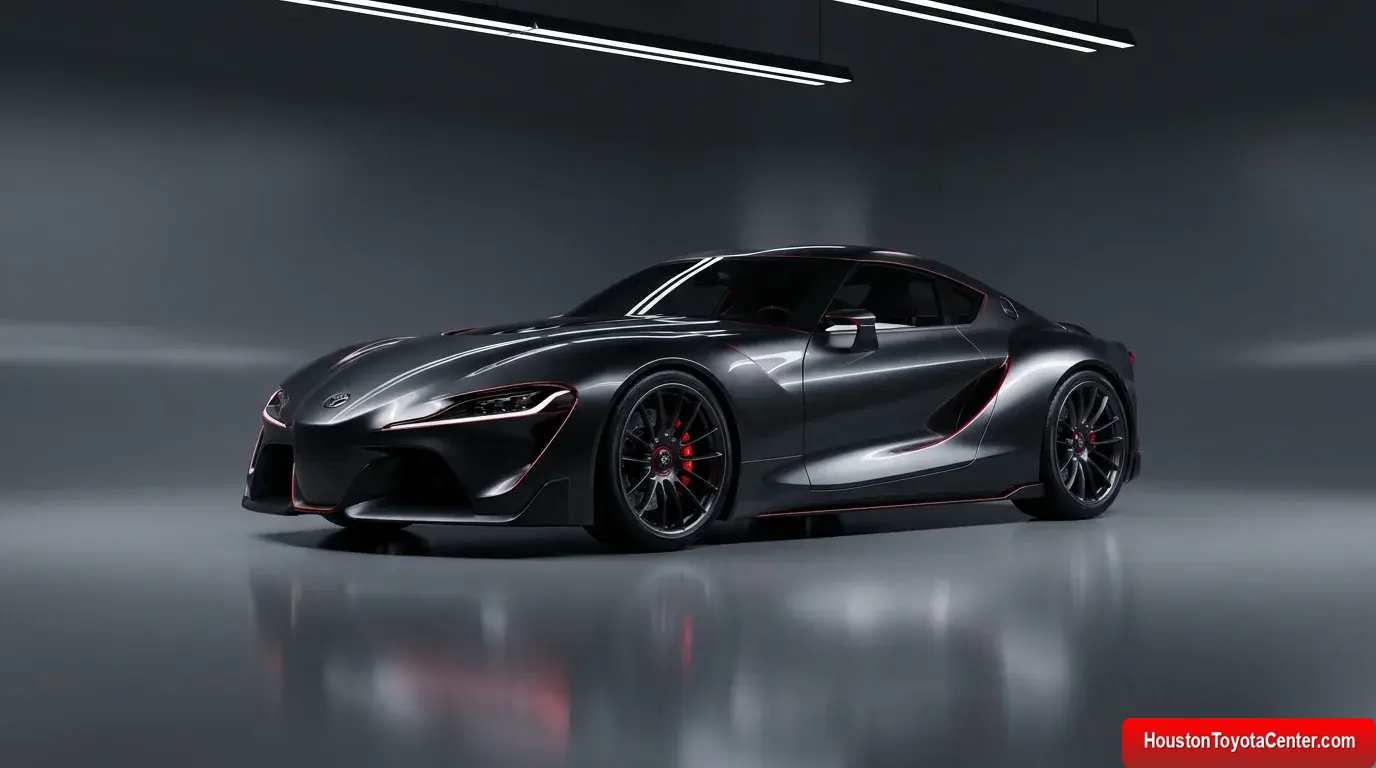
Toyota has built some of the most recognizable performance cars in automotive history. From the Supra and Celica to the GR Yaris and GR Corolla, the Japanese automaker has repeatedly demonstrated that performance can be about more than raw horsepower. It can also be about engineering, balance, driver engagement and a strong connection between car and road.
Now, however, the performance-car landscape is changing rapidly. Electrification, stricter emissions regulations, software-defined vehicles and new expectations from drivers are forcing manufacturers to rethink what a performance car should be.
For Toyota, that transformation could define the next generation of Gazoo Racing models.
The GR Brand Is Entering a New Chapter
Toyota Gazoo Racing, better known as GR, has become one of Toyota’s most important performance identities. The GR Supra, GR Yaris and GR Corolla have helped establish a modern generation of Toyota performance cars that combine motorsport-inspired engineering with everyday usability.
FREE: Quickly identify and understand problems with your vehicle 🚘
CLICK HEREThe next challenge is maintaining that identity as the industry moves toward electrification.
Toyota has already shown that it does not view electrification as incompatible with performance. Electric powertrains can deliver instant torque, precise power control and new opportunities for chassis engineering. The question is whether Toyota can use those advantages without losing the character that has traditionally defined its enthusiast cars.
That could mean a future in which the GR badge represents a broader range of technologies rather than a specific type of engine.
The End of the Traditional Performance Formula?
For decades, the formula for a fast sports car was relatively straightforward: increase engine power, improve the transmission, reduce weight and optimize aerodynamics.
Electric and hybrid technology changes that equation.
A future Toyota performance car could combine a compact internal-combustion engine with electric motors to create a highly responsive all-wheel-drive system. Instead of relying exclusively on mechanical components to distribute power, software could continuously manage torque between the wheels.
This would give engineers a new level of control over acceleration, cornering and stability.
The result may not feel like a traditional gasoline-powered sports car, but it could offer something entirely different: a performance experience built around instantaneous response and sophisticated torque management.
Lightweight Engineering Will Remain Crucial
More power is not necessarily the answer.
Toyota’s most interesting performance cars have often demonstrated the importance of weight, balance and mechanical simplicity. The GR Yaris, for example, became popular partly because it delivered a focused driving experience in a compact package.
That philosophy could become even more important in the electric era.
Batteries are heavy, and adding electric motors, cooling systems and high-voltage hardware can quickly increase a vehicle’s mass. For a performance car, additional weight can affect braking, cornering and driver feedback.
Toyota therefore faces a difficult engineering challenge: develop electrified performance cars while keeping them as light and agile as possible.
Advanced materials, smaller batteries, improved energy density and more efficient electric motors could become central to that strategy.
Could the Supra Become a Technology Flagship?
Few Toyota names carry as much emotional weight as Supra.
The current generation helped revive the nameplate for a new generation of enthusiasts, but the long-term future of the model will inevitably be influenced by the industry’s transition away from conventional combustion engines.
A future Supra could therefore become more than simply a faster version of today’s formula.
It could serve as a technological showcase for Toyota’s next-generation performance systems, potentially combining electrification, advanced aerodynamics, intelligent all-wheel drive and sophisticated software.
The challenge would be preserving the Supra’s identity. Enthusiasts are unlikely to accept a performance car simply because it is technologically advanced. It still needs personality.
Software Could Become Part of the Driving Experience
The next generation of performance cars will not be defined only by hardware.
Software is becoming an increasingly important part of vehicle development, allowing manufacturers to change how a car responds to the driver through electronic controls and calibration.
For Toyota, this could create opportunities to offer different driving personalities without fundamentally changing the vehicle’s mechanical architecture.
A future GR model could potentially offer road-focused, track-focused and efficiency-oriented configurations through software. Torque distribution, throttle response, regenerative braking and stability-control behavior could all become adjustable elements of the driving experience.
That does not necessarily mean turning performance cars into smartphones on wheels. Instead, the goal could be to use software to make advanced engineering more accessible to the driver.
Toyota’s Biggest Advantage May Be Its Racing DNA
Toyota’s motorsport experience could become one of its most important assets during this transition.
Racing provides a demanding environment for testing powertrains, thermal management, aerodynamics, energy recovery and durability. Technologies developed for competition can eventually influence production vehicles, even when the final road car uses a very different configuration.
Gazoo Racing gives Toyota a platform for exploring these technologies while maintaining a strong connection with performance enthusiasts.
That connection matters.
The future of Toyota performance cars will not be determined solely by acceleration figures or horsepower numbers. It will also depend on whether drivers believe the cars were designed with enthusiasts in mind.
A Different Definition of Performance
The next Toyota performance car may not sound like a traditional sports car.
It may have fewer mechanical sensations, more electronic controls and a powertrain that combines multiple sources of propulsion. Yet that does not necessarily mean the end of driving excitement.
Performance is ultimately about how a vehicle responds to its driver.
Toyota’s challenge will be to translate that principle into a new technological era. If the company can combine electrification with lightweight engineering, precise handling, distinctive design and genuine driver involvement, its future GR models could redefine what a Japanese performance car means.
The most exciting possibility is that Toyota will not simply electrify its existing performance formula.
It may create a new one.
The Road Ahead
Toyota’s performance-car future is likely to be shaped by a balance between heritage and innovation.
The company has a valuable history of enthusiast-focused models, but the next chapter will require different technologies and engineering solutions. Hybrid systems, battery-electric power, advanced software and new lightweight materials could all play a role.
For enthusiasts, the key question is simple: can Toyota preserve the emotional character of its performance cars while embracing the technology of the future?
If the answer is yes, the next generation of Toyota performance cars could prove that electrification does not have to mean the end of automotive passion.
It could simply mean that performance is about to take a different form.
Leave a Reply