
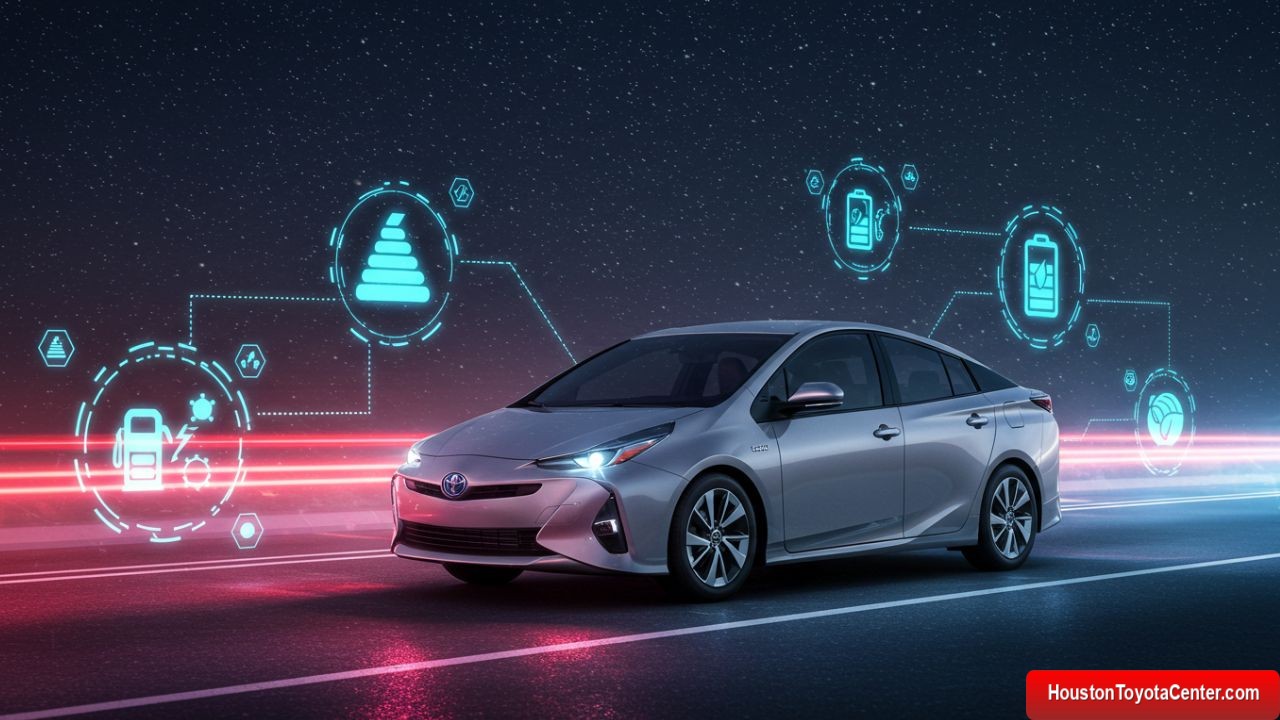
For over two decades, the Toyota Prius has stood as the gold standard for hybrid vehicle efficiency, continuously pushing the boundaries of what drivers can expect from fuel economy without sacrificing practicality or reliability. Since its introduction in 1997, this pioneering vehicle has evolved through multiple generations, each iteration bringing improved technology, better performance, and increasingly impressive miles-per-gallon ratings that have redefined consumer expectations for economical transportation. Understanding which Prius models deliver the best fuel efficiency requires examining not only current offerings but also the historical progression that has made this nameplate synonymous with eco-conscious driving.
The Current Generation: Setting New Standards
The latest fifth-generation Prius represents a significant leap forward in both style and substance, offering fuel economy figures that would have seemed impossible when the original model first appeared on roads around the world. The 2025 Toyota Prius LE trim leads the pack with an EPA-estimated combined rating of 57 miles per gallon, achieving 57 mpg in city driving and 56 mpg on the highway. This remarkable efficiency comes from Toyota’s refined hybrid powertrain, which pairs a 2.0-liter four-cylinder engine with electric motors to create a system that maximizes energy recovery and minimizes waste.
For buyers who opt for higher trim levels such as the XLE or Limited, fuel economy drops slightly to 52 mpg combined, with both city and highway ratings settling at 52 mpg. While this represents a decrease compared to the base LE model, it remains exceptionally competitive within the broader automotive market and reflects the additional weight and features included in these more luxurious configurations. The all-wheel-drive variants sacrifice some efficiency for enhanced traction and stability, delivering 53 mpg in the city and 54 mpg on the highway, resulting in a combined rating that still exceeds 50 mpg.
The Prius Prime: Plug-In Efficiency Redefined
For drivers seeking even greater efficiency and the ability to operate on pure electric power for daily commutes, the Prius Prime plug-in hybrid offers a compelling alternative that combines the best of both worlds. The 2025 Prius Prime delivers an astonishing 127 MPGe (miles per gallon equivalent) when operating in electric mode, while maintaining a respectable 52 mpg combined rating when running on its hybrid system after the battery is depleted. This dual capability means that owners who regularly charge their vehicles and keep trips within the electric range can achieve effectively infinite fuel economy for short-distance driving.
FREE: Quickly identify and understand problems with your vehicle 🚘
CLICK HEREThe SE trim of the Prius Prime offers up to 45 miles of EPA-estimated all-electric range, making it suitable for most daily commutes without using any gasoline whatsoever. Real-world testing has shown that experienced Prius Prime owners can achieve remarkable efficiency numbers, with some reporting lifetime averages exceeding 145 MPGe during periods when they maximize electric driving. The efficiency advantage becomes particularly pronounced for urban drivers who can complete most trips within the electric range while occasionally using the hybrid system for longer journeys.
Historical Perspective: Generational Improvements
To fully appreciate the achievement of current Prius models, it helps to understand how fuel efficiency has improved across the vehicle’s five distinct generations. The first-generation Prius, launched in Japan in 1997 and introduced to North America for the 2001 model year, established the template with modest but groundbreaking efficiency ratings. By the time the second generation arrived for 2004, improvements in hybrid technology had pushed combined fuel economy to approximately 48 mpg, a figure that seemed extraordinary at the time and helped establish the Prius as a mainstream choice rather than a niche curiosity.
The third generation, spanning model years 2010 through 2015, brought combined ratings up to 51 mpg, representing steady incremental improvement as Toyota refined its hybrid systems and reduced vehicle weight through engineering innovations. However, many enthusiasts consider the fourth generation, introduced for 2016, to be a particular sweet spot in Prius history, offering excellent fuel economy alongside improved reliability and driving dynamics. The 2016 Prius achieved 54 mpg combined for most trims, with the specialized Two Eco variant reaching an impressive 56 mpg combined.
Real-world experience often exceeds official EPA ratings, with careful drivers reporting figures well above 60 mpg under optimal conditions. The fourth-generation Prius proved particularly adept at highway cruising efficiency while maintaining strong city performance, thanks to aerodynamic improvements and more sophisticated energy management systems that learned driver habits and optimized power delivery accordingly.
Comparing Standard and Plug-In Models
When evaluating which Prius model offers the best fuel efficiency, the answer depends largely on driving patterns and access to charging infrastructure. For drivers who primarily take longer trips and cannot regularly charge a plug-in vehicle, the standard Prius LE with its 57 mpg combined rating provides exceptional value and convenience without requiring any change to refueling habits. The simplicity of never needing to plug in appeals to many buyers who want maximum efficiency without the complexity of managing battery charging.
Conversely, those with regular access to charging stations and predominantly shorter commutes will find the Prius Prime’s electric-only capability transformative, potentially eliminating gasoline purchases entirely for weeks at a time. The efficiency of electric motors, which convert 80 to 90 percent of energy into motion compared to roughly 20 percent for internal combustion engines, makes the Prime dramatically more efficient when operated primarily in electric mode. Even when accounting for electricity costs, the overall expense per mile tends to favor electric operation significantly.
Interestingly, real-world testing has revealed that on sustained highway driving at constant speeds, the standard Prius sometimes outperforms the Prime in pure gasoline mode, achieving 49 mpg compared to the Prime’s 46 mpg in one controlled test. This difference stems from the additional weight of the Prime’s larger battery pack, which becomes a disadvantage when the electric range is exhausted and the vehicle operates purely as a conventional hybrid.
Factors Influencing Real-World Efficiency
While EPA ratings provide useful benchmarks for comparison, actual fuel economy varies considerably based on driving style, weather conditions, maintenance practices, and route characteristics. Aggressive acceleration, high-speed highway driving, excessive use of climate control, and frequent cold starts all reduce efficiency below rated levels. Conversely, gentle acceleration, moderate speeds, proper tire inflation, and regular maintenance can help drivers exceed official estimates consistently.
The Prius’s regenerative braking system recovers kinetic energy during deceleration and stores it in the battery for later use, making it particularly efficient in stop-and-go city traffic where conventional vehicles waste energy as heat through friction brakes. This characteristic explains why the Prius often shows smaller differences between city and highway ratings compared to traditional vehicles, and why urban drivers may find the hybrid advantage even more pronounced than EPA numbers suggest.
Making the Right Choice
Selecting the most fuel-efficient Prius model requires balancing several factors beyond simple MPG ratings. The current fifth-generation Prius LE offers the highest combined fuel economy among non-plug-in models at 57 mpg, making it ideal for buyers prioritizing maximum gasoline savings without charging requirements. Those willing to invest in charging infrastructure and whose driving patterns suit electric operation will find the Prius Prime’s 127 MPGe rating in electric mode virtually unmatched in the mainstream market.
For used car shoppers, fourth-generation models from 2016 onward represent excellent value, offering fuel economy very close to current models while benefiting from proven reliability and lower purchase prices. The 2016 Prius in particular stands out as a sweet spot combining modern efficiency, contemporary styling, and established dependability records that give buyers confidence in long-term ownership.
Regardless of which specific model or generation buyers choose, the Prius nameplate continues to deliver class-leading fuel efficiency that reduces both environmental impact and operating costs. Whether opting for the latest technology or a carefully selected used example, Prius owners join a community of drivers who have demonstrated that practical, affordable, and genuinely efficient transportation is not just possible but readily available. The evolution from the original 1997 model to today’s sophisticated hybrids illustrates how continuous innovation can produce vehicles that serve both individual budgets and collective environmental goals simultaneously.
As fuel prices fluctuate and environmental consciousness grows, the Prius remains relevant not merely as a relic of early hybrid adoption but as a continuously improving solution that adapts to changing technologies and consumer needs. The most fuel-efficient Prius models of today stand as testament to nearly three decades of refinement, proving that the quest for better mileage need not compromise the qualities that make automobiles desirable in the first place.
Leave a Reply