
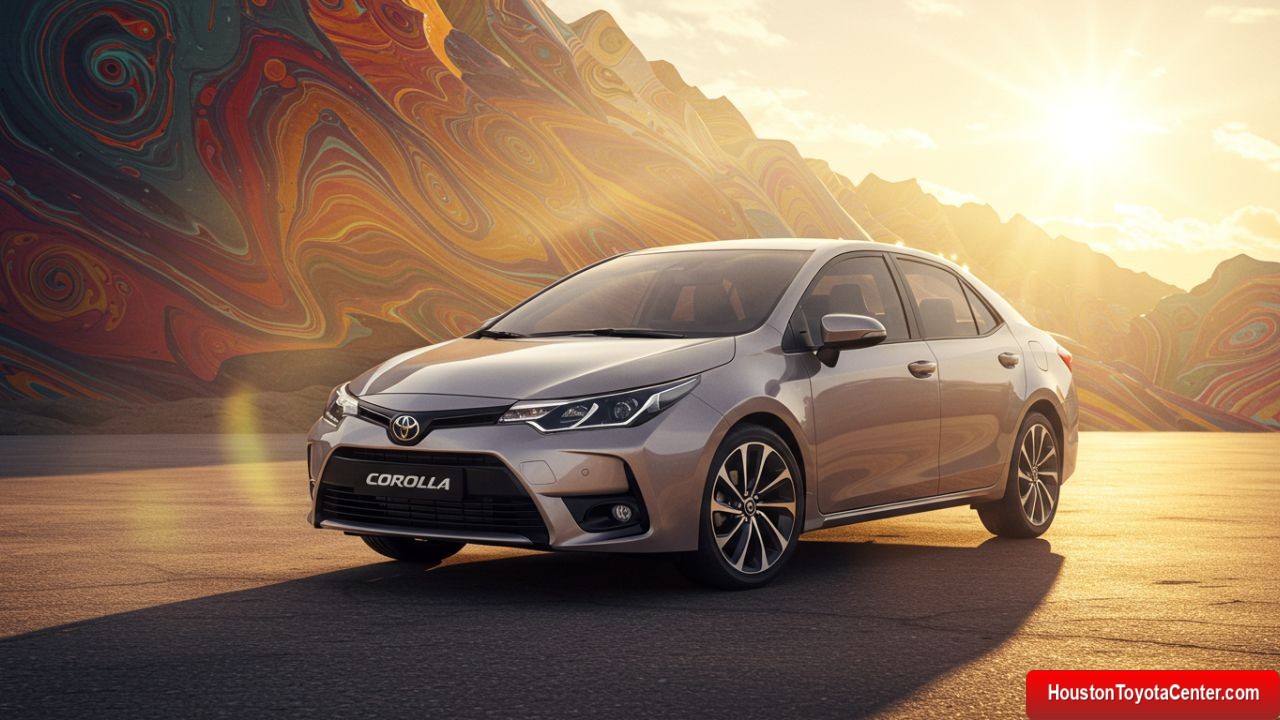
Few cars in automotive history have achieved the level of global recognition, consistency, and longevity as the Toyota Corolla. Since its introduction in 1966, the Corolla has become more than just a compact sedan. It has evolved into a global mobility solution, a benchmark for reliability, and a cornerstone of the identity of Toyota Motor Corporation.
While Toyota produces a wide range of successful vehicles, from rugged pickups to luxury sedans and hybrid pioneers, the Corolla holds a unique position. It is not the most expensive car Toyota makes, nor the fastest, nor the most technologically advanced in any single generation. Yet, it is arguably the most important. Its importance is not defined by glamour but by impact: sales volume, global reach, engineering philosophy, cultural presence, and long term influence on the automotive industry.
This article explores why the Corolla is Toyota’s most essential vehicle, examining its historical significance, engineering philosophy, market dominance, cultural influence, and future role in a rapidly changing automotive landscape.
The Origins of a Global Icon
When Toyota launched the Corolla in the mid 1960s, Japan’s automotive industry was still establishing itself on the global stage. The goal was simple but ambitious: create a small, affordable, and reliable car that could appeal not only to Japanese consumers but also to international markets.
FREE: Quickly identify and understand problems with your vehicle 🚘
CLICK HEREAt the time, many automakers were focused on either performance or luxury. Toyota took a different approach. The Corolla was designed to be practical above all else. It needed to start reliably, require minimal maintenance, and remain affordable to own over many years. These principles would become the foundation of Toyota’s global reputation.
The Corolla quickly became a success in export markets, particularly in North America, Southeast Asia, and parts of Europe. Its reputation for durability and efficiency made it a favorite among middle class families, small business owners, and fleet operators. Unlike niche vehicles that rise and fall with trends, the Corolla built its legacy through consistency.
Defining Toyota’s Philosophy of Reliability
To understand why the Corolla is so important, one must understand Toyota’s core engineering philosophy. Toyota is often associated with the concept of continuous improvement, known in Japanese as kaizen. This philosophy emphasizes incremental refinement over radical reinvention.
The Corolla became the purest expression of this philosophy. Each generation improved upon the previous one in subtle but meaningful ways. Engines became more efficient. Safety features improved. Build quality was refined. However, the core identity of the car remained unchanged.
This stability created trust. Buyers knew exactly what they were getting when they purchased a Corolla. It was not a gamble. It was a predictable and dependable investment. Over time, this predictability became one of Toyota’s most powerful assets in the global automotive market.
In many ways, the Corolla served as a rolling laboratory for Toyota. Lessons learned from mass production of the Corolla influenced other models across the lineup. Manufacturing techniques, quality control systems, and supply chain innovations often found their first large scale application in Corolla production lines.
The Corolla as a Global Best Seller
One of the most compelling reasons for the Corolla’s importance is its extraordinary sales record. Over multiple decades, it has consistently ranked among the best selling cars in the world. In some years, it has held the title of the world’s best selling passenger car outright.
This level of success is not accidental. It reflects a combination of affordability, global adaptability, and engineering discipline. The Corolla has been manufactured in numerous countries, allowing Toyota to tailor versions of the car to local markets while maintaining a consistent global identity.
In North America, it has served as a reliable entry level vehicle for new drivers and families. In Europe, it has competed in a highly competitive compact segment dominated by efficiency and practicality. In emerging markets, it has often represented a symbol of upward mobility and financial stability.
The scale of production also reinforces Toyota’s industrial strength. High volume manufacturing allows for economies of scale, reducing costs while maintaining quality. The Corolla is therefore not only a product but also a pillar of Toyota’s global business model.
Engineering Simplicity as a Strength
One of the most misunderstood aspects of the Corolla is its simplicity. In an era where automotive marketing often emphasizes performance, luxury features, and cutting edge technology, the Corolla remains grounded in practicality.
This simplicity is not a weakness. It is a deliberate engineering choice. By focusing on essential functions such as fuel efficiency, safety, durability, and ease of maintenance, Toyota ensures that the Corolla remains accessible to a wide range of consumers.
Many owners appreciate that the Corolla does not require specialized knowledge or expensive upkeep. Mechanics around the world are familiar with its systems, which makes repairs straightforward and affordable. This global serviceability is a key reason for its popularity in regions with varying levels of infrastructure.
Furthermore, simplicity enhances reliability. Fewer complex systems mean fewer points of failure. Over decades of refinement, Toyota has struck a balance between modern features and mechanical dependability.
Safety and Evolution Over Generations
While the Corolla began as a basic economy car, it has evolved significantly in terms of safety and technology. Modern versions include advanced driver assistance systems, improved crash structures, and enhanced visibility features.
This evolution demonstrates Toyota’s ability to adapt without losing identity. Each new generation incorporates lessons from global safety standards and real world data. The result is a vehicle that feels familiar yet progressively more advanced.
Safety has become one of the Corolla’s strongest selling points. For families, young drivers, and fleet operators, the Corolla offers peace of mind. It is not marketed as a luxury experience but as a secure and responsible choice.
The Corolla in Emerging Markets
The importance of the Corolla becomes even more evident when examining its role in emerging economies. In many countries, the Corolla is not just a car. It is a status symbol of reliability and economic achievement.
Its durability makes it particularly well suited for regions where road conditions may be challenging or where access to spare parts can be inconsistent. The Corolla’s reputation for longevity means it often remains in service for many years, sometimes even decades.
In these markets, the Corolla frequently serves as a taxi, rideshare vehicle, or small business transport. Its low operating cost and strong resale value make it a practical choice for income generating purposes.
This widespread utility reinforces Toyota’s global presence and strengthens the Corolla’s position as a backbone product in the company’s portfolio.
Cultural Impact and Symbolism
Beyond engineering and economics, the Corolla holds cultural significance. It represents reliability, modest success, and practical decision making. In many societies, owning a Corolla is associated with financial stability and responsibility rather than extravagance.
Unlike sports cars or luxury vehicles that aim to attract attention, the Corolla is designed to blend into everyday life. Yet this very quality has made it iconic. It is the car of commuters, parents, first time buyers, and professionals who prioritize function over image.
In popular culture, the Corolla often appears as the background vehicle of ordinary life. This understated presence has paradoxically made it one of the most recognizable cars in the world.
The Corolla’s Role in Toyota’s Business Strategy
From a corporate perspective, the Corolla plays a critical role in Toyota’s overall strategy. It acts as a high volume, stable revenue generator that supports research and development across the company.
The profits generated from Corolla sales help fund innovation in other areas, including hybrid technology, electric vehicles, and hydrogen research. In this sense, the Corolla is not just a product but a financial engine that enables experimentation elsewhere in the lineup.
It also serves as a global standardization platform. Toyota can test manufacturing improvements on the Corolla before scaling them across other models. This reduces risk and ensures consistent quality across the brand.
Competition and Market Pressure
Despite its dominance, the Corolla operates in one of the most competitive automotive segments. Compact sedans face constant pressure from rivals offering aggressive styling, advanced infotainment systems, and performance oriented variants.
However, the Corolla consistently maintains its position by focusing on long term value rather than short term excitement. While competitors may attract attention with bold redesigns or feature packed interiors, the Corolla appeals to practicality minded buyers.
This strategy has proven remarkably resilient. Even as consumer preferences shift toward SUVs and crossovers, the Corolla has adapted with variants such as hatchbacks and hybrid models, ensuring continued relevance.
Electrification and the Future of the Corolla
The global automotive industry is undergoing a major transformation toward electrification. Toyota has been cautious but strategic in this transition, emphasizing hybrid technology as a bridge between internal combustion engines and full electric vehicles.
The Corolla has played a key role in this transition. Hybrid versions of the model offer improved fuel efficiency and reduced emissions without sacrificing affordability or usability. This aligns perfectly with the Corolla’s historical mission: accessible mobility for the masses.
As regulations tighten and consumer expectations evolve, the Corolla is likely to continue adapting. Whether through expanded hybrid offerings or eventual full electrification, its core identity will remain centered on reliability and accessibility.
Why the Corolla Matters More Than Luxury Flagships
Automakers often highlight their flagship models as symbols of innovation and prestige. While these vehicles are important for brand image, they rarely define the core business of a company.
The Corolla is different. It represents volume, accessibility, and global relevance. It is the vehicle that most directly connects Toyota to everyday consumers around the world.
In many ways, the Corolla is Toyota’s true identity. It embodies the principles that made the company successful: consistency, quality, efficiency, and trust.
Conclusion
The Toyota Corolla is not the most glamorous car in Toyota’s lineup, but it is arguably the most important. It has defined the company’s reputation, supported its global expansion, and provided millions of people with affordable and reliable transportation.
Its significance goes beyond sales figures. The Corolla represents a philosophy of engineering that prioritizes long term value over short term excitement. It is a symbol of practical mobility that has remained relevant across decades of technological change.
For Toyota Motor Corporation, the Corolla is more than just a model. It is the foundation upon which global success has been built.
As the automotive industry continues to evolve, the Corolla’s role may change in form, but its importance is unlikely to diminish. It will remain a benchmark for reliability, a tool for everyday mobility, and a quiet but powerful force in shaping how the world drives.
Leave a Reply