
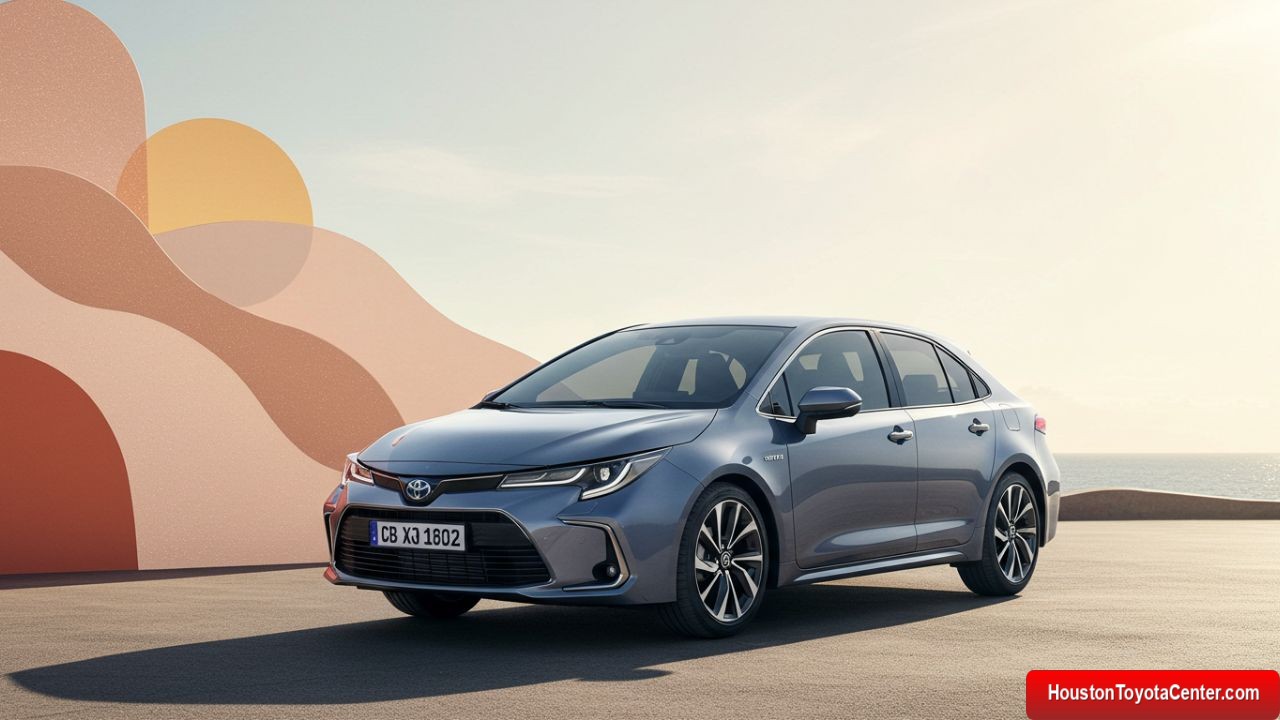
For decades, the automotive industry has been defined by a constant search for balance. Manufacturers have pursued greater performance, improved safety, enhanced comfort, and increased efficiency, often discovering that progress in one area came at the expense of another. Yet few innovations have reshaped the modern automobile as profoundly as hybrid technology. While many vehicles contributed to the evolution of hybrid powertrains, one model stands out for bringing the concept into the mainstream and transforming consumer perceptions around the world: the Toyota Corolla Hybrid.
The Corolla name has long represented practicality, affordability, reliability, and global appeal. Since its introduction in 1966, the Corolla has become one of the best-selling automobile nameplates in history. For generations of drivers, the Corolla symbolized dependable transportation rather than technological experimentation. That reputation made its eventual transition into hybrid technology particularly significant.
When Toyota introduced hybrid systems into the Corolla lineup, it achieved something that many industry experts had anticipated but few had successfully executed. Hybrid technology moved beyond early adopters and environmentally focused consumers into the hands of ordinary drivers seeking economical, dependable transportation. The Corolla Hybrid helped transform electrification from a niche interest into an everyday reality.
Understanding why the Corolla Hybrid became such an influential vehicle requires examining the history of hybrid technology, the evolution of consumer attitudes, Toyota’s engineering philosophy, and the broader automotive market. More importantly, it requires understanding how a familiar, trusted vehicle became a bridge between traditional internal combustion automobiles and the electrified future now emerging worldwide.
FREE: Quickly identify and understand problems with your vehicle 🚘
CLICK HEREThe Automotive Landscape Before Hybrid Mainstream Adoption
Before hybrids gained widespread acceptance, fuel efficiency was often associated with compromise. Consumers generally believed that economical vehicles lacked performance, refinement, or driving enjoyment. Manufacturers frequently designed fuel-efficient cars that prioritized economy at the expense of comfort and capability.
During the late twentieth century, increasing concerns about fuel consumption, urban pollution, and greenhouse gas emissions created pressure for innovation. Governments introduced stricter emissions regulations, while consumers became more conscious of operating costs.
Despite these trends, many drivers remained skeptical about alternative powertrains. Electric vehicles faced challenges related to battery capacity, charging infrastructure, and cost. Diesel engines offered efficiency but generated concerns regarding emissions and maintenance.
Hybrid technology emerged as a potential middle ground.
By combining an internal combustion engine with an electric motor and battery system, hybrid vehicles promised improved fuel economy without requiring charging stations or dramatic lifestyle changes. Yet early hybrid adoption remained limited because many consumers viewed the technology as unfamiliar and potentially unreliable.
The challenge facing manufacturers was not simply engineering an effective hybrid system. They needed to convince ordinary buyers that hybrid vehicles could be practical, affordable, and dependable over the long term.
Toyota’s Vision for Hybrid Technology
Toyota recognized an opportunity long before many competitors.
Rather than viewing hybrid systems as a temporary solution, Toyota considered them a foundational technology that could gradually prepare consumers for electrification. The company invested heavily in research and development throughout the 1990s, ultimately introducing one of the world’s first mass-produced hybrid vehicles.
Toyota’s hybrid strategy differed from many competitors in several key ways:
| Strategic Focus | Toyota’s Approach |
|---|---|
| Reliability | Prioritize durability equal to conventional vehicles |
| Accessibility | Make hybrids easy for average consumers to understand |
| Efficiency | Deliver measurable fuel savings |
| Scalability | Adapt the technology across multiple vehicle categories |
| Familiarity | Reduce lifestyle changes required by owners |
This philosophy helped establish consumer trust.
Rather than presenting hybrid technology as futuristic or experimental, Toyota integrated it into vehicles that emphasized practicality and everyday usability. This approach would eventually prove essential to the success of the Corolla Hybrid.
The Legacy of the Corolla Nameplate
Before discussing the hybrid version, it is important to understand the significance of the Corolla itself.
The Corolla earned a reputation over decades through consistent performance in areas that mattered most to average consumers:
- Reliability
- Low ownership costs
- Fuel efficiency
- Comfortable driving characteristics
- Strong resale value
- Global availability
Unlike sports cars or luxury vehicles, the Corolla appealed to a broad audience. Students, families, commuters, retirees, and fleet operators all embraced the model for different reasons.
This universal appeal created a unique opportunity.
When Toyota introduced hybrid technology into the Corolla, it was not asking consumers to adopt an unfamiliar vehicle. Instead, it was offering a familiar vehicle with improved efficiency and modern technology.
That distinction cannot be overstated.
Consumers who might hesitate to purchase a dedicated hybrid vehicle often felt comfortable purchasing a Corolla. The trust already established by the Corolla brand significantly lowered barriers to hybrid adoption.
How Hybrid Technology Works
To appreciate the Corolla Hybrid’s impact, it helps to understand the fundamentals of hybrid operation.
A hybrid vehicle combines several components:
- Internal combustion engine
- Electric motor
- Battery pack
- Power control system
- Regenerative braking system
These components work together to maximize efficiency.
During low-speed driving, the electric motor may power the vehicle independently. During acceleration, both the gasoline engine and electric motor can operate together. During cruising, the system continuously adjusts power delivery to optimize efficiency.
One of the most innovative aspects is regenerative braking.
Instead of wasting energy as heat during braking, the system captures and stores energy in the battery. This recovered energy can later assist propulsion, reducing fuel consumption.
The result is a vehicle capable of delivering impressive efficiency gains without requiring external charging.
For consumers, this means:
- No charging cables
- No charging stations
- No range anxiety
- Familiar driving experience
- Reduced fuel expenses
These advantages played a major role in the Corolla Hybrid’s success.
The Arrival of the Corolla Hybrid
When Toyota expanded hybrid technology into the Corolla lineup, the timing was significant.
Consumers increasingly wanted:
- Better fuel economy
- Lower operating costs
- Reduced environmental impact
- Proven reliability
However, many remained hesitant about fully electric vehicles.
The Corolla Hybrid addressed these concerns by offering a practical middle ground.
Drivers could enjoy many benefits associated with electrification while maintaining the convenience of conventional gasoline vehicles.
Importantly, Toyota avoided radically redesigning the Corolla to emphasize its hybrid identity.
Instead, the vehicle retained the characteristics that buyers already valued:
- Comfortable ride quality
- Practical interior space
- User-friendly controls
- Dependable performance
- Affordable ownership
This strategy helped normalize hybrid technology.
Rather than feeling like a technological experiment, the Corolla Hybrid felt like a Corolla that happened to be exceptionally efficient.
Fuel Efficiency as a Market-Changing Advantage
Fuel economy became one of the Corolla Hybrid’s strongest selling points.
While fuel prices fluctuate over time, consumers consistently appreciate lower operating costs. Even during periods of relatively inexpensive fuel, efficiency remains attractive because it directly affects ownership expenses.
The Corolla Hybrid demonstrated that significant efficiency improvements could be achieved without major sacrifices.
Typical Benefits Experienced by Owners
| Ownership Factor | Conventional Vehicle | Hybrid Advantage |
| Fuel Consumption | Higher | Lower |
| Urban Efficiency | Moderate | Excellent |
| Stop-and-Go Traffic | Less Efficient | More Efficient |
| Regenerative Energy Recovery | None | Yes |
| Environmental Impact | Higher Emissions | Reduced Emissions |
Urban drivers benefited particularly from hybrid technology.
Traffic congestion, frequent stops, and lower speeds create ideal conditions for electric motor assistance and regenerative braking. Many owners quickly noticed meaningful reductions in fuel consumption compared with traditional gasoline-powered vehicles.
These real-world savings helped generate positive word-of-mouth recommendations, accelerating hybrid acceptance.
Changing Public Perception
One of the Corolla Hybrid’s most important achievements was changing public perception.
Initially, many consumers associated hybrids with several concerns:
- High replacement costs
- Complex maintenance
- Limited performance
- Questionable durability
- Uncertain resale value
Over time, the Corolla Hybrid helped challenge these assumptions.
Owners discovered that hybrid systems could be remarkably dependable. Many vehicles accumulated substantial mileage while maintaining strong reliability records.
As confidence grew, skepticism declined.
The Corolla Hybrid became evidence that hybrid technology could function as a practical long-term ownership solution rather than a short-term experiment.
This shift in perception extended beyond Toyota.
As hybrid acceptance increased, consumers became more open to electrification generally, benefiting the entire automotive industry.
Reliability and Consumer Trust
Reliability has always been one of the Corolla’s defining strengths.
Toyota understood that introducing hybrid technology into the Corolla required maintaining that reputation.
Engineering teams focused extensively on durability testing and system integration. Components needed to withstand years of daily use under varying environmental conditions.
The result was a vehicle that consistently reinforced consumer confidence.
Many owners reported positive experiences involving:
- Minimal unexpected repairs
- Predictable maintenance costs
- Long battery life
- Consistent efficiency
- Strong long-term value
These outcomes were critical.
Had reliability suffered, hybrid adoption could have slowed significantly. Instead, positive ownership experiences encouraged more consumers to consider hybrid vehicles.
Trust became one of the most powerful drivers of market growth.
The Environmental Impact
Environmental considerations also contributed to the Corolla Hybrid’s importance.
Although hybrid vehicles are not emissions-free, they reduce fuel consumption and lower greenhouse gas emissions compared with many conventional alternatives.
The significance lies not only in individual vehicle performance but also in scale.
Because the Corolla is one of the world’s most popular vehicles, even modest efficiency improvements can produce substantial cumulative benefits when multiplied across millions of units.
Environmental advantages include:
- Reduced fuel consumption
- Lower carbon dioxide emissions
- Improved urban efficiency
- Reduced dependence on fossil fuels
- Support for broader sustainability goals
For many consumers, these benefits provided additional motivation to choose a hybrid.
Importantly, the Corolla Hybrid allowed environmentally conscious buyers to make a practical choice without dramatically changing their lifestyle.
Bridging the Gap Between Gasoline and Electric Vehicles
The automotive industry is undergoing one of the most significant transitions in its history.
As manufacturers pursue electrification, consumers face a range of options:
- Traditional gasoline vehicles
- Hybrid vehicles
- Plug-in hybrid vehicles
- Battery electric vehicles
The Corolla Hybrid occupies an important position within this spectrum.
It serves as a bridge.
Drivers unfamiliar with electrification can experience electric motor operation, regenerative braking, energy management systems, and enhanced efficiency without committing to a fully electric vehicle.
This transitional role has enormous value.
Many consumers gain confidence through hybrid ownership before considering more advanced forms of electrification.
In this sense, the Corolla Hybrid functions as both a product and an educational platform.
Affordability and Accessibility
A major factor behind the Corolla Hybrid’s influence is affordability.
Historically, advanced automotive technology often appeared first in expensive vehicles. New innovations typically required consumers to pay significant premiums.
Toyota worked to make hybrid technology accessible to mainstream buyers.
The Corolla’s established position within the affordable compact sedan segment helped support this goal.
Consumers could obtain hybrid benefits without entering luxury price ranges.
This accessibility expanded the potential customer base dramatically.
Instead of targeting only enthusiasts or environmentally focused buyers, the Corolla Hybrid appealed to:
- First-time vehicle owners
- Daily commuters
- Families
- Fleet operators
- Students
- Retirees
The broader the audience, the greater the impact on market trends.
Competition Responds
The success of hybrid models such as the Corolla Hybrid encouraged competitors to accelerate their own electrification strategies.
Automakers recognized that consumers increasingly valued:
- Fuel efficiency
- Lower emissions
- Reduced operating costs
- Advanced powertrain technology
As a result, hybrid offerings expanded throughout the industry.
Manufacturers introduced hybrid versions of:
- Sedans
- SUVs
- Crossovers
- Pickup trucks
- Luxury vehicles
Competition stimulated innovation.
Improved batteries, more efficient electric motors, advanced software systems, and enhanced manufacturing processes emerged as companies sought to remain competitive.
The Corolla Hybrid helped demonstrate that consumer demand existed on a large scale.
Global Influence
Few vehicles possess the Corolla’s global reach.
The model has been sold across numerous continents and markets, giving Toyota an extraordinary platform for introducing hybrid technology.
Different regions face different challenges:
| Region | Common Concern |
| Urban Centers | Congestion and emissions |
| Developing Markets | Fuel costs |
| Mature Markets | Sustainability goals |
| High-Density Cities | Efficiency and practicality |
| Suburban Areas | Operating expenses |
The Corolla Hybrid addressed many of these concerns simultaneously.
Its adaptability helped make hybrid technology relevant across diverse economic and geographic conditions.
As a result, its influence extended far beyond any single country.
The Role of Technology Integration
Another key to the Corolla Hybrid’s success was seamless integration.
Consumers generally prefer technology that simplifies life rather than complicates it.
Toyota designed hybrid systems that largely operated in the background.
Drivers did not need extensive technical knowledge.
The vehicle automatically managed:
- Engine operation
- Battery charging
- Energy recovery
- Power distribution
- Efficiency optimization
This simplicity reduced adoption barriers.
Rather than requiring behavioral changes, the Corolla Hybrid allowed drivers to enjoy benefits immediately.
The easier technology becomes to use, the more likely it is to achieve widespread acceptance.
Ownership Experience
The ownership experience often determines whether a technology succeeds commercially.
For many drivers, the Corolla Hybrid delivered positive outcomes in several areas:
Everyday Convenience
Owners appreciated not needing charging infrastructure while still benefiting from electrification.
Reduced Fuel Costs
Frequent drivers often experienced meaningful savings over time.
Comfortable Operation
The electric motor contributed to smooth acceleration and quiet low-speed driving.
Long-Term Confidence
Toyota’s reputation supported consumer trust in the technology.
Practicality
The vehicle maintained the utility expected from a compact sedan.
Collectively, these factors created a compelling ownership proposition.
Economic Significance
Hybrid adoption also carries broader economic implications.
Reduced fuel consumption can affect:
- Household transportation budgets
- National fuel demand
- Energy security strategies
- Corporate fleet expenses
When millions of drivers improve efficiency, the cumulative economic impact becomes substantial.
The Corolla Hybrid contributed to this effect by bringing hybrid technology into the mainstream market rather than limiting it to niche segments.
Its popularity demonstrated that environmental and economic interests could align.
Consumers saved money while reducing fuel usage.
Lessons for the Automotive Industry
The Corolla Hybrid offers several important lessons.
Familiarity Encourages Adoption
Consumers often embrace innovation more readily when it appears within a trusted product.
Reliability Matters
Technological breakthroughs succeed only when they prove dependable over time.
Simplicity Drives Acceptance
Complex systems must remain easy to use.
Affordability Expands Impact
Advanced technology reaches its full potential when accessible to ordinary buyers.
Trust Builds Markets
Strong brand reputations can accelerate adoption of new technologies.
These lessons continue influencing modern vehicle development.
The Future of Hybrid Technology
Although battery electric vehicles receive significant attention today, hybrids continue to play an important role.
In many markets, hybrids offer practical advantages:
- No charging requirements
- Proven infrastructure compatibility
- Strong efficiency gains
- Lower barriers to entry
As battery technology evolves, hybrid systems may continue serving as transitional solutions for millions of drivers worldwide.
The Corolla Hybrid remains relevant because it demonstrates how incremental progress can achieve meaningful results.
Not every automotive revolution arrives through dramatic disruption. Sometimes transformation occurs through gradual, practical improvement.
Why the Corolla Hybrid Became a Trendsetter
The phrase “started the hybrid trend” reflects more than sales success.
The Corolla Hybrid helped normalize a new way of thinking about transportation.
Instead of viewing efficiency as a compromise, consumers began seeing it as an advantage.
Instead of viewing electrification as intimidating, they began seeing it as practical.
Instead of viewing hybrid systems as experimental, they began seeing them as dependable.
These changes in perception represent one of the vehicle’s greatest achievements.
The Corolla Hybrid succeeded because it aligned technological innovation with everyday needs.
It did not ask consumers to change who they were or how they lived. It simply offered a better version of a vehicle they already trusted.
Conclusion
The Toyota Corolla Hybrid occupies a unique place in automotive history. While hybrid technology existed before its arrival, the Corolla’s widespread popularity gave electrification unprecedented visibility and accessibility. By combining proven reliability, affordability, practicality, and efficiency, the Corolla Hybrid introduced millions of drivers to the benefits of hybrid power.
Its influence extends beyond sales figures. The vehicle helped reshape consumer expectations, encouraged industry-wide innovation, supported environmental goals, and created a bridge between traditional gasoline vehicles and the electrified future. More importantly, it demonstrated that transformative technology does not need to be complicated or exclusive. Sometimes the most significant changes emerge when innovation is integrated into familiar, trusted products.
The Corolla Hybrid became more than a fuel-efficient sedan. It became a symbol of a broader shift in automotive thinking—a shift toward smarter energy use, practical sustainability, and accessible electrification. In doing so, it helped start a trend that continues to define the future of transportation.
Leave a Reply