
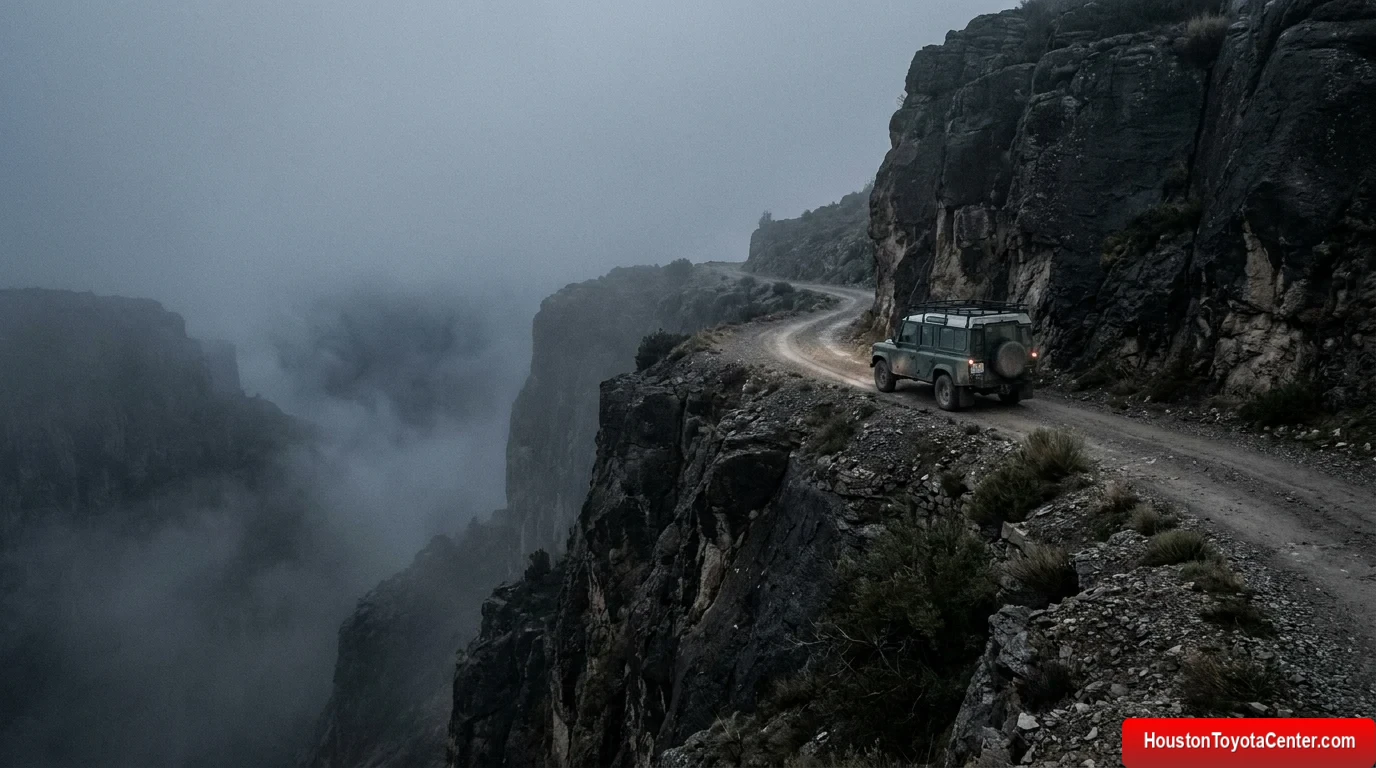
Every road tells a story. Some roads speak of progress, trade, and adventure. Others whisper warnings through avalanche signs, crumbling cliffs, hairpin turns, and weather-beaten guardrails. Around the world, there are roads so dangerous that merely driving them becomes an act of concentration bordering on survival. These routes are not dangerous because of speed alone. Their danger often comes from isolation, altitude, unpredictable weather, poor engineering, narrow lanes, unstable terrain, or the sheer impossibility of rescue when something goes wrong.
Yet despite the risk, people continue to drive these roads every day. Truckers transport food and fuel through mountain passes. Bus drivers carry families between remote villages. Miners, farmers, emergency workers, tourists, and adventurers all rely on these pathways. Some of the roads have become famous among overlanding enthusiasts and automotive journalists because they reveal a fundamental truth about transportation: the capability of a vehicle means little without the skill, patience, and courage of the person behind the wheel.
The vehicles that traverse these roads are often just as fascinating as the roads themselves. Rugged diesel trucks climb gradients that seem impossible. Compact utility vehicles squeeze through cliffside passages with inches to spare. Heavily modified four-wheel-drive machines survive mud, ice, rockfalls, and river crossings. In some places, decades-old buses continue operating against all logic, held together by ingenuity and necessity.
This article explores some of the world’s most dangerous roads and the remarkable cars, trucks, and utility vehicles that manage to survive them.
FREE: Quickly identify and understand problems with your vehicle 🚘
CLICK HEREWhy Certain Roads Become Extremely Dangerous
Dangerous roads are rarely dangerous for only one reason. Usually, multiple factors combine into a perfect storm of risk.
Geography
Mountain regions produce many of the world’s deadliest roads because mountains create steep slopes, unstable surfaces, and limited space for construction. Engineers may be forced to carve roads directly into cliffs or squeeze them alongside ravines. In many regions, the geology itself remains unstable due to erosion, earthquakes, or seasonal rain.
Weather
A safe road can become deadly within minutes when weather changes suddenly. Snowstorms reduce visibility and eliminate traction. Monsoon rains trigger landslides. Fog hides cliffs and approaching vehicles. Black ice transforms narrow roads into sliding surfaces.
Infrastructure Limitations
Some dangerous roads exist in economically challenged regions where maintaining modern infrastructure is difficult. Guardrails may be missing. Pavement may deteriorate. Bridges may remain decades beyond their intended lifespan.
Traffic Pressure
Certain roads carry far more traffic than they were designed to handle. Large commercial trucks share tiny roads with motorcycles, pedestrians, animals, and buses.
Human Behavior
Fatigue, speeding, poor maintenance, overloaded vehicles, and reckless overtaking turn already dangerous roads into catastrophe zones.
The most dangerous roads in the world are therefore not merely engineering problems. They are intersections of geography, economics, climate, and human necessity.
North Yungas Road, Bolivia
Often referred to as the “Death Road,” Bolivia’s North Yungas Road has become legendary among travelers and drivers alike. Connecting La Paz to the Yungas region, the route descends from high-altitude Andean terrain into humid rainforest.
The road became infamous long before adventure tourism discovered it. For decades, buses and trucks navigated narrow gravel lanes perched beside vertical drops exceeding 600 meters. In some sections, there was barely enough room for one vehicle.
What Makes It Dangerous
- Extreme cliffs with minimal protection
- Frequent fog reducing visibility
- Heavy rainfall causing mudslides
- Narrow passages requiring precision driving
- Loose gravel surfaces
- Waterfalls crossing the roadway
Drivers often had to reverse toward cliff edges to allow larger vehicles to pass. Before the construction of a safer alternative route, hundreds of fatalities reportedly occurred annually.
The Vehicles That Survive It
Historically, old diesel buses and cargo trucks dominated the road. These vehicles were rarely ideal for such conditions, but necessity outweighed comfort or safety.
Toyota Land Cruiser
One vehicle became almost synonymous with dangerous mountain transport worldwide: the Toyota Land Cruiser.
The Land Cruiser earned its reputation through reliability rather than luxury. On roads like North Yungas, durability matters more than speed. The vehicle’s body-on-frame construction, strong low-range gearing, and dependable diesel engines allow it to handle steep descents and slippery terrain.
Drivers value:
- Exceptional suspension articulation
- Mechanical simplicity
- Strong braking durability
- Reliability in remote regions
- Ability to carry heavy loads
In remote Bolivian regions, a broken vehicle can become a life-threatening problem. The Land Cruiser survives because it can endure abuse for decades.
Mitsubishi Pajero
The Mitsubishi Pajero also became common on dangerous South American routes. Smaller and lighter than many trucks, it offers maneuverability on narrow mountain roads.
The Pajero’s Super Select four-wheel-drive system gave drivers flexibility in changing conditions, especially during rain and mud.
Psychological Pressure on Drivers
What makes North Yungas especially terrifying is psychological exposure. Drivers remain constantly aware of the cliffs. There are few moments of mental relief. Even experienced drivers describe the route as exhausting.
Professional drivers often develop rituals:
- Constant horn usage before blind corners
- Precise wheel positioning habits
- Communication systems between vehicles
- Strict downhill-right-of-way traditions
On dangerous roads, culture itself evolves around survival.
James Dalton Highway, Alaska
The Dalton Highway stretches through Alaska’s wilderness toward the Arctic oil fields. Popularized by television and trucking documentaries, the road presents dangers very different from cliffside mountain roads.
Isolation is the Dalton Highway’s defining threat.
What Makes It Dangerous
- Extreme cold
- Long distances without services
- Ice-covered surfaces
- Heavy industrial trucking traffic
- Wildlife encounters
- Gravel-induced windshield damage
- Mechanical vulnerability in freezing conditions
Temperatures can fall to lethal levels. A vehicle breakdown may quickly become a survival emergency.
The Trucks of the Arctic
The Dalton Highway is dominated by heavy-duty trucks engineered for brutal conditions.
Kenworth W900
The Kenworth W900 remains iconic among Arctic truckers.
Its long-nose design accommodates massive diesel engines capable of hauling heavy equipment through frozen terrain. Truckers appreciate its rugged construction and serviceability.
Key features include:
| Feature | Importance on Arctic Roads |
|---|---|
| Powerful diesel engine | Maintains torque in snow and steep grades |
| Reinforced chassis | Handles rough gravel roads |
| Large fuel capacity | Essential for remote stretches |
| Engine braking systems | Critical for icy descents |
| Auxiliary lighting | Improves visibility in darkness |
Peterbilt 389
Another favorite among Arctic drivers, the Peterbilt 389 combines power with durability. Many operators modify these trucks specifically for extreme northern climates.
Common modifications include:
- Heated fuel systems
- Insulated engine compartments
- Specialized winter tires
- Reinforced suspension
- Emergency survival equipment storage
Tire Technology and Survival
One overlooked aspect of dangerous-road driving is tire management.
On the Dalton Highway, tire failure is frequent due to sharp gravel and temperature fluctuations. Truck drivers often carry multiple spares and know how to repair damage quickly.
A simple puncture in extreme cold can escalate into a deadly situation.
The Human Factor
Arctic trucking demands emotional discipline. Drivers face:
- Monotony
- Sleep disruption
- Continuous vibration
- Isolation
- Constant weather uncertainty
The road punishes overconfidence immediately.
Guoliang Tunnel Road, China
The Guoliang Tunnel Road appears almost unreal. Carved directly through mountain rock by villagers in China’s Henan province, the tunnel transformed an isolated settlement into a connected community.
The road itself is narrow, twisting, and visually dramatic.
What Makes It Dangerous
- Limited tunnel width
- Sharp turns
- Cliffside exposure
- Falling rocks
- Limited visibility
- High tourist traffic
The tunnel includes side openings carved into the rock face, creating spectacular windows overlooking steep cliffs.
Vehicles Commonly Seen There
Wuling Vans
Small utility vans dominate many Chinese mountain regions because of their practicality.
Wuling vehicles are not glamorous, but they excel in:
- Tight maneuvering
- Fuel efficiency
- Cargo flexibility
- Simplicity of repair
On dangerous roads, smaller dimensions can be more valuable than raw power.
Toyota Hilux
The Toyota Hilux is another global icon of endurance. Known for surviving extreme abuse, it frequently appears in remote and hazardous environments.
Its appeal comes from:
- Durable suspension
- High ground clearance
- Excellent load capacity
- Mechanical resilience
The Hilux has become a symbol of practical toughness worldwide.
Engineering Through Necessity
Guoliang Tunnel represents a recurring theme among dangerous roads: necessity drives innovation.
The villagers who carved the tunnel did not create a tourist attraction. They created access to survival, trade, medicine, and communication.
Many dangerous roads around the world exist because geography leaves few alternatives.
Skippers Canyon Road, New Zealand
Skippers Canyon Road in New Zealand is both breathtaking and intimidating. Originally developed during the gold rush era, the narrow gravel road winds along steep canyon walls.
Rental car companies often prohibit drivers from taking vehicles there.
What Makes It Dangerous
- Extremely narrow passages
- Sheer drops
- Loose gravel
- Minimal guardrails
- Frequent tourist inexperience
- Tight switchbacks
The road was never designed for modern traffic volumes.
Vehicles Built for Precision
Subaru Outback
New Zealand drivers frequently rely on practical all-wheel-drive wagons such as the Subaru Outback.
The Outback thrives in mixed terrain thanks to:
- Symmetrical all-wheel drive
- Stable low center of gravity
- Comfortable suspension
- Good visibility
- Reliable traction systems
Unlike oversized off-road trucks, the Outback balances maneuverability with capability.
Land Rover Defender
The Land Rover Defender remains legendary in remote environments.
Its strengths include:
- Strong off-road geometry
- Excellent approach and departure angles
- Durable drivetrains
- High water-fording ability
On roads like Skippers Canyon, the Defender’s compact wheel placement and visibility help drivers navigate narrow edges.
Fear and Overcorrection
One of the greatest dangers on cliff roads is overcorrection.
Drivers who panic near drop-offs may:
- Brake too aggressively
- Turn too sharply
- Freeze psychologically
- Drift toward danger instead of away from it
Experienced off-road instructors often emphasize calm steering inputs and slow, deliberate movements.
The Karakoram Highway, Pakistan and China
The Karakoram Highway is frequently called one of the highest paved international roads in the world. Stretching through the Himalayas and Karakoram mountain ranges, it connects Pakistan and China through extraordinary terrain.
It is also vulnerable to natural disasters on a massive scale.
What Makes It Dangerous
- Landslides
- Avalanches
- Earthquakes
- Altitude sickness
- Rockfalls
- Sudden flooding
- Glacier activity
The road crosses regions where mountains themselves remain geologically active.
High-Altitude Workhorses
Toyota Prado
The Toyota Prado has become popular in mountainous regions because it combines comfort with durability.
Drivers appreciate:
- Reliable diesel engines
- Strong cooling systems
- Long-distance comfort
- Four-wheel-drive reliability
High-altitude driving places unique stress on engines because thinner air reduces performance.
Hino Trucks
Commercial transport across the Karakoram often relies on colorful Hino trucks decorated in traditional Pakistani trucking art.
These trucks are more than transportation tools. They are cultural symbols.
Drivers navigate terrifying roads while hauling essential goods through mountain communities.
The Impact of Altitude on Vehicles
Altitude affects:
- Engine power
- Cooling efficiency
- Brake performance
- Human reaction time
- Tire pressure behavior
Turbocharged diesel engines often perform better than naturally aspirated engines at elevation because forced induction compensates for thinner air.
Human Endurance
Drivers on the Karakoram Highway face physical exhaustion.
Altitude may cause:
- Headaches
- Dizziness
- Slower concentration
- Fatigue
Yet truckers continue these journeys because communities depend on the road.
Zoji La Pass, India
The Zoji La Pass connects regions of India through dangerous Himalayan terrain. Snow, mud, narrow lanes, and military logistics combine to create one of the world’s most difficult seasonal routes.
What Makes It Dangerous
- Heavy snow accumulation
- Muddy surfaces
- Narrow mountain ledges
- Frequent closures
- Steep gradients
- Dense fog
The road can change character within hours.
The Vehicles of Himalayan Transport
Mahindra Scorpio
The Mahindra Scorpio is widely respected in India for rough-terrain capability.
Its advantages include:
- Rugged suspension
- Affordable maintenance
- Strong diesel torque
- Simplicity in remote areas
Vehicles operating in dangerous mountain regions must be repairable far from advanced service centers.
Tata Trucks
Tata commercial trucks are essential to logistics across India.
These trucks transport:
- Food supplies
- Fuel
- Construction materials
- Military equipment
On roads like Zoji La, reliability becomes a national infrastructure issue.
Driving During Seasonal Openings
Many mountain roads operate seasonally. When roads reopen after winter, traffic surges immediately.
Drivers face:
- Melting ice
- Unstable mud
- Avalanche debris
- Temporary road surfaces
Road crews often work under dangerous conditions themselves.
The Road of Bones, Russia
The Kolyma Highway, often called the “Road of Bones,” cuts through some of the harshest terrain on Earth in eastern Russia.
Built during the Soviet era under brutal conditions, the road remains infamous for cold, isolation, and historical tragedy.
What Makes It Dangerous
- Extreme subzero temperatures
- Vast isolation
- Limited rescue infrastructure
- Seasonal ice roads
- Mechanical failure risks
- Fuel accessibility challenges
The Siberian Machines
Kamaz Trucks
Kamaz trucks are built for punishing conditions.
In Siberia, these vehicles survive because of:
- Rugged simplicity
- Cold-weather engineering
- Strong drivetrain durability
- Ease of field repairs
Drivers often carry extensive survival equipment because rescue may take days.
UAZ Hunter
The UAZ Hunter reflects Soviet-era utilitarian engineering.
It prioritizes:
- Mechanical simplicity
- Off-road traction
- Ease of repair
- Function over comfort
The vehicle remains common in remote Russian regions because sophisticated electronics can become liabilities in extreme cold.
Cold as a Mechanical Enemy
Extreme cold affects every system in a vehicle.
Problems include:
- Thickened fluids
- Frozen fuel lines
- Battery weakness
- Brittle materials
- Tire hardening
Drivers may leave engines running for extended periods simply to prevent freezing.
The Atlantic Ocean Road, Norway
Not all dangerous roads are dangerous because of cliffs or poor construction. Norway’s Atlantic Ocean Road is a masterpiece of engineering, yet severe weather can make it terrifying.
The route crosses islands through a series of bridges exposed directly to North Atlantic storms.
What Makes It Dangerous
- Violent ocean winds
- Heavy rain
- Sea spray reducing visibility
- Winter icing
- Sudden storms
Videos of waves crashing over the roadway have made the route globally famous.
Scandinavian Vehicle Preferences
Volvo XC70
Volvo’s reputation for safety becomes especially relevant on roads like this.
The XC70 gained popularity because of:
- Excellent stability systems
- Advanced safety engineering
- All-wheel-drive confidence
- Comfortable winter driving dynamics
Audi Quattro Models
Audi’s Quattro all-wheel-drive systems perform well in wet and icy conditions.
Scandinavian drivers value:
- Predictable traction
- Stability in crosswinds
- Strong lighting systems
- Heated components
Weather as an Equalizer
Even modern roads become dangerous when weather overwhelms infrastructure.
The Atlantic Ocean Road demonstrates that danger is not limited to developing regions. Nature remains more powerful than engineering.
The Stelvio Pass, Italy
The Stelvio Pass is famous for its dramatic hairpin turns and breathtaking alpine scenery. Automotive journalists frequently rank it among the greatest driving roads in the world.
It is also extremely unforgiving.
What Makes It Dangerous
- Dozens of hairpin turns
- Narrow mountain lanes
- Tourist congestion
- Cyclist interactions
- Snow and ice risks
- Rapid elevation changes
Cars Built for Mountain Precision
Porsche 911 Carrera 4
The all-wheel-drive Porsche 911 variants perform exceptionally well in mountain driving.
Their strengths include:
- Precise steering
- Strong braking systems
- Balanced weight distribution
- High-performance traction
However, sports cars on dangerous roads require discipline. Overconfidence becomes dangerous quickly.
BMW X5
Luxury SUVs like the BMW X5 combine:
- Stability control systems
- Strong climbing power
- Comfortable long-distance capability
- Advanced driver assistance technologies
Modern electronics help reduce driver error, though they cannot eliminate risk entirely.
The Illusion of Safety
Well-paved roads can create false confidence.
Drivers often underestimate:
- Brake fade on descents
- Blind corners
- Changing weather
- Tourist unpredictability
On roads like Stelvio, skill matters more than horsepower.
The Common Traits of Vehicles That Conquer Dangerous Roads
Despite enormous regional differences, the vehicles most trusted on dangerous roads often share similar characteristics.
Reliability Over Luxury
Drivers in remote areas consistently prioritize reliability.
A vehicle with:
- Simple mechanical systems
- Easy repairability
- Durable suspension
- Proven drivetrains
is often preferred over technologically advanced alternatives.
Diesel Engines
Diesel engines remain common because they provide:
- Strong low-end torque
- Fuel efficiency
- Longevity
- Better hauling capability
This is especially important in mountainous terrain.
Ground Clearance
High ground clearance protects vehicles from:
- Rocks
- Floodwater
- Deep snow
- Uneven surfaces
Tire Quality
Tires determine whether traction exists at all.
Professional drivers invest heavily in:
- Snow tires
- Mud-terrain tires
- Reinforced sidewalls
- Correct tire pressure management
Driver Visibility
Vehicles with excellent visibility provide psychological and practical advantages on narrow roads.
Four-Wheel Drive
Four-wheel-drive systems improve:
- Climbing ability
- Descending control
- Stability on loose surfaces
- Confidence in unpredictable terrain
However, experienced drivers frequently repeat an important truth:
“Four-wheel drive helps you go. It does not guarantee you can stop.”
The Psychology of Driving Dangerous Roads
Dangerous-road driving is not merely technical. It is deeply psychological.
Tunnel Vision
Fear can narrow a driver’s focus too much.
Drivers may stare directly at:
- Cliffs
- Obstacles
- Oncoming traffic
which increases the chance of steering toward danger.
Fatigue
Long periods of concentration exhaust the human brain.
Professional drivers often develop routines involving:
- Controlled breathing
- Predictable pacing
- Scheduled stops
- Communication systems
Respect Versus Fear
The safest drivers are rarely fearless.
Instead, they maintain respect for conditions while remaining calm enough to make rational decisions.
Overconfidence causes countless accidents.
Technology and the Future of Dangerous Roads
Modern technology is changing how dangerous roads are navigated.
GPS and Satellite Communication
Drivers in remote regions now use:
- Satellite messengers
- GPS mapping
- Real-time weather updates
- Emergency beacons
These tools dramatically improve survival chances.
Advanced Driver Assistance Systems
Modern vehicles increasingly include:
- Hill descent control
- Traction management
- Collision warnings
- Stability systems
- Adaptive braking
These technologies reduce certain types of accidents.
Drones and Road Monitoring
Governments and infrastructure agencies now deploy drones to monitor:
- Landslides
- Snow accumulation
- Bridge conditions
- Traffic blockages
Electrification Challenges
Electric vehicles face unique difficulties on dangerous roads.
Challenges include:
| Challenge | Why It Matters |
| Charging infrastructure | Remote regions may lack chargers |
| Cold-weather battery performance | Reduced range in freezing temperatures |
| Repair complexity | Limited service access |
| Weight | Heavier vehicles affect traction and braking |
However, electric torque delivery can be advantageous in steep terrain.
Future overlanding electric vehicles may transform remote mobility.
Why People Continue to Drive These Roads
From a distance, it may seem irrational that anyone would willingly drive roads known for fatalities and extreme danger.
But for millions of people, these roads are not thrill-seeking destinations.
They are:
- Supply lines
- Economic lifelines
- School routes
- Emergency access corridors
- Family connections
- Cultural pathways
A truck driver in the Himalayas may transport food that entire villages depend upon. A rural bus operator in Bolivia may connect isolated communities to hospitals.
Dangerous roads exist because humans continue pushing into difficult environments.
The Romance and Reality of Dangerous Driving
Automotive culture often romanticizes dangerous roads.
Photographs of winding mountain passes and rugged off-road vehicles create images of freedom and adventure. While there is truth in that spirit, reality remains harsher.
Many drivers navigating these roads are not adventurers.
They are workers.
Their skills emerge not from recreation but necessity.
The truckers of Siberia, the bus drivers of Bolivia, the supply operators of the Himalayas, and the Arctic haulers of Alaska all represent forms of professional endurance.
The vehicles themselves become tools of survival.
A reliable truck can mean:
- Continued income
- Access to medicine
- Food delivery
- Community stability
In this context, automotive durability becomes profoundly human.
The Most Important Safety Lessons From the World’s Dangerous Roads
Whether driving an alpine pass or a rural gravel route, the world’s most dangerous roads reveal universal lessons.
Preparation Matters More Than Confidence
The best drivers prepare carefully.
They inspect:
- Tires
- Brakes
- Weather forecasts
- Fuel levels
- Recovery equipment
Speed Is Rarely the Solution
On dangerous roads, slow and controlled driving usually wins.
Mechanical Sympathy Matters
Drivers who understand their vehicles tend to survive difficult environments more consistently.
Knowing how brakes heat up, how traction changes, or how weight shifts during descents can prevent catastrophe.
Local Knowledge Is Invaluable
Locals often understand:
- Seasonal hazards
- Dangerous corners
- Weather patterns
- Safe passing zones
Ignoring local advice is a common mistake among inexperienced travelers.
Nature Always Has the Final Word
No vehicle, regardless of technology, fully conquers nature.
Avalanches, floods, landslides, and storms continue reminding humanity that infrastructure remains vulnerable.
Conclusion
The world’s most dangerous roads are more than dramatic travel stories. They are living examples of the relationship between humans, machines, and hostile geography.
Every dangerous road reflects a struggle against natural barriers. Mountains, oceans, deserts, ice fields, and remote wilderness challenge engineers and drivers alike.
The vehicles that survive these environments are rarely chosen for fashion. They are selected because they earn trust over years of hardship. The Toyota Land Cruiser, Kamaz truck, Subaru Outback, Tata lorry, Volvo wagon, and Arctic semi-truck all represent different solutions to the same problem: how to keep moving when the environment resists movement itself.
These roads also reveal something deeply human. People continue crossing dangerous terrain because life demands connection. Communities require supplies. Families require transportation. Economies require trade.
Behind every dangerous road is not just danger, but necessity.
And behind every vehicle that traverses these roads is a driver balancing skill, patience, courage, and respect for forces far greater than themselves.
Leave a Reply