
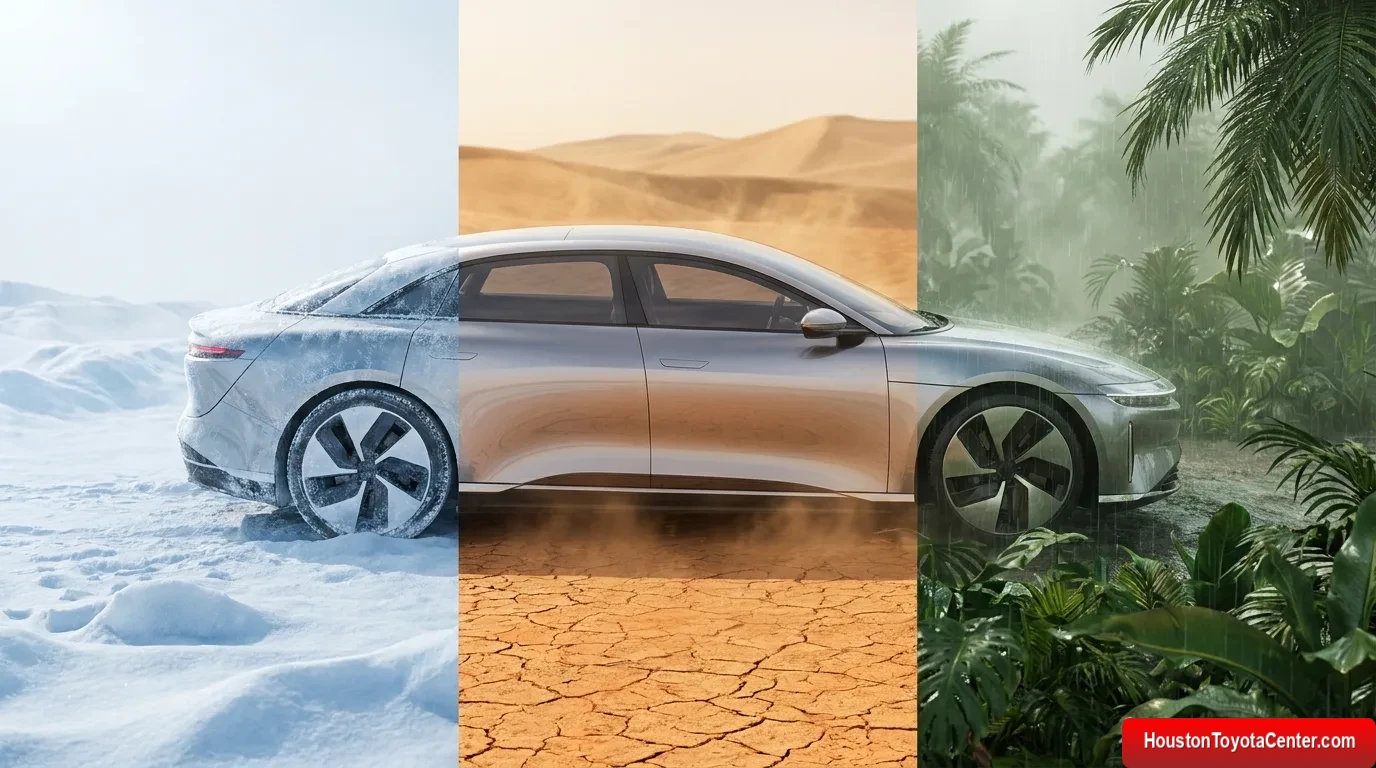
Climate has always shaped transportation. From the earliest wooden carts built for muddy roads to modern electric vehicles engineered for global markets, environmental conditions influence how vehicles are designed, tested, manufactured, and marketed. Yet as climate extremes become more intense and geographically widespread, automotive engineering faces an increasingly complex challenge: designing cars that can survive and perform reliably in radically different environments.
A vehicle that performs flawlessly in northern Norway may fail rapidly in the deserts of Saudi Arabia or the humid tropics of Southeast Asia. Arctic cold thickens fluids, weakens batteries, freezes components, and changes the behavior of metals and plastics. Desert heat accelerates wear, damages electronics, strains cooling systems, and degrades interiors. Tropical climates introduce relentless humidity, flooding, biological contamination, and corrosion.
Automakers cannot simply create one universal vehicle and expect it to perform identically everywhere. Instead, engineers adapt nearly every aspect of automotive design to environmental realities. The result is a fascinating intersection of climate science, materials engineering, aerodynamics, thermal management, electronics, ergonomics, software, and consumer behavior.
FREE: Quickly identify and understand problems with your vehicle 🚘
CLICK HEREToday, climate-specific engineering affects everything from battery chemistry and paint coatings to seat ventilation and windshield wiper systems. Electric vehicles add even greater complexity because batteries are particularly sensitive to temperature extremes. Autonomous driving systems introduce additional vulnerabilities since cameras, sensors, and radar systems must remain functional in snowstorms, dust storms, tropical rain, and freezing fog.
As global temperatures rise and weather patterns become less predictable, climate resilience is no longer a niche consideration. It is becoming central to automotive innovation.
The Relationship Between Climate and Automotive Engineering
Cars are intricate systems composed of thousands of interacting parts. Each material and component behaves differently depending on environmental conditions.
Rubber hardens in freezing temperatures and softens in extreme heat. Metals expand and contract. Electronics generate more heat under stress. Moisture creates corrosion pathways. Air density changes aerodynamic performance. Tire grip varies depending on surface temperature. Fuel efficiency changes dramatically depending on climate.
Automotive engineers therefore analyze regional climate conditions during the design process.
Some of the most important climate variables include:
| Climate Factor | Automotive Impact |
|---|---|
| Extreme cold | Battery efficiency loss, frozen fluids, brittle materials |
| Extreme heat | Engine overheating, interior degradation, thermal stress |
| Humidity | Corrosion, mold, electrical faults |
| Snow and ice | Reduced traction, sensor blockage, visibility challenges |
| Sand and dust | Air intake contamination, abrasion, cooling reduction |
| Heavy rain | Hydroplaning, flooding risk, electrical damage |
| UV exposure | Paint fading, dashboard cracking, material degradation |
| Altitude | Reduced engine oxygen intake, cooling efficiency changes |
Modern automakers operate global testing facilities where vehicles are exposed to simulated or natural environmental extremes.
Manufacturers frequently test cars in:
- Arctic Scandinavia
- Northern Canada
- Alaska
- The Sahara Desert
- Arizona deserts
- Middle Eastern environments
- Tropical regions in Southeast Asia
- High-altitude mountain ranges
These tests reveal failures that might never appear under standard laboratory conditions.
A vehicle intended for global sales may undergo millions of kilometers of testing across multiple continents before production begins.
Arctic Environments and Vehicle Engineering
Arctic and sub-Arctic regions represent some of the harshest conditions for automotive systems.
Temperatures can fall below -40°C, snow accumulation may reach several meters, roads become icy for months, and sunlight may disappear for extended periods during winter.
In such conditions, seemingly simple automotive functions become engineering challenges.
Cold Starts and Engine Reliability
One of the most difficult problems in Arctic climates is starting an engine after prolonged exposure to extreme cold.
At low temperatures:
- Engine oil thickens
- Fuel vaporization decreases
- Batteries lose output capacity
- Rubber seals become rigid
- Metal contraction alters tolerances
Internal combustion engines rely on precise lubrication during startup. Thickened oil circulates slowly, increasing wear and startup resistance.
To address this issue, manufacturers use:
- Low-viscosity synthetic oils
- Engine block heaters
- Oil pan heaters
- Glow plugs for diesel engines
- Enhanced starter motors
- Cold-resistant seals and gaskets
In many Arctic communities, drivers plug their vehicles into electrical outlets overnight so engine heaters maintain workable temperatures.
Without these systems, engine wear rises dramatically.
Battery Challenges in Cold Weather
Cold temperatures severely reduce battery efficiency.
This is particularly problematic for electric vehicles.
Lithium-ion batteries depend on chemical reactions that slow dramatically in freezing environments. As temperature falls:
- Charging speed decreases
- Energy output drops
- Regenerative braking becomes limited
- Range declines
- Internal resistance increases
An electric vehicle that delivers 500 kilometers of range in mild weather may lose 30% to 50% of its range in severe Arctic conditions.
To solve this, EV manufacturers implement advanced thermal management systems.
These systems may include:
| EV Cold-Climate Solution | Purpose |
| Battery preconditioning | Warms battery before charging or driving |
| Heat pumps | Improve cabin efficiency in cold climates |
| Liquid thermal loops | Maintain stable battery temperature |
| Insulated battery enclosures | Reduce heat loss |
| Intelligent charging software | Prevent battery damage in freezing conditions |
Some electric vehicles automatically warm batteries before arriving at charging stations to improve charging speed.
Tesla, Hyundai, Rivian, BMW, and other manufacturers increasingly optimize software for cold-weather battery management.
Traction and Tire Engineering
Snow and ice dramatically reduce traction.
Vehicle stability systems therefore become essential in Arctic driving.
Modern cars designed for cold climates incorporate:
- Sophisticated traction control systems
- Anti-lock braking systems
- Electronic stability control
- Torque vectoring
- All-wheel drive systems
Tires are especially important.
Winter tires use specialized rubber compounds that remain flexible in low temperatures.
They also include:
- Deeper tread patterns
- Siping structures for ice grip
- Snow evacuation channels
- Studded designs in some regions
The difference between summer and winter tires in Arctic conditions can be enormous.
A summer tire may become dangerously rigid below freezing.
Visibility in Snow and Ice
Maintaining visibility is another major challenge.
Arctic engineering often includes:
- Heated windshields
- Heated mirrors
- Heated washer nozzles
- Powerful defrosters
- Headlight washers
- Heated wiper blades
- Snow-resistant sensor placement
Autonomous driving systems face additional complications.
Cameras and LiDAR systems can become obstructed by:
- Snow accumulation
- Ice formation
- Frost
- Slush
- Condensation
As a result, climate-resistant sensor design is becoming a major field within autonomous vehicle development.
Material Performance in Extreme Cold
Cold weather changes the physical properties of materials.
Plastics may crack.
Rubber may lose elasticity.
Metals become more brittle.
Engineers therefore select materials carefully for Arctic durability.
For example:
- Flexible polymer blends are used in bumpers
- Silicone-based seals resist freezing
- Specialized lubricants retain performance at low temperatures
- Cold-resistant wiring insulation prevents cracking
Even interior materials are affected.
Seat foam hardness changes in freezing weather, influencing comfort.
Touchscreens may respond more slowly.
LCD displays can lag or darken.
Manufacturers increasingly use climate-tested electronics to improve reliability.
Cabin Comfort and Human Factors
In Arctic regions, heating performance becomes a critical selling point.
Drivers expect:
- Fast cabin warm-up
- Heated seats
- Heated steering wheels
- Rear passenger heating
- Efficient insulation
Electric vehicles face a unique challenge because cabin heating consumes battery energy.
Traditional combustion vehicles can use waste engine heat for cabin warming.
EVs must generate heat using battery power.
This problem has accelerated adoption of heat pump systems that significantly improve cold-weather efficiency.
Some premium vehicles also use:
- Multi-zone climate control
- Infrared cabin heating
- Heated armrests
- Heated door panels
Climate comfort increasingly influences customer satisfaction ratings in northern markets.
Desert Climates and Automotive Survival
If Arctic environments threaten vehicles with freezing conditions, deserts attack them with relentless heat, ultraviolet radiation, dust, and sand.
In regions where ambient temperatures exceed 50°C, thermal management becomes the dominant engineering concern.
Engine Cooling Systems
Extreme heat places enormous strain on combustion engines.
Higher temperatures reduce cooling efficiency while simultaneously increasing thermal load.
Desert-ready vehicles often feature:
- Larger radiators
- Enhanced coolant circulation
- High-capacity fans
- Additional oil coolers
- Improved airflow management
- Heat-resistant hoses
Turbocharged engines require special attention because turbochargers generate intense heat.
Without adequate cooling, engines may suffer:
- Knock
- Pre-ignition
- Reduced performance
- Lubrication breakdown
- Premature wear
Manufacturers frequently recalibrate engines for hot-weather markets.
This may include altered ignition timing and cooling strategies.
Air Filtration and Dust Protection
Sand and dust are among the most destructive environmental contaminants for vehicles.
Fine particles infiltrate:
- Engines
- Air conditioning systems
- Electronics
- Bearings
- Cabin ventilation systems
Desert vehicles therefore require advanced filtration systems.
Many use:
| Desert Engineering Feature | Benefit |
| Multi-stage air filters | Capture fine dust particles |
| Raised air intakes | Reduce sand ingestion |
| Sealed electronics | Prevent contamination |
| Reinforced bearings | Resist abrasive wear |
| Cabin filtration systems | Improve air quality |
Off-road vehicles intended for desert use often include snorkel systems that raise engine air intakes above dust clouds.
Military vehicles and rally cars use even more aggressive filtration technologies.
Heat Effects on Electronics
Modern cars contain dozens of computers and thousands of semiconductor components.
Electronics are highly sensitive to heat.
Excessive temperatures can cause:
- Signal degradation
- Component expansion
- Solder fatigue
- Thermal shutdowns
- Reduced lifespan
To manage these risks, manufacturers design:
- Ventilated electronic compartments
- Heat shields
- Passive cooling systems
- Thermal insulation barriers
- Intelligent fan control systems
Battery-electric vehicles face especially difficult challenges in desert climates.
Battery overheating can:
- Accelerate degradation
- Reduce charging speed
- Trigger thermal protection limits
- Shorten battery lifespan
Advanced EVs therefore use liquid cooling systems to maintain battery temperatures within narrow operating ranges.
Tire Engineering for Hot Roads
Road surface temperatures in deserts can exceed 70°C.
At such temperatures, tire compounds soften rapidly.
Excessive heat increases:
- Blowout risk
- Tread wear
- Rolling resistance
- Structural stress
Manufacturers design desert-capable tires using:
- Heat-resistant compounds
- Reinforced sidewalls
- Optimized pressure tolerances
- Stronger internal belts
SUVs and trucks intended for hot climates often use larger tires because greater air volume improves thermal resilience.
Interior Protection Against Solar Radiation
One of the most visible effects of desert climates appears inside the cabin.
Ultraviolet radiation and heat degrade interior materials over time.
Common problems include:
- Dashboard cracking
- Leather fading
- Plastic warping
- Adhesive failure
- Screen discoloration
Manufacturers combat this with:
- UV-resistant coatings
- Ceramic window treatments
- Heat-reflective glass
- Infrared-blocking windshields
- Improved dashboard polymers
Luxury brands increasingly market thermal comfort technologies as premium features.
Ventilated seats, solar-reflective upholstery, and advanced climate control systems help maintain cabin usability in scorching conditions.
Fuel and Fluid Stability in Heat
Heat affects automotive fluids significantly.
Engine oil thins.
Coolant evaporates faster.
Brake fluid can approach boiling temperatures.
Fuel volatility changes.
As a result, desert vehicles may use:
- High-temperature oils
- Enhanced coolant formulations
- Heat-resistant brake systems
- Improved fuel line insulation
Heavy-duty cooling becomes especially important for towing applications.
Vehicles pulling trailers in desert environments can experience catastrophic overheating if cooling systems are insufficient.
Aerodynamics and Sandstorms
Desert winds create unique aerodynamic challenges.
Sandstorms expose vehicles to:
- Abrasive particles
- Reduced visibility
- Cooling obstruction
- Paint erosion
Some off-road desert vehicles incorporate:
- Reinforced paint coatings
- Protective underbody shields
- Elevated suspension systems
- Sand-resistant radiator designs
Even windshield design matters.
Steeper windshield angles may reduce abrasive impact accumulation.
Tropical Climates and Vehicle Adaptation
Tropical environments combine heat with humidity, biological activity, flooding, and intense rainfall.
This combination creates a different set of engineering priorities.
Corrosion Resistance
Humidity accelerates corrosion dramatically.
Salt-rich coastal air worsens the problem.
Rust remains one of the most expensive long-term threats to vehicles in tropical regions.
Manufacturers therefore invest heavily in corrosion protection.
Common solutions include:
| Corrosion Protection Method | Purpose |
| Galvanized steel | Prevents rust formation |
| Underbody coatings | Shields against moisture and salt |
| Drainage channels | Prevent water accumulation |
| Corrosion-resistant fasteners | Extend structural lifespan |
| Sealed electrical connectors | Reduce moisture intrusion |
Vehicles sold in tropical regions often receive market-specific anti-corrosion treatments.
Premium automakers may test vehicles in salt-spray chambers for thousands of hours.
Rainfall and Water Management
Tropical climates frequently experience intense rainfall.
Urban flooding presents major risks.
Water intrusion can destroy:
- Engines
- Electronics
- Interiors
- Sensors
- Battery systems
To reduce vulnerability, automakers engineer:
- Elevated air intakes
- Improved door sealing
- Water-resistant electronics
- Underbody shielding
- Drainage systems
SUV popularity in tropical regions is partly linked to flood resilience.
Higher ride height improves survivability during heavy rains.
Electric vehicles require especially careful waterproofing.
Battery packs are heavily sealed and tested against water intrusion.
Air Conditioning as a Core Requirement
In many tropical regions, air conditioning is not a luxury feature.
It is essential.
As a result, climate control systems become central to vehicle design.
Tropical-market vehicles often prioritize:
- Powerful compressors
- Rear-seat vents
- Rapid cabin cooling
- Humidity management
- Cabin air purification
Manufacturers may install larger cooling systems in vehicles intended for tropical countries.
Strong air conditioning also influences fuel consumption and EV range.
Efficient thermal management therefore becomes economically important.
Mold, Odors, and Biological Challenges
Warm, humid conditions encourage:
- Mold growth
- Mildew accumulation
- Bacterial contamination
- Cabin odor formation
Engineers address these issues with:
- Antimicrobial materials
- Improved cabin ventilation
- Moisture-resistant upholstery
- Enhanced drainage systems
- Cabin air filters
Luxury vehicles increasingly use air ionization and advanced filtration systems to maintain cabin quality.
Electrical Reliability in Humid Conditions
Humidity creates electrical risks.
Condensation can cause:
- Short circuits
- Connector corrosion
- Sensor failure
- Signal instability
To improve durability, tropical-ready vehicles often include:
- Waterproof connectors
- Enhanced insulation
- Moisture-resistant coatings
- Sealed control modules
As vehicles become more software-dependent, moisture resilience becomes increasingly important.
Tropical Road Conditions
Many tropical regions experience road conditions that vary dramatically throughout the year.
Heavy rain may produce:
- Potholes
- Mud
- Erosion
- Standing water
- Reduced traction
Manufacturers adapt suspension systems accordingly.
Vehicles intended for emerging tropical markets often feature:
- Reinforced suspension
- Greater ground clearance
- Stronger wheel designs
- Simplified repairability
Durability sometimes takes priority over performance or luxury.
Electric Vehicles and Climate Extremes
The transition toward electric mobility introduces entirely new climate-related engineering concerns.
Battery systems are highly sensitive to temperature.
This makes environmental adaptation even more critical.
Battery Thermal Management
Battery chemistry performs best within controlled temperature ranges.
Extreme cold reduces reaction speed.
Extreme heat accelerates degradation.
Modern EVs therefore rely on sophisticated thermal systems.
These may include:
- Liquid cooling circuits
- Refrigerant-based thermal control
- Heat pumps
- Intelligent software optimization
- Active battery warming
Battery thermal management is now among the most important engineering fields in automotive development.
Charging Infrastructure and Climate
Climate also affects charging infrastructure.
In Arctic regions:
- Charging cables stiffen
- Ice forms on connectors
- Charging speed drops
In desert climates:
- Charging stations overheat
- Electronics require cooling
- Solar exposure accelerates wear
In tropical climates:
- Moisture protection becomes critical
- Flood resilience matters
- Corrosion resistance is essential
Infrastructure design increasingly mirrors vehicle engineering priorities.
EV Range Variability Across Climates
Climate has a major effect on EV range.
| Climate Condition | Typical EV Impact |
| Extreme cold | Reduced battery efficiency and heating losses |
| Extreme heat | Increased cooling demands |
| Humid tropics | Higher air conditioning usage |
| Mountain regions | Variable regenerative braking benefits |
Consumers often underestimate how dramatically environmental conditions alter EV behavior.
This creates pressure for manufacturers to improve transparency and climate-adaptive software.
Autonomous Vehicles and Environmental Complexity
Autonomous vehicles rely heavily on environmental sensing.
Climate extremes therefore present serious obstacles.
Snow and Sensor Blindness
In Arctic conditions:
- Cameras become obscured
- LiDAR may scatter unpredictably
- Radar performance changes
- Lane markings disappear
Autonomous systems struggle when roads become visually ambiguous.
This forces engineers to develop:
- Heated sensor housings
- Redundant sensing systems
- AI models trained on snow conditions
- Self-cleaning camera systems
Desert Dust and Optical Challenges
Dust storms interfere with:
- Optical sensors
- Airflow systems
- Cooling systems
- Precision electronics
Future autonomous systems may require climate-specific operating modes.
Tropical Rain and Visibility
Heavy tropical rain reduces visibility for both humans and machines.
Autonomous systems must process:
- Water distortion
- Reflective surfaces
- Dynamic flooding
- Fogging
Climate resilience is becoming central to autonomous driving safety validation.
Regional Design Philosophies Around the World
Different regions prioritize different automotive characteristics based on climate.
Scandinavian Design Priorities
Nordic markets emphasize:
- Safety
- Winter traction
- Cabin heating
- Lighting performance
- Cold-weather durability
Vehicles sold in Scandinavia often include standard features that are optional elsewhere.
Middle Eastern Vehicle Preferences
Desert markets prioritize:
- Air conditioning strength
- Heat-resistant interiors
- Large cooling systems
- Dust protection
- High thermal durability
Large SUVs remain especially popular because of terrain and heat resilience.
Southeast Asian and Tropical Markets
Tropical regions often favor:
- Fuel efficiency
- Reliable air conditioning
- Flood resilience
- Corrosion resistance
- Durable suspension systems
Compact MPVs and crossovers dominate many tropical markets because they combine practicality with elevated ride height.
Motorsport as a Climate Engineering Laboratory
Extreme motorsport environments accelerate innovation.
Racing exposes vehicles to conditions beyond ordinary consumer usage.
Arctic Rally Engineering
World Rally Championship winter events test:
- Ice traction
- Cold starts
- Lighting systems
- Suspension durability
Studded tire technology and advanced traction systems evolved partly through rally competition.
Desert Racing Innovation
Events like the Dakar Rally push vehicles through:
- Extreme heat
- Dust storms
- Sand dunes
- Long-distance thermal stress
Technologies refined in desert racing include:
- Advanced filtration
- Suspension cooling
- Reinforced drivetrains
- Navigation systems
Tropical Endurance Racing
Hot and humid endurance races reveal weaknesses in:
- Brake cooling
- Driver fatigue management
- Engine reliability
- Tire durability
Motorsport often serves as an accelerated testing environment for production technologies.
Materials Science and Climate Adaptation
One of the most important frontiers in automotive climate engineering is materials science.
Modern vehicles use increasingly specialized materials optimized for environmental resilience.
Smart Materials
Future vehicles may use smart materials capable of adapting to environmental changes.
Examples include:
- Self-healing coatings
- Thermally adaptive glass
- Shape-memory alloys
- Phase-change cooling materials
These technologies could dramatically improve climate resilience.
Composite Structures
Composite materials resist corrosion better than traditional steel.
Carbon fiber and advanced polymers may become more common in regions where humidity accelerates rust.
However, heat expansion and UV resistance remain concerns.
Sustainable Materials and Climate Durability
As automakers adopt recycled and bio-based materials, engineers must ensure these materials remain durable across climates.
Sustainability goals cannot compromise long-term reliability.
This creates new engineering challenges.
Climate Change and the Future of Automotive Design
Climate change itself is reshaping automotive engineering priorities.
Weather events are becoming:
- More intense
- Less predictable
- More geographically widespread
Heat waves now affect regions previously considered temperate.
Flooding occurs more frequently.
Cold snaps remain dangerous even as global averages rise.
Automakers must therefore design for broader operating ranges.
Heat Resilience Becoming Universal
Vehicles once optimized mainly for moderate climates increasingly require robust thermal management.
Extreme heat now affects:
- Europe
- North America
- China
- Australia
This pushes manufacturers toward universal heat resilience.
Flood-Ready Vehicle Engineering
Flood resilience is becoming more important globally.
Future vehicles may include:
- Elevated electronics placement
- Improved sealing standards
- Water-detection systems
- Emergency battery isolation
Electric vehicles especially require advanced waterproofing protocols.
Energy Efficiency Under Climate Stress
Climate adaptation also intersects with energy efficiency.
Cooling systems consume energy.
Heating systems reduce EV range.
Thermal management therefore becomes critical for sustainability.
Future innovations may include:
- Solar-reflective paints
- Passive cooling systems
- Ultra-efficient heat pumps
- AI-controlled thermal optimization
Consumer Expectations and Climate Comfort
Consumers increasingly expect vehicles to remain comfortable regardless of environment.
This expectation influences purchasing decisions.
Modern buyers value:
- Remote climate control
- Fast heating and cooling
- Weather-adaptive software
- Cabin air purification
- Thermal efficiency
Connected vehicle systems now allow drivers to precondition cabins remotely.
This is particularly important for EVs.
Premium Features Becoming Standard
Climate-focused features once reserved for luxury cars are spreading into mainstream markets.
Examples include:
- Heated seats
- Ventilated seats
- Heated steering wheels
- Dual-zone climate systems
- Advanced filtration
As climate extremes intensify, these features may become standard expectations worldwide.
The Economic Impact of Climate-Specific Design
Engineering vehicles for extreme climates increases development costs.
Manufacturers must invest in:
- Specialized testing facilities
- Additional validation cycles
- Climate-specific materials
- Software optimization
- Regional supply chains
However, failure to adapt can be even more expensive.
Poor climate durability damages:
- Brand reputation
- Warranty profitability
- Customer trust
- Long-term reliability rankings
Climate resilience therefore becomes both an engineering and business priority.
Military and Industrial Vehicles in Extreme Climates
Some of the most advanced climate engineering appears in military and industrial vehicles.
These machines must operate reliably in environments where failure may have catastrophic consequences.
Arctic Military Engineering
Military Arctic vehicles use:
- Extreme insulation
- Specialized fuels
- Multi-fuel engines
- Reinforced drivetrains
- Advanced heating systems
Cold-weather mobility remains strategically important for northern nations.
Desert Tactical Vehicles
Desert military vehicles prioritize:
- Sand filtration
- Cooling redundancy
- Suspension durability
- Long-range reliability
Civilian off-road vehicles often adopt technologies pioneered in military applications.
Software-Defined Vehicles and Climate Intelligence
Modern vehicles increasingly rely on software.
This creates opportunities for climate-adaptive intelligence.
Future cars may automatically optimize themselves depending on environmental conditions.
Examples include:
| Smart Climate Adaptation | Function |
| Predictive battery warming | Prepares EV battery before cold-weather charging |
| AI cooling optimization | Adjusts cooling based on driving behavior |
| Weather-linked traction systems | Automatically modifies stability control |
| Flood-risk alerts | Warns drivers about dangerous road conditions |
| Dust-condition sensor management | Protects autonomous systems during storms |
Connected vehicles may eventually use real-time weather data to continuously adapt performance.
Urban Planning, Infrastructure, and Climate-Compatible Cars
Climate adaptation extends beyond the vehicle itself.
Infrastructure influences automotive design.
Examples include:
- Heated roads in northern countries
- Desert charging station cooling systems
- Flood-resistant parking structures
- Tropical drainage systems
Cities may increasingly shape the types of vehicles that succeed regionally.
Cultural Influences on Climate-Oriented Design
Climate also shapes emotional preferences and cultural expectations.
In cold climates, drivers may value:
- Warm interior aesthetics
- Rugged reliability
- Winter confidence
In hot climates, buyers may prefer:
- Bright exterior colors
- Powerful cooling systems
- Heat-resistant cabins
In tropical regions, practicality and durability may dominate purchasing behavior.
Automotive design therefore reflects both environmental realities and cultural adaptation.
Future Innovations for Extreme Climate Mobility
The future of automotive engineering will likely include even more climate-specific innovation.
Possible developments include:
Adaptive Exterior Surfaces
Vehicles may use surfaces that alter thermal absorption dynamically.
Cars could potentially:
- Reflect sunlight in deserts
- Absorb heat in Arctic regions
- Reduce cooling demands automatically
Advanced Glass Technologies
Future glass systems may:
- Change opacity dynamically
- Block infrared radiation
- Prevent ice formation
- Improve sensor clarity
Climate-Adaptive Tires
Smart tire compounds could potentially adjust stiffness depending on temperature.
This would improve safety across broader environmental conditions.
AI Environmental Prediction
Vehicles may eventually predict climate hazards before drivers encounter them.
Systems could identify:
- Black ice
- Flood zones
- Sandstorm conditions
- Heat-induced tire risks
Artificial intelligence may become one of the most important tools in climate adaptation.
Conclusion
Climate extremes profoundly influence how vehicles are designed, engineered, and experienced.
Arctic environments demand thermal resilience, traction, and cold-weather reliability. Desert climates require advanced cooling, dust protection, and heat-resistant materials. Tropical regions prioritize corrosion resistance, water management, humidity control, and durable suspension systems.
As vehicles become increasingly electrified, connected, and autonomous, climate adaptation grows even more complex. Batteries, sensors, software systems, and electronic architectures introduce new vulnerabilities to environmental stress.
At the same time, climate change is expanding the importance of resilience beyond traditionally extreme regions. Heat waves, flooding, severe storms, and temperature volatility now affect global automotive design priorities.
The future car will not simply be faster, cleaner, or smarter.
It will also need to be more adaptable.
Automotive engineering is evolving toward intelligent systems capable of responding dynamically to environmental conditions in real time. Thermal management, climate-aware software, advanced materials, and predictive AI will become central pillars of vehicle development.
In many ways, the automobile is becoming a climate survival machine as much as a transportation device.
The cars of the future must endure snowstorms in the Arctic, sandstorms in deserts, and monsoon floods in tropical megacities — often within the same global product lineup.
This challenge is reshaping one of the world’s largest industries.
And as climate extremes intensify, the relationship between environment and automotive design will only grow more important.
Leave a Reply