
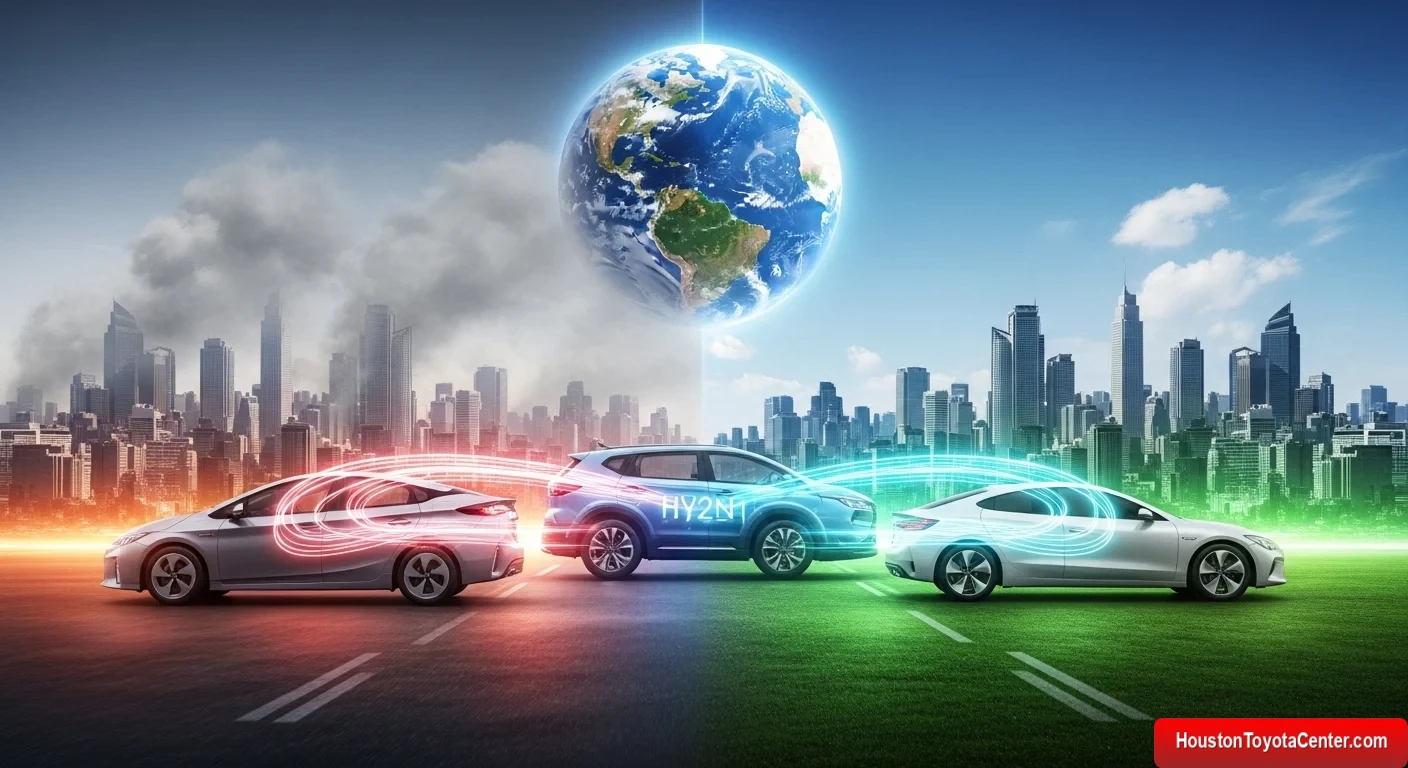
The global automotive industry has undergone a dramatic transformation over the past few decades. Concerns about climate change, fossil fuel dependency, urban air pollution, and energy security have pushed governments, consumers, and manufacturers to rethink how vehicles are powered. Among all automakers navigating this shift, Toyota stands out as one of the most influential pioneers in alternative fuel technology.
Toyota’s journey toward leadership in this field did not happen overnight. It is the result of decades of strategic thinking, disciplined engineering philosophy, long-term investment, and a willingness to challenge conventional industry assumptions. While many competitors focused on short-term gains or incremental improvements to internal combustion engines, Toyota pursued a broader vision—one that included hybrid systems, hydrogen fuel cells, and a diversified approach to energy solutions.
This article explores in depth how Toyota rose to prominence in alternative fuel technology. It examines the company’s philosophy, key innovations, strategic decisions, challenges, and its ongoing role in shaping the future of sustainable mobility.
The Origins of Toyota’s Environmental Vision
Early Awareness of Environmental Challenges
Toyota’s commitment to sustainability can be traced back to the late 20th century, long before environmental responsibility became a mainstream corporate priority. During the 1970s oil crises, Japan faced significant energy insecurity due to its reliance on imported oil. This created a national urgency around fuel efficiency and energy diversification.
FREE: Quickly identify and understand problems with your vehicle 🚘
CLICK HEREToyota recognized early that improving fuel economy was not just a regulatory necessity—it was a strategic imperative. This mindset laid the groundwork for future innovation in alternative fuel systems.
The Toyota Production System and Efficiency Thinking
Toyota’s internal culture played a crucial role in enabling its technological leadership. The Toyota Production System (TPS), known for principles such as lean manufacturing, continuous improvement (kaizen), and waste reduction, fostered an environment where efficiency was deeply embedded in decision-making.
This philosophy naturally extended beyond manufacturing into product development. Engineers were encouraged to think holistically about energy use, emissions, and system optimization—key considerations in alternative fuel technologies.
The Birth of Hybrid Technology
The G21 Project: A Bold Beginning
In the early 1990s, Toyota launched the G21 project, an ambitious initiative aimed at developing a “car for the 21st century.” The goal was to create a vehicle that significantly reduced fuel consumption and emissions without sacrificing practicality or affordability.
At the time, hybrid technology was considered risky. Battery costs were high, infrastructure was limited, and consumer demand was uncertain. Despite these challenges, Toyota pushed forward.
The Launch of the Prius
In 1997, Toyota introduced the Toyota Prius in Japan, followed by a global release in 2000. This marked a historic milestone—the world’s first mass-produced hybrid electric vehicle (HEV).
The Prius combined a gasoline engine with an electric motor and battery system, allowing it to switch seamlessly between power sources or use both simultaneously. This innovation delivered significant fuel efficiency gains and reduced emissions.
Why the Prius Was Revolutionary
The success of the Prius was not just technological—it was strategic. Toyota achieved several critical breakthroughs:
- Affordability: Compared to experimental hybrids, the Prius was priced for mass adoption.
- Reliability: Toyota’s reputation for durability reassured skeptical consumers.
- Practicality: Unlike niche electric vehicles, the Prius required no charging infrastructure.
The Prius became a symbol of environmental consciousness and technological innovation, helping Toyota establish a dominant position in hybrid technology.
Scaling Hybrid Technology Globally
Expanding the Hybrid Lineup
Following the success of the Prius, Toyota expanded hybrid technology across its vehicle lineup. Models such as the Camry Hybrid, Corolla Hybrid, and RAV4 Hybrid brought electrification to mainstream segments.
This strategy allowed Toyota to:
- Achieve economies of scale
- Reduce production costs
- Normalize hybrid technology for everyday consumers
Hybrid Synergy Drive
Toyota’s proprietary hybrid system, known as Hybrid Synergy Drive, became a cornerstone of its success. It optimized the interaction between the internal combustion engine and electric motor, delivering:
- Smooth acceleration
- Improved fuel efficiency
- Reduced emissions
This system evolved over multiple generations, becoming more compact, efficient, and cost-effective over time.
Toyota’s Multi-Pathway Strategy
Beyond Battery Electric Vehicles
While many automakers have recently focused heavily on battery electric vehicles (BEVs), Toyota has pursued a diversified approach. The company believes that no single technology can address all global mobility needs.
Toyota’s strategy includes:
- Hybrid Electric Vehicles (HEVs)
- Plug-in Hybrid Electric Vehicles (PHEVs)
- Battery Electric Vehicles (BEVs)
- Hydrogen Fuel Cell Vehicles (FCEVs)
Rationale Behind the Strategy
Toyota argues that different regions have different energy infrastructures, economic conditions, and environmental priorities. For example:
| Region Type | Suitable Technology | Key Factors |
|---|---|---|
| Urban developed areas | BEVs | Charging infrastructure, emissions regulations |
| Emerging markets | HEVs | Affordability, limited charging infrastructure |
| Long-distance transport | Hydrogen | Fast refueling, high energy density |
This flexible approach allows Toyota to adapt to diverse global markets while reducing overall emissions.
Leadership in Hydrogen Fuel Cell Technology
The Vision for Hydrogen
Toyota has been a strong advocate for hydrogen as a clean energy source. Hydrogen fuel cells generate electricity by combining hydrogen with oxygen, producing only water as a byproduct.
Toyota sees hydrogen as particularly promising for:
- Long-range vehicles
- Heavy-duty transport
- Industrial applications
The Toyota Mirai
In 2014, Toyota launched the Toyota Mirai, one of the first commercially available hydrogen fuel cell vehicles.
The Mirai demonstrated several advantages:
- Zero tailpipe emissions
- Fast refueling (similar to gasoline vehicles)
- Long driving range
Challenges of Hydrogen Adoption
Despite its potential, hydrogen technology faces significant challenges:
- Limited refueling infrastructure
- High production costs
- Energy inefficiencies in hydrogen production
Toyota has addressed these challenges by partnering with governments and energy companies to develop hydrogen ecosystems.
Investment in Battery Technology
Solid-State Batteries
Toyota is a leading developer of solid-state battery technology, which promises major improvements over traditional lithium-ion batteries.
Potential benefits include:
- Higher energy density
- Faster charging times
- Improved safety
- Longer lifespan
Toyota has invested billions in research and aims to commercialize solid-state batteries in the coming years.
Battery Supply Chain Strategy
Toyota has also taken a proactive approach to securing battery supply chains. This includes:
- Partnerships with battery manufacturers
- Investment in raw materials
- Development of recycling technologies
Strategic Partnerships and Collaboration
Working with Governments
Toyota has collaborated extensively with governments worldwide to promote alternative fuel adoption. These partnerships include:
- Incentives for hybrid and hydrogen vehicles
- Infrastructure development
- Regulatory alignment
Industry Alliances
Toyota has also formed alliances with other companies to accelerate innovation. Examples include partnerships in:
- Battery development
- Hydrogen infrastructure
- Autonomous driving technologies
Overcoming Challenges and Criticism
Criticism of Slow BEV Adoption
In recent years, Toyota has faced criticism for being slower than competitors in adopting battery electric vehicles.
However, Toyota maintains that its multi-pathway strategy is more sustainable in the long term, particularly for global markets with varying needs.
Balancing Innovation and Profitability
Developing alternative fuel technologies requires significant investment. Toyota has managed to balance innovation with profitability by:
- Leveraging hybrid technology at scale
- Maintaining strong core business performance
- Investing strategically rather than reactively
Environmental Impact and Achievements
Emissions Reduction
Toyota’s hybrid vehicles have collectively reduced billions of tons of CO₂ emissions worldwide. The widespread adoption of hybrid technology has had a measurable environmental impact.
Lifecycle Sustainability
Toyota also focuses on lifecycle sustainability, including:
- Manufacturing efficiency
- Recycling programs
- Renewable energy use in production
The Role of Corporate Philosophy
Long-Term Thinking
One of Toyota’s defining characteristics is its long-term perspective. Unlike companies driven by quarterly results, Toyota emphasizes sustainable growth and future readiness.
Continuous Improvement (Kaizen)
Toyota’s commitment to continuous improvement has enabled it to refine its technologies over time, maintaining a competitive edge.
Comparing Toyota to Competitors
Key Differences in Strategy
| Company | Primary Focus | Strategy Approach |
|---|---|---|
| Toyota | Multi-pathway | Hybrids + Hydrogen + BEVs |
| Tesla | BEVs | Full electrification |
| Volkswagen | BEVs | Aggressive EV transition |
| Hyundai | Mixed | EVs + Hydrogen |
Toyota’s approach is more diversified, reflecting its belief in technological pluralism.
The Future of Toyota in Alternative Fuels
Expanding BEV Offerings
Toyota is increasing its investment in battery electric vehicles, with new models and platforms under development.
Hydrogen Ecosystem Development
Toyota continues to promote hydrogen as part of a broader energy ecosystem, including applications beyond passenger vehicles.
Integration with Smart Cities
Toyota is also exploring how alternative fuel vehicles can integrate with smart city infrastructure, energy grids, and autonomous systems.
Lessons from Toyota’s Success
Toyota’s journey offers several key lessons:
- Think Long-Term: Sustainable innovation requires patience and persistence.
- Diversify Risk: Multiple technologies reduce dependence on a single solution.
- Scale Matters: Mass production drives cost reduction and adoption.
- Collaborate Widely: Partnerships accelerate progress.
- Stay Customer-Focused: Practical solutions win over consumers.
Conclusion
Toyota’s rise as a leader in alternative fuel technology is a story of vision, discipline, and strategic foresight. From pioneering hybrid vehicles with the Prius to advancing hydrogen fuel cells with the Mirai, Toyota has consistently pushed the boundaries of automotive innovation.
While the future of mobility remains uncertain, one thing is clear: Toyota’s commitment to sustainability and technological diversity positions it as a key player in shaping the next era of transportation.
Rather than betting everything on a single solution, Toyota has embraced complexity—recognizing that the path to a cleaner, more sustainable future is not linear, but multifaceted.
Leave a Reply