
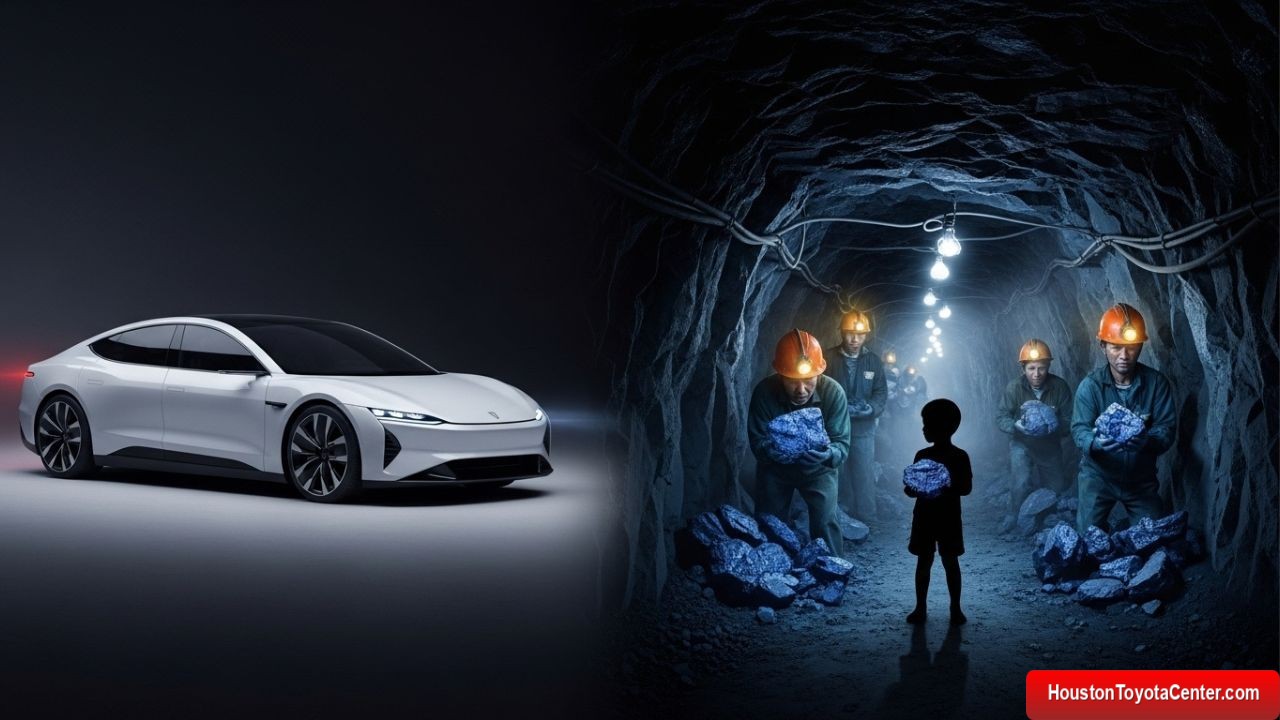
Electric vehicles (EVs) are widely promoted as a cornerstone of a cleaner, more sustainable future. Governments subsidize them, automakers race to electrify fleets, and consumers increasingly see EVs as a moral upgrade over internal combustion engines. At the heart of this transformation lies a relatively obscure but critical metal: cobalt.
Cobalt is a key component in most lithium-ion batteries used in electric vehicles today. It stabilizes battery chemistry, increases energy density, and improves safety by reducing the risk of overheating and fires. Without cobalt, modern EVs would be heavier, less efficient, and more prone to failure.
Yet cobalt carries a heavy ethical burden. Roughly 70% of the world’s cobalt supply comes from the Democratic Republic of the Congo (DRC), a country long plagued by political instability, corruption, environmental degradation, and human rights abuses. Reports of child labor, unsafe working conditions, forced displacement, and environmental contamination have raised serious moral questions about whether EVs are truly as “clean” as they appear.
This article explores the ethics of cobalt mining for EV batteries in depth. It examines the supply chain, labor conditions, environmental impacts, corporate responsibility, consumer complicity, and emerging alternatives. Ultimately, it asks a difficult but necessary question: Can a green transition built on ethically compromised materials truly be called sustainable?
FREE: Quickly identify and understand problems with your vehicle 🚘
CLICK HEREWhy Cobalt Matters in EV Batteries
To understand the ethical stakes, it is important first to understand why cobalt is used at all.
The Role of Cobalt in Lithium-Ion Batteries
Most EV batteries today use lithium-ion chemistries such as NMC (Nickel-Manganese-Cobalt) or NCA (Nickel-Cobalt-Aluminum). Cobalt plays several critical roles:
- Thermal stability: It prevents batteries from overheating and catching fire.
- Energy density: It allows batteries to store more energy per unit of weight.
- Longevity: It reduces degradation over repeated charge cycles.
In short, cobalt makes EV batteries safer, lighter, and longer-lasting.
Why Not Just Remove Cobalt?
Battery manufacturers are actively trying to reduce cobalt content, but eliminating it entirely is difficult. Cobalt-free batteries often face trade-offs:
- Reduced safety margins
- Shorter lifespan
- Lower energy density
These trade-offs can translate into heavier vehicles, reduced driving range, or increased fire risk—outcomes that undermine consumer trust and adoption.
Thus, cobalt remains a key enabler of the EV revolution, even as its ethical costs become harder to ignore.
The Geography of Cobalt: A Concentrated and Risky Supply Chain
Cobalt is not evenly distributed around the world. Its supply chain is unusually concentrated, which amplifies ethical and geopolitical risks.
Global Cobalt Production by Region
| Region | Approx. Share of Global Production |
|---|---|
| Democratic Republic of the Congo | ~70% |
| Russia | ~4–5% |
| Australia | ~3–4% |
| Philippines | ~2–3% |
| Cuba & Others | Remainder |
The DRC’s dominance makes cobalt uniquely vulnerable to local governance failures and exploitation.
Why the DRC Dominates Cobalt Mining
The DRC sits atop rich copper-cobalt deposits formed by unique geological conditions. These deposits are:
- High-grade and economically attractive
- Often near the surface, enabling artisanal mining
- Located in regions with weak regulatory enforcement
While industrial mining operations exist, a significant portion of cobalt comes from artisanal and small-scale mining (ASM)—a sector that is largely informal and difficult to regulate.
Artisanal Mining and Child Labor: The Most Visible Ethical Crisis
When people talk about the ethics of cobalt, they are often referring to artisanal mining in the DRC.
What Is Artisanal Cobalt Mining?
Artisanal mining involves individuals or small groups extracting minerals using basic tools such as shovels and pickaxes. In the DRC, this work often occurs:
- Without protective equipment
- In hand-dug tunnels prone to collapse
- Outside formal labor protections
Estimates suggest that 100,000–200,000 people are involved in artisanal cobalt mining, including tens of thousands of children.
Child Labor: Causes, Not Just Symptoms
Children work in cobalt mines for complex, interconnected reasons:
- Extreme poverty and lack of alternatives
- Inadequate access to education
- Family survival strategies
- Weak enforcement of labor laws
Children may dig, wash, transport, or sort cobalt ore, often for a few dollars a day.
From an ethical standpoint, this raises profound concerns:
- Exposure to toxic dust and heavy metals
- Long-term health consequences
- Loss of education and future opportunities
The presence of child labor directly contradicts the moral narrative often used to promote EVs as a socially responsible choice.
Environmental Damage: The Hidden Cost of “Clean” Energy
Beyond human rights, cobalt mining inflicts serious environmental harm, particularly in regions with limited regulation.
Local Environmental Impacts in the DRC
Cobalt mining affects ecosystems and communities in multiple ways:
- Soil contamination: Heavy metals seep into farmland
- Water pollution: Rivers and groundwater become toxic
- Air pollution: Dust from mining operations spreads cobalt particles
Residents living near mines have reported elevated levels of cobalt in their blood and urine, linked to respiratory disease and birth defects.
Global Environmental Irony
EVs are designed to reduce carbon emissions over their lifetime. However, the environmental costs of extracting battery materials complicate this narrative:
- Mining is energy-intensive
- Processing produces significant waste
- Damage is often localized in poorer countries
This raises ethical questions about environmental justice—specifically, whether wealthy countries are exporting environmental harm to poorer ones in the name of sustainability.
Corporate Responsibility: Who Is Accountable?
The cobalt supply chain is long and complex, involving multiple layers:
- Artisanal miners
- Local traders
- Smelters and refiners
- Battery manufacturers
- Automakers
- End consumers
This complexity creates moral distance, allowing companies to claim ignorance or lack of control.
Automakers and Tech Companies Under Scrutiny
Major corporations have faced lawsuits and investigations alleging complicity in human rights abuses linked to cobalt. Ethical critiques often focus on:
- Insufficient supply chain transparency
- Inadequate auditing practices
- Reliance on self-reported compliance
While many companies publish sustainability reports and codes of conduct, critics argue these measures often lack enforcement teeth.
The Limits of Auditing
Auditing artisanal mining is especially difficult:
- Informal operations change rapidly
- Ore from multiple sources is mixed
- Documentation is often unreliable
As a result, cobalt labeled “responsibly sourced” may still originate from ethically compromised conditions.
The Role of Governments and Regulation
Ethical responsibility does not rest solely with corporations.
DRC Government Challenges
The DRC government faces structural obstacles:
- Limited administrative capacity
- Corruption and rent-seeking
- Dependence on mining revenue
While laws exist to restrict child labor and regulate mining, enforcement is uneven.
International Regulation and Due Diligence Laws
Some importing regions have begun to act:
- EU battery regulations aim to mandate supply chain transparency
- OECD due diligence frameworks provide voluntary guidelines
- U.S. laws restrict imports tied to forced labor
However, enforcement remains inconsistent, and many regulations rely on corporate self-policing.
Ethical Frameworks for Evaluating Cobalt Mining
Different ethical theories offer distinct perspectives on cobalt mining.
Utilitarian Perspective
From a utilitarian view, EVs reduce global emissions and climate harm, potentially benefiting billions. This could be weighed against localized harms in mining regions.
Critics argue this reasoning risks sacrificing vulnerable populations for aggregate global benefit.
Deontological Perspective
A rights-based approach emphasizes that:
- Child labor is inherently wrong
- Human dignity should not be violated, regardless of benefits
Under this framework, ethically compromised cobalt is unacceptable, even if it supports climate goals.
Environmental Justice Perspective
This lens highlights unequal burdens:
- Benefits accrue mainly to wealthy consumers
- Harms are borne by impoverished communities
Ethical sustainability, from this view, requires fair distribution of both costs and benefits.
Emerging Alternatives: Is Ethical Cobalt Possible?
The ethical problems of cobalt mining are not immutable.
Improving Conditions in Artisanal Mining
Some initiatives aim to formalize artisanal mining:
- Designated mining zones
- Safety training and equipment
- Child labor monitoring programs
These efforts recognize that banning artisanal mining outright could worsen poverty.
Battery Chemistry Innovation
Technological alternatives include:
| Battery Type | Cobalt Content | Key Trade-offs |
|---|---|---|
| NMC (Traditional) | High | High performance, ethical risk |
| NMC (Low-Cobalt) | Reduced | Balanced performance |
| LFP (Lithium Iron Phosphate) | None | Lower energy density |
| Solid-State (Future) | Potentially none | Still experimental |
Many automakers are shifting entry-level EVs to LFP batteries, particularly in China.
Recycling and Circular Supply Chains
Battery recycling can reduce demand for newly mined cobalt:
- Recovering cobalt from end-of-life batteries
- Reducing environmental footprint
- Increasing supply security
However, recycling infrastructure is still developing and cannot yet meet demand alone.
Consumer Responsibility: Are Buyers Complicit?
Ethical responsibility ultimately extends to consumers.
The Moral Tension of Green Consumption
Many EV buyers are motivated by environmental concern. Yet few consider:
- Where battery materials come from
- Under what conditions they were extracted
This creates a paradox: ethical intentions paired with ethically problematic outcomes.
What Can Consumers Do?
While individual power is limited, consumers can:
- Support companies with transparent sourcing
- Advocate for stronger regulations
- Extend battery life and support recycling
Ethical consumption is imperfect, but informed pressure can influence corporate behavior over time.
The Future of Ethical EV Supply Chains
The EV transition is still in its early stages. Choices made now will shape its moral legacy.
Key Paths Forward
- Stronger international regulation
- Investment in cobalt-free technologies
- Formalization rather than criminalization of artisanal mining
- Greater transparency and accountability
The ethical goal is not merely fewer emissions, but a just and humane energy transition.
Conclusion: Rethinking What “Clean” Really Means
Cobalt mining exposes a central contradiction of the green transition: technologies designed to save the planet can still harm people. Electric vehicles undeniably reduce tailpipe emissions and play a vital role in combating climate change. Yet their reliance on ethically fraught supply chains challenges simplistic narratives of sustainability.
The ethics of cobalt mining force us to confront uncomfortable truths about globalization, inequality, and moral responsibility. A truly sustainable future cannot be built solely on technological progress—it must also be grounded in justice, transparency, and respect for human dignity.
The question is no longer whether we can afford to address the ethics of cobalt mining, but whether we can afford not to.
Leave a Reply