
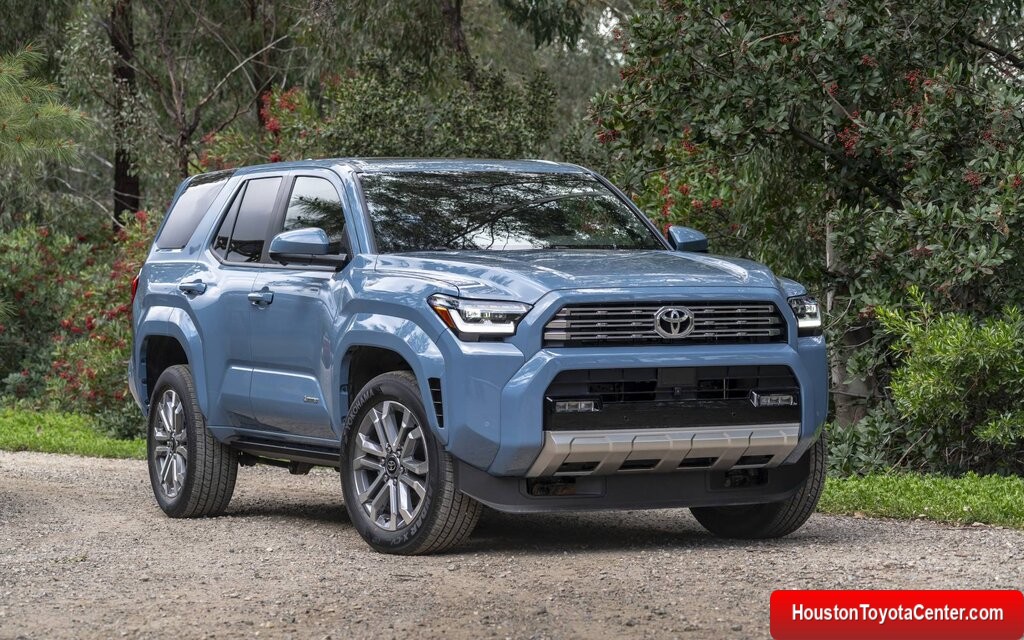
In an era where the automotive industry is rapidly pivoting toward electrification, crossovers, and software-defined vehicles, there remains a stubborn outlier—a machine that seems almost frozen in time, yet continues to thrive. The Toyota 4Runner stands as a rare survivor of a nearly extinct breed: the body-on-frame, naturally aspirated, rugged SUV built not for urban commuting comfort, but for durability, off-road capability, and mechanical honesty.
While competitors have softened, downsized, or disappeared entirely, the 4Runner has resisted change in ways that are both baffling and deeply admirable. It is, in many respects, a relic—but a relic with a loyal following and a clear purpose. This article explores why the 4Runner continues to exist, what makes it unique in today’s market, and whether its old-school philosophy still holds value in a modern automotive landscape.
A Brief Historical Context
The 4Runner was first introduced in 1984 as a compact SUV derived from the Toyota pickup truck. Early versions were essentially modified trucks with fiberglass shells, emphasizing utility over refinement. Over the decades, the 4Runner evolved into a more refined vehicle, but it never abandoned its core identity: a rugged, body-on-frame SUV capable of handling harsh environments.
While many of its rivals—such as the Ford Explorer and Nissan Pathfinder—transitioned to unibody construction for improved ride comfort and fuel efficiency, the 4Runner remained committed to its truck-based architecture. This decision would ultimately define its place in the market.
FREE: Quickly identify and understand problems with your vehicle 🚘
CLICK HEREWhat Does “Old-School” Really Mean?
Calling the 4Runner “old-school” is not just a stylistic observation—it reflects fundamental engineering choices that are increasingly rare.
Body-on-Frame Construction
Unlike modern crossovers that use unibody designs, the 4Runner is built on a separate ladder frame. This design offers several advantages:
- Greater durability under stress
- Better performance in off-road conditions
- Easier repair after damage
However, it also comes with trade-offs:
- Increased weight
- Lower fuel efficiency
- Less refined on-road ride quality
Naturally Aspirated Engine
Most modern SUVs rely on turbocharged engines or hybrid systems. The 4Runner, however, sticks with a 4.0-liter V6 engine without forced induction. This engine is known for its reliability and simplicity but lacks the efficiency and power density of newer designs.
Traditional Transmission
The 4Runner uses a conventional automatic transmission rather than a dual-clutch or continuously variable transmission (CVT). While not as efficient, it is generally more robust and better suited for off-road use.
Key Specifications Overview
Below is a simplified comparison of the 4Runner’s core characteristics against typical modern SUVs:
| Feature | Toyota 4Runner | Modern Crossover SUV |
|---|---|---|
| Platform | Body-on-frame | Unibody |
| Engine Type | Naturally aspirated V6 | Turbocharged / Hybrid |
| Transmission | 5-speed automatic | 8-10 speed / CVT |
| Fuel Efficiency | Low | Moderate to High |
| Off-Road Capability | Excellent | Limited |
| Ride Comfort | Firm | Smooth |
| Longevity Potential | Very High | Moderate |
| Maintenance Complexity | Low | Higher |
Why the 4Runner Still Exists
At first glance, it may seem irrational that the 4Runner continues to be produced with relatively minimal changes. However, its continued success can be attributed to several factors.
1. Reliability Reputation
Toyota has built a global reputation for reliability, and the 4Runner is one of its strongest ambassadors. Owners frequently report vehicles exceeding 300,000 miles with proper maintenance. This level of durability creates a strong resale value and long-term ownership appeal.
2. Off-Road Credibility
Unlike many SUVs that merely look rugged, the 4Runner delivers genuine off-road performance. Features such as:
- Low-range gearing
- Locking differentials
- Crawl control systems
make it capable of tackling terrain that would defeat most crossovers.
3. Simplicity in a Complex World
Modern vehicles are increasingly complex, filled with sensors, software systems, and advanced electronics. While these features improve convenience and safety, they also introduce potential points of failure.
The 4Runner’s relatively simple mechanical design appeals to buyers who value:
- Ease of maintenance
- Mechanical transparency
- Long-term reliability
4. Niche Market Position
The automotive market has largely abandoned traditional SUVs, creating a niche that the 4Runner dominates. Buyers who want a rugged, dependable vehicle with minimal compromise have very few alternatives.
The Driving Experience
Driving a 4Runner is a distinctly different experience compared to modern SUVs.
On-Road Behavior
On paved roads, the 4Runner feels:
- Heavier and less responsive
- More prone to body roll
- Less fuel-efficient
However, it also feels:
- Solid and planted
- Mechanically predictable
- Confidence-inspiring in poor conditions
Off-Road Performance
Off-road is where the 4Runner truly shines. Its design allows it to:
- Maintain traction on uneven terrain
- Absorb impacts without structural damage
- Navigate steep inclines and declines with control
For enthusiasts, this capability is not just a feature—it is the primary reason to own the vehicle.
Interior and Technology: A Deliberate Trade-Off
One of the most common criticisms of the 4Runner is its outdated interior. Compared to modern SUVs, it lacks:
- Large, high-resolution infotainment screens
- Advanced driver assistance systems
- Premium materials and finishes
However, this simplicity can also be seen as an advantage:
- Fewer distractions
- Greater durability of materials
- Easier long-term maintenance
The interior is functional rather than luxurious, reflecting the vehicle’s intended purpose.
Fuel Economy: The Biggest Weakness
There is no avoiding this: the 4Runner is inefficient by modern standards. Its fuel consumption is significantly higher than most competitors, largely due to:
- Its heavy body-on-frame construction
- Its naturally aspirated engine
- Its older transmission design
In a world increasingly focused on environmental sustainability, this is a major drawback and one of the biggest threats to its long-term survival.
Safety Considerations
The 4Runner includes basic modern safety features, but it lags behind newer vehicles in areas such as:
- Advanced driver assistance systems
- Crash avoidance technologies
- Autonomous driving capabilities
While it remains a safe vehicle by traditional standards, it does not lead the industry in safety innovation.
Ownership Experience
Pros
- Exceptional reliability
- High resale value
- Strong off-road capability
- Simple mechanical design
Cons
- Poor fuel economy
- Outdated technology
- Less comfortable ride
- Limited innovation
Who Should Buy a 4Runner?
The 4Runner is not for everyone. It is best suited for:
- Outdoor enthusiasts
- Off-road adventurers
- Buyers prioritizing longevity over luxury
- Drivers who prefer mechanical simplicity
It is less suitable for:
- Urban commuters
- Technology-focused buyers
- Those seeking fuel efficiency
- Families prioritizing comfort and convenience
The Future of the 4Runner
The automotive industry is undergoing a transformation driven by:
- Electrification
- Emissions regulations
- Consumer demand for technology
These trends pose significant challenges for vehicles like the 4Runner. Maintaining a body-on-frame SUV with a naturally aspirated engine may become increasingly difficult due to regulatory pressures.
However, there are a few possible paths forward:
1. Hybridization
Toyota could introduce a hybrid powertrain to improve fuel efficiency while maintaining the vehicle’s core characteristics.
2. Platform Modernization
A new generation could retain body-on-frame construction while incorporating modern materials and technology.
3. Electrification (Long-Term)
While unlikely in the near term, an electric off-road SUV could eventually replace the traditional 4Runner.
Why It Still Matters
The 4Runner represents something increasingly rare: a vehicle designed with a clear, singular purpose. In a market filled with compromises and multipurpose designs, it stands out by refusing to be everything to everyone.
It is not the most comfortable, efficient, or technologically advanced SUV—but it excels in areas that many modern vehicles have abandoned.
This clarity of purpose is what keeps it relevant.
Cultural Significance
Beyond its technical specifications, the 4Runner has developed a strong cultural identity. It is associated with:
- Adventure and exploration
- Durability and reliability
- Independence from trends
For many owners, it is more than just transportation—it is a tool for lifestyle and identity.
Final Thoughts
The Toyota 4Runner is an anomaly in today’s automotive world. It defies trends, ignores conventional wisdom, and continues to succeed on its own terms.
Its strengths—durability, capability, and simplicity—are qualities that have become increasingly rare. Its weaknesses—inefficiency, outdated technology, and lack of refinement—are more noticeable than ever.
Yet, despite these shortcomings, the 4Runner remains deeply relevant.
It survives not because it is the best SUV by modern metrics, but because it fulfills a role that no one else seems willing to occupy. It is the last old-school SUV standing—not because the world stopped changing, but because it chose not to.
And in that refusal to evolve too quickly, it has carved out a legacy that few vehicles can match.
Leave a Reply