
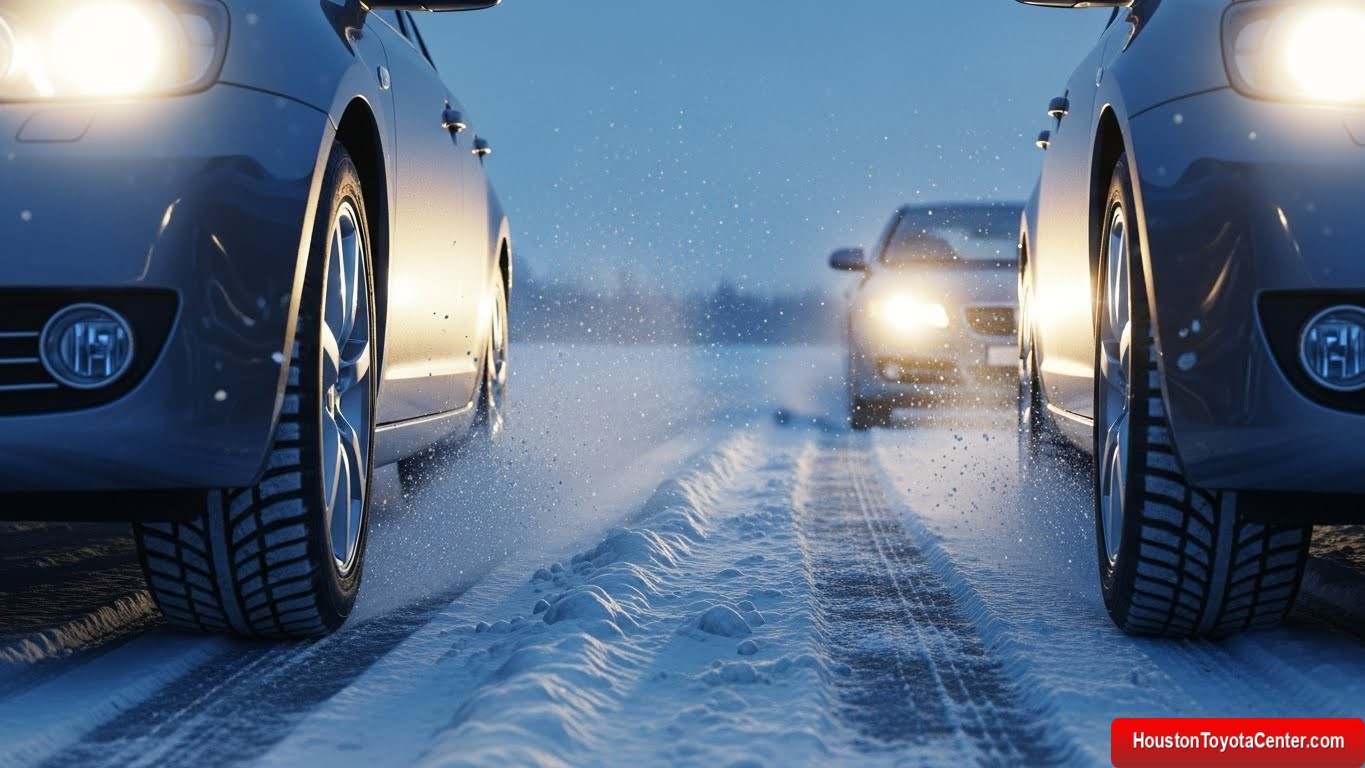
Tires are the only part of your vehicle that actually touch the road. No matter how advanced your engine, brakes, suspension, or driver-assistance systems are, everything ultimately depends on four contact patches roughly the size of your palms. Because of this, tire choice has a disproportionate impact on safety, performance, comfort, and even fuel economy.
Among the most misunderstood choices drivers face is the decision between winter tires and all-season tires. Many drivers assume that all-season tires are “good enough” for winter, or that winter tires are only necessary in extreme climates with constant snowstorms. Others believe winter tires are only about traction in snow, ignoring how they behave on cold, dry pavement.
The truth is more nuanced—and more important—than most people realize.
This article explores the critical difference between winter tires and all-season tires, diving deeply into rubber chemistry, tread design, real-world performance, safety data, cost considerations, legal aspects, and regional climate realities. By the end, you’ll understand not only what makes these tires different, but why that difference can be the line between control and chaos on winter roads.
FREE: Quickly identify and understand problems with your vehicle 🚘
CLICK HEREUnderstanding Tire Categories at a Glance
Before going deeper, it helps to clarify the basic categories:
| Tire Type | Primary Purpose | Ideal Temperature Range | Snow & Ice Performance |
|---|---|---|---|
| Summer Tires | Warm-weather performance | Above ~45°F (7°C) | Very poor |
| All-Season Tires | Year-round moderate use | ~20°F to 100°F (-7°C to 38°C) | Limited |
| Winter Tires | Cold, snow, ice conditions | Below ~45°F (7°C) | Excellent |
| All-Weather Tires | Hybrid category | Broad, cold-tolerant | Good (3PMSF rated) |
This article focuses on winter tires vs. all-season tires, the two most commonly confused options.
The Fundamental Difference: Rubber Chemistry
Why Rubber Matters More Than Tread
Many drivers focus on tread patterns when comparing tires, but rubber compound is the single most important differentiator between winter tires and all-season tires.
All-Season Tire Rubber
All-season tires are designed to work “well enough” across a wide range of conditions. To achieve this, manufacturers use rubber compounds that balance:
- Heat resistance in summer
- Acceptable flexibility in mild winter conditions
- Longevity and wear resistance
However, as temperatures drop below approximately 45°F (7°C), all-season rubber begins to harden. When rubber hardens, it loses its ability to conform to the microscopic texture of the road surface. This directly reduces grip—even on dry pavement.
Winter Tire Rubber
Winter tires use specialized cold-weather compounds rich in silica and other additives that keep the rubber soft and flexible in freezing temperatures.
This flexibility allows winter tires to:
- Maintain traction on cold, dry roads
- Grip wet surfaces in near-freezing rain
- Interlock with snow and ice at a micro level
Key Insight:
Winter tires don’t just outperform all-seasons in snow—they outperform them in cold conditions of any kind, including dry asphalt.
Tread Design: More Than Just “Chunky Grooves”
All-Season Tread Patterns
All-season tires typically feature:
- Moderate tread depth
- Larger tread blocks for stability
- Fewer biting edges
- Limited siping (small slits in tread blocks)
This design prioritizes:
- Quiet operation
- Even wear
- Fuel efficiency
- Acceptable wet traction
However, these features limit their ability to evacuate slush, bite into snow, or grip ice.
Winter Tire Tread Patterns
Winter tires are visually distinct for a reason. Their tread design is engineered for winter-specific challenges:
Key features include:
- Deeper tread depth for snow displacement
- Aggressive siping (hundreds or thousands of tiny cuts)
- Directional or asymmetric patterns for slush evacuation
- Snow-to-snow adhesion, where packed snow sticks to snow better than rubber does
Winter tire tread blocks are designed to move and flex, creating biting edges that grip ice and compacted snow.
| Feature | All-Season Tires | Winter Tires |
|---|---|---|
| Tread Depth | Moderate | Deep |
| Sipes | Limited | Extensive |
| Block Flexibility | Low | High |
| Snow Evacuation | Average | Excellent |
Braking Performance: Where the Difference Becomes Critical
Stopping Distance on Cold Roads
Acceleration is helpful, but braking is where safety is truly measured. Numerous independent tests show that winter tires dramatically reduce stopping distances compared to all-season tires in cold conditions.
In many real-world scenarios:
- A vehicle on winter tires can stop 20–40% shorter on snow or ice.
- On cold, dry pavement, winter tires still stop shorter due to better rubber compliance.
Imagine two identical vehicles approaching a stop sign at 30 mph:
- The vehicle on winter tires stops safely before the line.
- The vehicle on all-season tires slides into the intersection.
That difference often comes down to a single car length—or less.
Ice: The Ultimate Test
Ice is where all-season tires struggle the most. Even advanced all-season models lack the sheer number of biting edges and soft compound necessary for reliable ice grip.
Winter tires:
- Create micro-friction through siping
- Use compounds that interact chemically with ice surfaces
- Maintain flexibility even on polished ice
This is why winter tires are often described as a safety upgrade, not just a seasonal convenience.
Cornering and Stability in Winter Conditions
Lateral Grip Matters
Many winter accidents don’t happen during acceleration or braking, but during cornering.
All-season tires:
- Lose lateral grip quickly on snow and ice
- Tend to slide unpredictably
- Trigger electronic stability control more often
Winter tires:
- Maintain progressive, predictable grip
- Provide better steering feedback
- Reduce reliance on traction control systems
Stability Control Is Not a Substitute for Winter Tires
Modern vehicles rely heavily on electronic stability control (ESC), traction control, and ABS. However, these systems cannot create grip—they can only manage what’s already available.
Winter tires increase the available grip, allowing electronic systems to work more effectively.
Wet Winter Roads: The Overlooked Danger
Slush and Cold Rain
Winter driving isn’t always about snow. Slush, freezing rain, and cold standing water are often more dangerous.
All-season tires may:
- Hydroplane at lower speeds in cold water
- Struggle to evacuate slush
- Lose wet grip as rubber stiffens
Winter tires are optimized for:
- Slush channeling
- Cold wet traction
- Reduced hydroplaning risk in winter conditions
This makes winter tires especially valuable in regions with frequent freeze-thaw cycles.
Temperature, Not Snowfall, Is the Real Trigger
A Common Misconception
Many drivers decide whether they need winter tires based solely on snowfall. This is a mistake.
Temperature is the real deciding factor.
Even in regions with:
- Minimal snowfall
- Well-plowed roads
- Mostly dry winter conditions
Winter tires still outperform all-seasons once temperatures stay below 45°F (7°C).
Climate-Based Decision Guide
| Winter Climate | Recommended Tire Strategy |
|---|---|
| Cold with frequent snow | Winter tires (mandatory for safety) |
| Cold with little snow | Winter tires (still beneficial) |
| Mild winters, rare cold snaps | High-quality all-season or all-weather |
| Warm climate year-round | All-season or summer tires |
All-Season Tires: Strengths and Limitations
Where All-Season Tires Excel
All-season tires are not “bad” tires. They are designed for convenience and versatility.
Strengths include:
- No seasonal changeover
- Long tread life
- Quiet ride
- Good wet and dry performance in moderate temperatures
- Lower upfront cost
For drivers in temperate climates, all-season tires can be a practical choice.
Where They Fall Short
However, compromises are inevitable.
Limitations include:
- Reduced grip in cold temperatures
- Poor ice traction
- Longer stopping distances in winter
- False sense of security
All-season tires are best described as three-season tires with winter tolerance, not true winter solutions.
Winter Tires: Types and Variations
Studless Winter Tires
Most modern winter tires are studless, relying on advanced rubber compounds and tread designs.
Advantages:
- Excellent snow and ice traction
- Quiet compared to studded tires
- Legal in most regions
Studded Winter Tires
Studded tires use metal studs embedded in the tread.
Advantages:
- Superior grip on sheer ice
Disadvantages:
- Increased road wear
- Noisy
- Restricted or banned in some regions
- Less effective on dry pavement
Performance Winter Tires
Designed for sporty vehicles:
- Better dry-road handling
- Slightly reduced deep-snow traction
- Ideal for winter driving on cleared roads
Cost Considerations: Are Winter Tires Worth It?
Upfront vs. Long-Term Cost
At first glance, winter tires seem expensive. However, the math often tells a different story.
Key points:
- Using winter tires extends the life of your all-season or summer tires
- You’re spreading wear across two sets
- Reduced accident risk can prevent costly repairs or insurance claims
Cost Comparison Example
| Item | Single Set (All-Season Only) | Two Sets (Winter + Summer/All-Season) |
|---|---|---|
| Tire Replacement Interval | 3–4 years | 6–8 years total |
| Accident Risk | Higher in winter | Lower |
| Seasonal Changeover | None | Required |
| Overall Safety | Moderate | High |
When viewed as a safety investment, winter tires often justify their cost.
Fuel Economy and Efficiency
Rolling Resistance Differences
Winter tires typically have:
- Higher rolling resistance
- Slightly lower fuel efficiency
This is due to:
- Softer compounds
- Deeper tread
However, the difference is usually modest and outweighed by safety benefits.
Cold Weather Reality
Cold weather already reduces fuel economy due to:
- Thicker fluids
- Longer warm-up times
- Increased air density
The incremental fuel penalty of winter tires is relatively small.
Noise and Ride Comfort
All-Season Tires
- Generally quieter
- Firmer ride
- More stable at highway speeds
Winter Tires
- Slightly louder, especially on dry roads
- Softer ride due to flexible rubber
- Improved comfort on rough winter surfaces
Modern winter tires have made significant strides in reducing noise compared to older designs.
Legal Requirements and Insurance Implications
Winter Tire Laws
Some regions require winter tires by law during specific months or conditions.
Examples include:
- Certain European countries
- Parts of Canada
- Mountain passes with traction laws
Failure to comply can result in:
- Fines
- Liability in accidents
- Insurance claim complications
Insurance Benefits
In some regions, using winter tires:
- Qualifies for insurance discounts
- Reduces fault determination in winter accidents
Even where not legally required, winter tires can have legal and financial advantages.
All-Weather Tires: A Middle Ground?
What Are All-Weather Tires?
All-weather tires are a newer category designed to bridge the gap between all-season and winter tires.
They:
- Carry the Three-Peak Mountain Snowflake (3PMSF) rating
- Remain flexible in cold temperatures
- Can be used year-round
The Trade-Off
All-weather tires:
- Perform better than all-seasons in winter
- Do not match dedicated winter tires in extreme conditions
- Wear faster in hot summer conditions
They can be a viable option for drivers who want simplicity without fully sacrificing winter safety.
Psychological Safety vs. Real Safety
One of the most dangerous aspects of all-season tires in winter is overconfidence.
Drivers may believe:
- “My car has AWD, so I’m fine.”
- “The roads are plowed.”
- “I’ve never had a problem before.”
But physics does not negotiate. AWD helps you move; it does not help you stop.
Winter tires provide real, measurable safety, not just perceived control.
The Critical Difference Summarized
The difference between winter tires and all-season tires is not subtle, and it is not limited to snow.
It is:
- A difference in rubber chemistry
- A difference in braking distances
- A difference in cornering stability
- A difference in predictability
- A difference in safety margins
In cold conditions, winter tires are not a luxury—they are a purpose-built tool.
Final Thoughts: Making the Right Choice
Choosing between winter tires and all-season tires is ultimately a decision about risk tolerance.
If you:
- Drive in cold temperatures
- Value predictable handling
- Want maximum braking performance
- Prioritize safety over convenience
Then winter tires are the superior choice.
All-season tires remain a practical solution for mild climates and drivers who rarely experience sustained cold. But when winter truly arrives, the critical difference becomes impossible to ignore.
Your tires don’t just affect how your car drives—they affect how it stops, turns, and protects you when conditions are at their worst.
In winter, that difference matters more than ever.
Leave a Reply