
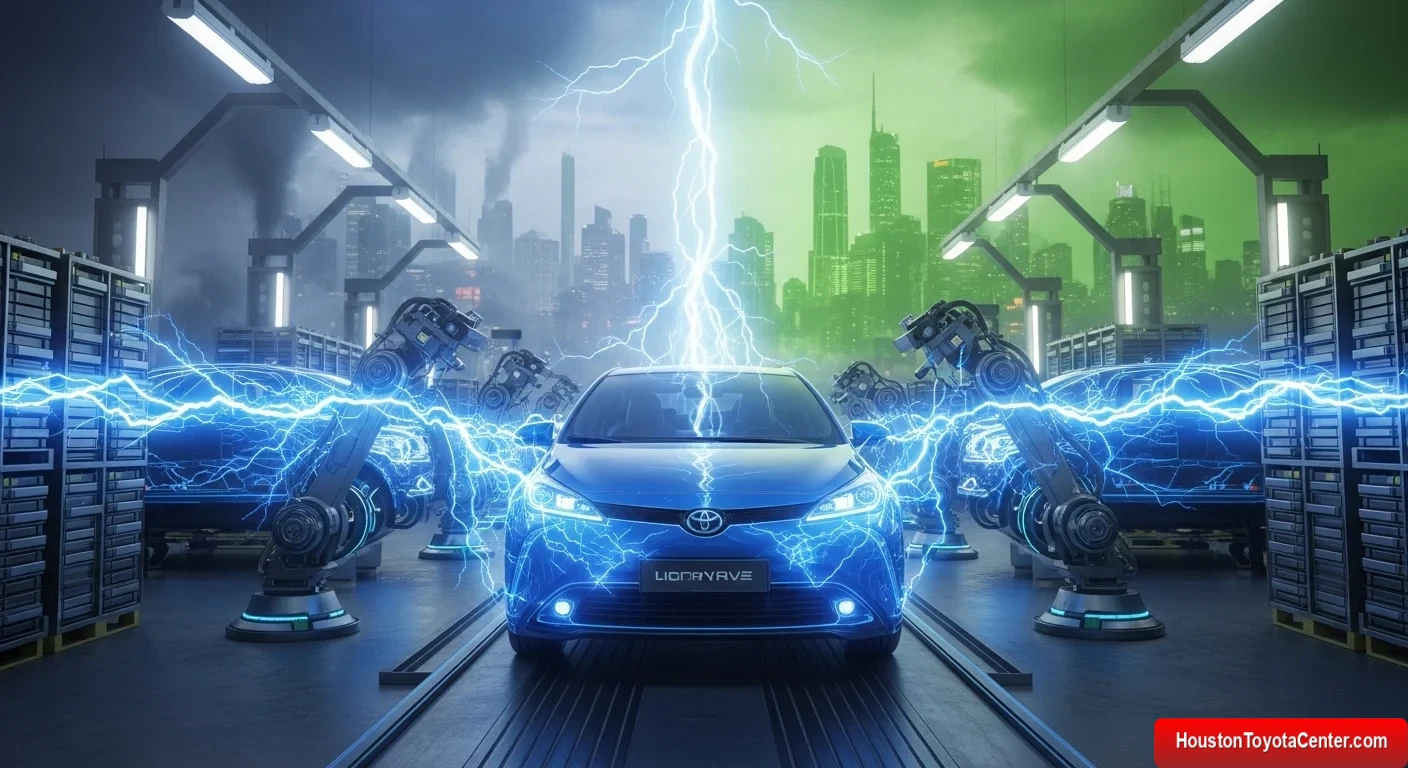
The global automotive industry is undergoing one of the most profound transformations in its history. As governments tighten emissions regulations and consumers become increasingly conscious of environmental impact, automakers are racing to develop electric vehicles (EVs) that are not only technologically advanced but also accessible to the mass market. Among these companies, Toyota occupies a particularly interesting position. Known for its dominance in hybrid vehicles and its reputation for reliability, Toyota has approached the electric transition differently from many competitors.
While companies such as Tesla, BYD, and Volkswagen Group have aggressively expanded their battery-electric vehicle lineups, Toyota has adopted a multi-pathway strategy that includes hybrids, plug-in hybrids, hydrogen fuel cell vehicles, and fully electric cars. Critics have sometimes argued that Toyota has been slow to embrace full electrification. However, the company maintains that its strategy is designed to deliver electric mobility that is affordable, scalable, and practical across different markets and infrastructure conditions.
In recent years, Toyota has begun accelerating its battery-electric initiatives, placing special emphasis on reducing costs. The company’s strategy for affordable electric vehicles combines advanced battery development, modular platforms, manufacturing innovation, supply chain integration, and global partnerships. Together, these elements form a comprehensive approach aimed at bringing electric cars within reach of millions of consumers.
This article explores Toyota’s strategy in depth, examining how the company plans to compete in the rapidly evolving EV market while maintaining its focus on affordability and reliability.
FREE: Quickly identify and understand problems with your vehicle 🚘
CLICK HEREToyota’s Historical Approach to Electrification
To understand Toyota’s strategy for affordable EVs, it is necessary to look at the company’s broader electrification philosophy.
Toyota pioneered hybrid technology with the launch of the Toyota Prius in 1997, a model that transformed the perception of fuel efficiency and environmentally conscious driving. Instead of committing early to fully electric vehicles, Toyota focused on hybrid systems that combine internal combustion engines with electric motors.
This approach allowed Toyota to electrify millions of vehicles while avoiding some of the limitations that early EVs faced, such as short driving ranges and limited charging infrastructure.
The company’s electrification portfolio now includes several technologies:
| Technology Type | Description | Toyota Example |
|---|---|---|
| Hybrid Electric Vehicle (HEV) | Combines gasoline engine and electric motor without external charging | Toyota Prius |
| Plug-in Hybrid (PHEV) | Hybrid vehicle that can be charged from external power | Toyota Prius Plug-in |
| Battery Electric Vehicle (BEV) | Fully electric vehicle powered by batteries | Toyota bZ4X |
| Hydrogen Fuel Cell (FCEV) | Generates electricity using hydrogen | Toyota Mirai |
Toyota argues that this diversified strategy allows the company to reduce emissions across different markets with varying infrastructure capabilities. For regions where EV charging networks are still developing, hybrids remain a practical solution.
However, with the global shift toward stricter emissions targets and growing EV demand, Toyota has increasingly focused on scaling up battery-electric vehicles.
The Affordable EV Challenge
Producing affordable electric vehicles is one of the biggest challenges in the automotive industry today. While EV adoption is growing rapidly, the average electric car remains significantly more expensive than comparable gasoline vehicles.
Several factors contribute to this price gap:
- Battery costs
- Raw material supply
- Manufacturing complexity
- Charging infrastructure requirements
- Limited economies of scale
Batteries alone can account for 30–40% of the total cost of an electric vehicle. Materials such as lithium, nickel, cobalt, and graphite are essential components of modern battery chemistry, and their prices fluctuate significantly due to global demand.
Companies such as Ford Motor Company and General Motors have invested billions in EV development, but maintaining affordability while improving range and performance remains difficult.
Toyota’s strategy focuses heavily on reducing battery costs while maintaining durability and safety.
The bZ Series: Toyota’s Dedicated Electric Platform
One of the most important steps in Toyota’s EV strategy is the introduction of the “bZ” series, which stands for “Beyond Zero.”
The first model in this lineup is the Toyota bZ4X, an electric SUV developed in partnership with Subaru Corporation. The bZ series represents Toyota’s move toward dedicated battery-electric platforms designed specifically for EV efficiency and scalability.
The platform behind these vehicles is called e-TNGA (Electric Toyota New Global Architecture), which allows Toyota to produce different EV models with shared components.
Key advantages of the platform include:
- Flexible battery placement
- Modular drivetrain configuration
- Shared components across models
- Lower production costs through standardization
This architecture is designed to support multiple vehicle types, including sedans, SUVs, and crossovers.
The modular approach helps Toyota achieve economies of scale, a critical factor in making EVs more affordable.
Battery Innovation: The Core of Toyota’s Cost Strategy
Perhaps the most important component of Toyota’s affordable EV strategy is battery innovation.
Toyota has invested heavily in battery research, exploring multiple technologies that could reduce costs while improving energy density.
Lithium-Ion Improvements
Toyota continues to refine lithium-ion battery technology to improve energy efficiency and manufacturing efficiency.
Improvements include:
- Higher energy density
- Reduced material usage
- Simplified manufacturing processes
These changes can significantly reduce battery costs per kilowatt-hour.
Solid-State Batteries
Toyota is widely recognized as a leader in solid-state battery research.
Solid-state batteries replace liquid electrolytes with solid materials, offering several advantages:
| Feature | Lithium-Ion Batteries | Solid-State Batteries |
|---|---|---|
| Energy density | Moderate | Higher |
| Charging speed | Moderate | Faster |
| Safety | Good | Improved |
| Lifespan | Good | Potentially longer |
Toyota has announced plans to commercialize solid-state batteries later in the decade.
If successful, this technology could significantly reduce battery size, weight, and cost while improving vehicle range.
Manufacturing Innovations and Gigacasting
Toyota is also exploring new manufacturing techniques to lower EV production costs.
One method gaining attention is “gigacasting,” a manufacturing process popularized by Tesla. This technique uses large casting machines to produce major vehicle components in single pieces rather than assembling multiple smaller parts.
Benefits include:
- Reduced part count
- Faster assembly
- Lower labor costs
- Improved structural rigidity
Toyota has reportedly been studying similar techniques to streamline EV production.
In addition, the company is developing next-generation assembly lines designed specifically for electric vehicles. These factories are expected to feature:
- Automated battery installation
- Modular assembly systems
- Reduced factory footprint
The goal is to shorten production times and reduce overall manufacturing expenses.
Supply Chain Optimization
Securing reliable access to battery materials is another key component of Toyota’s affordability strategy.
Global demand for lithium, nickel, and cobalt is rising rapidly as EV adoption increases. Automakers are therefore investing heavily in supply chain partnerships to secure long-term access to these materials.
Toyota has established partnerships with battery suppliers and mining companies around the world.
These partnerships aim to ensure:
- Stable material supply
- Reduced price volatility
- Responsible sourcing practices
Toyota has also invested in battery recycling technology, which could help recover valuable materials from used batteries and reduce reliance on newly mined resources.
Global Production Strategy
Toyota’s global manufacturing network is one of its greatest strengths.
The company operates factories in numerous regions, allowing it to produce vehicles closer to key markets.
This localized production strategy reduces:
- Shipping costs
- Import tariffs
- Supply chain disruptions
Toyota plans to manufacture EVs in multiple regions, including:
| Region | Strategic Goal |
|---|---|
| North America | Serve the growing EV market and meet regulatory targets |
| Europe | Comply with strict emissions regulations |
| China | Compete in the world’s largest EV market |
| Southeast Asia | Expand affordable electrified vehicles |
| Japan | Maintain technology leadership |
This distributed manufacturing model supports Toyota’s goal of making EVs accessible to a wide range of customers worldwide.
Software and Digital Integration
Modern electric vehicles rely heavily on software.
Toyota has invested significantly in software platforms that control battery management, driver assistance, and connectivity features.
These systems can improve efficiency by:
- Optimizing energy consumption
- Managing battery temperature
- Enhancing regenerative braking
Toyota is also developing a new software platform that could unify vehicle operating systems across its lineup.
Software standardization helps reduce development costs while enabling new features through over-the-air updates.
Competition in the Affordable EV Segment
Toyota’s affordable EV strategy must compete against rapidly advancing rivals.
Several companies are aggressively targeting the same market segment.
For example:
- BYD produces low-cost EVs using vertically integrated battery manufacturing.
- Tesla aims to release lower-priced models using advanced manufacturing techniques.
- Volkswagen Group is developing modular EV platforms such as MEB.
Each company has a different strategy for reducing costs.
Toyota’s advantage lies in its manufacturing expertise, supply chain strength, and long-term focus on reliability.
Government Policies and Market Incentives
Government policies play a major role in EV affordability.
Many countries provide incentives such as:
- Purchase subsidies
- Tax credits
- Reduced registration fees
- Access to carpool lanes
For example, the European Union has established strict emissions targets that encourage automakers to expand EV production.
Similarly, the United States Government has introduced tax credits for electric vehicles under recent climate legislation.
Toyota must navigate these regulatory environments while ensuring its vehicles remain competitively priced.
The Role of Hybrid Vehicles in Toyota’s Strategy
While Toyota is increasing its EV efforts, hybrids remain a central part of its strategy.
The company argues that hybrids can reduce emissions immediately without requiring new charging infrastructure.
Because hybrids use smaller batteries than EVs, they also require fewer raw materials.
This approach allows Toyota to electrify a larger number of vehicles with the same battery supply.
For markets where EV charging infrastructure is limited, hybrids may remain an important transitional technology.
Future Electric Models
Toyota has announced plans to expand its EV lineup significantly over the next decade.
Future vehicles are expected to include:
- Compact city EVs
- Mid-size electric sedans
- Electric SUVs
- Affordable entry-level EVs
Many of these models will be based on next-generation platforms designed specifically for cost efficiency.
Toyota has also hinted at ultra-low-cost EVs for emerging markets.
These vehicles could play a crucial role in expanding global EV adoption.
Consumer Trust and Brand Reputation
Toyota’s reputation for reliability may play an important role in its EV strategy.
Many consumers associate Toyota vehicles with durability and low maintenance costs.
If the company can apply the same reliability standards to its EV lineup, it could attract buyers who are hesitant about electric vehicles.
Affordability is not only about purchase price—it also includes long-term ownership costs.
Toyota’s experience with hybrid battery durability may help reassure customers concerned about battery lifespan.
Challenges Facing Toyota’s EV Plans
Despite its strong position, Toyota faces several challenges in the transition to affordable electric vehicles.
These challenges include:
- Increasing competition from established EV manufacturers
- Rapid technological innovation across the industry
- Supply chain uncertainties for battery materials
- Infrastructure limitations in some regions
Companies such as Tesla and BYD have already achieved large-scale EV production, giving them a head start.
Toyota must move quickly to scale its own EV manufacturing while maintaining quality standards.
Long-Term Vision
Toyota’s long-term vision extends beyond simply producing electric vehicles.
The company aims to create a broader ecosystem of sustainable mobility solutions.
This vision includes:
- Renewable energy integration
- Hydrogen infrastructure
- Battery recycling
- Smart mobility services
By combining these elements, Toyota hopes to reduce environmental impact across the entire lifecycle of its vehicles.
Conclusion
Toyota’s strategy for affordable electric cars is built on a combination of technological innovation, manufacturing efficiency, and global scalability.
Rather than focusing solely on battery-electric vehicles from the beginning, Toyota pursued a diversified electrification strategy that included hybrids and hydrogen technologies. While this approach initially drew criticism, it has also provided the company with extensive experience in battery systems, electric motors, and energy management.
Now, as the EV market accelerates worldwide, Toyota is leveraging that expertise to develop a new generation of affordable electric vehicles.
Key elements of this strategy include:
- Next-generation battery technologies such as solid-state batteries
- Modular EV platforms like e-TNGA
- Advanced manufacturing techniques
- Global supply chain partnerships
- Expanded EV model lineup
If Toyota successfully executes this plan, it could become one of the dominant players in the mass-market EV segment.
The challenge ahead is enormous, but Toyota has repeatedly demonstrated its ability to transform the automotive industry—from pioneering hybrid technology with the Toyota Prius to shaping the future of sustainable mobility.
The coming decade will reveal whether Toyota’s carefully calculated approach can deliver what many consumers are waiting for: electric cars that are not only environmentally friendly, but also truly affordable.
Leave a Reply