
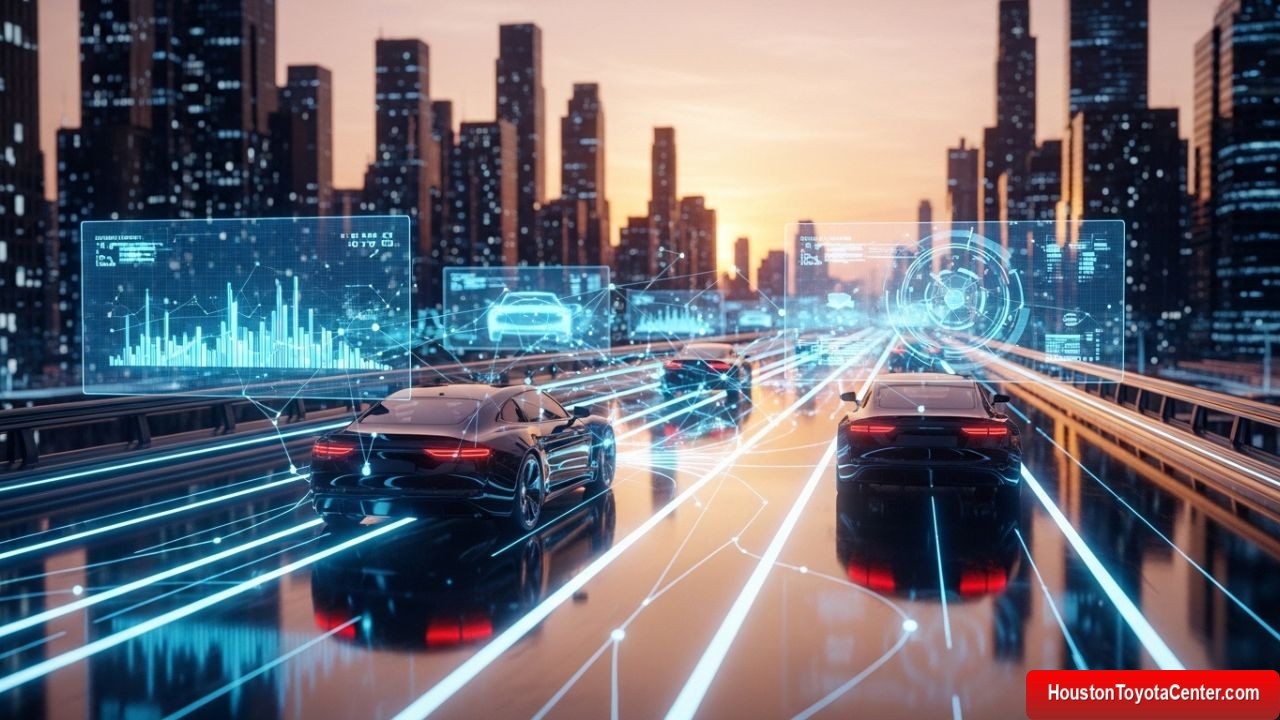
The automotive industry is entering an era defined not only by horsepower or fuel economy, but by something far more intangible: data. Big Data, the collection and analysis of vast amounts of information generated by vehicles, drivers, and environments, is transforming how cars are designed, built, maintained, and experienced.
From real-time diagnostics and predictive maintenance to connected ecosystems and autonomous driving, Big Data is the silent force steering the next generation of vehicles. In this article, we explore how Big Data shapes the future of transportation, the benefits it brings to automakers and consumers, and the challenges that lie ahead.
What is Big Data in the Automotive Context?
Big Data refers to the large volumes of structured and unstructured information generated from numerous sources — including vehicle sensors, cameras, GPS devices, and even social media interactions.
Modern vehicles can generate 25 gigabytes of data per hour, collected from cameras, radar, LiDAR, infotainment systems, and driver-assistance sensors. When analyzed properly, this data can reveal patterns that improve performance, enhance safety, and personalize the driving experience.
FREE: Quickly identify and understand problems with your vehicle 🚘
CLICK HERE| Type of Data | Source | Use Case |
|---|---|---|
| Telematics Data | Vehicle sensors, GPS, and connectivity systems | Maintenance prediction, driving behavior analysis |
| Environmental Data | Weather, traffic, and road sensors | Route optimization and hazard detection |
| Behavioral Data | User preferences, infotainment usage, voice commands | Personalized interfaces and targeted services |
| Manufacturing Data | Supply chain, assembly lines, testing | Production optimization and defect reduction |
This constant flow of information gives automakers the ability to learn from every mile driven — by millions of vehicles simultaneously.
Data as the New Fuel: How Automakers Use Big Data
In today’s mobility ecosystem, Big Data is not just a byproduct of technology — it’s the foundation of innovation. Automakers are now technology companies as much as they are manufacturers.
Here’s how Big Data is fueling progress across the industry:
1. Predictive Maintenance and Vehicle Health Monitoring
Traditional maintenance follows a schedule — change oil at 5,000 miles, inspect brakes every 10,000 miles, and so on. Big Data disrupts this model with predictive maintenance.
Using continuous sensor data, vehicles can predict when components will fail, send alerts to drivers, and schedule service automatically. For example:
- Toyota’s predictive analytics systems analyze historical part performance to estimate failure likelihood.
- Tesla’s vehicles use cloud data to detect anomalies in battery or motor behavior.
- Fleet operators reduce downtime by monitoring wear patterns across multiple vehicles.
This data-driven maintenance reduces costs, prevents breakdowns, and increases vehicle lifespan.
2. Enhancing Safety Through Real-Time Analytics
Safety has always been the cornerstone of automotive innovation. Now, Big Data enables a shift from reactive to proactive safety systems.
Vehicles collect billions of data points from radar, cameras, and sensors. Machine learning algorithms analyze this data in real time to detect hazards and predict accidents before they occur.
Examples include:
- Collision prediction systems that warn drivers based on braking patterns and surrounding vehicle behavior.
- Adaptive cruise control that adjusts speed dynamically using traffic flow data.
- Emergency response optimization, where vehicles automatically transmit crash details and location to first responders.
As cars become more connected, shared safety insights between vehicles (known as Vehicle-to-Vehicle, or V2V communication) could reduce accidents across entire cities.
3. Personalized Driving Experiences
Big Data allows cars to learn from their users — adapting not only to conditions but also to preferences.
Imagine your car adjusting seat positions, lighting, and infotainment based on who’s driving. This personalization is already here. By analyzing driver habits, voice commands, and travel history, vehicles can create unique profiles that follow the driver wherever they go.
For automakers, this data also means new opportunities in targeted advertising, subscription-based upgrades, and digital assistant integration.
4. Smart Manufacturing and Supply Chain Optimization
The impact of Big Data starts long before a vehicle leaves the factory. Automakers now employ data analytics in every step of production:
- Supply chain monitoring detects bottlenecks and adjusts logistics in real time.
- Machine learning models predict component shortages or quality issues before they disrupt production.
- Digital twins — virtual models of factories — simulate production scenarios to optimize performance.
For instance, Toyota’s lean manufacturing philosophy has evolved with Big Data integration, enabling faster responses to part shortages, natural disasters, or demand shifts.
5. Autonomous Vehicles: The Ultimate Data Machines
Perhaps no innovation depends more on Big Data than autonomous driving.
Self-driving cars require enormous volumes of sensor and environmental data to navigate safely. A single autonomous test vehicle can generate up to 5 terabytes of data per hour, processed through artificial intelligence to detect pedestrians, read traffic signs, and make split-second decisions.
Data sources include:
- LiDAR and radar sensors mapping surroundings in 3D.
- Cameras interpreting road markings, lights, and obstacles.
- V2X communication sharing road conditions between vehicles and infrastructure.
Every autonomous vehicle acts as both a user and generator of data — improving the entire network’s intelligence.
Connected Cars and the Internet of Vehicles (IoV)
The next stage of connectivity goes beyond a single vehicle — it’s about the network of vehicles communicating with each other and with the environment.
The Internet of Vehicles (IoV) connects cars through cloud-based systems, enabling them to exchange:
- Traffic information
- Road condition alerts
- Energy consumption data
- Navigation updates
This data exchange allows dynamic route planning, accident prevention, and efficient urban mobility.
For example:
- Vehicles can reroute collectively to avoid congestion.
- EVs can locate the nearest available charging stations.
- Municipal systems can analyze aggregated data to improve infrastructure planning.
As 5G networks mature, latency will drop below 1 millisecond, making real-time vehicle communication a reality.
Environmental and Sustainability Benefits
Big Data doesn’t just improve convenience — it also contributes to sustainability.
By analyzing patterns in driving behavior, traffic congestion, and energy consumption, automakers can reduce emissions across fleets. Hybrid and electric vehicles use this data to:
- Optimize battery performance.
- Adjust power output according to terrain.
- Recommend eco-friendly driving habits.
Fleet managers can monitor carbon footprints and receive sustainability insights from aggregated data, leading to greener transportation systems.
Cybersecurity: Protecting the Data-Driven Vehicle
The more connected vehicles become, the greater the cybersecurity risks.
Each connected car has hundreds of access points — from infotainment systems to cloud APIs — that can become potential vulnerabilities. Protecting this digital infrastructure requires continuous encryption, intrusion detection, and over-the-air updates.
Automakers now employ:
- Blockchain for secure data transactions.
- AI-based intrusion detection to identify abnormal system behavior.
- Multi-layer authentication for connected services.
In 2023 alone, the number of cybersecurity incidents targeting connected vehicles grew by over 200%, highlighting the urgency of secure Big Data systems.
Big Data and Insurance: The Rise of Usage-Based Models
Insurance companies are now harnessing Big Data to design fairer and more customized policies.
Usage-Based Insurance (UBI) relies on telematics data to assess real driving behavior rather than generalized risk profiles. Safe drivers benefit from lower premiums, while insurers gain real-time insight into accident causes and claim authenticity.
Key metrics collected include:
- Speed variations
- Braking patterns
- Time of day driving
- Average mileage
This shift encourages safer roads and transparent pricing models.
Data Monetization: Turning Bytes into Business
Automakers are realizing that data itself is a valuable product. The ability to analyze and monetize vehicle data is opening new revenue streams, such as:
- Subscription features (heated seats, navigation updates).
- In-car commerce and voice-based shopping.
- Real-time traffic data licensing.
For example, Toyota and other manufacturers collaborate with smart city projects, sharing anonymized vehicle data to enhance traffic management systems.
Ethical and Privacy Considerations
While Big Data offers immense benefits, it also raises concerns about privacy and ownership.
Who owns the data your car generates — you, the automaker, or the software provider? Regulations like GDPR and California’s CCPA have begun addressing these questions, but a global standard is still emerging.
Transparency, user consent, and anonymization are essential pillars of ethical automotive data usage. The future of mobility depends on maintaining public trust in how this data is handled.
The Road Ahead: How Big Data Will Shape the Future
Looking ahead, Big Data will redefine nearly every aspect of vehicle life cycles — from design to disposal.
Predictions for the Next Decade:
- Self-Improving Vehicles — Cars will receive over-the-air updates that adapt performance based on collective user data.
- AI-Powered Design — Vehicle designs optimized through simulations of millions of digital prototypes.
- Full Integration with Smart Cities — Vehicles communicating directly with infrastructure for automated traffic control.
- Personal Data Ecosystems — Drivers owning encrypted personal mobility profiles accessible across brands.
- Sustainable Production — Big Data minimizing waste and resource use throughout manufacturing chains.
These transformations point toward a world where mobility is smarter, safer, cleaner, and entirely data-driven.
Conclusion: Data Is the New Engine
The automotive world is undergoing a data revolution. Big Data has evolved from a background technology into the central nervous system of modern mobility. It allows cars to think, learn, and adapt — not only to the driver but to the world around them.
From predictive maintenance to autonomous navigation, from connected ecosystems to sustainable production, Big Data is the invisible engine powering the future of transportation.
As the industry accelerates toward this intelligent future, one thing is certain: the next generation of vehicles won’t just move people — they’ll move information, too.
Leave a Reply