
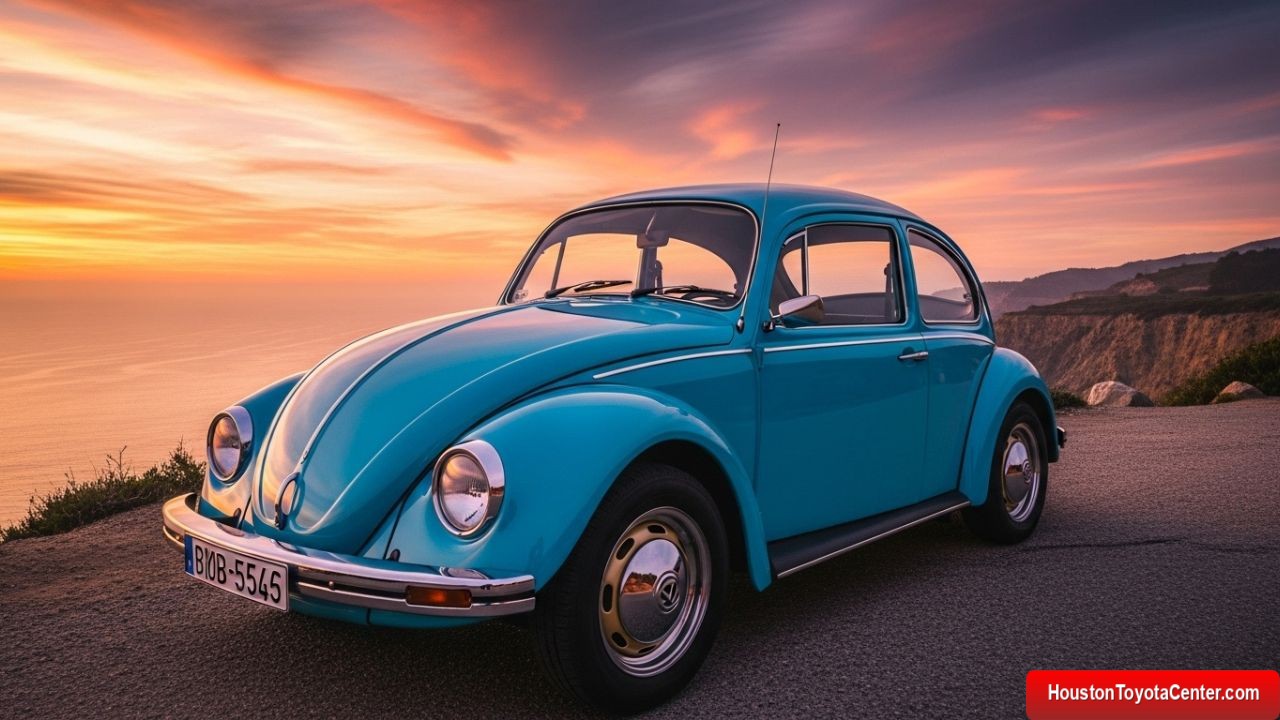
Few automobiles in history have captured the world’s imagination as vividly and universally as the Volkswagen Beetle. More than a car, the Beetle became a cultural icon, a political symbol, a design masterpiece, a technological curiosity, and a beloved companion for tens of millions of drivers across generations. Its story spans nearly a century—from the economic struggles of pre–World War II Germany to the counterculture explosion of the 1960s, and from global manufacturing dominance to a nostalgic 21st-century revival. The Volkswagen Beetle’s legacy is not merely enduring—it is woven deeply into the fabric of modern automotive history, shaping consumer culture, popular media, industrial innovation, and collective memory.
This article explores the Beetle’s multifaceted legacy, tracing its origins, evolution, global rise, emotional impact, and lasting significance. It also examines why the Beetle continues to resonate with so many people long after production officially ceased.
From Concept to Cultural Touchstone
The Early Roots
The Beetle’s beginnings lie in a tumultuous era of German history. In the 1930s, the country was emerging from crushing economic depression, and the idea of a “people’s car”—a simple, inexpensive vehicle for the masses—became a powerful political and industrial motivation. Volkswagen, meaning “people’s car,” was founded with the intention of developing such a vehicle. Engineer Ferdinand Porsche was tasked with creating a car that was affordable, fuel-efficient, reliable enough for long journeys, and easy for ordinary citizens to maintain.
These engineering priorities gave rise to the Beetle’s distinctive design features: a rear-mounted air-cooled engine, a rounded body for aerodynamics, and a rugged chassis that could handle rough roads. Though the political context of its early years remains controversial, the Beetle’s technical concept was ingenious and ahead of its time.
FREE: Quickly identify and understand problems with your vehicle 🚘
CLICK HEREThe Post-War Rebirth
After World War II, the newly-reorganized Volkswagen company restarted production under British supervision. Unemployment in Germany was high, infrastructure was devastated, and the Beetle appeared as a symbol of renewal. As the German economy began to rebuild, the Beetle became a central part of the “Wirtschaftswunder” or economic miracle. By the early 1950s, the car was being exported around the world, beginning an expansion that would make it a global phenomenon.
Design: Function, Simplicity, and Identity
The Beetle’s shape is one of the most instantly recognizable in automotive design. At a time when cars were growing larger, heavier, and more angular, the Beetle’s smooth, rounded silhouette made it something entirely different. It appeared friendly, unintimidating, and almost cartoon-like—qualities that helped humanize it in the eyes of the public.
Why the Beetle’s Design Worked
- Aerodynamics: The curved shape reduced drag and increased efficiency, even before aerodynamics became a major industry focus.
- Air-Cooled Engine: Without a radiator or traditional cooling system, the Beetle was less prone to overheating and easier to maintain.
- Rear Engine Placement: This provided improved traction on slippery roads and freed the front for luggage.
- Modularity: Many Beetle parts were interchangeable across model years, making repairs and customization easy.
- Affordability: Simplicity kept costs low, enabling millions to purchase their first car.
Emotional Design
Beyond functionality, the Beetle’s “face”—with its rounded headlights and curved fenders—invited emotional attachment. In design psychology, objects with symmetrical curves and “eye-like” features evoke friendliness or warmth. It is no accident that the Beetle was anthropomorphized in films, advertising, and popular culture.
As generations of car buyers shifted from purely utilitarian needs to emotional connections with brands, the Beetle thrived.
The Beetle in Popular Culture
It’s impossible to talk about the Beetle without acknowledging its enormous cultural footprint.
1960s America and the Counterculture
In the United States, the 1960s represented a massive cultural shift—one that aligned perfectly with the Beetle:
- It was small when Detroit cars were enormous.
- It was efficient when American engines were thirsty.
- It was inexpensive during an era of rising consumerism.
- It was quirky, individualistic, and expressive.
Young people adopted the Beetle as a statement. It became a symbol of nonconformity, environmental awareness, and rebellion against excess. Its simplicity made it modifiable, and whole subcultures—such as the dune buggy movement—sprang up around Beetle conversions.
Film and Media
The most famous Beetle of all time, of course, is Herbie, the living car from The Love Bug film series. Herbie’s portrayal as a mischievous, heroic character cemented the Beetle’s identity as more than machinery. It was now a personality.
The Beetle appeared in:
- Music album covers
- Animated series
- Countless commercials
- Toy lines
- Global street art
Its image became universal.
Engineering Longevity
If cultural appeal gave the Beetle personality, engineering reliability gave it staying power. For decades, the Beetle was renowned for being nearly indestructible. Its mechanical architecture remained largely unchanged for over 40 years—almost unheard of in the auto industry.
Strengths of the Beetle’s Engineering
| Feature | Benefit |
|---|---|
| Air-cooled engine | No radiator leaks, fewer moving parts, cold-weather reliability |
| Simple electronics | Easier DIY repairs |
| Lightweight body | Better fuel economy |
| Flat underbody | Off-road capability |
| Modular parts | Cheap and accessible maintenance |
One of the Beetle’s greatest engineering achievements was its adaptability. It could drive in deserts, snow, mountains, and remote rural regions with minimal maintenance. This made it popular in countries with challenging road conditions, including Mexico, Brazil, and parts of Africa and Southeast Asia.
The Beetle Around the World
Mexico: The Beetle’s Second Home
When production ended in Germany in 1978, manufacturing continued in Mexico for decades. The “Vocho,” as it is affectionately known, became one of the most common and beloved cars in Mexico. It served as:
- A reliable taxi
- A delivery vehicle
- A family car
- An icon of urban life
The last classic Beetle ever produced rolled off a line in Puebla, Mexico, in 2003.
Brazil: Innovation and Adaptation
Brazil produced its own variations, including the Brazillian VW Fusca. The Beetle became deeply embedded in national identity, often appearing in films, music, and rural life. Brazil even briefly revived production in the 1990s due to popular demand.
Europe and Beyond
In post-war Europe, the Beetle served as the first car for millions. In Australia and South Africa, locally assembled Beetles were considered durable and practical. In Asia, its affordability helped establish Volkswagen as a trusted brand.
The “New Beetle” Revolution (1998–2010)
By the late 20th century, nostalgia for vintage design was rising. Volkswagen recognized the emotional value of the Beetle and introduced the “New Beetle” in 1998. This reboot was not mechanically similar to the original, but stylistically it paid homage to the classic.
What Made the New Beetle Special
- Retro-futuristic design that embraced nostalgia
- Colorful interiors that captured the playful spirit of the original
- A flower vase on the dashboard, one of the most endearing design decisions
- Modern technology, safety features, and front-engine layout
The New Beetle became a pop-culture icon in its own right, especially among younger drivers and design enthusiasts. Its popularity peaked in the early 2000s, appearing in movies, commercials, and fashion photography.
The 2011–2019 Beetle: A Final Evolution
In 2011, Volkswagen introduced a more mature and refined version simply called the “Beetle.” It was wider, more athletic-looking, and aimed at a broader audience. However, the era of small quirky cars was waning, replaced by consumer demand for crossovers and SUVs.
In 2019, Volkswagen announced that the Beetle would be discontinued. Fans around the world mourned the end of an era, though many held out hope for an electric revival someday.
Why the Beetle Endures
Even after production ceased, the Beetle remains one of the most beloved cars of all time. Its legacy endures due to several powerful factors.
1. Emotional Attachment
Owners often describe the Beetle as a friend or companion. It has a personality that other cars simply lack.
2. Cultural Universality
Few cars have the global reach of the Beetle. From Mexico City to Berlin to Cape Town, it is instantly recognized and fondly remembered.
3. Design Influence
The Beetle inspired generations of designers who saw beauty in simplicity and efficiency. Its form influenced both retro design movements and minimalist engineering.
4. Customization and Community
Beetle clubs exist around the world. Enthusiasts modify them into hot rods, dune buggies, drag racers, or meticulously restored time capsules.
5. Durability
Many Beetles remain on the road today, proving the incredible longevity of the original design.
The Beetle as a Symbol
The Beetle means different things in different cultures, yet its symbolism is consistently positive.
- Freedom: For young people getting their first car.
- Nostalgia: For adults remembering their youth.
- Innovation: For designers and engineers.
- Simplicity: In an age of increasing complexity.
- Equality: It was a car anyone could own.
Its shape conveys approachability. Its history reflects resilience. Its presence across countries represents unity through design.
The Beetle is proof that objects can transcend their intended purpose to become cultural ambassadors.
The Future of the Beetle
While Volkswagen has shifted its focus toward electric mobility, whispers of a potential electric Beetle revival persist among fans and journalists. EV platforms are perfectly suited to the Beetle’s signature shape, as rear-drive layouts and compact motors echo the personality of the original.
Whether or not Volkswagen brings it back, the Beetle remains alive in:
- Restored classics
- Electric conversion projects
- Film and art
- Enthusiast communities
- Automotive museums
No other car has bridged so many generations or remained so deeply cherished for so long.
A Legacy Like No Other
The Volkswagen Beetle is more than the sum of its parts. Its enduring legacy stems not just from clever engineering, iconic design, or global reach, but from the human stories it carries with it. Bumblebee-yellow Beetles used in family road trips; weathered taxis navigating chaotic cities; flower-filled dashboards; first dates; road adventures; film and art; joy and nostalgia.
The Beetle endures because it has heart.
It represents a rare intersection of function, form, and emotion—a triumph of automotive design that will remain timeless long after every last Beetle has left the roads.
Its legacy is not parked in the past. It continues to drive forward, in memory, culture, and imagination.
Leave a Reply