
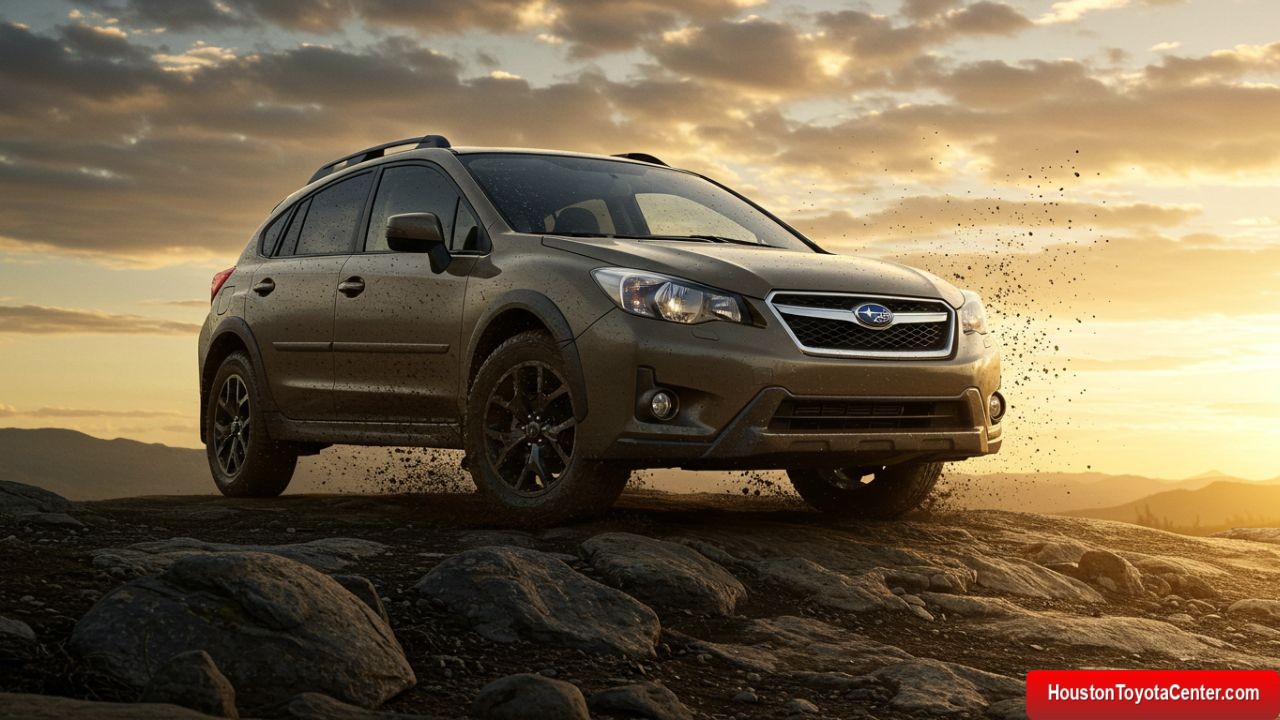
The Subaru Crosstrek has become synonymous with rugged versatility. Combining Subaru’s legendary Symmetrical All‑Wheel Drive with generous ground clearance, a thoughtfully engineered chassis, and a charismatic aesthetic, it appeals to drivers who crave outdoor adventures. Yet, beneath its off‑road credentials lies a powertrain that many critics—and even some loyal owners—describe as underpowered. This tension between off‑road capability and on‑road performance defines the Crosstrek experience. Below, we dive deep into every facet of this compact crossover, exploring why it shines off the beaten path while often feeling sluggish on the highway.
1. Introduction: The Dual Nature of the Crosstrek
The Crosstrek occupies a unique niche. It’s small enough to navigate crowded city streets but rugged enough to tackle trails—a feat few crossovers under $30,000 can claim. Yet, it cannot escape the scrutiny of performance enthusiasts accustomed to turbocharged or high‑output engines. Rather than a pure on‑road performer, the Crosstrek is first and foremost an adventure companion. Its DNA prioritizes traction, stability, and driver confidence in low‑traction scenarios over outright acceleration.
By understanding both sides of the equation—off‑road prowess and sluggish acceleration—prospective buyers can make informed choices, and current owners can better appreciate the trade‑offs inherent in Subaru’s engineering priorities.
2. Core Specifications
Below is a table comparing key specifications of the most popular Crosstrek configurations (2025 model year) to give context to its capabilities and limitations:
FREE: Quickly identify and understand problems with your vehicle 🚘
CLICK HERE| Specification | Base 2.0i | Premium 2.0i | Sport 2.5i | Limited 2.5i | Hybrid 2.0i |
|---|---|---|---|---|---|
| Engine | 2.0L naturally aspirated 4‑cyl 152 hp @ 6,000 rpm 145 lb‑ft @ 4,000 rpm | Same as Base | 2.5L naturally aspirated 4‑cyl 182 hp @ 5,800 rpm 176 lb‑ft @ 4,000 rpm | Same as Sport | 2.0L + electric motor 148 hp combined |
| Transmission | CVT | CVT | CVT | CVT w/ paddle shifters | CVT |
| Drivetrain | Symmetrical AWD | Symmetrical AWD | Symmetrical AWD | Symmetrical AWD | Symmetrical AWD |
| Ground Clearance | 8.7 inches | 8.7 inches | 8.7 inches | 8.7 inches | 8.7 inches |
| 0–60 mph | ~9.3 seconds | ~9.3 seconds | ~8.5 seconds | ~8.5 seconds | ~9.8 seconds |
| Fuel Economy (city/highway) | 28 / 33 mpg | 28 / 33 mpg | 27 / 32 mpg | 27 / 32 mpg | 35 / 36 mpg |
| Curb Weight | 3,100 lbs | 3,150 lbs | 3,225 lbs | 3,260 lbs | 3,350 lbs |
| Approach/Departure/Breakover Angles | 16.8° / 24.4° / 21.4° | Same | Same | Same | Same |
| Base Price (MSRP) | $24,195 | $26,345 | $28,295 | $30,945 | $30,295 |
Table: 2025 Subaru Crosstrek Trim Comparison
This snapshot highlights why the Crosstrek attracts off‑road enthusiasts: ground clearance and AWD come standard across the lineup. Yet, none of the trims prioritize straight‑line speed.
3. Off‑Road Prowess
“The Crosstrek is the Swiss Army knife of subcompact crossovers.”
- Symmetrical All‑Wheel Drive (AWD)
- Balanced Power Distribution: Unlike on‑demand AWD systems, Subaru’s Symmetrical AWD provides continuous, near‑instant torque split front to rear. This ensures traction on dirt, gravel, or snow, maintaining momentum and stability.
- X‑Mode & Hill Descent Control: Standard on Premium and above, X‑Mode optimizes engine output and transmission ratios, modulates AWD torque, and employs advanced traction control for slippery or uneven terrain. Hill Descent Control maintains a steady crawl rate downhill without throttle or brake input.
- Chassis and Suspension
- Raised Ride Height: At 8.7 inches, the Crosstrek towers over most competitors, allowing it to clear rocks, stumps, and ruts.
- Long‑Travel Suspension: Tuned for comfort and articulation, it soaks up bumps on forest roads and provides wheel travel necessary for uneven surfaces.
- Rigid Frame & Underbody Protection: A reinforced platform and skid plates guard vital components (oil pan, fuel lines) from trail hazards.
- Approach, Departure, and Breakover Angles
- Respectable approach (16.8°), departure (24.4°), and breakover (21.4°) angles enable tackling moderate trails without scraping body panels.
- Tire & Wheel Options
- Factory‑fit 17″ wheels with all‑season tires offer a balance of comfort and grip.
- Aftermarket support for taller all‑terrain or mud‑terrain tires is robust, with wheel wells accommodating up to 235/70 R17 without modification.
- Real‑World Off‑Road Scenarios
- Forest Roads & Gravel Tracks: Drivers praise its confident handling on gravel, praising its predictable slip angles and strong traction.
- Snow & Ice: Subaru’s AWD shines in winter, delivering control on black ice and deep snow where FWD rivals spin their wheels.
- Sand & Mud: While not a deep‑mud specialist, the Crosstrek can power through soft sand with tire pressure adjustments and X‑Mode engaged.
4. Sluggish Acceleration
“It feels like you’re piloting a turtle uphill.”
Despite its off‑road talent, the Crosstrek often disappoints drivers expecting brisk acceleration:
- Engine Output vs. Vehicle Weight
- The base 2.0L engine delivers just 152 hp for a vehicle tipping the scales north of 3,100 lbs, resulting in a 0–60 mph time around 9.3 seconds—slow compared to subcompact rivals like the Mazda CX‑30 (8.4 s) or Honda HR‑V (8.9 s).
- Even the 2.5L Sport’s 182 hp yields only an 8.5 s sprint to 60 mph, respectable but far from sporty.
- Continuously Variable Transmission (CVT)
- Subaru’s CVT emphasizes smoothness and fuel economy over quick shifts or manual‑feel gear changes.
- Under hard acceleration, drivers note a “rubber‑band” sensation: the engine revs climb before real power arrives, blunting throttle response.
- Top‑Speed and Passing Power
- Mid‑range torque dip around 3,000–4,000 rpm makes highway passing more challenging, especially when loaded with cargo or climbing grades.
- Drivers often downshift via paddle shifters (Sport and Limited trims) to access more responsive throttle mapping, but paddles only simulate six ratios, and shifts still feel delayed.
- Hybrid’s Trade‑Off
- The Hybrid variant improves fuel economy but lacks an electric boost strong enough to dramatically quicken acceleration. Its 0–60 mph time of ~9.8 seconds is even slower.
- Impact on Daily Driving
- Urban Commutes: Stop‑and‑go traffic hides acceleration deficiencies, but merging onto freeways can feel nerve‑wracking.
- Hills & Grades: Climbing sustained inclines at highway speeds demands more throttle input, leading to higher revs and CVT drone.
- Load Sensitivity: Full passenger load or gear for camping exacerbates sluggishness; acceleration times can climb into the 10+ second range.
5. Balancing Trade‑Offs: Why Subaru Made These Choices
Subaru’s engineering ethos for the Crosstrek prioritizes safety, reliability, and traction above raw power. Key reasons for its configuration:
- Fuel Efficiency & Emissions: A mild, naturally aspirated engine paired with CVT achieves competitive mpg ratings without complex turbocharging plumbing.
- Cost & Complexity: Turbocharged engines or dual‑clutch transmissions add manufacturing costs and potential maintenance challenges; Subaru aims for long‑term durability.
- Market Position: The Crosstrek targets outdoorsy buyers valuing confidence in diverse conditions over performance bragging rights.
Subaru’s lineup complements the Crosstrek with sportier options (WRX, BRZ) for drivers seeking punchy acceleration, letting the Crosstrek remain a dependable all‑weather adventurer.
6. Owner Perspectives & Aftermarket Solutions
Many Crosstrek owners accept—or even embrace—the balance Subaru struck. Online forums teem with discussions of mods to alleviate performance shortcomings:
- Tuning & ECU Flashing
- Aftermarket tunes can unlock up to 20 hp and improve throttle response, though gains vary and may impact warranty.
- Exhaust & Intake Upgrades
- High‑flow air intakes and cat‑back exhausts deliver minimal horsepower increases but sharpen engine sound, making the Crosstrek feel more lively.
- Turbocharger Kits
- A niche community experiments with DIY turbo swaps, though this is costly, complex, and risks reliability.
- Alternative Tires
- Switching from tall, soft all‑terrain tires to lower‑profile performance tires on paved adventures reduces rolling resistance, offering a modest improvement in 0–60 mph times.
- Shuttle to Sport Mode Mapping
- Some custom tuners reprogram CVT logic to hold simulated gears longer, giving a more engaging driving feel.
Ultimately, most owners accept that transforming the Crosstrek into a sporty canyon‑carver requires compromise—and potentially voided warranties—rather than a simple bolt‑on fix.
7. Comparative Analysis: Crosstrek vs. Competitors
| Feature | Subaru Crosstrek | Mazda CX‑30 | Honda HR‑V | Toyota Corolla Cross | Jeep Renegade |
|---|---|---|---|---|---|
| Base Horsepower | 152 hp | 186 hp | 158 hp | 169 hp | 177 hp |
| Standard AWD | Yes | No (optional) | No | No (optional) | No (optional) |
| Ground Clearance | 8.7 in. | 8.0 in. | 7.3 in. | 8.3 in. | 8.7 in. |
| 0–60 mph (base) | 9.3 s | 8.4 s | 8.9 s | 9.2 s | 8.2 s |
| Fuel Economy (city/hwy) | 28 / 33 mpg | 25 / 33 mpg | 26 / 32 mpg | 31 / 34 mpg | 22 / 30 mpg |
| Off‑Road Focus | High | Low | Low | Low | Medium |
Table: Crosstrek vs. Segment Rivals
- The Crosstrek’s standard AWD and high ground clearance set it apart in true off‑road capability.
- Competitors often outshine it in acceleration and interior refinement but lack Subaru’s trail‑ready pedigree.
8. Living with the Crosstrek: Real‑World Stories
“I drove my Crosstrek 1,200 miles through Colorado backcountry over ten days. Not once did I worry about traction, but I sure missed the grunt when merging onto I‑70.” — Reddit user @TrailSeeker
- Weekend Warriors: Mountain bikers, ski patrols, and rock‑climbers praise the Crosstrek’s ability to haul gear to remote trailheads.
- Urban Explorers: Young professionals appreciate its compact footprint for city parking and cavernous vault-like roof rails for kayak carriers.
- Daily Commuters: Some lament the CVT drone on highways, opting for aftermarket exhausts or simply resigning to the Crosstrek’s unique character.
9. Should You Buy One?
- Yes, if you:
- Regularly encounter snow, gravel, or mud in your daily driving.
- Value Subaru’s reputation for reliability and resale value.
- Prize cargo flexibility and roof‑rack capacity for outdoor gear.
- Maybe Not, if you:
- Require rapid acceleration for highway merges or performance driving.
- Prefer a smoother, sportier powertrain—consider Mazda CX‑30 or Honda CR‑V.
- Dislike CVT characteristics such as engine drone under load.
10. Conclusion
The Subaru Crosstrek remains a compelling package for adventure seekers: a compact crossover that scoffs at urban confines and beckons toward dirt roads, mountain passes, and winter trails. Yet, its underwhelming acceleration and CVT quirks remind us that every engineering choice involves compromise. Understanding these trade‑offs empowers buyers to match the Crosstrek to their lifestyle—or steer them toward an alternative better suited to their performance expectations.
Whether you accept its turtle‑like launch in exchange for rock‑solid off‑road confidence—or your heart longs for more horsepower—Subaru has carved out a distinct identity with the Crosstrek: a companion for those who prioritize where they can go over how fast they get there.
Leave a Reply