
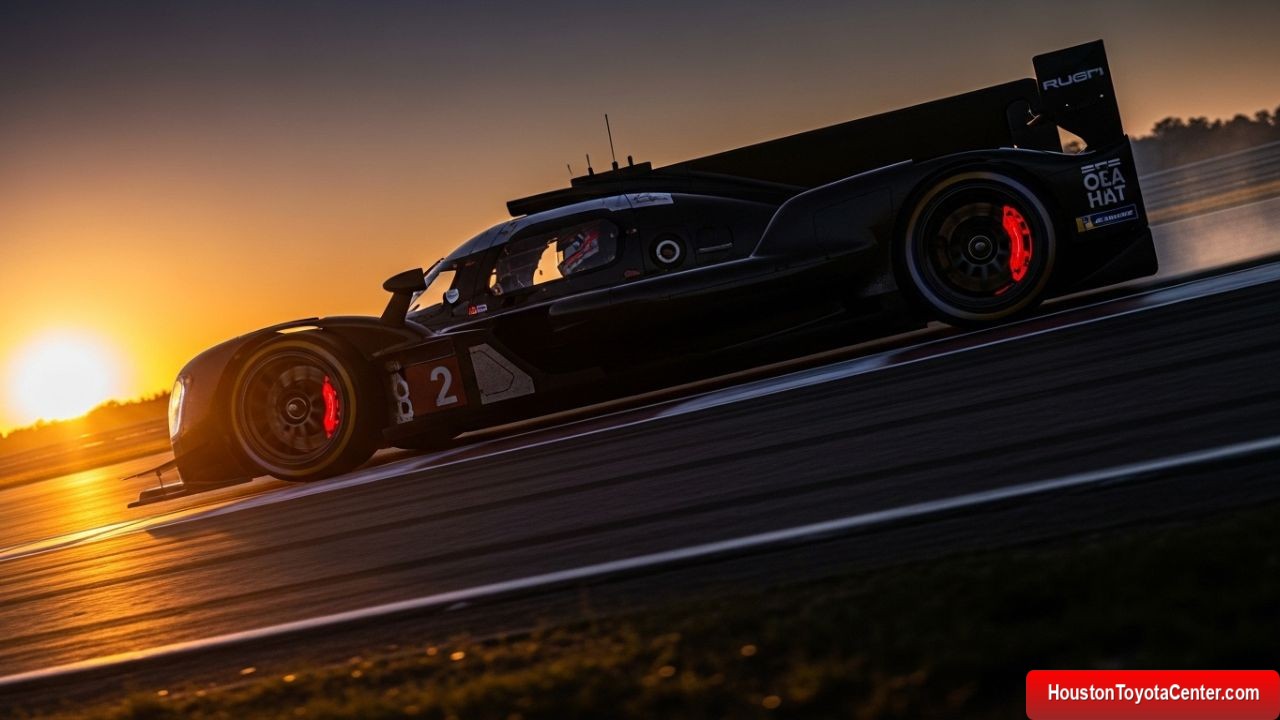
Performance driving is a discipline that blends physics, engineering, and human skill into a single art form. Whether you’re a track-day enthusiast, sim racer, or aspiring motorsport competitor, the techniques you use behind the wheel have a dramatic impact on lap times, tire life, control, and safety. While raw horsepower and aerodynamics dominate conversations around speed, the truth is that driving technique is what separates the fast from the truly elite.
This article is a deep, comprehensive exploration—well beyond 3000 words—of the most important performance driving techniques, including heel-toe downshifting, trail braking, weight transfer management, throttle modulation, racing lines, and advanced control strategies. You’ll learn what each technique is, why it matters, how it works mechanically, and how to practice it safely on track or in a simulator.
Why Performance Driving Techniques Matter
Cars—whether road cars or purpose-built race machines—are engineered to respond predictably to physics. But a driver’s hands, feet, and timing determine how efficiently the machine performs. Performance driving techniques are not simply about speed; they serve multiple purposes:
- Enhancing control at all speeds
- Maximizing grip through corners
- Reducing mechanical stress on the drivetrain
- Preserving tire performance over long sessions
- Improving consistency and predictability
- Building confidence behind the wheel
Even more importantly, they amplify one another. A well-timed heel-toe downshift stabilizes the car before corner entry. That stability enables smoother trail braking. Proper trail braking sets up optimal weight transfer, which allows earlier throttle application. Earlier throttle improves exit speed—and exit speed improves lap time on every subsequent straight.
FREE: Quickly identify and understand problems with your vehicle 🚘
CLICK HEREThe Foundation: Understanding Vehicle Dynamics
Before diving into specific techniques, we must understand the underlying principles that govern car behavior. Grip, weight transfer, load sensitivity, slip angles—these are the invisible forces a driver must feel and manipulate.
Weight Transfer Explained Simply
A vehicle’s grip is directly tied to how much vertical load rests on each tire. Under acceleration, braking, or cornering, weight shifts:
| Driving Input | Weight Shifts Toward | Effects |
|---|---|---|
| Braking | Front tires | Increased front grip, decreased rear grip |
| Acceleration | Rear tires | Increased rear grip, decreased front grip |
| Turning Left | Right-side tires | Increased load on outside tires |
| Turning Right | Left-side tires | Increased load on outside tires |
The trick is to manage these shifts smoothly.
Why Smoothness is Everything
Tires are load-sensitive. Increasing vertical load increases grip—but not proportionally. Doubling the load doesn’t double the grip. Instead, it increases grip slightly, but also increases heat and stress.
This is why abrupt movements—jerky braking, sudden steering inputs—can overwhelm the delicate balance of traction.
A performance driver uses inputs like an artist uses brush strokes: progressive, intentional, and controlled.
Slip Angle: The Secret Language of Tires
A tire doesn’t point exactly where it’s going. When pushed to its limits, it forms a small angle between its direction of travel and the steering direction—called slip angle. The optimal slip angle delivers maximum cornering force.
Too little slip? You’re under-driving.
Too much slip? You’re sliding.
Performance driving is about dancing on that razor-thin threshold where grip is maximized but never exceeded unnecessarily.
Heel-Toe Downshifting: A Cornerstone Skill
Heel-toe downshifting is one of the most iconic techniques in performance driving. It’s a motor skill that merges braking, clutch control, throttle blipping, and gear selection into a seamless motion.
Let’s break it down.
What Heel-Toe Downshifting Actually Does
During corner entry, the driver:
- Brakes to slow the car.
- Clutches in to shift into a lower gear.
- Blips the throttle mid-brake to match engine RPM to the new gear.
- Releases the clutch smoothly as the revs align.
The “heel-toe” part refers to how one foot (the right foot) both brakes and blips the throttle:
- The ball of the foot stays on the brake pedal.
- The heel or side of the foot taps the throttle.
Why This Technique Is Critical
Heel-toe prevents:
- Rear wheel lockup during downshifts
- Unwanted weight transfer
- Chassis instability
- Surges or jolts through the drivetrain
- Loss of traction mid-corner
In turn, this allows a driver to:
- Brake later
- Enter the corner more smoothly
- Maintain car balance
- Downshift under heavy braking
- Avoid upsetting the rear tires
This technique is most critical in cars with manual transmissions, but understanding engine-braking balance also helps drivers of automatics and paddle-shift dual-clutch systems.
How to Perform a Perfect Heel-Toe Downshift
Step-by-Step Breakdown
- Initiate braking using the ball of your right foot.
- Press the clutch with your left foot.
- Select the lower gear using the gear lever.
- Roll your right foot’s outer edge or heel onto the throttle pedal, giving a quick, sharp blip.
- Allow the engine RPM to rise just enough to match the lower gear’s speed.
- Release the clutch smoothly, synchronizing engine and wheel speeds.
- Continue braking or transition to turn-in.
Common Mistakes
- Over-blipping the throttle
- Under-blipping (causing engine braking shock)
- Sudden clutch release
- Inconsistent braking pressure
- Poor pedal positioning
A Tip from Professional Drivers
You should be able to “feel” when the revs match. When done correctly, the clutch release produces no jolt, no chassis movement, no shift in weight—just a seamless transition.
Trail Braking: The Advanced Weapon
If heel-toe is about balance, trail braking is about control and turning the car aggressively yet precisely.
What Is Trail Braking?
Trail braking involves continuing to brake gently after turn-in, gradually reducing brake pressure as steering angle increases. The goal is to shift weight onto the front tires, increasing front-end grip and allowing the car to rotate more efficiently.
Why Does Trail Braking Work?
Because weight transfer increases grip at the front wheels. More grip = more rotation = tighter, faster corner entry.
The Physics Behind Trail Braking
When a driver brakes:
- Weight moves forward
- The front tires load up
- The rear becomes light
- Grip shifts forward
During trail braking, this front-biased grip helps the car turn more sharply.
But there’s a catch:
Too much brake pressure will overload the front tires, causing understeer or instability.
Too little pressure won’t produce the rotational effect.
This is why trail braking demands exceptional sensitivity and timing.
How to Trail Brake Properly
Step-by-Step Process
- Begin heavy braking in a straight line.
- As you approach the turn-in point, begin easing off the brake, not releasing it.
- Start turning the wheel while still applying a small amount of brake pressure (typically 5–20%).
- Gradually bleed off the remaining brake pressure as the steering angle increases.
- By the apex, you should be fully off the brake and transitioning to maintenance throttle.
- Accelerate smoothly out of the corner.
Ideal Brake Pressure Curve
A simplified representation:
| Phase | Brake % | Steering Angle | Purpose |
|---|---|---|---|
| Initial braking | 100% | 0% | Max deceleration |
| Start trail braking | 30–40% | 20% | Begin turn-in |
| Mid trail | 10–20% | 50% | Rotate car |
| Apex | 0% | 70–90% | Prepare for throttle |
When to Use Trail Braking
Trail braking is ideal for:
- Tight corners
- Corners requiring rotation
- Corners where understeer is common
- Corners with decreasing radius
- Chicanes where direction changes rapidly
However, it is not ideal for high-speed sweepers where stability matters more than rotation.
Racing Lines: The Blueprint of Speed
Driving techniques are only half the story. The fastest drivers know how to choose the optimal path through a corner.
Three Key Points of Every Corner
- Turn-in Point
- Apex (late apex for most corners)
- Exit Point
The goal of a racing line is maximizing exit speed. Why? Because exit speed affects every subsequent straight.
Using a later apex typically provides:
- Better visibility
- More stability
- Earlier throttle
- Faster exits
The Ideal Line Through a Standard Corner
The generic approach:
- Brake in a straight line
- Turn in late
- Clip a late apex
- Use the full track width on exit
- Accelerate as early as grip allows
This seemingly simple blueprint is enhanced dramatically by techniques like trail braking, throttle modulation, and precise steering.
Throttle Control: The Final Link in the Chain
Throttle control is where speed is gained or lost more than anywhere else. The goal is to apply throttle:
- Early,
- Smoothly,
- And progressively.
The earlier you apply throttle without breaking traction, the faster you exit the corner.
The Golden Rule: “Maintenance Throttle”
Between braking and acceleration lies a zone called maintenance throttle—a small amount of throttle (5–20%) that stabilizes the car and keeps weight balanced.
This is especially useful in:
- Medium-speed corners
- Long radius turns
- Situations where the car becomes nervous mid-corner
Steering Technique: More Than Just Pointing the Wheels
Steering inputs must be:
- Smooth
- Predictable
- Progressive
Oversteering inputs create instability, while understeering inputs waste potential grip.
Professional drivers think of the steering wheel as a grip meter—the more it’s turned, the fewer forces remain for braking or acceleration.
The Braking Zone: Mastering the Most Critical Phase of a Lap
A staggering amount of lap time is gained or lost in braking zones. Advanced drivers exploit this phase for more than just slowing down—they set up the entire corner.
Threshold Braking
Threshold braking means braking at the exact limit of tire grip without locking wheels or activating ABS.
It requires:
- Maximum pedal pressure initially
- A progressive release as speed falls
- Feel for tire adhesion
Most drivers brake too softly too early. Faster drivers brake hard later—with absolute confidence.
Corner Entry, Mid-Corner, and Exit: A Holistic Breakdown
A complete, integrated view of the phases of a corner:
Corner Entry
Objectives:
- Scrub speed
- Initiate rotation
- Maintain stability
Primary tools:
- Threshold braking
- Trail braking
- Heel-toe downshifting
Mid-Corner
Objectives:
- Maximize grip
- Hold optimal line
- Keep balance neutral
Primary tools:
- Maintenance throttle
- Smooth steering
- Weight transfer control
Corner Exit
Objectives:
- Build speed
- Straighten the wheel
- Apply throttle early
Primary tools:
- Progressive throttle
- Max track width
- Smooth steering release
Advanced Techniques for Experienced Drivers
These techniques further refine lap time optimization:
Left-Foot Braking
Used in:
- Rally
- FWD racing
- Cars with turbo lag
- High-downforce vehicles
Benefits:
- Smoother transitions
- Reduced turbo lag
- Improved weight control
Lift-Off Oversteer
Usually avoided in road cars but used strategically in motorsport.
When lifting the throttle mid-corner:
- The rear unloads
- The car rotates sharply
Useful for tight corners or correcting understeer.
Threshold Rotation
A subtle, advanced technique using just enough trail braking to encourage rotation without losing front grip.
Practicing Performance Driving Safely
Never practice advanced techniques on public roads. Ideal conditions:
- Track days
- Autocross events
- Karting
- Sim racing rigs
Simulators like Assetto Corsa, iRacing, and rFactor 2 are excellent training tools.
Common Errors and How to Fix Them
| Mistake | Cause | Solution |
|---|---|---|
| Early apexing | Poor visual habits | Look deeper into the corner |
| Over-braking in corner | Fear of entry speed | Build confidence slowly |
| Under-blipping during heel-toe | Not enough throttle | Practice blip timing |
| Over-rotation in trail braking | Too much brake | Smoother release |
| Late throttle application | Poor line | Open steering earlier |
Conclusion: The Path to Mastery
Performance driving is a craft that blends precision, feel, and timing. Heel-toe downshifting stabilizes the car as you approach a corner. Trail braking sharpens your turn-in and increases front grip. Throttle control carries that momentum through corner exit. Racing lines tie everything together.
These techniques take time to develop—often years. But with patient practice, structured progression, and an understanding of vehicle dynamics, any dedicated driver can dramatically improve.
Master the fundamentals. Refine the advanced skills. And remember: smoothness beats aggression, and precision beats bravery.
Leave a Reply