
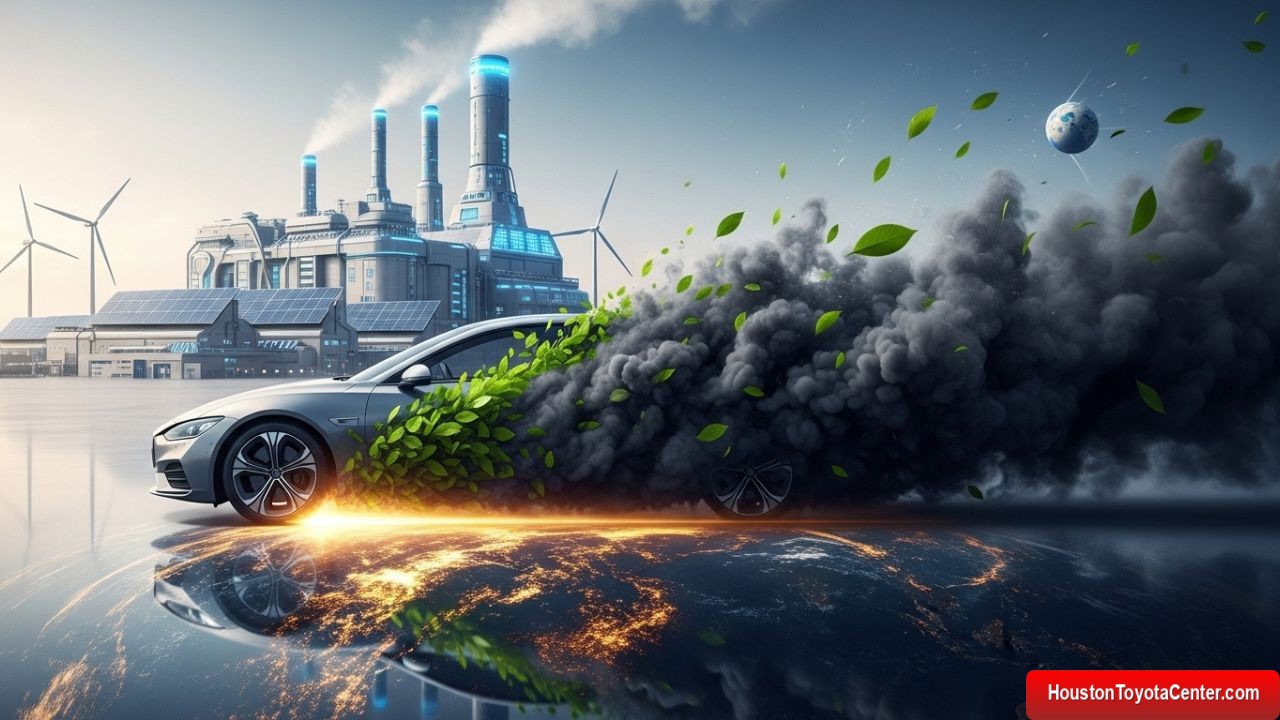
The global automotive industry stands at a critical crossroads. For more than a century, cars have symbolized freedom, innovation, and economic growth—but they have also been a major contributor to greenhouse gas emissions, air pollution, and climate change. As governments tighten environmental regulations and consumers become increasingly eco-conscious, car manufacturers are under immense pressure to dramatically reduce their carbon footprint. What once seemed like a distant sustainability goal has now become a central business strategy.
Reducing carbon emissions in the automotive sector is not limited to producing electric vehicles. It is a far broader and more complex transformation involving raw material sourcing, manufacturing processes, logistics, energy usage, product design, vehicle lifespan, recycling, and even how cars are used by consumers. Today’s leading automakers are reinventing nearly every aspect of their operations to align with a low-carbon future.
This article explores in depth how car manufacturers are reducing their carbon footprint, examining the technologies, strategies, and systemic changes reshaping the industry. From electrification and renewable energy to circular economy models and digital innovation, the road to sustainability is long—but progress is accelerating.
Understanding the Automotive Carbon Footprint
Before examining solutions, it is essential to understand what constitutes a car manufacturer’s carbon footprint. Carbon emissions occur at multiple stages throughout a vehicle’s lifecycle, often referred to as a cradle-to-grave or life cycle assessment (LCA).
FREE: Quickly identify and understand problems with your vehicle 🚘
CLICK HEREMajor Sources of Emissions
- Raw Material Extraction
Steel, aluminum, lithium, cobalt, and plastics all require energy-intensive extraction and processing. - Manufacturing and Assembly
Factories consume vast amounts of electricity, natural gas, and water. - Transportation and Logistics
Shipping components and finished vehicles across continents adds significant emissions. - Vehicle Use Phase
For internal combustion engine (ICE) vehicles, fuel combustion is the largest emissions source. - End-of-Life Disposal or Recycling
Improper disposal leads to wasted materials and additional emissions.
Historically, manufacturers focused almost exclusively on tailpipe emissions. Today, sustainability strategies address Scope 1, Scope 2, and Scope 3 emissions, including indirect emissions across the supply chain.
Electrification: The Most Visible Shift
Transition from Internal Combustion Engines to Electric Vehicles
Electrification is the most publicized strategy for reducing automotive emissions. Electric vehicles (EVs) produce zero tailpipe emissions and significantly lower lifecycle emissions when powered by clean electricity.
Manufacturers are:
- Phasing out gasoline and diesel engines
- Investing billions in EV platforms
- Launching hybrid, plug-in hybrid, and fully electric models
- Building dedicated EV-only production lines
While EV production can initially generate higher emissions due to battery manufacturing, long-term emissions are considerably lower—especially as grids become greener.
Battery Technology Improvements
Battery production is carbon-intensive, but manufacturers are aggressively working to reduce its impact through:
- Higher energy density cells (less material per kWh)
- Solid-state battery research
- Reduced cobalt and nickel dependency
- Improved manufacturing efficiency
- Localized battery production to reduce transport emissions
Many companies now require suppliers to use renewable energy in battery plants, cutting embedded emissions dramatically.
Renewable Energy in Manufacturing
Transitioning Factories to Clean Energy
Automotive plants are energy-hungry facilities, operating 24/7 with heavy machinery, robotics, paint shops, and climate control systems. To address this, manufacturers are:
- Installing on-site solar and wind farms
- Signing long-term renewable energy purchase agreements (PPAs)
- Using energy storage systems to balance supply
- Electrifying processes previously powered by fossil fuels
Some automakers have committed to operating all global facilities on 100% renewable electricity, a milestone that significantly reduces Scope 2 emissions.
Energy Efficiency and Smart Manufacturing
Beyond clean energy sourcing, manufacturers are cutting emissions by using less energy overall:
- AI-driven energy management systems
- Heat recovery systems in paint shops
- LED lighting and smart sensors
- Predictive maintenance to reduce waste
These upgrades not only lower emissions but also reduce operational costs, making sustainability financially attractive.
Sustainable Materials and Lightweight Design
Reducing Emissions Through Material Innovation
Vehicle weight directly affects fuel consumption and energy efficiency. To combat this, manufacturers are redesigning vehicles using lightweight and low-carbon materials such as:
- Recycled aluminum and steel
- Bio-based plastics
- Natural fibers (hemp, flax, kenaf)
- Carbon-neutral synthetic leathers
Recycled aluminum, for example, can cut emissions by up to 95% compared to primary aluminum production.
Interior and Exterior Sustainability
Sustainability now extends to car interiors:
- Seats made from recycled PET bottles
- Vegan leather alternatives
- Water-based paints and coatings
- Reduced use of chrome and toxic finishes
These changes lower emissions, reduce chemical waste, and appeal to environmentally conscious consumers.
Circular Economy and Vehicle Lifecycle Management
Designing for Recycling and Reuse
Modern car design increasingly follows circular economy principles, ensuring materials stay in use longer and waste is minimized.
Manufacturers are:
- Designing parts for easy disassembly
- Labeling materials for recycling
- Using modular components
- Recovering valuable metals from batteries
Some companies aim to recover over 95% of vehicle materials at end-of-life.
Battery Second Life and Recycling
EV batteries often retain significant capacity after vehicle use. Automakers are:
- Repurposing batteries for grid storage
- Using them in renewable energy systems
- Developing closed-loop recycling systems
This reduces the need for new raw materials and cuts emissions associated with mining and processing.
Greener Supply Chains
Supplier Emissions Reduction Programs
A significant portion of automotive emissions comes from suppliers. To address this, manufacturers are:
- Requiring suppliers to report emissions
- Setting carbon reduction targets
- Offering technical support and incentives
- Prioritizing low-carbon suppliers
Some automakers now refuse to work with suppliers that do not align with climate goals.
Localization and Nearshoring
Global supply chains increase transportation emissions. To reduce this, companies are:
- Building regional production hubs
- Sourcing materials locally
- Reducing dependency on long-distance shipping
Localization improves resilience while lowering carbon output.
Logistics and Transportation Optimization
Low-Carbon Shipping and Transport
Transporting millions of vehicles annually has a major environmental impact. Manufacturers are reducing emissions by:
- Switching to electric or hydrogen trucks
- Using rail instead of road transport
- Employing biofuels in shipping
- Optimizing delivery routes with AI
Some are even experimenting with wind-assisted cargo ships and carbon-neutral logistics networks.
Digitalization and Smart Technologies
AI, Data, and Simulation
Digital tools play a powerful role in emissions reduction:
- Virtual prototyping reduces physical testing
- AI optimizes production flows
- Digital twins simulate energy usage
- Predictive analytics minimize waste
By reducing errors and inefficiencies, digitalization cuts both emissions and costs.
Policy, Regulation, and Industry Collaboration
Meeting and Exceeding Regulations
Governments worldwide are imposing stricter emissions standards, zero-emission mandates, and reporting requirements. Forward-thinking manufacturers go beyond compliance by:
- Setting science-based targets
- Aligning with international climate agreements
- Advocating for stronger climate policies
Cross-Industry Partnerships
Car manufacturers increasingly collaborate with:
- Energy companies
- Battery startups
- Recycling firms
- Tech companies
- Governments and NGOs
These partnerships accelerate innovation and spread the cost of sustainable transformation.
Consumer Behavior and Shared Responsibility
Encouraging Sustainable Driving
Manufacturers are influencing driver behavior through:
- Eco-driving modes
- Real-time efficiency feedback
- Connected apps tracking emissions
- Subscription and car-sharing models
A more efficient vehicle is only part of the solution—how it’s used matters just as much.
Transparency and Carbon Reporting
Measuring What Matters
Accurate carbon accounting is essential. Automakers now publish:
- Detailed sustainability reports
- Product-level carbon footprints
- Third-party verified emissions data
This transparency builds trust and allows consumers to make informed decisions.
Challenges and Trade-Offs
Despite progress, challenges remain:
- Battery raw material scarcity
- High upfront costs
- Infrastructure limitations
- Uneven access to renewable energy
- Risk of greenwashing
Addressing these issues requires long-term commitment and systemic change.
Future Trends in Automotive Decarbonization
Emerging Technologies
The next phase of emissions reduction may include:
- Hydrogen fuel cell vehicles
- Carbon-neutral synthetic fuels
- Fully autonomous shared fleets
- Advanced recycling technologies
From Car Manufacturer to Mobility Provider
Many automakers are redefining themselves as mobility companies, focusing on:
- Shared transportation
- Integrated public transit solutions
- Reduced private car ownership
This shift could significantly lower total vehicle numbers and emissions.
Comparative Overview of Key Emission Reduction Strategies
| Strategy | Emissions Impact | Cost Level | Implementation Speed |
|---|---|---|---|
| Electric Vehicles | Very High | High | Medium |
| Renewable Energy | High | Medium | Fast |
| Lightweight Materials | Medium | Medium | Medium |
| Circular Economy | High | Medium | Slow |
| Supply Chain Optimization | Very High | Medium | Medium |
| Digital Manufacturing | Medium | Low | Fast |
Conclusion: A Transformation in Motion
Car manufacturers are undergoing one of the most profound transformations in their history. Reducing carbon footprints is no longer a side initiative—it is reshaping product design, manufacturing, supply chains, business models, and customer relationships.
While challenges persist, the industry’s momentum is undeniable. Electrification, renewable energy, sustainable materials, and circular economy principles are converging to create cleaner, smarter, and more responsible mobility. The road to net-zero emissions is long, but car manufacturers are no longer standing still—they are accelerating toward a more sustainable future.
Leave a Reply