
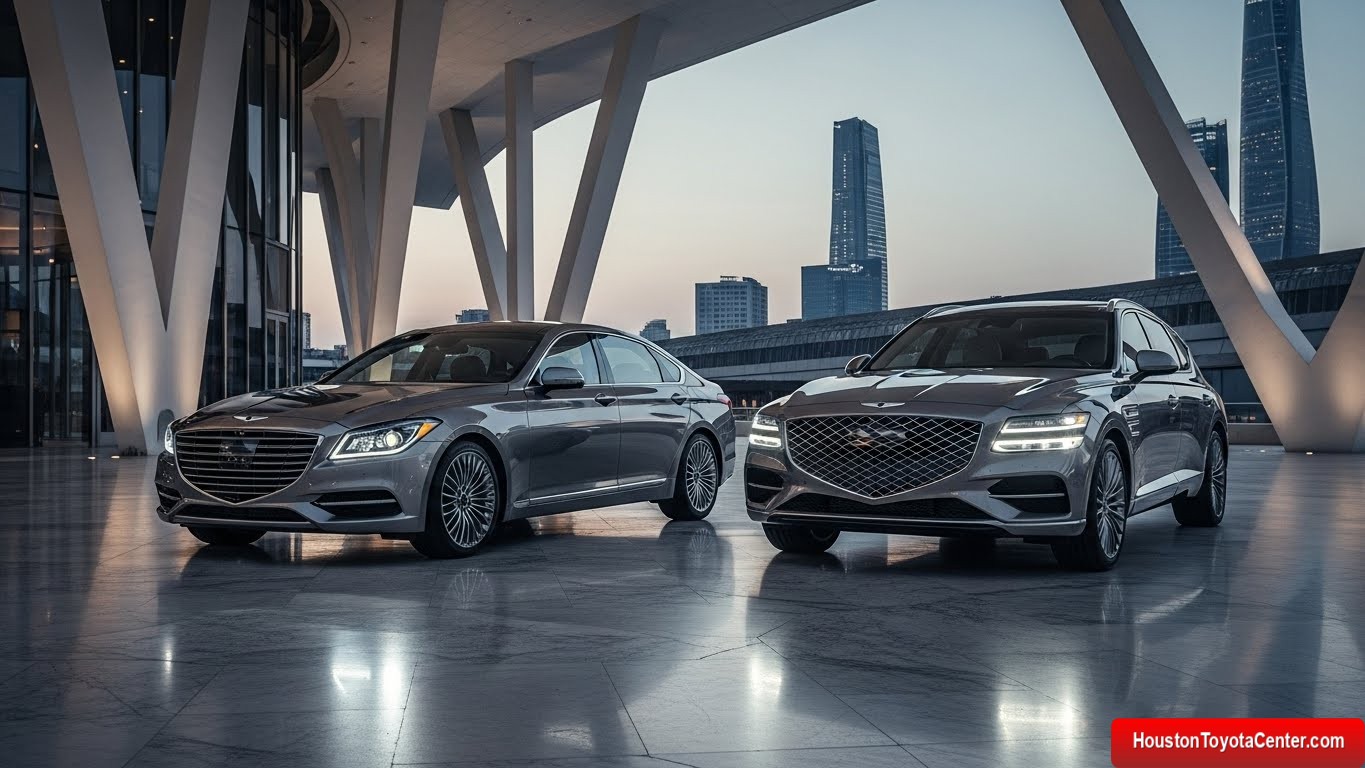
In the global automotive industry, the leap from mass-market manufacturing to true luxury is one of the most difficult transitions a brand can attempt. Luxury is not simply about higher prices or more features; it is about perception, heritage, craftsmanship, emotional appeal, and trust built over decades. Many automakers have tried and failed to cross this divide. Yet Genesis, the luxury marque born from Hyundai Motor Group, has managed to do what few expected: establish itself as a credible, competitive, and increasingly respected luxury brand in a remarkably short period of time.
Genesis is not merely a sub-brand with leather seats and a premium badge. It represents a strategic reimagining of how a modern luxury car brand can be built from the ground up in the 21st century. Free from some of the historical baggage of traditional luxury marques, Genesis has been able to blend cutting-edge technology, refined design, customer-centric service, and aggressive value propositions into a coherent identity. This article explores how Genesis emerged, why it succeeded, and what its rise reveals about the future of luxury automobiles.
Hyundai Before Genesis: From Budget to Belief
To understand Genesis, one must first understand Hyundai’s journey. Founded in 1967 in South Korea, Hyundai initially focused on affordability and rapid expansion. In its early decades, Hyundai vehicles were known primarily for low prices rather than high quality. During the 1980s and early 1990s, Hyundai struggled with reliability perceptions in key markets such as the United States, despite strong sales driven by aggressive pricing.
The turning point came in the late 1990s and early 2000s, when Hyundai committed itself to quality improvement as a core corporate strategy. The introduction of the 10-year/100,000-mile warranty in the U.S. was not just a marketing gimmick; it was a public declaration of confidence in engineering and durability. Over time, Hyundai’s quality scores rose dramatically, often rivaling or exceeding those of established Japanese brands.
FREE: Quickly identify and understand problems with your vehicle 🚘
CLICK HEREBy the mid-2000s, Hyundai found itself in a new position. It had proven that it could build reliable, well-equipped vehicles at competitive prices. The next question was whether it could move beyond value and into aspiration. Rather than stretching the Hyundai brand too far upward, executives began to consider a separate luxury identity—one that could stand on its own merits.
The Genesis Sedan: Testing the Waters
The Genesis story began not as a brand, but as a model. In 2008, Hyundai launched the Genesis sedan, a rear-wheel-drive luxury car aimed squarely at established competitors such as the BMW 5 Series, Mercedes-Benz E-Class, and Lexus GS. This was a bold move, especially considering Hyundai’s brand image at the time.
The Genesis sedan surprised critics and consumers alike. It offered a spacious interior, refined ride, powerful V6 and V8 engines, and a long list of standard features—often at a significantly lower price than its German and Japanese rivals. Reviewers praised its comfort, build quality, and value, even if they noted that brand prestige lagged behind competitors.
The market response was encouraging enough for Hyundai to push further. In 2011, the Equus flagship sedan arrived, targeting the BMW 7 Series and Mercedes-Benz S-Class. Hyundai supported the Equus with white-glove service, including valet pickup and dedicated customer support. This service-focused experiment would later become a cornerstone of the Genesis brand philosophy.
The Birth of Genesis as a Standalone Brand
In 2015, Hyundai officially announced Genesis as an independent luxury brand, following a path previously taken by Toyota with Lexus and Nissan with Infiniti. However, Genesis faced a unique challenge: it entered a luxury market far more crowded and mature than the one Lexus encountered in the late 1980s.
From the outset, Genesis emphasized separation from Hyundai. This separation was not merely cosmetic. Genesis vehicles would be sold in dedicated showrooms or carefully curated spaces within existing dealerships. Branding, marketing language, customer experience, and even dealership training were redesigned to align with luxury expectations.
Crucially, Genesis avoided rushing product expansion. Rather than flooding the market with numerous models, it focused on a carefully chosen lineup, each vehicle intended to reinforce the brand’s core values: elegance, performance, and human-centered design.
Design as Identity: The Genesis Look
One of the most important factors in Genesis’s success has been its design language. Under the leadership of renowned designers such as Luc Donckerwolke and Peter Schreyer, Genesis developed a distinctive aesthetic that balances modern minimalism with classical luxury cues.
The signature “Two Lines” lighting design, seen in headlights and taillights, became an immediate visual identifier. The large crest grille, inspired by the brand’s winged logo, communicates confidence and presence without excessive ornamentation. Unlike some competitors that rely on aggressive or overly complex styling, Genesis vehicles project calm sophistication.
Interior design has been equally important. Genesis cabins emphasize clean lines, high-quality materials, and intuitive layouts. Real wood, brushed metal, and soft-touch surfaces are used thoughtfully rather than extravagantly. The goal is not to overwhelm the driver with visual noise, but to create a sense of serene luxury.
Engineering and Performance: Quietly Competitive
Luxury buyers expect more than comfort; they demand performance that matches or exceeds the segment standard. Genesis recognized early on that credibility would depend on delivering vehicles that could stand up to established players on the road, not just on paper.
Genesis sedans and SUVs are built on dedicated rear-wheel-drive and all-wheel-drive platforms, allowing for balanced handling and refined ride quality. Engines range from turbocharged four-cylinders to powerful V6 units, with tuning focused on smooth, linear power delivery rather than raw aggression.
While Genesis may not market itself as a hardcore performance brand, models like the G70 have demonstrated that the company can produce cars that are genuinely engaging to drive. Reviews often highlight steering precision, chassis balance, and ride comfort that rivals or surpasses European competitors.
Technology Without Intimidation
Modern luxury is increasingly defined by technology, but Genesis has taken a notably restrained approach. Instead of overwhelming drivers with complex menus and touch-sensitive controls, Genesis emphasizes usability and clarity.
Infotainment systems are designed with logical layouts, responsive interfaces, and a balance between touchscreens and physical controls. Advanced driver-assistance systems, such as adaptive cruise control, lane-keeping assist, and blind-spot monitoring, are often standard rather than optional.
This philosophy reflects a broader Genesis belief: technology should serve the user, not dominate the experience. In doing so, Genesis appeals not only to tech-savvy buyers but also to those who value simplicity and ease of use.
The Genesis Customer Experience: Luxury Beyond the Car
Perhaps the most disruptive aspect of Genesis’s strategy is its approach to customer experience. Traditional luxury brands often rely on exclusivity and prestige, sometimes at the expense of convenience. Genesis has flipped this model by focusing on service and respect.
Genesis offers concierge services, valet pickup and delivery for maintenance, and transparent pricing in many markets. The purchasing process is designed to reduce stress, with fewer high-pressure sales tactics and a greater emphasis on relationship-building.
This customer-first mindset has resonated strongly, particularly with younger luxury buyers who may be less impressed by legacy status and more interested in how a brand treats them. Genesis consistently scores highly in customer satisfaction and dependability studies, reinforcing its reputation as a brand that listens.
Competing with Giants: Genesis vs. Established Luxury Brands
Genesis competes in segments dominated by decades-old luxury brands with loyal customer bases. Rather than attempting to outspend or out-shout these competitors, Genesis has chosen a more subtle approach.
The following table illustrates how Genesis positions itself relative to traditional luxury brands:
| Aspect | Genesis | Traditional Luxury Brands |
|---|---|---|
| Brand Heritage | Modern, young | Decades of history |
| Design Philosophy | Minimalist, elegant | Varies from classic to aggressive |
| Pricing Strategy | High value, generous standard features | Higher base prices, costly options |
| Customer Experience | Concierge-focused, low-pressure | Prestige-focused, dealership-dependent |
| Technology | Intuitive, user-friendly | Feature-rich, sometimes complex |
Rather than trying to replace established brands, Genesis offers an alternative definition of luxury—one that emphasizes calm confidence over flamboyance.
Global Expansion and Market Challenges
Genesis’s expansion beyond South Korea and North America has been deliberate. Entering markets such as Europe, the Middle East, and Australia requires adapting to local tastes, regulations, and competitive landscapes.
In Europe, where brand heritage carries significant weight, Genesis faces an uphill battle. However, its focus on design, electrification, and customer service aligns well with European consumer expectations. Limited but strategic showroom placements help maintain exclusivity while controlling costs.
In the Middle East, Genesis has found a more receptive audience, particularly for its larger sedans and SUVs. Strong demand for luxury vehicles, combined with appreciation for comfort and design, has helped the brand establish a solid presence.
Electrification and the Future of Genesis
As the automotive industry moves toward electrification, Genesis has positioned itself at the forefront of this transition within the luxury segment. Electric models such as the GV60 and Electrified G80 showcase the brand’s ability to integrate advanced electric powertrains without sacrificing refinement.
Genesis approaches electrification not as a radical break, but as a natural evolution of its core values. Quiet operation, smooth acceleration, and reduced environmental impact align perfectly with the brand’s emphasis on calm luxury.
The challenge ahead will be balancing innovation with identity. As new technologies emerge, Genesis must ensure that its vehicles remain emotionally engaging and distinct in an increasingly digital and software-driven world.
Cultural Impact and Brand Perception
One of the most remarkable aspects of Genesis’s rise is how quickly it has shifted public perception. What was once seen as an ambitious experiment is now widely regarded as a legitimate luxury brand.
This shift has been driven not only by product quality but also by storytelling. Genesis marketing avoids flashy slogans, instead focusing on craftsmanship, design philosophy, and human experience. This understated approach reinforces the brand’s image as thoughtful and confident.
In a sense, Genesis represents a broader cultural shift in luxury. Younger consumers often value authenticity, transparency, and experience over status symbols. Genesis speaks directly to these values, positioning itself as a brand for those who appreciate quality without needing to prove it.
Lessons from Genesis: Redefining Modern Luxury
The success of Genesis offers valuable lessons for the automotive industry and beyond. First, it demonstrates that luxury can be built relatively quickly if a brand is willing to invest deeply in quality, design, and customer experience. Second, it shows that heritage, while valuable, is not the only path to credibility.
Genesis also highlights the importance of restraint. By avoiding overextension and focusing on a clear identity, the brand has been able to build trust incrementally. Each model reinforces the same core message, creating a cohesive brand narrative.
Finally, Genesis proves that luxury does not have to be intimidating or exclusionary. By treating customers with respect and offering genuine value, it has redefined what premium ownership can feel like.
Conclusion: A New Standard in Luxury
Genesis is more than Hyundai’s luxury offshoot; it is a case study in how modern luxury can be conceived, executed, and sustained. Through thoughtful design, competitive engineering, customer-centric service, and a clear sense of purpose, Genesis has carved out a meaningful place in a fiercely competitive market.
As the automotive landscape continues to evolve, Genesis stands as a reminder that innovation is not only about technology, but about mindset. In choosing to prioritize people over prestige and experience over excess, Genesis has not only succeeded—it has changed the conversation about what luxury can be.
Leave a Reply