
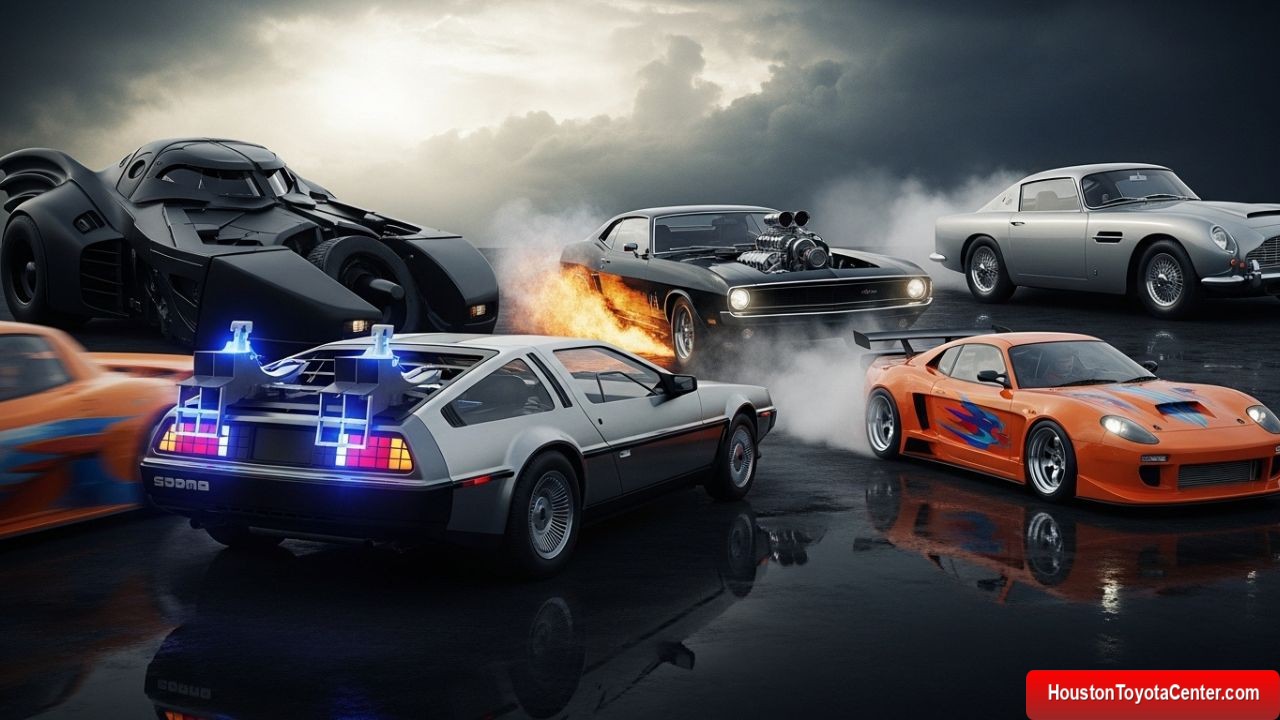
Few elements of cinema ignite the imagination as powerfully as cars. Sleek, roaring machines often become iconic characters in their own right—sometimes even overshadowing the actors behind the wheel. Movie cars can embody speed, rebellion, luxury, futurism, nostalgia, and power. While some are heavily modified, others are recognizable production models that gained legendary status thanks to the silver screen.
This article explores the most famous movie cars in film history and their real-world counterparts. From muscle cars to supercars, from retro cruisers to futuristic prototypes, we’ll analyze what makes each one unforgettable. Along the way, you’ll find comparisons, specifications, and fascinating details about how each vehicle was adapted for cinematic use.
The Ford Mustang GT 390 – “Bullitt” (1968)
If there is one car scene that changed Hollywood forever, it’s the legendary San Francisco chase in Bullitt. McQueen’s 1968 Ford Mustang GT 390 Fastback has become a symbol of cinematic cool.
Real-World Counterpart
The real Mustang GT 390 came equipped with a 6.4-liter V8 producing around 325 horsepower. It wasn’t the fastest muscle car of the era, but its combination of power, handling, and pure attitude made it an icon.
FREE: Quickly identify and understand problems with your vehicle 🚘
CLICK HEREWhy It Became Famous
- The raw, realistic chase scene—no music, just engine roar
- McQueen’s real-life passion for racing
- Minimal modifications that kept the car recognizable and relatable
Notable Modifications for Filming
- Reinforced suspension
- Upgraded engine tuning
- Removed emblems for a stealthier look
The DeLorean DMC-12 – “Back to the Future” Series
Few cars have reached pop-culture immortality like the stainless-steel DeLorean. Though the real model struggled commercially, its time-traveling version became a legend.
Real-World Counterpart
The production DMC-12 featured:
- A 2.85-liter V6
- Gullwing doors
- Iconic brushed stainless steel body
- Underpowered performance by sports car standards
Movie Modifications
- Flux capacitor installation (fictional)
- Exterior wiring and props to imply time-travel technology
- “Mr. Fusion” upgrade in later films
The movie transformed a commercial flop into one of the most recognized cars in film history.
The 1977 Pontiac Firebird Trans Am – “Smokey and the Bandit”
This black-and-gold Firebird Trans Am became the ultimate symbol of American cool in the late 1970s.
Real-World Counterpart
The Trans Am was a performance version of the Pontiac Firebird featuring:
- A 6.6-liter V8
- Sport-tuned suspension
- Aggressive aerodynamic styling
Why It Became Famous
The car’s constant appearance in stunts, high-speed runs, and comedic chase scenes helped solidify its image. Sales skyrocketed after the film’s release—a perfect example of cinema influencing the auto market.
The 1994 Toyota Supra MK IV – “The Fast and the Furious” (2001)
Paul Walker’s bright orange Supra helped kick off one of the most influential car franchises of all time.
Real-World Counterpart
The MK IV Supra already had a cult following due to its legendary 2JZ-GTE engine:
- Twin-turbocharged
- Capable of handling massive aftermarket tuning
- A favorite among street racers
Film Modifications
- Wild aerodynamic body kit
- NOS system
- Custom graphics (now iconic)
The movie boosted the Supra’s status from tuner favorite to global superstar.
The Aston Martin DB5 – “James Bond” Series
A list of famous movie cars is incomplete without Bond’s signature ride. The Aston Martin DB5 debuted in Goldfinger (1964) and has appeared in several Bond films since.
Real-World Counterpart
The DB5 features:
- A 4.0-liter straight-six
- An elegant aluminum body
- Classic British grand-tourer engineering
Bond Modifications
Although fictional, the car’s arsenal became unforgettable:
- Machine guns
- Rotating license plates
- Oil slick dispenser
- Ejector seat
The DB5 is often referred to as “the most famous car in the world.”
1970 Dodge Charger – “The Fast and the Furious” Franchise
Dominic Toretto’s black Charger is synonymous with raw American muscle and family loyalty.
Real-World Counterpart
The 1970 Dodge Charger R/T:
- 7.0-liter or 7.2-liter V8 options
- Up to 425 horsepower (426 Hemi)
- One of the most powerful muscle cars ever produced
Movie Enhancements
Because movie physics don’t apply, the Charger is portrayed as nearly unstoppable:
- Supercharger sticking out of the hood
- Reinforced chassis
- Drag-racing modifications
This car is a character in its own right across the franchise.
Chevrolet Camaro (as Bumblebee) – “Transformers” Series
Although Bumblebee was originally a Volkswagen Beetle in the cartoons, the 2007 film reboot transformed him into a Chevrolet Camaro—and it worked spectacularly.
Real-World Counterpart
Bumblebee appears as two versions:
- A 1977 Camaro
- A modern Camaro Concept
The real Camaro gained massive brand recognition thanks to its role in the franchise.
Impact
Chevrolet leveraged the movie to relaunch the Camaro line, increasing interest among younger car enthusiasts.
The Mini Cooper – “The Italian Job” (1969 & 2003)
Both versions of The Italian Job turned the Mini Cooper into a cinematic star.
Real-World Counterpart
The Minis used in the original film were the classic Austin Minis—small, lightweight, and incredibly nimble.
The 2003 remake used BMW’s modern Mini Coopers, which retained the spirit of agility while adding more power and safety.
Why It Worked
Their ability to fit through tight spaces made for spectacular, creative chase sequences.
The Batmobile – Various Batman Films
Unlike most entries on this list, the Batmobile changes drastically with each interpretation of Batman.
Real-World Counterparts
Because the Batmobile is a fictional vehicle, the real-world counterparts vary, but some inspirations include:
- Jet fighters
- Military APCs
- Le Mans racing cars
Most Famous Versions
| Film | Batmobile Style | Real-World Basis |
|---|---|---|
| Batman (1989) | Long, gothic, turbine-powered | Built on Chevrolet Impala chassis |
| The Dark Knight Trilogy | “Tumbler” military tank-car | Custom-built, inspired by military prototypes |
| The Batman (2022) | Muscle-car hybrid | Built on a modified 1969 Dodge Charger |
The Batmobile remains the most diverse and conceptually ambitious movie car ever created.
The Ecto-1 – “Ghostbusters” (1984)
An eccentric white 1959 Cadillac Miller-Meteor ambulance, the Ecto-1 became as memorable as the proton packs.
Real-World Counterpart
Based on Cadillac’s large V8-powered chassis, these ambulances and hearses were used for real emergency services.
Movie Modifications
- Roof racks full of “ghost detection” gadgets
- Sirens and lights
- Custom interior equipment
It fits perfectly with the quirky, comedic tone of the film.
1973 Ford Falcon XB GT – “Mad Max” Series
Known as the “Pursuit Special,” this post-apocalyptic monster is one of the most recognizable dystopian vehicles ever filmed.
Real-World Counterpart
The Ford Falcon XB was an Australian muscle car equipped with:
- A 5.8-L V8
- Classic 1970s muscle styling
- Strong performance credentials
Modifications
- Aggressive matte-black paint
- Exaggerated supercharger
- Reinforced bumpers
- Wasteland-ready external equipment
Its rugged, desperate look became the aesthetic blueprint for post-apocalyptic cinema.
1961 Ferrari 250 GT California – “Ferris Bueller’s Day Off”
“It is so choice.” That quote alone propelled this car into pop culture.
Real-World Counterpart
The real Ferrari 250 GT California is one of the rarest and most valuable Ferraris in the world, worth tens of millions today.
For filming, replicas were used to avoid destroying a priceless vehicle.
Why It’s Iconic
- Represents youthful rebellion
- Symbol of luxury and freedom
- Inspires one of the most memorable endings in ’80s cinema
Volkswagen Beetle – “Herbie” Movies
Herbie, the sentient Beetle, quickly became one of Disney’s most beloved characters.
Real-World Counterpart
The Volkswagen Beetle:
- Affordable
- Lightweight
- Extremely reliable
- Globally recognizable
Why It Worked
Herbie’s charm came from taking one of the most ordinary cars ever made and giving it personality.
1976 Ford Gran Torino – “Starsky & Hutch”
The bright red Gran Torino with its distinctive white stripe is an unmistakable part of ’70s car culture.
Real-World Counterpart
The Gran Torino was a stylish American cruiser with strong V8 options and bold styling.
It became a symbol of buddy-cop television cool.
Lotus Esprit S1 – “The Spy Who Loved Me”
Another Bond car worthy of mention is the submersible Lotus Esprit.
Real-World Counterpart
The Lotus Esprit S1 was known for:
- Lightweight fiberglass body
- Wedge-shaped styling
- Excellent handling
Movie Modifications
The film featured a custom-built underwater prop version capable of transforming into a submarine.
The Mystery Machine – “Scooby-Doo” (Live Action)
Two live-action Scooby-Doo films (2002, 2004) brought the Mystery Machine to life.
Real-World Counterpart
Based on a 1972–1976 Ford Econoline van, customized with psychedelic paint and interior props.
The van became a symbol of fun, nostalgia, and quirky adventure.
Conclusion: Why Movie Cars Become Legends
Movie cars tap into something primal: our fascination with speed, adventure, rebellion, and style. They often transcend their mechanical origins and enter the realm of mythology. Whether it’s a humble Beetle with a mind of its own or a muscle car roaring through an apocalyptic wasteland, these vehicles gain personality, identity, and emotional significance through storytelling.
Cinema gives cars a soul—and in return, these cars help tell stories that stay with us for generations.
Leave a Reply